/in News/di

Possibility of collaboration with Canadian environmental education journal
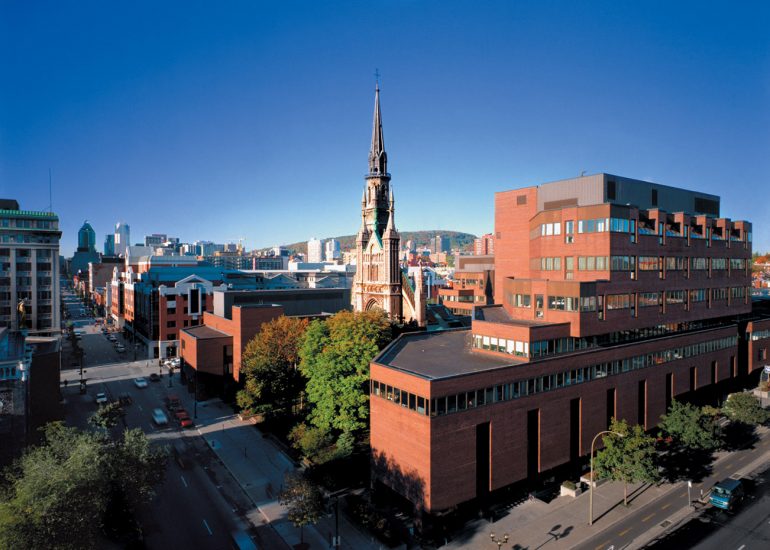
Each year, the journal “Éducation relative à l’environnement : Regards – Recherches – Réflexions” publishes an issue outside the theme, under the responsibility of the Center for Research in Education and Training relating to the Environment and Eco-Citizenship (UQAM). This issue of the journal will be entirely made up of texts submitted spontaneously to the journal. Articles received before June 1, 2020 will be posted on the journal’s website for the month of January 2021. Be sure to visit the publication guidelines before submitting your proposal.

The journal “Éducation relative à l’environnement : Regards – Recherches – Réflexions” updates its list of potential French-speaking experts. Peer evaluation (revision work) corresponds to a process of selecting the manuscripts to be published in the journal and accompanying the authors to improve their text. This evaluation task is unpaid. However, it offers the opportunity to take a critical look at research articles in its field. In addition, each assessor receives an official certificate of their contribution to the review. Also, the names, first names and home institutions of all the evaluators are presented on the journal’s website, in the “Production credits” section of the issue concerned. If this prospect of collaboration interests you, do not hesitate to send us the following information: name, surname, home institution and function, Email address, fields of intervention, activities and areas of expertise, reference of your latest publications – with internet link if applicable. If your application is successful, you will receive an email confirming that you are included in the list of potential evaluating experts.

Online Resource Center
The Espace Ressources site is linked to the Center for Research in Education and Training relating to the Environment and Eco-Citizenship (University of Quebec in Montreal). One of its missions is to meet the needs of documentary resources. You will find tools for continuing research training, productions aimed at stimulating, supporting and disseminating research activities, as well as elements to fuel educational reflection. Access here.

/in News/di

Resolving Environmental Threats for the Benefit of Humanity, conference in Korea

The Twenty-Sixth International Conference on the Unity of the Sciences (ICUS XXVI) will be held in Seoul (Korea) on February 3 – 5. The main theme will be Resolving Environmental Threats for the Benefit of Humanity.

Mario Salomone, Secretary General of the WEEC Network is one of the speakers. The theme of his speech will be about Educating the Public in Environmental Best Practices.

The conference is organised by the HJIFUS, the Hyo Jeong International Foundation for the Unity of the Sciences. HJIFUS engages in research on the environmental ailments of Earth. As the Foundation has connections to many world level organizations, it is well-positioned to spread innovative ideas and best practices to leaders. HJIFUS institutions around the world work together to cosponsor international conferences and projects.

The mission of HJIFUS is to protect and regenerate the health of the environment, thereby enhancing the well-being of humanity and all life on Earth.

To do this, HJIFUS will identify environmental threats and their causes. The Foundation conducts research on solutions to the environmental problems directly or through partnering entities. After best solutions are identified, HJIFUS supports their implementation in areas of the world facing environmental challenges.

/in News/di

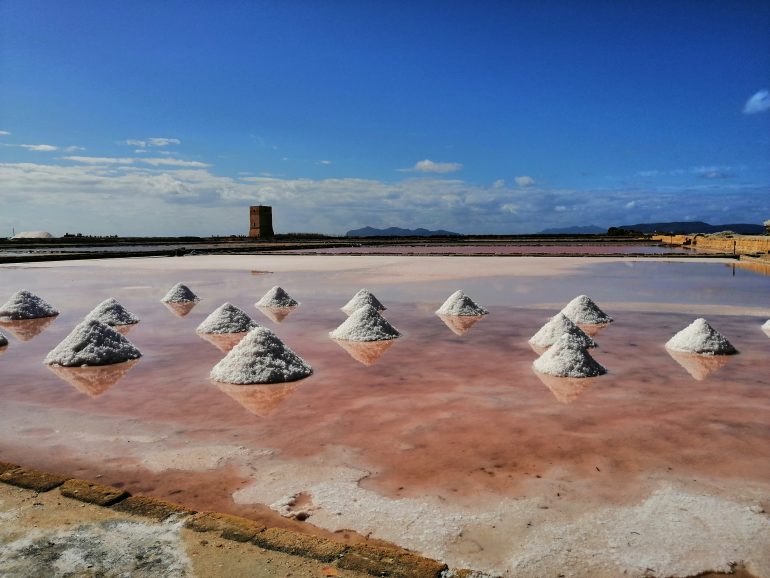
MedArtSal, sustainable management of artisanal salinas in the Mediterranean

Ready, set, go! MedArtSal kick is a project to promote sustainable management of artisanal salinas in the Mediterranean. The eight partners of the project MedArtSal – sustainable management model for Mediterranean Artisanal Salinas are gathering in Rome, on 18 January, for the kick off meeting of this initiative funded by the European Programme ENI CBC MED 2014-2020 with a total budget of € 3.2 million and an EU contribution of € 2.9 million (90%).
Artisanal salinas across the Mediterranean are today facing many pressures due to profound socio- economic changes that have affected productive activities. The MedArtSal project that is being launched in Rome, aims to promote the multifunctional use of the artisanal salinas to diversify socioeconomic activity generating revenues in terms of good quality salt production, but also by obtaining other products that can be commercialized, or by exploring their potential for tourism, while respecting the natural values of the sites. The project will address common challenges for artisanal salinas in four Mediterranean countries (Italy, Spain, Lebanon and Tunisia), with 10 pilot actions for the development of new products/services in selected salinas and 2 demonstration projects on the diversification of salinas products (i.e. food and cosmetics) and services (i.e. HO.RE.CA) carried out in La Esperanza, Cádiz (Spain) and Sidi Al-Hani (Tunisia).
«Investing in artisanal salinas means preserving our cultural heritage and landscape, local development and biodiversity. The final aim is to develop a sustainable and adaptable management model fostering the territorial valorisation of artisanal salinas in the Mediterranean region» says Gaetano Zarlenga, General Manager at University Consortium for Industrial and Managerial Economics, (CUEIM), Italy. The main beneficiaries of this project will be artisanal salinas and salt producers, small and medium enterprises around these sites and local communities from the Mediterranean region.
The project has a duration of 3 years and is led by CUEIM – University Consortium for Industrial and Managerial Economics (Italy) and involves the following partners: Association for the Development of Rural Capacities (Lebanon), Fair Trade Lebanon (Lebanon), IUCN Centre for Mediterranean Cooperation (Spain), Mediterranean Sea and Coast Foundation (Italy), Saida Society (Tunisia), University of Cádiz (Spain), and Tuniso-Italian Chamber of Commerce and Industry (Tunisia).
Contacts
Lourdes Lázaro, IUCN Centre for Mediterranean Cooperation (Lourdes.lazaro@iucn.org)

/in News/di

African youth against climate change, a new hub is born

A major new initiative to fight climate change was launched by Her Royal Highness Princess Lalla Hasnaa, President of the Mohammed VI Foundation for Environmental Protection, at the 2019 Climate Action Summit of the United Nations. The initiative, focused on promoting the ideas and solutions of young Africans, was launched on the sidelines of the United Nations General Assembly. Her Royal Highness, as a globally committed actor, has, for several decades, systematically placed young people and citizens at the center of the Foundation’s activities.

This initiative was born out of a partnership between the Mohammed VI Foundation for Environmental Protection, YOUNGO (group of children and young people at the United Nations Framework Convention on Climate Change), the Mohammed VI Polytechnic University, the OCP Group, as well as young people who were at the heart of the co-construction of this initiative.

The Mohammed VI Foundation for Environmental Protection brings to this initiative its 18 years of experience in education for sustainable development in Morocco, as well as a significant emphasis on Africa, digital technology and international cooperation . YOUNGO makes use of more than 200 youth-led NGOs for young people, as well as its technical expertise. The Mohammed VI Polytechnic University contributes with its approach based on learning by doing (learning by doing), its network of African experts as well as its cutting-edge resources. Finally, the OCP Group provides its support and expertise as a representative of the private sector.

The African Youth Climate Hub will offer young Africans the opportunity to establish and foster a generational movement to fight climate change. The Hub will educate, inspire, empower and mobilize young people to create lasting change in their schools, communities and professional ecosystems, at all levels.

The aim is to create a forum where young Africans can discuss their ideas for combating climate change. The ideas deemed most relevant to the key targets of the Hub will be developed in an incubator before being refined and then deployed. The Hub hopes to bring together the most committed and innovative young African thinkers on climate change, create a learning center and help people find green jobs in Africa.

«Africa is affected by climate change and at the same time constitutes a rich breeding ground for solutions. There has never been a more inclusive and impact-oriented space, allowing young Africans to come together and share their ideas for solutions adapted to their continent». This was stated by Meryem Hdia, a 21-year-old Moroccan woman, youth ambassador for the Hub. «This new platform will allow young Africans to create their own solutions to climate change. It is about developing ideas that will have a real impact on the lives of people around the world».

The African Youth Climate Hub will enable young Africans to identify and connect with the different groups and organizations that need to rely on their ideas to integrate best practices and amplify the impact of their actions. The Hub aims to generate forums involving the main stakeholders and young people, to reduce differences in capacity and to promote an active intergenerational approach.

But the Hub is not limited to ideas: the objective is to generate tangible results with support mechanisms put in place to make ideas happen. Among these mechanisms, the establishment of a network to facilitate cross-border and intergenerational connections, an incubator and a knowledge center.
The African Youth Climate Hub will be based at the Hassan II International Center for Environmental Training in Rabat, Morocco. An annual meeting of the Hub will be held at the Center and will allow young people from all over the African continent to share their knowledge, exchange their best practices, etc.

Contacts: contact@youthclimatehub.org


/in News/di

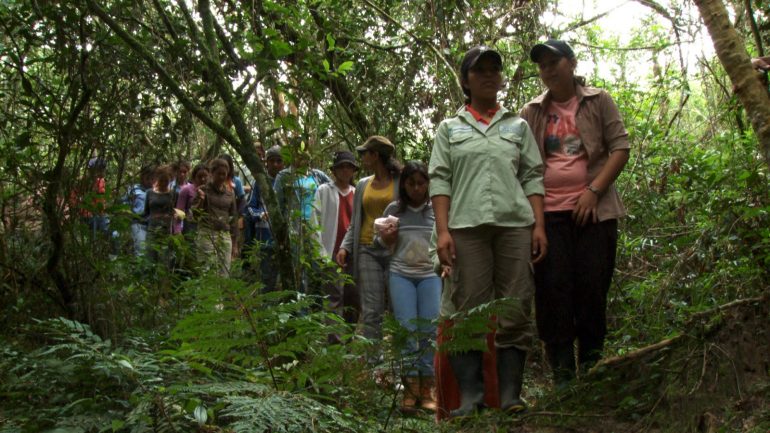
Daughters of the Forest, documentary film

The documentary film Daughters of the forest tells the intimate, powerful story of a small group of girls in one of the most remote forests left on earth who are transformed by attending a radical high school where they learn to protect the threatened forest and build a better future for themselves.It tells the story of these girls living in a rural area where more than 95 percent of the forest has been razed for multi-national agri-businesses.
Meanwhile, more than 80 percent of the people in the region live in extreme poverty, and nearly 90 percent of the teenage girls become pregnant by the age of 16, then drop out of school.

Despite this landscape of despair, The Centro Educativo Mbaracayu, is a place of hope and opportunities for these young girls as they become agents of change.


/in News/di

Week-long Training courses on ESD

The time of year has arrived for the Erasmus+ KA1 applications. This year MEdIES offers three courses on 3 topics:
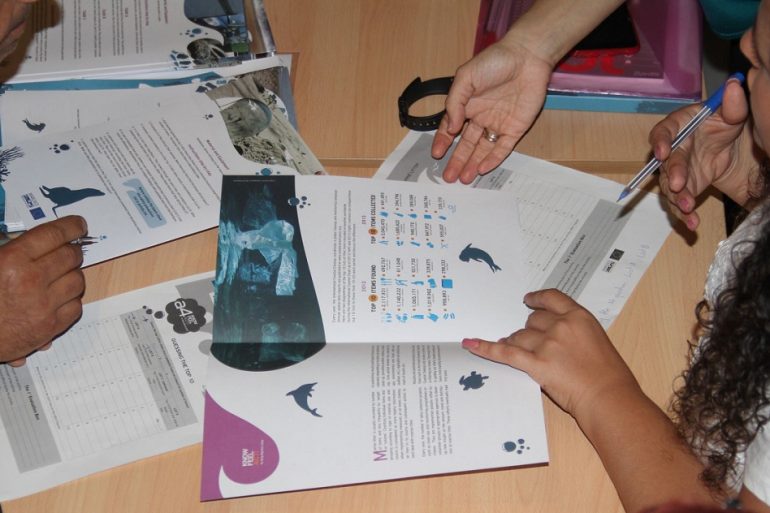
Marine Litter Education. Sun 4 October – Sat 10 October 2020. The course aims to build trainees’ skills in delivering meaningful education interventions on the issue of marine litter, using experiential, learner-centered training methods.
Animation in Education. Sun 8 November 2020 – Sat 14 November 2020 . This course is the product of collaborative work of the past six years. Since 2014 more than 250 formal and non-formal educators were trained on the use of short-video animation on ESD projects.
Education for Alternative Water Resources. Sun 24 January – Sat 30 January 2021. The course aims to enhance the professional development of formal and non-formal educators on non-conventional water resources. It capitalizes on our 10-yr experience having trained ~5000 educators!

All courses are eligible for an EU ERASMUS+ KA1 grant to support the trainees’ participation coming from the EU. Deadline for Erasmus+ KA1 application: 05/02/2020.
Training courses on ESD themes for teachers and adult education staff 100% fundable by Erasmus plus KA1.

MEdIES runs week-long training courses on Education for Sustainable Development (ESD) for formal and non-formal educators from European countries and beyond.

The courses combine short theory sessions with many workshops, visits, hands-on, and co-creative group-work sessions. They all start from a common “core” instruction with the principles of ‘Education for Sustainable Development’, in light of the Sustainable Development Goals (SDGS), followed by a different focus-theme.
The indoor sessions are held in the premises of MIO-ECSDE, in the historical centre of Athens, while the outdoor sessions and visits take place in and around the city of Athens.

The tuition fee for the week-long training (for MIO-ECSDE / MEdIES) is 490 Euro. The total cost (tuition fee, travel, accommodation and subsistence), depending on the country of origin can range between 1300 and 1800 EURO. These costs are eligible to be 100% funded by the Erasmus+ programme, notably under Key Action 1 (KA1 – mobility projects for staff of school education and adult education).
Contacts at info@medies.net

/in News/di

China: Gunter Pauli named one of the Nation’s best science teachers

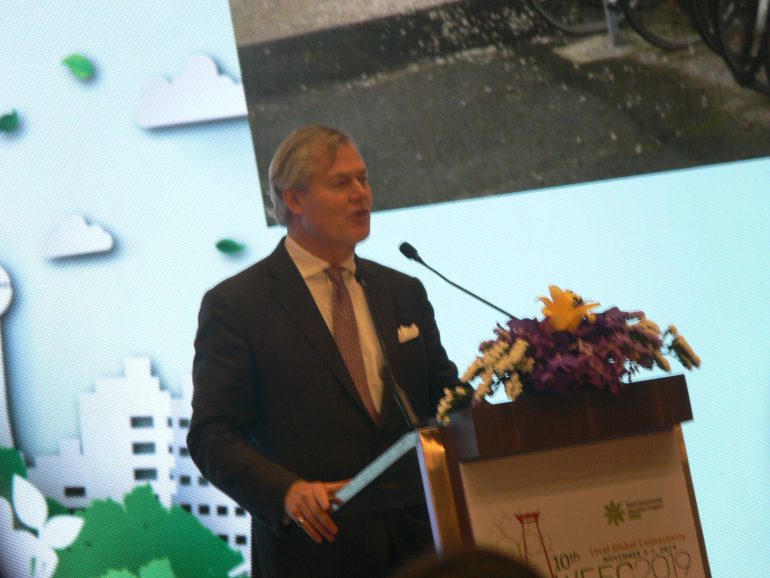
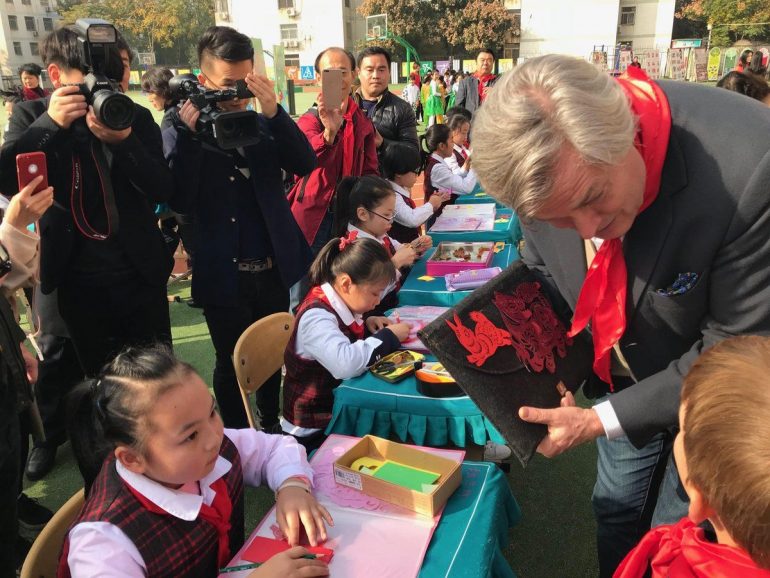
The Xinhua News Agency announced the 10 best science teachers of China.  Gunter Pauli, one of the most influencer speaker at WEEC Congress, famous all around the world for his books and lectures, has been recognized as one of the Nation’s best science teachers (first time for a foreigner).
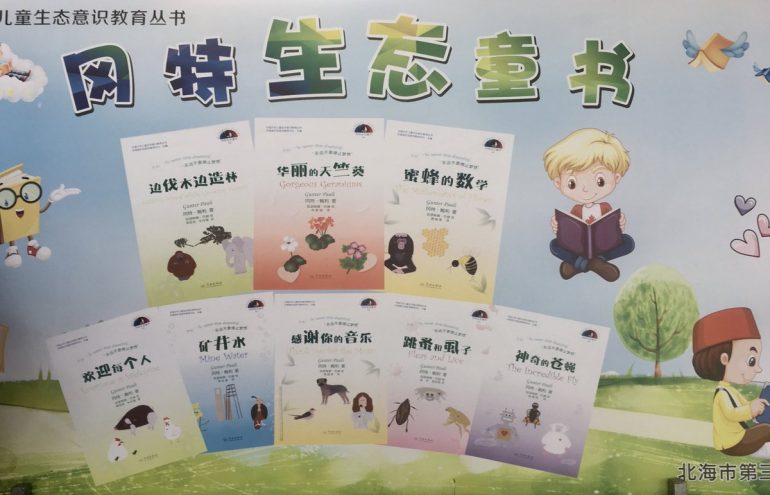
“Gunter’s Fables” are remarkably popular, and the production each year of 36 additional fables has offered a continuous flow of inspiration to teachers and children alike.
«Remember perhaps I have an agreement to publish 365 fables, I have already written 306 and the Chinese Government already published 216 – said Mr Pauli – Over the past 7 years I have taught 35,000 teachers and have spoken to more than 300,000 students. These model  classes have become so popular that the Government decided that within a decade these classes will have been presented in each and every province … by me in person».

It was just last November 2 that Alibaba and the Government awarded Gunter Pauli the “Best Education on Nature” award.  «What an honor to be recognized  now for the science education – he commented –  After all this is exactly what we need “be inspired by Nature” and ensure that we transform society for the better based on innovative science».

/in News/di

Empowers successful clean-up in “the hinge of Africa”

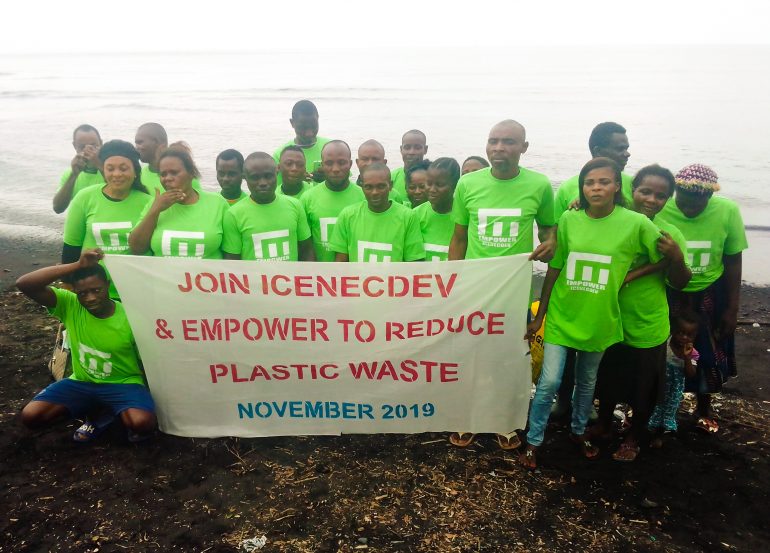
The local section of ICENECDEV – Cameroon organised a full action packed clean-up  in the coastal village of Isobe Idenau. The community members received information on the effects of marine litter and how actions can be taken in order to prevent waste from ending up in the environment. Their joint efforts led to a collection of 1004,8 kg of plastic waste! Which means the coastal community made sure that they saved more than a ton of waste from ending up in the ocean and harming our marine life. The executive director Fongoh Eric and his organizing team ICENECDEV together with the local community worked hard to realise this goal!
Discovery Networks Norway joined this plastic waste movement on their impact day and contributed to clean-up with quintuple global effect sponsoring clean-ups around the world. Thanks to their sponsorship, it led to new clean-up in a whole new region of Empowers journey- West Cameroon. Because of the geographical and cultural diversity of the country, it is often referred to as “Africa in miniature” and as “the hinge of Africa”.
Like many African countries, Cameroon exhibits the burdens of waste managements. Several factors such as inadequate financial resources, low levels of enforcement of regulations, lack of knowledge and poor governance often lead to poor waste management services. The local partner ICENECDEV (also accredited to UNEP) has actively been working towards combating marine plastic litter and micro plastics.
With partners they aim to increase awareness and actions on the environment along the coastal village communities along the west coast of Cameroon (Isobe, Idenau, Etissah, Batoke,Bakingli). «We are thrilled to be a part of this campaign with ICENECDEV to illuminate on the waste problem and incentivize plastic waste collection in the region. We humbly thank everyone involved for all their superb efforts in this collaboration».

Read the full article here

/in News/di

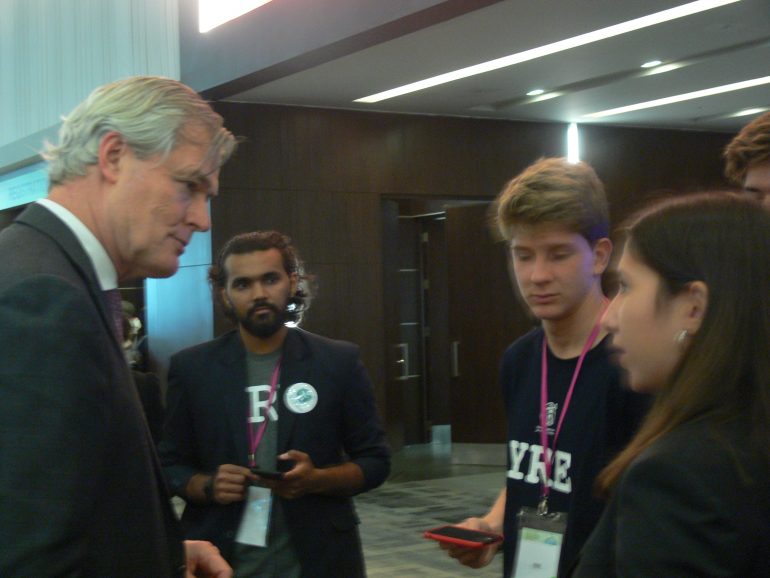
YRE: an interview to Gunter Pauli at 10WEEC

When we were about to leave the conferance hall, we heard someone talking enthusiastically. We sat back to our seats. It didn’t take much time of the speaker to catch our attention. He was Gunter Pauli the author of the book The Blue Economy. We would like to share some highligting points from his speech.

“Tell the people three-minutes stories , they will ask for more.”

Everyone loves stories if we turn the most difficult scientific subjets into stories by using childhood games that we all played outdoor. Childrens mustn’t lose their fantasy . We need this fantasy to move to a vision. Plus, science should be solid. We can use children toys and games to make science concrete for them. For example we can use kites to teach gravity and ascending force.

“Now it’s time to sell the diplomas.”

We should stop whatever we are doing today because it seems that it doesn’t work as we can’t save the world as we don’t have any sustainability to the economy with old industrial errors of which the worst is the education. Because we still have mind control at schools. The biggest industry today is selling diplomas. We don’t need to be there; we should change whatever we are doing today.

“We should shift from green economy to blue economy”.

After his speech, we had a chance to talk about his book, The Blue Economy, which was translated into 34 languages. In his book he claims that green economy doesn’t work. Moreover, it is expensive as it doesn’t use what we have in nature. Sustainable economy requires new methods; blue economy which is cheap and responses to the people’s needs by using what we have in nature. We must benefit from our oceans and seas.

YRE Turkey in WEEC 2019 Thailand
By İrem Yılmaz & Mehmet Ardan

/in News/di

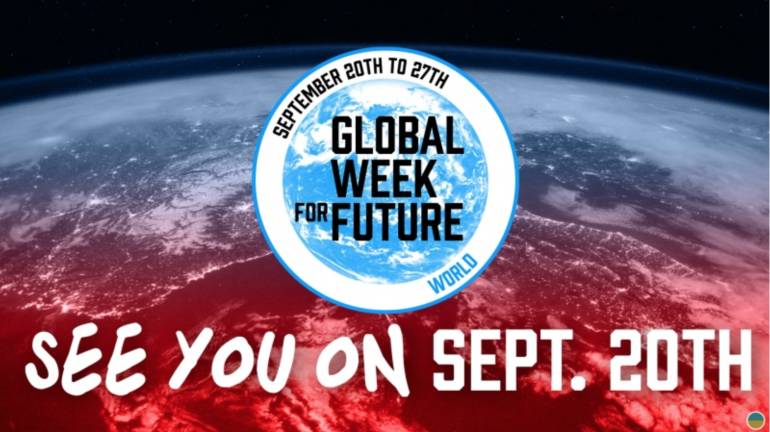
September 20-27: a week for the future

World mobilization and strike week for the Earth from 20 to 27 September, announced by Fridays for future, while in New York on the 23rd António Guterres, Secretary General of the United Nations, convenes the leaders of the planet for a summit leading to concrete actions for the climate. «Join the ‘Week for Future and Climate Justice’ of Fridays for future and take to the streets next to the young», this is the appeal of the Secretary General of the WEEC network Mario Salomone.
In New York, where Greta Thunberg arrived crossing the Atlantic by sailboat to avoid greenhouse gas emissions, the UN Climate Action Summit 2019 is held.

The invitation of UN Secretary General António Guterres to world leaders is to bring to New York concrete and realistic plans to increase the measures decided at the national level by 2020, in line with the reduction of greenhouse gas emissions of 45 % over the next decade and to reduce net emissions to 2050 by zero.

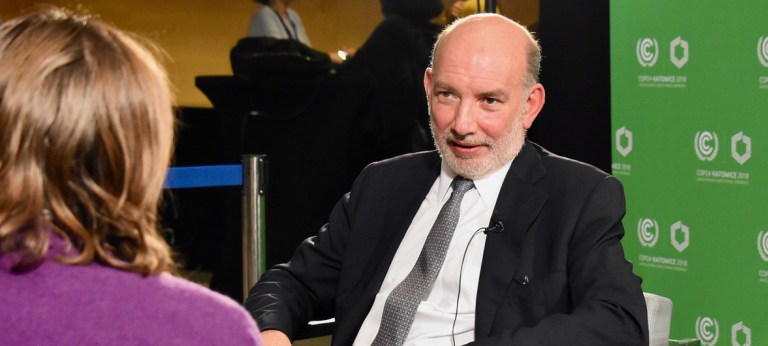
Guterres also appointed a special envoy, Mexican diplomat Luis Alfonso de Alba (in the photo), with the task of ensuring that every country in the world has the tools, vision and political will necessary for ambitious climate action, benefit of all aspects of society.
Fridays for future: a week of international mobilization, for the future and for climate justice. The WEEC Network is at their side

In the same days the mobilization week (with “global strike” on Friday) held by the Fridays for future takes place all over the world. A “global barrage” of climate strikes, they said, awaiting the participation of millions of students, workers and adults in general.

«The appeal of Greta Thunberg and the young people of Fridays for future – declared the secretary general of the international network of environmental education WEEC Mario Salomone – must certainly be picked up and relaunched. Teachers, university professors, educators in general, from every sector and every organization, must be mobilized, alongside their daily work of building up knowledge, skills, attitudes and behaviors, including the presence alongside all those who demonstrate against the climate crisis. The future and climate justice are also our goal».