/in News/di

SDG Accord Report 2019: Progress towards the Global Goals in the Universities and Colleges
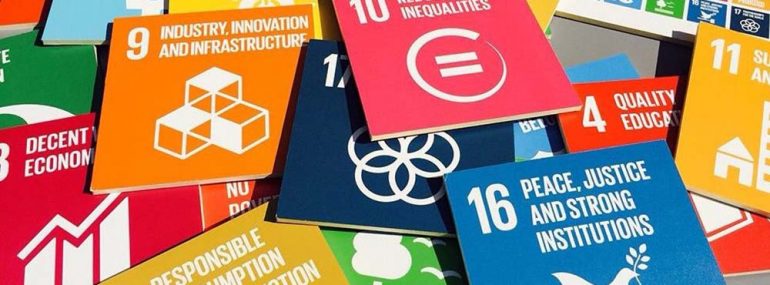
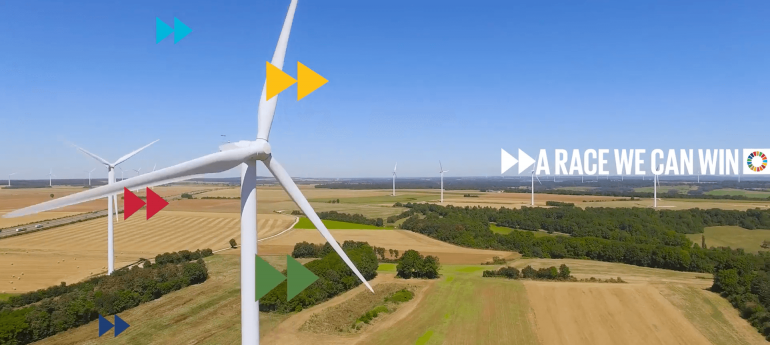
The Annual SDG Accord Report 2019, titled Progress towards the Global Goals in the University and College sector was launched some days ago in New York at the UN High Level Political Forum. The SDG Accord – says Iain Patton CEO, EAUC-The Alliance for Sustainability Leadership in Education – is a high profile international initiative that the Global Alliance developed to allow the tertiary education sector to demonstrate its commitment to playing its part in meeting the SDGs, and sharing best practice. This is a partnership initiative, endorsed by the UN’s HESI and many other global partners. It was launched in 2017, at 9WEEC in Canada, and it currently has official commitment to its tenets from 110 institutions, 103 support organisations and 817 individuals – all spread across 85 countries.
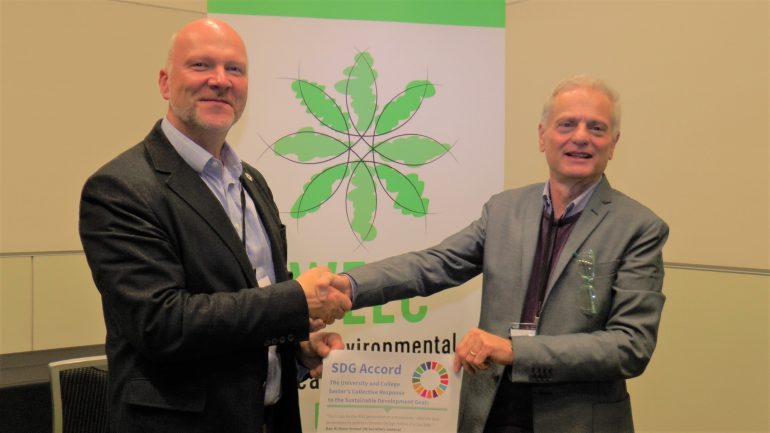
from the left: Iain Patton EAUC-The Alliance for Sustainability Leadership in Education and Mario Salomone WEEC Secretary General at 9WEEC Vancouver (Canada) 2017

The SDG Accord provides a platform to come together in a movement, to inspire, celebrate and advance the critical role that education has in delivering the SDGs, and presents this in a coherent Annual Report for use by the UN, governments, business and wider society. While the sustainability journey of each institution will reflect its unique context, it is clear that connecting them together through the SDG Accord offers the opportunity for scaling of impact. Signatories of the SDG Accord commit to embedding the SDGs into their education, research, leadership, operations, administration and engagement activities.

«The SDG Accord brings institutions together, giving them a platform to share best practice and empowers them to be more aspirational on this agenda – says Sam Barratt Chief, Education and Youth for UN Environment and Chair of the Higher Education Sustainability Initiative – . The report shows that acting on climate change and education are the stand-out priorities, but positive action is being taken on all of the SDGs with real change taking place, just one year on since the last report. As ever, there is always more to do and certainly the UN and partners in the Higher Education Sustainability Initiative will look at the recommendations outlined in this report which will inform our thinking for the months ahead. We look forward to seeing institutions tackle these global challenges with the fierce determination and smart innovation of which they are so capable, with our door wide open to help in any way that we can».

Here you can read the Accord, full text  

The Accord can be signed on four levels.

  1. Leaders of institutions sign to make a corporate commitment – this must be the highest authority such as Vice Chancellor, Principal, President etc.
  2. Leaders of related university and college support organisations sign to make a corporate commitment to supporting the sector
  3. Leaders of student associations ie Students’ Unions or Student Guilds – this must be the president.
  4. Individual students, researchers, academics and operational staff can sign to make a personal and professional commitment to playing their part in advancing sector performance

Sign up here


/in News/di

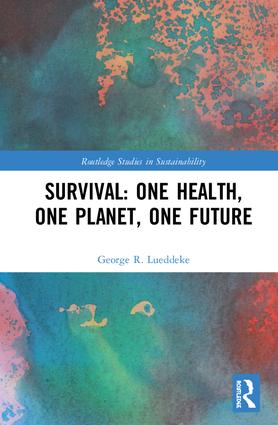
Survival: One Health, One Planet, One Future


Planet Earth has been here for over 4.5 billion years but in just two human generations we have managed to place our only ‘home’ at great risk. Complicating things further, the author observes, we may be on a path where information or data is becoming more important than feelings – reality vs science fiction? Many lessons from history have not yet been learned and new lessons may prove equally, if not more, difficult to take on board as we head deeper into the twenty-first century.

This book highlights two of our greatest social problems: changing the way we relate to the planet and to one another, and confronting how we use technology for the benefit of both humankind and the planet.

Covering a wide range of key topics, including environmental degradation, modern life, capitalism, robotics, financing of war (vs peace) and the pressing need to re-orient society towards a sustainable future, the book contends that lifelong learning for sustainability is key to our survival.
The author argues that One Health – recognising the fundamental interconnections between people, animals, plants, the environment – needs to inform the UN-2030 Sustainable Development Goals and that working towards the adoption of a new mindset is essential.
We need to replace our current view of limitless resources, exploitation, competition and conflict with one that respects the sanctity of life and strives towards well-being for all, shared prosperity and social stability.

Toward a new worldview

There are no easy answers but, given the recent report of the Intergovernmental Panel on Climate Change (IPCC), two fundamental changes are necessary if we are to survive in the coming decades: first, recognise the need to value and respect the interdependencies between people, animals, plants, and the environment (i.e., the One Health and Well-Being concept); and, second, shape through lifelong learning a new mindset – – transforming human attitudes: replacing our current view of limitless resources, exploitation, competition and conflict with one that respects the sanctity of life and strives towards well-being for all, shared prosperity and social stability.

Summarised in the Ten Propositions for Global Sustainability, the author challenges decision-makers at all levels – especially political and corporate – to take universal responsibility for the health and well-being of all people and planet – highlighting the criticality of the United Nations 2030 Sustainable Development Goals – ‘to leave no one behind’ and to evolve institutions to serve human, ecological and future needs, much sooner than later.

Evidence based and transdisciplinary – and including contributions from the World Bank, InterAction Council, Chatham House, UNESCO, World Economic Forum, the Tripartite One Health collaboration (UN Food and Agriculture Organization, World Organisation for Animal Health and World Health Organization), One Health Commission and more – this book cuts across sociopolitical, economic and environmental lines. It will be of interest to practitioners, academics, policy-makers, students, nongovernment agencies and the public at large in both developed and developing nations.

George R. Lueddeke MEd PhD is an educational advisor in higher and medical education and chairs the global One Health Education Task Force for the One Health Commission and the One Health Initiative. He has published widely on educational transformation, innovation and leadership and been invited as a plenary speaker to different corners of the world.
/in News/di

Universities and Colleges for the Climate Summit. A letter to sign here!

In advance of the Secretary General’s Climate Summit on September 23, networks and institutions working in Further and Higher Education are coming together to add their support to this letter that would be shared with key government officials and the media in advance of this event.
The aim is to get as many networks and institutions as possible on board in order to showcase the commitments towards the attainment of SDG 4 (Education) and 13 (Climate Change).

As at 21st May 2019, networks from the Higher Education Sustainability Initiative (HESI), Global Alliance, EAUC – The Alliance for Sustainability Leadership in Education and Second Nature have already agreed to support this letter. Collectively, they represent over 500 individual institutions.

Mario Salomone, Secretary General of the WEEC Network, already signed the letter and invites everybody to sign and share it.

Who can sign: Ideally, the president or chancellor of respective institutions will sign on to this letter on behalf of the institution. However any faculty or staff member of the institution can sign on to reiterate pre-existing commitment. Networks that represent higher and further education institutions can also sign on to the letter.

Deadline: The current deadline for signing on to this letter is August 1st 2019.

Click here to sign

Climate Emergency Letter
As institutions and networks of higher and further education from across the world, we collectively declare a Climate Emergency in recognition of the need for a drastic societal shift to combat the growing threat of climate change.
The young minds that are shaped by our institutions must be equipped with the knowledge, skills and capability to respond to the ever-growing challenges of climate change. We all need to work together to nurture a habitable planet for future generations and to play our part in building a greener and cleaner future for all.
We are today committing to collectively step up to the challenge by supporting a three-point plan which includes:
Mobilizing more resources for action-oriented climate change research and skills creation;
Committing to going carbon neutral by 2030 or 2050 at the very latest;
Increasing the delivery of environmental and sustainability education across curriculum, campus and community outreach programmes.
We call on governments and other education institutions to join us in declaring a Climate Emergency and back this up with actions that will help create a better future for both people and our planet.

Click here to sign

Current representation:
23 institutions representing approx. 200,000 students
14 networks representing approx. 6,000 institutions

/in News/di

From local to European level: a meeting in France for EE networks

The partners of the Erasmus+ strategic partnership programme invite you to a day of discovery on Friday 21 June 2019 in the Philippe Lamour area at Montpellier Supagro.
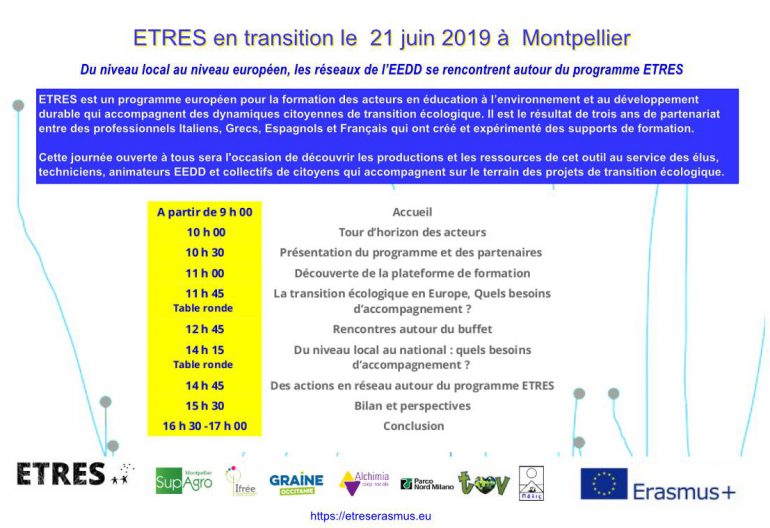

This day, open to all, is be an opportunity to discover the programme’s productions, share resources, discuss future perspectives…

In addition to the initial partnership of the project, we also welcome actors in environmental education and sustainable development from other European countries, including Mario Salomone, Secretary General of the WEEC (World Congress on Environmental Education).

Etres is supported by EU and brings together many training centres and SDEE professionals coming from 4 countries within a network.
The aims of the project are not only to add value to the ideas, practices exchanges and tools to be collectively thought on a local area.

/in News/di

The world in a photo, 4 competitions now open

Produced by the World Photography Organisation, the internationally acclaimed Sony World Photography Awards are one of the most important fixtures in the global photographic calendar.
The Awards are a global voice for photography and provide a vital insight into contemporary photography today. For both established and emerging artists, the Awards offer world-class opportunities for exposure of their work.

Now in its 13th year, the Awards consist of four competitions (read more details at the links): Professional (for a body of work), Open (for a single image), Student (for academic institutions) and Youth (for 12-19 year-olds).

Always free to enter, there is a competition and a category for everyone – from Architecture, Documentary, Landscape, Portraiture, Sport, Street Photography, Wildlife, Travel, Culture and more.

All images are judged by industry experts from across the world, who come together each year in London to reward standout works. A total prize fund of $60,000 (USD) plus the latest Sony digital imaging equipment is shared between the winning photographers.

With the power to kickstart and shape careers, the Awards provide those working in photography a global stage to showcase their work. Previous winning and shortlisted photographers have gone on to be represented by renowned galleries and institutions worldwide, as well as their work being featured in major international publications.

In addition, the Awards recognize the world’s most influential artists working in the medium through the Outstanding Contribution to Photography award; previous recipients include Mary Ellen Mark, Elliott Erwitt, Martin Parr, William Eggleston, Candida Höfer and, most recently, Nadav Kander.

The World Photography Organisation is a global platform for photography initiatives. Working across up to 180 countries, our aim is to raise the level of conversation around photography by celebrating the best imagery and photographers on the planet.

/in News/di

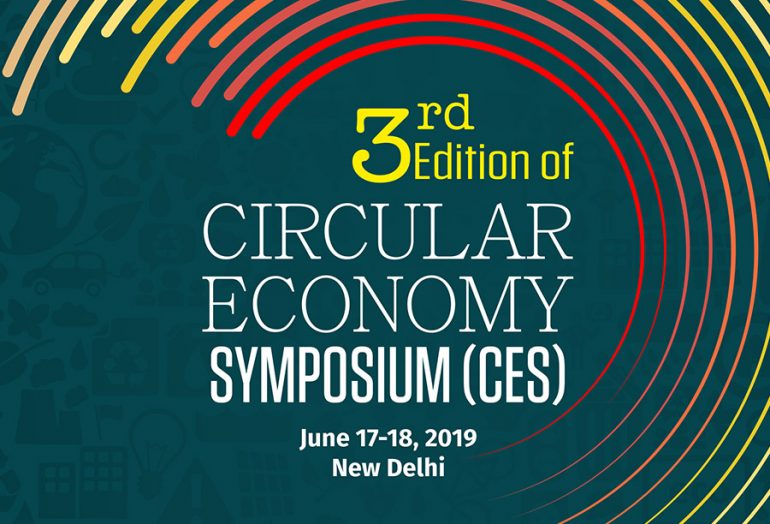
Circular economy, 3rd edition of the symposium in India

FICCI is organizing the third edition of Circular Economy Symposium on 17th- 18th June 2019 at FICCI Headquarters in New Delhi.

This edition will also witness the Awards ceremony for the Frst India Circular Economy Awards.

The objective of the Symposium is to mainstream Circular Economy Principles in Indian businesses for long term value creation, both economic (extended value of products and materials for as long as possible) as well as environmental (minimizing waste generation and resource use). Alongside CES 2019, we would also be introducing the first ever “Indian Circular Economy Awards” to reward organisation doing exceptional work towards the circular economy.

Circular Economy, in such a scenario,through its innovative business models, serves as an alternative to a traditional linear economy (make, use, dispose) in which we keep resources in use for as long as possible, extract the maximum value from them whilst in use, then recover and regenerate products and materials at the end of each service life. In this context, adopting the principles of Circular Economy could help organizations decouple resource requirements from growth aspirations.
FICCI in year 2017 contemplated the idea of constituting a platform – the Circular Economy Symposium (CES) with an objective to mainstream discussion and action on CircularEconomy.
The 2018 edition of the Symposium was attended by over 200 delegates from industry (including startups), government, civil society and academia and witnessed the release of a theme paper on “Accelerating India’s Circular Economy Shift”. The report highlights that Circular business growth models could spell gains of up to US $ 697 bn in India by 2030. It gives a deep insight into how Circular Economy models can radically help Indian businesses in creating sustainable value

For registering online, please visit this website.

/in News/di

Local Democratic Challenges: Environment, Inequalities and Resilient Cultural Mediation

The INTERNATIONAL SOCIOLOGICAL ASSOCIATION’s research committee on sociotechnics and sociological practice (isa-26) and the working group on global-local relations (ISA-WG01) in cooperation with the Sociology of Work and Employment Lab, Sociology Department, University of the Aegean, Lesvos, Greece and its partner, the Observatory on Combating Discrimination, Greek Center of Social Research (EKKE) organize the Conference Local Democratic Challenges: Environment, Inequalities and Resilient Cultural Mediation in Fragile / Transitional Communities (Sept. 9-11, 2019, Conference Center, Cooperative Bank of Chania, Chania, Crete, Greece), supported by the Cooperative Bank of Chania, with the patronage of the WEEC Network.

The ISA is interested in relating participation to a socio-technical process whereby local community cohesion issues emerge as dominant forms impressed by globalization forces on the one side, but also by new knowledge forms, such as info-technology, which require symmetries in the manner of holistic approaches to be co-founded at local level.

Territoriality becomes important as local labor needs to organize new forms of organization where info-technology becomes key for bio sciences, including services suchas, labor mobility. Tourism, culinary culture and gaming are cases in point. However, the key issue remains the social reproduction issues which are needed by the community. A dynamic knowledge based trusted network akin to an Orchestra maybe the key to communal sustainability. This requires local partnership and trusted political mediation, from the bottom, to reconcile divisions and galvanize the community.
«We are seeking papers whereby different forms of participation, inclusion/exclusion issues, empowerment, cooperation, define forms of social and rural developmentat local levelin order to bridge “separate” and often conflictual political communities of interest».

The problems of fragile and rural communities are of interest here.
How do power relationships allow for inclusion and how such partnerships can become more effective tools for sustainable local governance? What is the of sociological practice mediation and how such mediation can be recognized technicity, as management? Are welcomed papers focused on these issues leading to the overall consideration of the role of social capital, social economyand its role on local public (general interest) policy formation.

Organiser: Prof. George O. Tsobanoglou, Sociology of Labour Laboratory, University
of the Aegean, Lesvos, Vice-President, Research Committee RC26 Sociotechnics –
Sociological Practice, International Sociological Association.
Send your abstract (up to 250 words) along with your coordinates (Name, Prof. Association and a brief bio (up to 50 words) by July 1, 2019 to the following addresses:
Email: g.tsobanoglou@soc.aegean.gr and necoud@otenet.gr

/in News/di

Beat Air Pollution. Unep campaign for the World Environment Day 2019

World Environment Day cannot succeed without everybody’s participation. Each year, thousands of cities, schools, non-governmental organizations, businesses and groups organize creative and fun events to inspire further action.
For this year’s World Environment Day, UN Environment will be calling on everyone, everywhere to come together to Beat Air Pollution, which is now the biggest public health crisis on the planet.
«We want to work with our partners in education and youth to take this message into the classroom, campus and community to raise awareness and take action around air pollution, which causes asthma and other respiratory illnesses in young people.
We would like to beat last year’s record and get thousands of events organized with our education partners and we hope that the materials and activations will inspire you to get your sleeves up and ready to join in!» This is the message of the Unep.

What you can do

1. Make June 5 a Beat Air Pollution Day:
a. Bring in an “Air-expert”: Bring in a local air pollution expert to talk about air quality and its impact in the community during either a school assembly or lecture to raise awareness around this issue.
b. Teach it: Ask teachers and professors to teach a whole day on air quality for World Environment Day. Check out this list of Air Quality-related lecture notes and teaching resources. Explore the materials to discuss questions with students such as:
• What are the biggest sources of air pollution?
• How many different sources of air pollution are they exposed to on their way to school/university?
• How can they reduce or avoid these sources of pollution?
• How do they personally contribute to air pollution?
• What can they do to reduce their own “dirty air-print”?
c. Walk / Bike to School Day: Consider implementing a “Walk / Bike to School Day” to encourage leaving the car at home.
d. Tree planting for air and wildlife: Investing in biodiversity can help clean the air and provide habitats for wildlife. Host a tree-planting event on World Environment Day and ask students to bring in seedlings for their own plants in an effort to replenish this valuable resource.
2. Then, register your event online: Go to the World Environment Day site to get all the help you need and register your event so we can see what you are doing online and put you on our real-time map. All those that register will be awarded a World Environment Day participation certificate by UN Environment.
3. Finally, show your support on social: This year, we want to inspire millions of people to share their concern about air quality by getting involved in the #BeatAirPollution social media campaign. We will be going all out with the campaign on May 22. It’s quick to do and will take just 3 minutes to show your support, all you need to do is:
• First, put a mask (or scarf, wrap) around your face / mouth
• Take a selfie
• Then share your commitment as to what you will do to take action on air quality in your own life
• Then share it using the hashtag #beatairpollution on your social media channels tagging three others to do the same
If you would like further feedback or guidance around any of these suggested ideas, or if you’d like to explore alternative options: unenvironment-yea@un.org

VIDEO Take a mask and act!

/in News/di

Learning and networking for sustainable development in the Alps

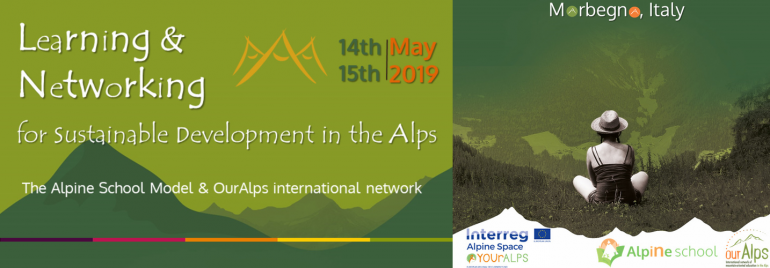
YOUrALPS’ partners have the pleasure to invite you to the international conference for the presentation of the two main outputs of the project: the Alpine School Model and the OurAlps Network. The conference will gather together professionals of education, mountain education and mountain activities in the Alps; policymakers and public authorities; representatives of associations, protected areas and networks; as  well as young people passionate about  the Alps.

During the Alpine School Model presentation, the experiences of schools and non-formal organizations who tested the model during the project will be highlighted. A round table will also be held to discuss with international and national policymakers about Alpine education and about the possibility of assuring the model’s sustainability in the future.
During the round table dedicated to OurAlps, we will discuss together the importance of an international network of mountain education in the Alps, in relation to international strategies aimed at Youth.
On day 2 of the conference, workshops in small groups will allow an operational exchange on targeted themes for mountain education and the OurAlps network.

Register here

The conference is organised in the frame of the INTERREG Alpine Space Project YOUrALPS

YOUrALPS_Conference_Morbegno2019_VF

/in News/di

Green jobs in Latin America: a webinar on March 26th

The Department of Green Jobs of the International Labor Organization invites you to participate in the webinar Green Jobs in Latin America, what is the situation and what tools allow us to move towards a Just Transition?
What is the situation of Green Jobs in Latin America? What are the main challenges of the Just Transition in the region? How can we evaluate the effect of green policies on employment? What is the role of Triangular South-South cooperation as a tool for the Just Transition?

Tuesday, March 26 | 9 am – 10:15 am (Mexico Time, UTC-6) | 4 pm – 5:15 pm (CET, UTC + 1)

Speakers:
– Ana Sánchez, Regional Specialist in Green Jobs, ILO / Green Jobs.
– Santiago Lorenzo, Director of Sustainable Finance, Climate Action Network.
– Joaquim Bento, Professor at the Higher School of Agriculture Luiz de Queiroz, University of São Paulo, Brazil.
– Anita Amorim, Director of the Special and Emerging Alliances Unit of the ILO.

Assistance: Register using this link
You will find it also in the brochure: 5º GAIN Webinar – Empleos Verdes en Latinoamérica, 26 Marzo.
Then you will have the link to access the session. Open said link in the day and time of the Webinar.

For any questions, contact greenjobs@ilo.org