The International Green Gown Awards are supported by UN Environment and are open to any university or college across the world.
The Awards are truly unique and recognise institutions delivering world-class leadership in sustainability. They have a global reach and offer an opportunity to engage the world’s 200 million higher and further education students in the sustainability initiatives that can help them tackle a world characterised by rapid change and uncertainty.
The Awards are free to enter and, as an SDG champion, they offer an ideal opportunity to give your sustainability work global impact.
Is your institution the most sustainable institution of the year?
Is your institution benefitting society?
Is your institution empowering students?
Endorsed by UN Environment, we are looking for inspirational sustainability leaders. Recognising exceptional sustainability initiatives being undertaken by the world’s universities and colleges, the International Green Gown Awards set the bar and put every learning institution at the heart of delivering the UN Global Goals.
The 2019 Awards are now open for applications. There is no limit on the number of applications or categories each institution can enter. Entry is free of charge.
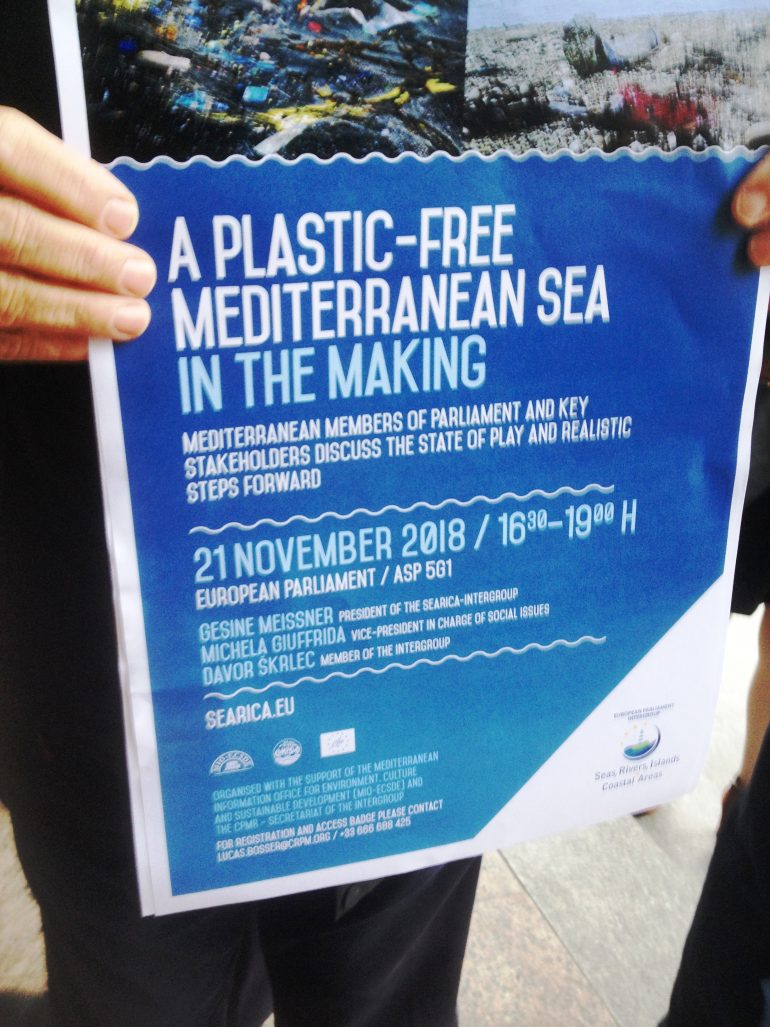
On the 21st of November the Seas, Rivers, Islands and Coastal Areas Intergroup (Searica) met with MIO-ECSDE and the informal Circle of Mediterranean Parliamentarians for Sustainable Development (COMPSUD) at the European Parliament in Brussels. This was a unique occasion where Members of the European Parliament and Members of Parliament of non-EU countries came together with marine litter experts, environmental NGOs, journalists and other key stakeholders to explore the next steps in achieving a litter-free Mediterranean Sea. The event was attended by some 65 participants from 20 or so countries. Read more here.
For a long time we have known that plastic in the ocean is a problem; we know the causes of it deleterious effects on the marine environment.
With the Plastic Strategy and its approach to phase out or ban certain plastic products, the EU has set a benchmark against plastic pollution. A lot is happening already at this crucial moment. We need to leave the plastics behind and rethink the future of plastics towards plastics free oceans and seas.
A second meeting organised by GWP/ Med was held on the 22nd in Brussels implementing NEXUS programme in MENA (Middle East and North Africa) countries about Water, Energy, Food and biodiversity. How to avoid that the consumption of one of them may diminish or damage the others. We are aware, in fact, that when we take something out from our planet we’ll pay in some way, particularly in biodiversity.
Patrizia Bonelli, representative of WEEC Network (second from the left)
00weechttps://weecnetwork.staging.19.coop/wp-content/uploads/2025/01/WEEC-Logo_200.pngweec2019-01-02 12:29:252019-01-02 12:29:25Plastic Free is the way to be
Fantastique. C’est le premier mot qui nous vient à l’esprit après ce séjour de 5 jours basé autour de l’environnement mais aussi autour du partage, de l’échange et de la rencontre, au pays du charbon, la Pologne, ce qui est par ailleurs paradoxal dans le contexte de notre venue, et avec comme événement moteur, la COP24, conférence internationale sur le climat. Organisé par l’Alliance pour l’éducation à la citoyenneté planétaire (AECP), ce voyage a regroupé une soixantaine de personnes venant d’Europe, du Québec et d’Afrique francophone, qui ont été sélectionnées pour leur implication dans l’éducation au développement durable dans leur école ou association.
Dimanche 2, au soir et alors que la COP24 vient de s’ouvrir, nous débarquons de l’avion et c’est Cracovie qui nous accueille dans son atmosphère hivernale. Nous sommes désormais en route pour la maison d’hôtes qui nous héberge… et qui est à seulement une dizaine de minutes de marche du camp d’Auschwitz, dont on a visité l’entrée le lendemain.
C’est sur une période de 3 jours que nous avons accueilli chaleureusement, étant arrivés les premiers, les autres groupes venant de Belgique, du Tchad et du Maroc. A tour de rôle, chaque délégation et chaque établissement a pu présenter aux autres ses projets respectifs pour l’environnement et le développement durable et chacun a pu piocher dans les actions des autres pour les ajuster et les appliquer à son école.
Le lundi était un jour de préparation à la COP ; par petits groupes, nous avons essayé de lister les différentes questions à poser aux stands une fois sur place et avons travaillé sur ce qu’on voulait notamment ramener de la COP à notre retour (documents, photos, vidéos..) .
La journée de mardi était incontestablement la plus grosse journée du séjour, le jour le plus attendu de tous, la visite à la COP24. Séparés dans des groupes de 5 ou 6 personnes, nous avons pu profiter pleinement de ce grand événement international et aller à la rencontrer des délégations nationales aux pavillons, aux stands des ONG et des organisations intergouvernementales. Nous avons pu aussi assister à une conférence à laquelle participaient des grandes compagnies automobiles et avoir l’intervention de 4 jeunes étudiants français, qui ont partagé avec nous leur opinion sur le réchauffement et qui ont pu répondre à nos questions. A la fin de la journée, nous prenons la route du retour, comblés et avec nos petits badges et les sacs pleins de cadeaux. Nous en profitons pour accueillir le groupe de la Côte d’Ivoire qui arrive enfin après maintes péripéties durant leur voyage mais qui arrive avec le sourire.
Le mercredi matin était une demi-journée de debrief de la COP24 où nous avons échangé sur ce qu’on retiendrait de la COP, comment nous irons en parler à nos proches et camarades, de ce qui nous avait surpris, choqués, déçus là-bas. Nous avons travaillé notamment sur la façon dont on voulait retransmettre nos rencontres et notre découverte de la COP aux élèves de nos collèges.
Puis l’après-midi a été dédié à la visite guidée de Cracovie qui se situe à une petite heure de route de l’endroit où nous logions. Pendant cette demi-journée, nous avons pu visiter la cour du château de Cracovie et découvrir le patrimoine historique de celle qui est la seconde ville du pays et de son grand marché de Noël. Nous sommes rentrés épuisés mais surtout transis de froid par le temps glacial que notre guide considérait étonnamment comme assez clément. Le dernier soir, les adultes nous ont informés des projets mis en place entre les différents pays au cours du séjour et qui seront mis en œuvre au cours de l’année.
Le jeudi est donc la dernière journée de notre séjour, avec un retour à la COP pour assister à la table ronde avec des membres d’ONG, des délégations françaises et belges, et un expert du GIEC auxquels nous avons pu poser nos questions. Ensuite, ce fut l’occasion aussi pour certains de terminer les visites inachevées de mardi. Pour clôturer notre venue, nous avons interprété le chant préparé en amont mardi soir, dans les allées de la conférence, ce qui nous a valu un petit bain de foule venue nous regarder…mais aussi un petit rappel à l’ordre des agents de sécurité qui nous ont reproché de ne pas les avoir prévenus de notre intervention musicale.
C’est en début d’après-midi que nous nous séparons physiquement, tous émus de devoir nous quitter après nous être attachés les uns aux autres si rapidement et facilement, et déjà nostalgiques de ce qui reste une expérience infinie, unique et inoubliable.
Badis, Noémie, Warren et Tao.
00weechttps://weecnetwork.staging.19.coop/wp-content/uploads/2025/01/WEEC-Logo_200.pngweec2018-12-20 13:12:412018-12-20 13:12:41COP 24 Katowice 2018. Youth Forum
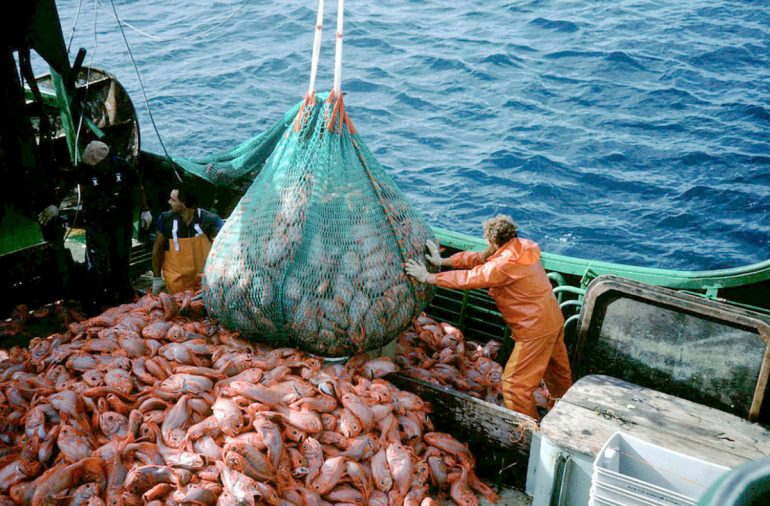
Good news in the Mediterranean and Black Sea: according to new FAO-GFCM report, for the first time over the past years, the pressure has reduced raising hopes for fisheries. The percentage of overexploited fish stocks decreased by 10%- from 88 percent in 2014 to 78%in 2016. More efforts are needed, however, to ensure long-term fish stock sustainability, warns The State of Mediterranean and Black Sea Fisheries.
This means more support for the small-scale fishing sector, which employs most fishers and causes least environmental damage; reducing bycatch and discards; and introducing more drastic measures such as significantly reducing fishing or establishing fisheries restricted areas (areas where fishing activities are regulated).
The latter is particularly needed to safeguard the most heavily fished species, such as European hake, which is fished nearly six times beyond its sustainable level.
“Fisheries provide the region with an important socio-economic balance and are essential to ending hunger and poverty,” said Abdellah Srour, GFCM Executive Secretary.
“Sustainability may be expensive in the short term, but there is nothing more expensive than running out of fish,” said Miguel Bernal, FAO Fishery Officer and one of the report’s coordinators.
Mediterranean and Black Sea fisheries are under threat in the long run because of the effects of increased pollution from human activities, habitat degradation, the introduction of non-indigenous species, overfishing and the impacts of climate-driven changes.
Across, the region, the ranking of capture fisheries production in 2014-2016 continues to be dominated by Turkey (321 800 tonnes and 26 percent of total landings compared to 31 percent in 2013), followed by Italy (185 300 tonnes and 16 percent, similar to the 2013 percentage). Algeria (96 300 tonnes and 8 percent) and Greece (65 700 tonnes and 5 percent) also maintain the same (2013) percentages in landing contribution. Both Tunisia (185 300 tonnes) and Croatia (74 400 tonnes) show an increase compared to 2013 (from 7 to 9 percent for Tunisia and from 3 to 6 percent for Croatia). Total landings for Spain (78 200 tonnes) decreased from 8.5 percent to 7 percent of the total).
Among subregions, the Black Sea continues to provide the largest contribution to capture fisheries production, with a 32 percent of the total, followed by the western Mediterranean (22 percent of total), the Adriatic Sea (16 percent), and the central and eastern Mediterranean (15 percent each).
Some sectors generate more discards than others – trawling, for example, accounts for over 40 percent in some areas, whilst small-scale fisheries tend to be below 10 percent.
According to the report, incidental catches of vulnerable species are relatively rare events but are important because the species caught are of conservation concern. Among the vulnerable species most affected by incidental catches, are sea turtles (which appear in 8 out 10 of reports on incidental catches) followed by sharks, rays, and skates (appearing in 2 out of 10 reports on incidental catches each). Seabirds and marine mammals represent the lowest number of incidental catches, and are only occasionally included on incidental catches reports.
The report was launched on the occasion of the first GFCM Forum on Fisheries Science (Fish Forum 2018) organized at the FAO headquarters from 10th to 14th December 2018, as a recognition of the instrumental role of science in improving knowledge towards sustainable fisheries management.
00weechttps://weecnetwork.staging.19.coop/wp-content/uploads/2025/01/WEEC-Logo_200.pngweec2018-12-19 13:32:102018-12-19 13:32:10Hopes for Mediterranean and Black Sea fisheries
The XII National Conference of Environmental Sociologists in Italy, titled “Politics, Ecology and Society in the Anthropocene”, will be held on 26 and 27 September 2019, at the University of Salerno.
The Conference will be focused on the organization and reorganization of political, social, and ecological relations within the era that some scholars define as Anthropocene.
At the same time, this concept will be critically considered. On the one hand, it is recognized the degree of uncertainty that the general scientific debate highlights about this concept, developing a deep critique. On the other, it is highlighted the geographical, social and political homogeneity implied by this concept, as it places in the background the inequalities which characterize the socio-ecological relations over time – for example those linked to colonial and neocolonial, gender, and human and extra-human natures relations.
The concept of Anthropocene marks a field in movement, both from the point of view of the quality of socio-ecological relationships, and from the point of view of the epistemological and methodological aspects that drive research and knowledge production.
This turbulence is theoretically and empirically important, involving the intertwining of
politics, society and ecology in all the areas of socio-ecological relationships that are
considered relevant.
On this basis and in consideration of the multiplicity of approaches and research fields that traditionally characterize Environmental Sociology in Italy, a call for panels is opened, in order to organize the Conference in a series of sessions.
We invite all interested scholars to submit proposals for thematic sessions by 25 January 2019, specifying the following contents:
1) Panel title; 2) name or names of organizers; 3) three keywords; 4) an abstract to present panel aims (max 3,000 characters).
Proposals can be submitted in Italian, Spanish, or English, sending them to the following e-mail address: 12congresso.sociologiambiente@gmail.com.
Panel proposals will be evaluated and published by 5 February 2019, followed by a call for Conference presentations until submission deadline (25 April 2019). Presentations (title, proponents, 3 keywords, and a 3,000 characters abstract) will be sent both to the Conference address (12congresso.sociologiambiente@gmail.com) and the thematic session organizers. Accepted presentations will be notified by 15 May 2019. Conference program will be published by 30 May 2019.
Conference Scientific committee: Alfredo Agustoni, Aurelio Angelini, Marco Castrignanò, Enrico Ercole, Alfredo Mela, Giorgio Osti, Luigi Pellizzoni, Lauro Struffi, Enrico M. Tacchi, Anna Maria Zaccaria. Local Conference organizer: Gennaro Avallone
00weechttps://weecnetwork.staging.19.coop/wp-content/uploads/2025/01/WEEC-Logo_200.pngweec2018-12-19 13:17:452018-12-19 13:17:45Politics, Ecology and Society in the Anthropocene
Two days and five sessions of work were held with scientists and journalists to discuss the energy transition of the Mediterranean region, the circular economy and combatting plastic pollution. The program has been completed with two sessions dedicated to initiatives and tools for the journalistic profession, and to debating and exchanging experiences between professionals.
Around 50 environmental journalists and scientists from 20 countries in the Mediterranean basin, researchers, experts, NGOs, and international institutions attended the 3rd Meeting of Environmental Journalists of Mediterranean News Agencies, held at the UfM headquarters, in Barcelona, Spain (13th and 14th Novamber).
The event has been promoted by the Union for the Mediterranean (UfM) and the International Union for the Conservation of Nature (IUCN), in collaboration with the Alliance of Mediterranean News Agencies (AMAN) and EFEverde of the EFE Agency.
As part of the activities, journalists, scientists and experts paid a visit to the Switchmed Connect’s exhibition on “The Circular Economy in the Mediterranean region”. The exhibition showcased impactful stories from the SwitchMed programme, an initiative that supports and connects stakeholders to scale-up social and eco innovations in the Mediterranean.
“Our ocean plays such a critical role in our economy, and the Mediterranean is both a tourism and conservation hotspot filled with rich biodiversity. We cannot afford to continue turning our ocean into a vast, contaminated plastic soup”, highlighted Antonio Troya, director of the IUCN Centre for Mediterranean Cooperation.
“The Mediterranean is one of the most vulnerable regions in the world to the effects of climate change and environmental degradation. Promoting a collective response from the countries of the region to these challenges is at the heart of the Union for the Mediterranean’s mandate”, said Jorge Borrego, UfM Senior Deputy Secretary-General for Energy and Climate Action. George Penintaex, Secretary General of the Alliance of Mediterranean News Agencies (AMAN) and Arturo Larena, Director of EFE Verde at the EFE News Agency, also addressed the audience at the opening session.
The leit motiv across all the work sessions was that of plastics and microplastics in the sea, the tip of an iceberg that everyone sees and whose consequences are easily understood even by the general public.
The challenge of the energy transition, focusing on the role of renewable resources and energy efficiency, also for its social consequences, was the theme of the first and second round table discussions. Among the best practices presented: the Plastic Buster project that analyzes how waste affects marine life, the film A plastic Ocean. On the subject of microplastics Marie-Aude Sevin, IUCN expert on the marine program dedicated to plastics presented the site marplasticcs.org in which are gathered resources, best practices, events and other useful information on the topic of microplastics. Lucile Courtial of the Prince Albert Foundation in Monaco presented Beyond Plastic Med, a network of stakeholders connected with the objective of collecting data and giving concrete and sustainable solutions to the problem of marine pollution.
The meeting was also an opportunity to compare policy-makers, consumers and the plastics industry and to present useful initiatives and tools for disseminators and journalists on the issues of pollution and science. For example, Patrick Wegerdt of the European Commission DG Environment pointed out that we are moving towards a 100% recyclable plastic and that 50% of waste at sea is made up of disposable plastic objects. The video “Are you eating plastic for dinner?” can be an interesting example of how plastic negatively affects our lives and our health. How to build a society without plastic? From this provocative question Jesus Iglesisas (Ecopreneurs for the Climate) started to explain how the problem of plastic is above all social “the alternatives exist – he said – but we must start from a radical change of habits” in which the key words are inclusion, cooperation, sustainability. The climateinnovation.city site presents events, actors and workers in this direction.
This initiative wants to establish a network of communicators and journalists, a meeting point where to exchange opinions and discussions. In addition, this event facilitates direct access to important sources of environmental information in both scientific and political areas, as well as aspects of management.
The two previous meetings in Málaga (2015) and Marrakech (2016) enabled the consolidation of this network of communicators, and resulted in several important outcomes including; the publication titled “A journalist’s guide on environmental information”, the launch of the MAP Ecology section as part of the Moroccan News Agency, and the creation of the online platform medgreenjournalism.net to foster networking of environmental journalists across the Mediterranean.
00weechttps://weecnetwork.staging.19.coop/wp-content/uploads/2025/01/WEEC-Logo_200.pngweec2018-11-30 16:53:322018-11-30 16:53:32Microplastics and circular economy, the challanges of the Mediterranean media
For more than two decades, Chile’s indigenous Diaguita Huascoaltinos have faced the powerful extractive model that has emerged in Chile. Since 2000, this community has resisted attempts to locate Pascua Lama, a Chile-Argentina binational mining project, the Canadian gold company Barrick Glod Corporation. This project was initially approved in 2000, following 10 years of exploration.
Highly contested because of the multiple impacts on the region, especially on the glaciers and being located on usurped territories in the Diaguita Huascoaltina community, this project provoked one of the longest socio-ecological conflicts in Chile. The construction of the mine was initiated in 2010, but the project had to face a determined social opposition and legal recourse accusing it of irreparable environmental damage. These struggles have borne fruit. The activities of the mine had to be paralyzed in 2013. And finally, in October 2018, the Environmental Court of Antofagasta region where the project is located, decreed the definitive closure of Pascua Lama.
The territory has, however, been heavily affected by all these years of mining activity, the habitat of several species, damaged and rivers, contaminated by acidic waters. As well, threats to the territory continue: another mega mining project in Canada, Nueva Union (copper, gold and molybdenum), resulting from the pooling of the Relincho and El Morro mining projects of the Canadian Teck and Goldcorp, has begun its Exploration in the Indigenous Conservation Territory, which is already having impacts on the Cordillera Ecosystem and the flora and fauna, protected by the Diaguita Huascoaltina community. The intended life of this project is 38 years, with the possibility of expansion. The asymmetrical struggle for the defense of the territory continues to face this new gigantic mining project. Event co-organized by Centr’ERE – Center for Research and Education and Training related to the environment and eco-citizenship of the University of Quebec in Montreal and CDHAL- Center for Human Rights in Latin America, November 27th.
00weechttps://weecnetwork.staging.19.coop/wp-content/uploads/2025/01/WEEC-Logo_200.pngweec2018-11-29 11:03:322018-11-29 11:03:32Conference: Indigenous Territories and Expansion of Extractivism
In times of shortage of resources and competing extra-curricular activities in formal education, a joint effort of students, teachers, parents, school authorities, the general public and other actors is mandatory to allow mountain-oriented Education (MoE) develop its unique potential. Together with all other project partners who supported the work, the Department of Geography of the University of Innsbruck presents the elaboration of the three subreports. You will find information on the status quo of the implementation of MoE in the five EU Alpine states, on opportunities and shortcomings of established good practice examples and the conclusions and recommendations for a better integration of formal and non-formal environmental education by elicitating both youth, experts, educators, practitioners and official documents for the realm of YOUrALPS project.
Take a detailed look at the main results of work package 2 of the currently running Interreg Alpine Space Project YOUrALPS here for report 1: “Collection and analysis of existing Mountain-oriented education (MoE) practices and approaches”,
and here for report 2: “Political Strategies on Education for sustainable development and Mountain-oriented Education”.
The report 3: “Mountain-oriented education (MoE) implementation approaches & challenges” is here.
00weechttps://weecnetwork.staging.19.coop/wp-content/uploads/2025/01/WEEC-Logo_200.pngweec2018-11-27 16:41:302018-11-27 16:41:30Three reports for alpine education
Today, November 27, is celebrated as World Handprint Day gathering all the positive actions taken by the people around the globe towards sustainability. This day highlights the importance of various positive actions taken by an individual and community, together to set a long journey towards sustainability. The second ‘Global Handprint Day’ is be organized at CEE Ahmedabad on November 27, 2018.
On the day, Handprint actions of the schools, teachers and students across the country are recognized at national level. The event sees felicitation of ‘Paryavaran Mitra Puraskar’ exemplar of 2018. ‘Paryavaran Mitra Puraskar’ provides a rich platform for schools across the country to share and learn from the hands on experiences in environment education from each other.
The Handprint was launched by Centre for Environment Education (CEE) on 27th November, 2007 at UNESCO’s 4th International Conference on Environmental Education held at Ahmedabad, India. The concept emerged from one of the CEE’s Programmes- Environmental Education in Schools of Andhra Pradesh (EESAP 2000 to 2008). Handprint represents positive actions taken by the people around the globe towards sustainability.
00weechttps://weecnetwork.staging.19.coop/wp-content/uploads/2025/01/WEEC-Logo_200.pngweec2018-11-27 16:25:522018-11-27 16:25:52The World Handprint Day celebrates positive actions
Now is online the Issue 14 of the journal Environmental Education: Regards – Research – Reflections. It has finally been added to the OpenEdition Journals Portal | Revues.org. This issue is dedicated to art and environmental education.
Now It is available the issue 14-1 here. In the next weeks also the volume 14-2 will be accessible.
00weechttps://weecnetwork.staging.19.coop/wp-content/uploads/2025/01/WEEC-Logo_200.pngweec2018-11-27 15:59:512018-11-27 15:59:51The new issue of the Journal of EE is now online
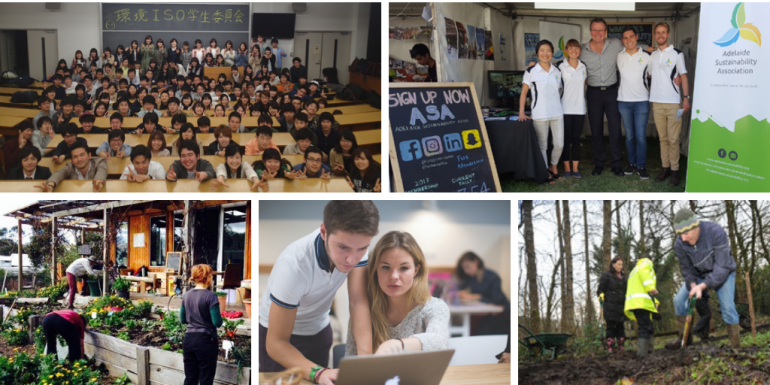 The International Green Gown Awards are supported by UN Environment and are open to any university or college across the world.
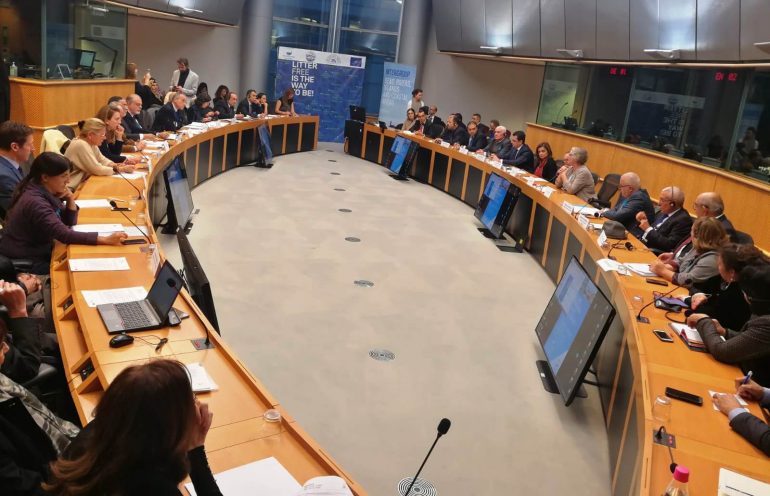 On the 21st of November the Seas, Rivers, Islands and Coastal Areas Intergroup (Searica) met with MIO-ECSDE and the informal Circle of Mediterranean Parliamentarians for Sustainable Development (COMPSUD) at the European Parliament in Brussels. This was a unique occasion where Members of the European Parliament and Members of Parliament of non-EU countries came together with marine litter experts, environmental NGOs, journalists and other key stakeholders to explore the next steps in achieving a litter-free Mediterranean Sea. The event was attended by some 65 participants from 20 or so countries.
  For a long time we have known that plastic in the ocean is a problem; we know the causes of it deleterious effects on the marine environment.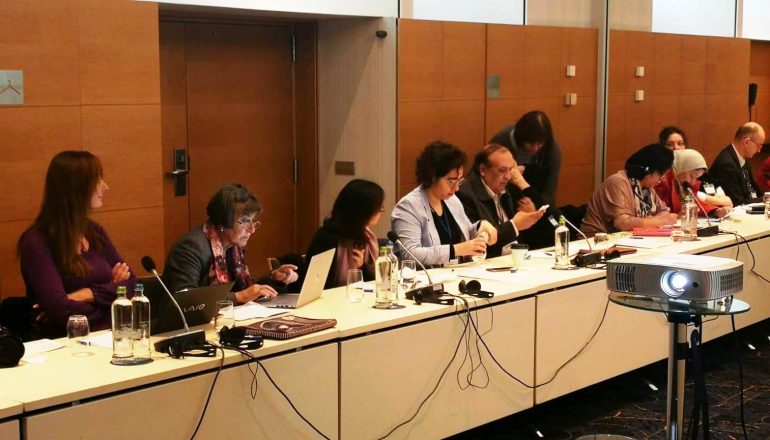
 Fantastique. C’est le premier mot qui nous vient à l’esprit après ce séjour de 5 jours basé autour de l’environnement mais aussi autour du partage, de l’échange et de la rencontre, au pays du charbon, la Pologne, ce qui est par ailleurs paradoxal dans le contexte de notre venue, et avec comme événement moteur, la COP24, conférence internationale sur le climat. Organisé par l’Alliance pour l’éducation à la citoyenneté planétaire (AECP), ce voyage a regroupé une soixantaine de personnes venant d’Europe, du Québec et d’Afrique francophone, qui ont été sélectionnées pour leur implication dans l’éducation au développement durable dans leur école ou association.
 Good news in the Mediterranean and Black Sea: according to
  The XII National Conference of Environmental Sociologists in Italy, titled “Politics, Ecology and Society in the Anthropocene”, will be held on 26 and 27 September 2019, at the University of Salerno.
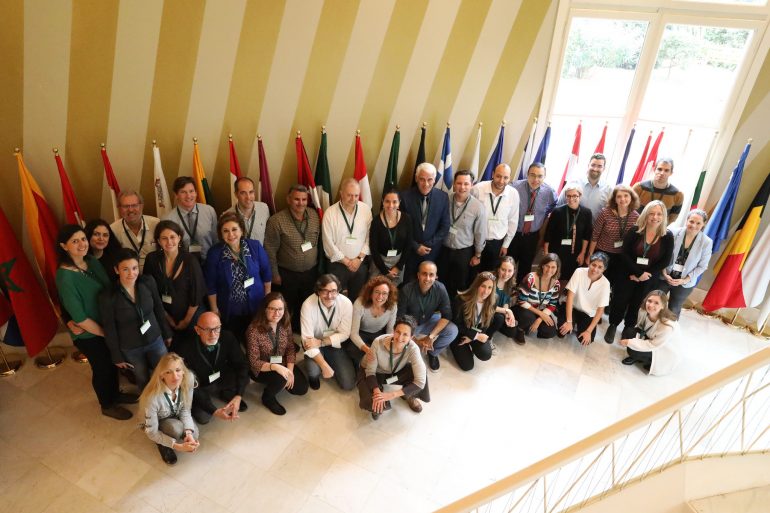 Two days and five sessions of work were held with scientists and journalists to discuss the energy transition of the Mediterranean region, the circular economy and combatting plastic pollution. The program has been completed with two sessions dedicated to initiatives and tools for the journalistic profession, and to debating and exchanging experiences between professionals.
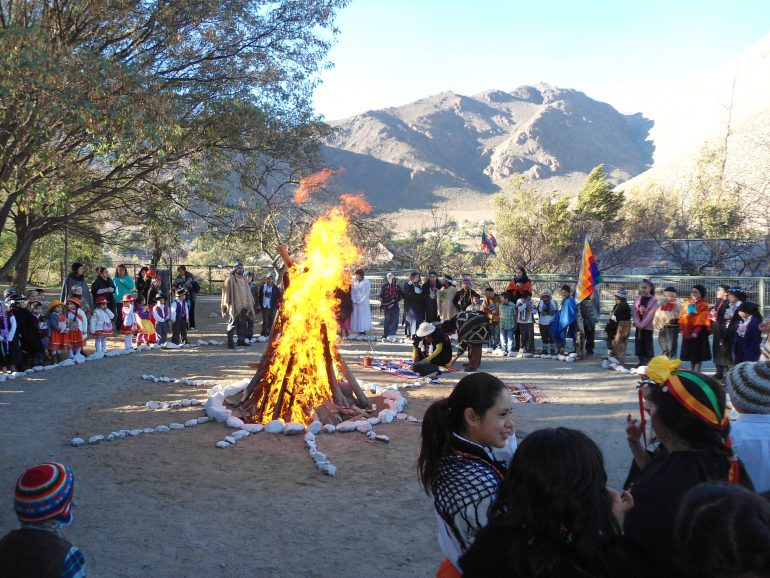 For more than two decades, Chile’s indigenous Diaguita Huascoaltinos have faced the powerful extractive model that has emerged in Chile. Since 2000, this community has resisted attempts to locate Pascua Lama, a Chile-Argentina binational mining project, the Canadian gold company Barrick Glod Corporation. This project was initially approved in 2000, following 10 years of exploration.
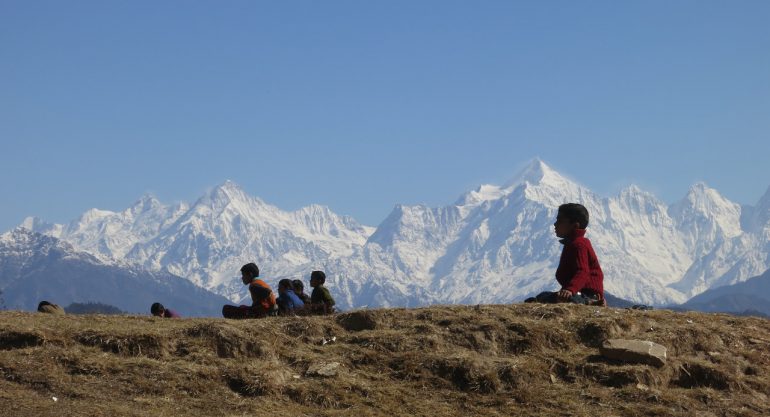 In times of shortage of resources and competing extra-curricular activities in formal education, a joint effort of students, teachers, parents, school authorities, the general public and other actors is mandatory to allow mountain-oriented Education (MoE) develop its unique potential. Together with all other project partners who supported the work, the Department of Geography of the University of Innsbruck presents the elaboration of the three subreports. You will find information on the status quo of the implementation of MoE in the five EU Alpine states, on opportunities and shortcomings of established good practice examples and the conclusions and recommendations for a better integration of formal and non-formal environmental education by elicitating both youth, experts, educators, practitioners and official documents for the realm of YOUrALPS project.
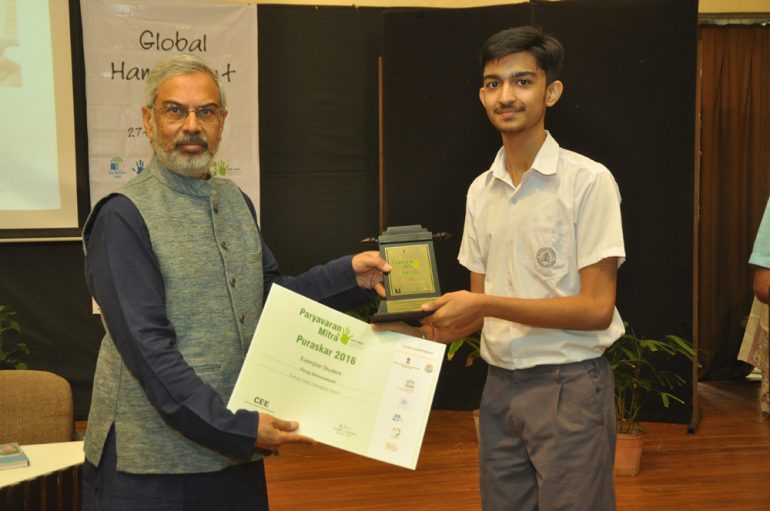 Today, November 27, is celebrated as
  Now is online the Issue 14 of the journal Environmental Education: Regards – Research – Reflections. It has finally been added to the OpenEdition Journals Portal | Revues.org. This issue is dedicated to art and environmental education.