/in News/di /1 commento

Australia, call for contributions AAEE conference 2018

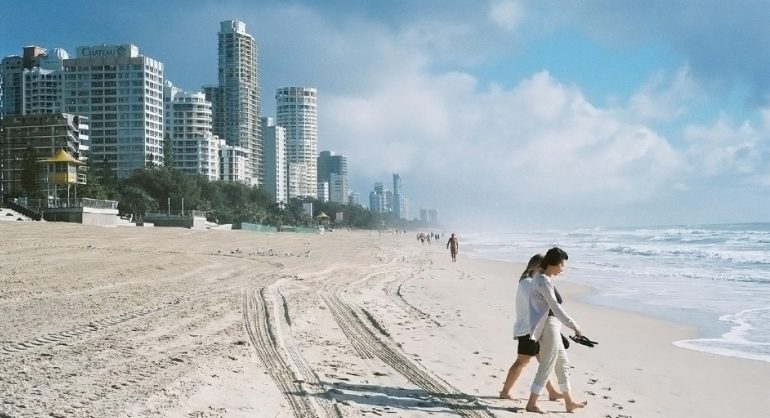
The Australian Association for Environmental Education (AAEE) and the 2018 AAEE Conference Organising Group invite you in Australia, to the Gold Coast, between 21-25 October 2018 for the 20th Biennial Conference and 3rd Research Symposium. The Call for Contributions is open here.

The Conference theme of Creating Capacity for Change builds on AAEE’s strong tradition of sharing the latest in environmental education theory, policy and practice to support excellent environmental and sustainability education and build capacity for change in children, young people and adults.
The Conference will discuss the ways in which environmental and sustainability educators can respond to the environmental, social and political challenges and how to build – in ourselves and in others – the capacity for change.
With an already strong base of environmental and sustainability education participants, this conference continues to share and build knowledge and capacity through a multi-disciplinary, multi- sector approach that encourages and enables a diversity of insights and practices from different sectors to be shared and discussed. The aim is also to promote the key role played by environmental and sustainability education in developing and empowering individuals, communities and societies.

The Conference program, which includes social activities such as the welcome reception and conference dinner, will provide an ideal opportunity to network with colleagues, old and new.
«We invite you to join us on this journey of learning, sharing, collaborating and showcasing the best that environmental and sustainability education has to offer» say Jo Ferreira and Cam Mackenzie, Conference Co-Convenors and organisers of the 8WEEC congress in 2011.

/in News/di /1 commento

Sustainable practices in 30 Islamic finance institutions

The Responsible Finance & Investment Summit 2018 concluded with the release by the RFI Foundation of a report about Islamic financial institutions’ perceptions and actions on their environmental and social impacts. «The report includes a detailed survey of over 30 Islamic financial institutions’ sustainable finance practices – says Blake Goud, CEO, RFI Foundation – The survey finds growing awareness that Islamic finance has an ethical mandate to address social and environmental impacts linked to the activities they finance. The results of a survey, coupled with an examination of more than 30 case studies from Islamic finance and within Muslim majority countries finds that key challenges on implementation, building internal and external stakeholder awareness about the financial impact of environmental and social issues, and highlight the need for greater capacity building within the Islamic finance ecosystem».

The survey results are incorporated into some recommendations and conclusions including:
– Development well-structured strategies and enhanced policies for environmental and social issues within Islamic financial institutions including incentive programs tied to social and environmental outcomes;
– Greater consideration of how awqaf (perpetual endowments) can be mobilized in support of sustainable infrastructure, education, healthcare, food security, renewable energy, and water management, among others
– Training employees and management in Islamic financial institutions to enhance their focus on environmental and social issues in their business decision-making process, including a more proactive role for Shari’ah scholars on sustainable business practices.

/in News/di /Lascia un commento

Quebec coalition for environmental education and ecocitizenship

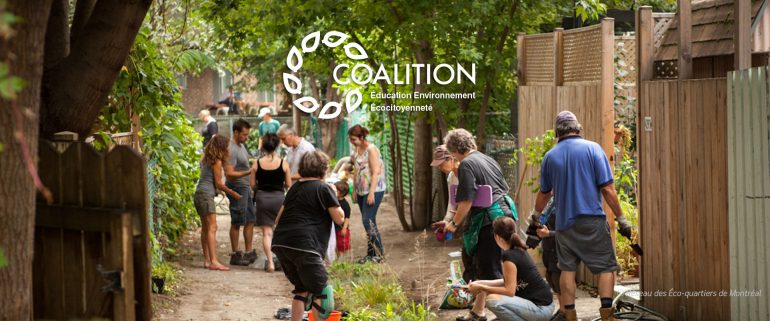
The Coalition Education – Environment – Ecocitizenship is a group of organizations and individuals mobilized to stimulate the institutionalization and the full deployment of an environmental and eco-citizenship education in the Quebec society, both in communities formal education than in non-formal educational contexts.
This strategy is the result of the work of a collective of actors from 57 institutions and organizations of our educational society, aware of the need to vigorously promote the role of environmental education and eco-citizenship in Quebec.
The Coalition was structured within the framework of the work of a partnership platform set up by the research center in education and training related to the environment and eco-citizenship of UQAM. In order to contribute to the vast socio-ecological transformation that is required in our society, the Coalition pursues a twofold mission:
– Promote the advancement of environmental education and eco-citizenship in Quebec by bringing together the actors of the various sectors concerned and by democratically developing a concerted action to this end.
– Promoting the adoption and implementation of a Québec Environmental Education Strategy in the public space and with the various decision-making bodies in the fields of education, the environment and associated fields and eco-citizenship, which is reflected in public policy elements, accompanied by structuring action plans.

Given the collective and political nature of the mission, objectives and actions of the Coalition, the following principles must be respected:
– Adopt a democratic, coherent and concerted mode of operation; in this sense, any initiative taken on behalf of the Coalition should be shared, discussed and validated by the Coordination Committee before being carried out;
– Recognize and respect the right of dissent or reserve for certain actions or speeches that will not result in consensus; each initiative of the Coalition will result in a consultation of members to this effect;
– When speaking publicly on behalf of the Coalition, ensure that the statements in the Strategy are properly expressed, and that the Coalition’s approach is not partisan.

Statuts_Coalition Éducation Environnement Ecocitoyenneté

Stratégie (Détaillée) 2 avril 2018

Stratégie (Sommaire) 2 avril 2018

/in News/di /Lascia un commento

Madrid, Reinventing the horizon: science and art in the face of climate change

Reinventing the horizon, that’s the title of the international symposium organised in Madrid,  April 18-19 by the Fundacion Ramon Areces .
A symposium to connect together science and art in a new interpretation of climate change. In the scenario of environmental destruction and uncertainty, it is essential to reinvent a horizon of hope. Humanity is now entering a new unwanted geological period – the Anthropocene – which is characterized by the fact that human beings are changing the vital cycle of the planet, altering its natural variability. Our species has become a force capable of changing some ecological processes, in an escalation of the primacy of cultural evolution over biological evolution.

Reinventing the horizon supposes co-evolving with nature and cooperating in terms of equity with the rest of the human species. But also recognizing ourselves as beings who dream, who imagine a sustainable future, capable of devising and carrying out the great revolution of change towards sustainability. We need ways of life in which the future is seen as a space of good living for all human species and respect for the rest of the world both living and no living. We need a hope that is not simply empty optimism but a commitment to the enormous creative capacity of the human being. A capacity that, as President Kennedy once said, is able to face every challenge.

The responsibility of scientists and artists is to generate new models of life in line with the Sustainable Development Goals promulgated by the United Nations. Thera are numerous and simultaneous drivers of global change: global warming, transformations in land uses, overexploitation of resources …, which has brought with it the destruction of ecosystems and the loss of biodiversity.

It becomes fundamental to seek solutions and creative proposals that allow us to glimpse new ways of organizing personal and collective life, respectful of the ecological integrity, the well-being of humanity as a whole and the dignity of every human being as unique and unrepeatable.

Among these problems, we have focused on human-induced climate change by its status as an epitome that synthesizes and expresses the irreversibility of some of these environmental phenomena of anthropocentric origin.  We have already started non-return processes, such as global warming, the melting of the Arctic, the rise in sea level … Processes that demand decisive action by the governments of the world to tackle the causes that generate them, mitigating its consequences and creating mechanisms of adaptation to the new historical circumstances that, in the present and in the immediate future, humanity must face.

What kind of knowledge is needed to face the enormous challenges we face? How to interpret the complex reality of a challenge that is new in the history of humanity? What role does Science play? And the Art, what clues can it give us?

With this philosophy, the Symposium wants to create a transdisciplinary space in which scientific analysis and artistic considerations converge will be able to articulate information, dialogue, imagination and creativity that are needed for the change, from the confidence in the innovative capacity of the human being. According to the words of the frontrunners, the future is on the way. Our responsibility is enormous. We are the first generation that is aware of this problem and perhaps the last one with capacity and time to solve it.

Mario Salomone, Secretary General of the WEEC Network, speaks on Thursday, 19. the title of his speech is Imagination and creativity in the Anthropocene: the role of education and art

Online inscription


/in News/di /Lascia un commento

Marseille, Global Responsibility, now

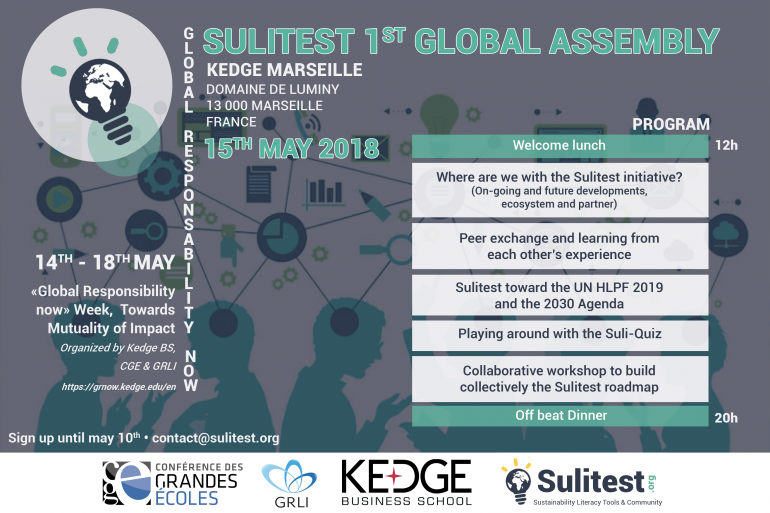
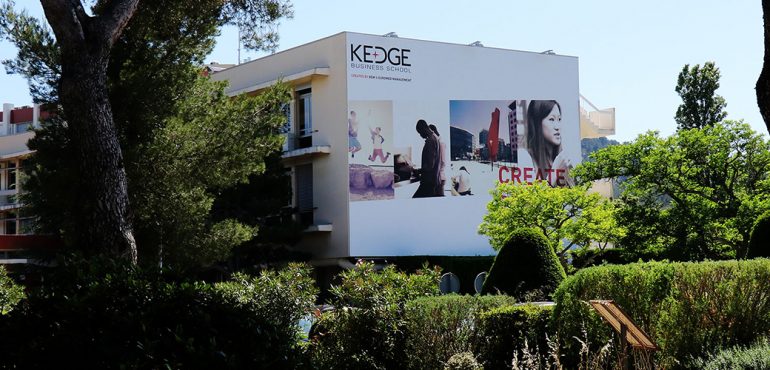
Global Responsibility, now ” is organized from 14-18 May 2018, by Kedge Business School in collaboration with the Globally Responsible Leadership Initiative (GRLI) and the Conférence des Grandes Ecoles (CGE) in Marseille, France. During this week, networks and initiatives from around the globe – local student organizations, regional interest groups, international partnerships and UN-level initiatives – will convene to move towards accelerating systemic impact.

For many years, the responsibility of higher education & learning institutions for building a sustainable world has been highlighted. All over the world, faculty, administrators, learning facilitators and students have developed initiatives at local, regional and international levels to help transform society, business and education. These initiatives have generated positive energy and goodwill, inspired further actions and innovations and led to undeniable progress. However the collective impact of these initiatives still somehow falls short of the deep transformation required at individual and collective level to make the change sustainable.

Networks and initiatives from around the globe, with representation at various levels – local student organisations, regional interest groups, international partnerships and UN-level initiatives – will convene 14-18 May and move towards accelerating systemic impact. The event will also work to strengthen and accelerate the global partnership for sustainable development with a specific emphasis on SDG 17.

The Sulitest Conference (15th May) is one of the highlights scheduled during the first days of the event. It’s focus is to gather for the first time all major players of the Sulitest community: university full players, partners, companies, regional chapters (RNEC), our advisory board and administrative council.

You can register here

Venues

/in News/di /Lascia un commento

Two Post-Doctoral Research Associate Positions

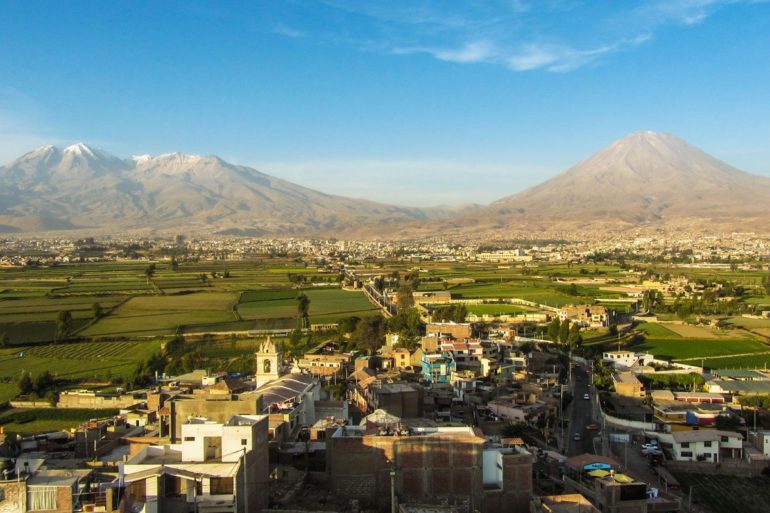
The Human Dimensions Lab, Department of Forestry and the Natural Resources Purdue University, West Lafayette, Indiana are looking for  two post-doctoral research associates to join two collaborative, interdisciplinary, international projects. Both projects are part of a large initiative, Arequipa Nexus Institute for Food, Energy, Water, and the Environment (the Nexus Institute) and both positions will involve coordination and collaboration with selected faculty and graduate students at the National University of Saint Augustine (UNSA), our partner institution in Arequipa, Peru.
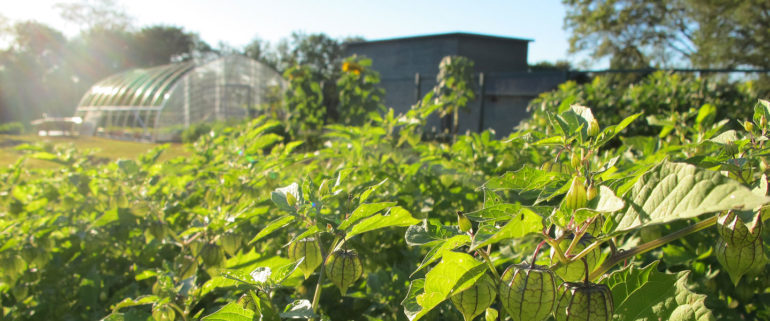
Project 1: Equitable Co-existence of Agriculture, Mining, and Regional Development in Arequipa: Realities, Barriers, and Opportunities.
Project 2: A Framework for Sustainable Water Management in the Arequipa Region

Specific responsibilities: managing day-to-day communication and relationship between research team and partners in Peru; organizing and coordinating qualitative and quantitative data collection in the field (as soon as summer 2018); analyzing qualitative and quantitative data; co-developing manuscripts and other research and engagement products; participating in other research-related project activities.
Required qualifications: completed a PhD in a relevant field by the start date; high Spanish-language competency, particularly in spoken Spanish; interest and willingness to travel to the Arequipa region for field work during an extended period of time (e.g., one or more months).
Strongly preferred qualifications: experience with interview and survey research; familiarity and/or experience with water governance and smallholder farmer related research; experience with statistical/econometric analyses; field experience in the rural Global South.

Both post-doctoral research associate positions are for two years, given satisfactory progress in the first year. The annual salary is $47,500 plus benefits, and they provide funds to cover relevant travel expenses to research sites and conferences. The selected post-doctoral research associates will also have opportunities for professional development on and off-campus. Preferred start date is April 16, 2018, but may be negotiated upon request. Review of applications will start on March 19, 2018 and will continue until the position is filled. Women and underrepresented minorities are strongly encouraged to apply.

To apply: submit the following in a single PDF file to Dr. Zhao Ma via email (zhaoma@purdue.edu): cover letter describing your relevant experience and scholarly interests with a clear indication of your preference between the two projects; curriculum vitae; two examples of relevant publications or writing samples; and contact information of three references. Please use the following subject for your email “Nexus post-doc application for position X_First Name Last Name.

/in News/di /Lascia un commento

Campus, casa, cidade: laboratories of change

The University of Coruña and Alcoa foundation organise the Educating for Sustainability Course, under the title Campus, casa, cidade: laboratorios do cambio.
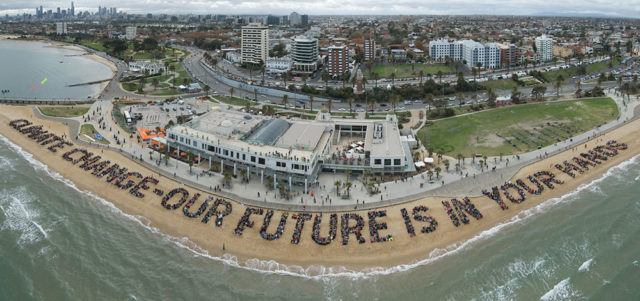
This project has the objective to advance a community and university formation, share basic concepts of environmental and social sustainability and develop a capacity to act on priority issues.
The program includes lectures, theoretical-practical training sessions, field work and monitored and autonomous field works. It combines individual and group work, in the use of apartment, at the campus or at the campus as places of study and experimentation.
With a calendar distributed from March to June, you can choose the topic, place and time of your participation.

Contamination, waste, climate change, resources, health … activities include the calculation of the ecological footprint, the water footprint, noise maps and water consumption, audits of water and energy consumption in the home, and all through the Use of ICTs as tools for participatory georeferencing and networking

Read the program here

Mario Salomone, Secretery General of the  WEEC (World Environmental Education Congress) will be present with a conference on March 13th, h 17:00, Faculty of Educational Science, with a speech focus on the education for sustainability.

campuscasacidade_triptico

/in News/di /4 commenti

RESCLIMA international seminar: Education for climate change

The 4th RESCLIMA international seminar: Education for climate change in the educational system and the 2nd meeting of the Rede internaional de pesquisadores em educação ambiental e justiça climática (REAJA) will take place in Santiago de Compostela (Spain) on October 26 and 27, 2018.

The registration period is open, as well as for the submission of proposals to present communications and posters, whose deadline is the next March 15.

The climate change is the big challenge of the XXI century. Urge to be aware of human vulnerability this threat, as well as accepting the biggest responsibility of the companies that most contributed emissions of greenhouse gas (GHG), which contrasts with the lower capacity of the answer to the effects of an out-of-control climate. Alarms in the scientific community warn that we have little time to react. In a few years there will have to be a major social, economic and energy transformation to avoid the collapse of civilization as we know it.
At this crossroads, the slowness of climate policies are surprising. Climate changes occupy a marginal place in the public area and are far from being a priority issue for decision-makers or the general population.
The fundamental objective of educational and communication programs in the next decade should be to convert the climate changes into a relevant and significant problem.

The RESCLIMA project addresses the relationship between science and popular culture in social representations of climate change: contributions to education and communication on climate risks. It explores the complex logic involved in the construction of popular knowledge and the role that scientific culture plays in popular thinking on climate change. RESCLIMA responds to the need for greater understanding of the ‘social factor’ in climate change, to better inform the design of policies, programmes and educational/communicational resources regarding general and specific socio-environmental issues. This web site is designed to facilitate public interface with the project, to make known its most prominent results from the very earliest phases, and to generate multi-directional information pathways with other researchers and with society in general.

Read the program in Spanish

Read the program in Portuguese

/in News/di /Lascia un commento

The Walking Curriculum, a new tool for Environmental Education

The Walking Curriculum is an innovative interdisciplinary resource for educators K-12 who want to take student learning outside school walls. Walking Curriculum activities can be used in any context to develop students’ Sense of Place and to enrich their understanding of curricular topics. Based on principles of Imaginative Ecological Education, the 60 easy-to-use walking-focused activities in this resource are designed to engage students’ emotions and imaginations with their local natural and cultural communities, to broaden their awareness of the particularities of Place, and to evoke their sense of wonder in learning. Through walking we can enrich our students’ sense-making abilities, we can enhance their very being and, as we go, we can seed with meaning the contexts in which they spend so many hours learning.

In the 60 walks described in this resource you will see a variety of themes, perspectives, and motivations. For example, students may be asked to find different things (such as shapes, spaces or lines, evidence of growth or change, “the best” hiding places), to change perspectives (imagine being a beetle, a detective, or a visitor from outer space), to encounter the world differently (emphasizing one sense over another or moving through space differently), to seek evidence of human-nature relationships, to identify patterns, or to locate natural or human systems in action. In all cases, the intent is to broaden their  awareness of the particularities of Place. The activities are designed to: engage the body, emotions, and imagination in ways that can increase students’ familiarity with the local natural context in which they go to school; increase students’ attention to detail and their attunement with Place; connect Place-based learning activities with cross-curricular goals; and serve as examples for your own, Place-inspired teaching ideas.

Overview: Introductory chapters provide a rationale for the Walking Curriculum and describe the underlying educational philosophy it reflects. Detail is provided so you can prepare to use the resource as well as extend and enrich your students’ learning. The walks themselves are divided into three sets: The 30 walks are paired with guiding questions and an imaginative activity or prompt to engage students’ emotions. These are the easiest walks for you to employ; they require little direct teaching or guidance ahead of time. They are readily adaptable for students of all ages. The second set contains 15 walks requiring some direct instruction and guidance; they will work better if they are properly introduced and contextualized. The final set of 15 walks is specifically designed for High School students and reflects interdisciplinary curricular outcomes.

Where To Get The Walking Curriculum

Get a paperback/ebook HERE in USA or HERE in the UK. Ebooks available in CANADA HERE. (Other markets available, so just search in Amazon) NOTE: All proceeds from sales support imaginED—a blog for imaginative educators by imaginative educators (free for all teachers)

About The Author

Dr. Gillian Judson is a member of the Faculty of Education at Simon Fraser University in B.C., Canada, one of the directors of the Imaginative Education Research Group (IERG), and coordinator of Imaginative Ecological Education initiatives. Her work is primarily concerned with the role of imagination in learning (PreK-Higher Education). As an educational consultant she explores imagination in the context of ecological education, educational program design, higher education, educational change, educational leadership, and Museum Education. She has written two books on Imaginative Ecological Education: Engaging Imagination In Ecological Education: Practical Strategies For Teaching (UBC Press; 2015) and A New Approach To Ecological Education: Engaging Students’ Imaginations In Their World (Peter Lang, 2010). Learn more about the Imaginative Ecological Education, or IEE, approach here.

/in News/di /Lascia un commento

Strategy for ESD, the commitment of Italian Institutions

by Patrizia Bonelli

The Italian Strategy for ESD was updated by the Ministry of Education in the Plan for Education to Sustainability on July the 28th 2017. The plan meets the goals of Agenda 2030 on sustainability.
Actually the road map towards the implementation of ESD in Italy has been long and difficult, marked by the following steps:
2009, 2010, 2014: Guide-Lines for Environmental Education
2015 Strategy for ESD law 221
2016 Agreement for PON (National Operative Program)
2015 Reform of school art.6 law107underlining the importance of: Knowledge and respect for environment Active & democratic citizenship
20/22 November 2016 States General – Paper of Rome
Signed by the Minister of Education & the Minister of Environment

18 July 2017 the Strategy presented to HLPF of UN by the Minister of Environment
28 July 2017 updating of Italian Strategy for ESD by the minister of Education in the Plan for Education to Sustainability
PON, National Operative Programme 2014/2020, for schools financed by Structural European funds is an important step but the most relevant is certainly the meeting of States General (Paper of Rome) which included scientific community, civil society, productive and economic world and Institutions. They agreed upon the Strategy for ESD for the implementation of agenda 2030 including strategies, projects, methods, actions. They identified priority areas in climate change, green economy, legality and environment protection.

The most important supporting principles of the paper of Rome take advantage from the existing opportunities as the alternation school –work to involve students from secondary schools in start-up and projects of research thanks to agreements between schools and public and private companies and enterprises.

The updating of the Strategy on ESD presented on the 28th of July 2017 is based on:
20 actions in 4 macro areas that intend to assure that all the buildings of the Ministry will be perfectly sustainable, from the central buildings to all the schools and Universities (5 million euro). Moreover, all the staff and teachers will be trained to promote awareness and ability in education for sustainability. For that purpose, 20 million euro are provided to introduce ESD in the schools of every order and level.
University and research are encouraged and economically supported in the offer of training, courses and graduation in ESD at any level. Scholarships for students’ mobility is financed by 65 Ph.D. grants coherent with the goals of agenda 2030.

Information and Communication will be widened not just to disseminate official positions and documents, but also good practices of single schools and research of universities for sustainability.

The institutional effort of the Ministry of Education (MIUR) has been always carried on in synergy with the Ministry of Environment (MATTM) but the Minister of Education is particularly involved in many strategic choices as Vector 4 of Agenda 2030 asks for “quality education as fundamental axis of SD being a crossing element for the change offering awareness and ability in communication”.
Knowledge is fundamental to fight poverty, to support economy, to promote an open and inclusive society.
Thanks to the Three-dimensional approach of ESD: environmental-social-economic, the challenge may turn into opportunities.
As a matter of fact, sustainability doesn’t relay just on education and didactics but also in the context and buildings.
Schools and Universities, as micro worlds, need to become completely sustainable, in the buildings themselves, to reduce energy and water consumption (production or storage), in the correct management of waste. Finally, ESD has to be included in programmes and curricula during all the scholastic years and beyond towards long life learning and no formal or informal education. Support, inclusion and empowering have to be ensured to no governmental organizations supplying no formal or informal education and methods of active education.
In the National Education System, ESD is not considered just a further discipline, it is included in the main teachings; in the Ministerial guide lines of 2015 each discipline is re-examined from the point of view of ESD.
Moreover, territorial agreements are strongly supported to involve Local Authorities and Civil Society to contribute to ESD programs with central administration and schools.
The plan behind the updating of the Strategy of ESD presented on the 28th July 2017, has been built thank to a working group of experts, ministerial directors and managers who worked to facilitate networking and collaboration among experts and educators in ESD for the promotion of actions and for the dissemination of knowledge and skills, lifestyles and models of sustainable production and consumption.
The working group made proposals for dissemination of ESD addressed to any level of education and upper education, actions for the development and support of research and university didactics sustainability oriented, the construction of informal education, the support of the good governance of administration.
The plan meets the goals of Agenda 2030 and make of sustainability the main axis which shapes all the policy of the Ministry of Education: from buildings, to teachers’ training, from the central administration to the access to the university, to didactics and research.
Moreover, the plan was informed by the supporting principles of ESD from UN documents to the Paper of Rome (States General). The Teaching coming from the Ministry of Environment that promoted The States General.

The Paper of Rome recommends to face ESD in an inter-disciplinary and trans-disciplinary optics, according to a systemic vision of knowledge. To use interactive, participative, innovative methodologies, requiring an emotional and behavioural involvement, besides rational thought. It proposes to ensure teachers and educators a kind of training, arousing also the ability to build interdisciplinary routes and innovative participative teaching methodologies, and also to assess their efficacy.
It also invites to involve in education and training a wide network of actors: educators, students, parents, associations, institutions, societies, universities, research teams, an alliance between school and out of school world and to enjoy the reciprocal benefits. In the end, the Paper of Rome advises and insists to start from a stronger link with the territory, through concrete experiences on the field and exploration of the places.