/in News/di /3 commenti

9th WEEC, My Experience
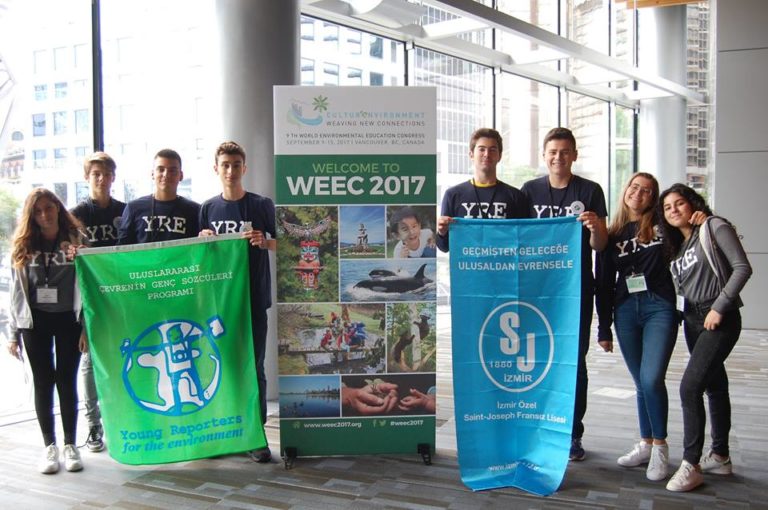
The Young Reporters for Environment, from the Izmir Saint-Joseph Fernch High School  (Turkey) attended the 9th WEEC in Vancouver (Canada) and now they present their experience.

This event is my most beautiful international experience. Conference was really good and I’m very proud of being one of the numbered young reporters. The conference went well and in the presentation moment we were in the focal point. Everybody liked our project and they supported us because everybody wants the youth understand the importance and work for environmental problems. And also everybody liked YRE and when we said there are more than 250.000 youngster like us in the 35 countries, all of our listeners were full of hope for the future of our world and they were pleased. After the presentation I met with lots of important lecturers, professors and nature scientist. Some ecological educators have very important projects for their countries.
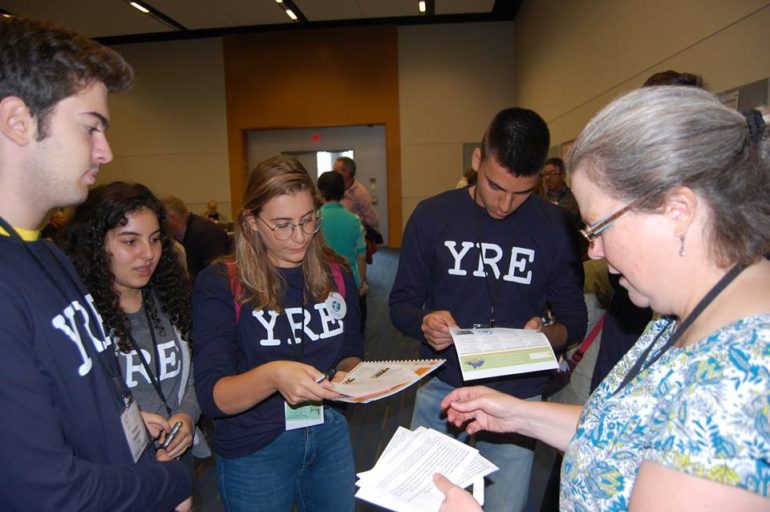
One of the most important lecturer invited us for a conference in Australia. She is the team leader for cleaning the most polluted area in Australia. I saw that every person in conference from any age from anywhere is curious about environmental problems, they do research and write some articles. That made me happy. The feeling of made our families proud, representing our school and our country is the most honorable thing in my life. I know that the future is on our hands. And if we behave responsibly to protect the environment and work for sustainable living conditions the world can be a better place to live.
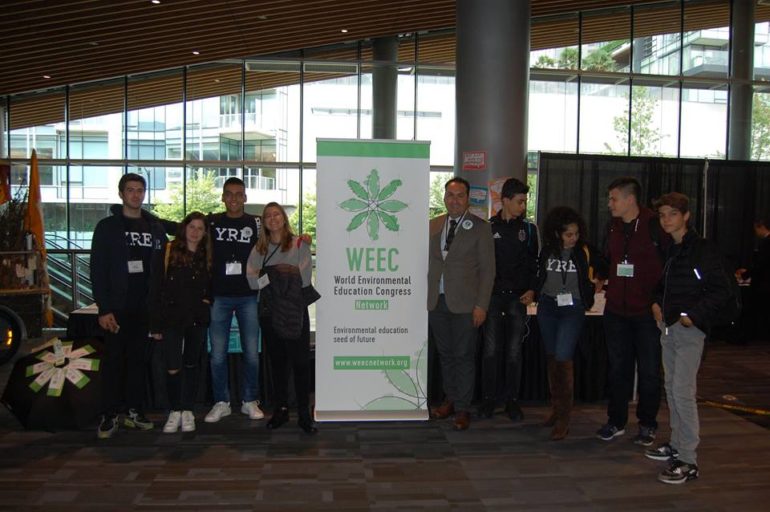
EFE KAAN OK

YRE STUDENT
From Izmir Saint-Joseph Fernch High School /TURKEY

/in News/di /2 commenti

Online Certificate on Education for Sustainable Development

The Earth Charter Center for Education for Sustainable Development offers an online certificate programme on education for sustainable development, in collaboration with the UN Mandated University for Peace.
This Online Certificate Diploma is designed to provide participants with the understanding, knowledge, and skills to integrate Education for Sustainable Development and Education for Global Citizenship into classrooms, schools, and curricula with depth and creativity. It contributes to the implementation of the Sustainable Development Goals, with a specific focus on SDG 4, target SDG 4.7 .

Specifically, this Certificate Programme seeks to:

Clarify concepts of sustainability, sustainability values and principles, sustainable lifestyles and responsible consumption; and global citizenship, as well as the synergies between them.
Deepen and expand knowledge about new paradigms of education associated with education for sustainability, sustainable lifestyles, education for global citizenship and transformative education.
Strengthen capacities and skills of the educators to integrate the values of sustainability in their areas of action, and develop educational programmes that promote a new awareness of our relationship with the environment and sustainable lifestyles.
Explore methodological and transforming pedagogical tools that can be used in educational programmes.
Motivate and inspire educators to contribute, through their areas of action, in building more coherent, harmonious, and sustainable societies.
Stimulate the exchange of experiences between educators from different contexts and regions.

The Certificate Programme has a duration of five months. It consists of four courses plus five seminars. Each course consists of five sessions (one per week). The minimum hourly load per participant is 124 hours, which involves 4 hours per week to read and see all the materials per session, plus the time for the seminars, and the preparation and implementation of a final project (individually or in group).

The course fee is US$1,300 (30% discount offered for groups of 3 or more. 10% discount in registration before November 15th, 2017, full payment only).

Read the program’s brochure


/in News/di /Lascia un commento

GEEP, A global call for Action

The Global Environmental Education Partnership (GEEP) announces a global call for action for the field of environmental education (EE): Imagine a World. A global call for Action.
To achieve a positive, sustainable future  – that’s the goal of the campain –  we need to act now for environmental education, elevate our work as individuals and organizations, and increase our collective impact.
The GEEP is focused on building capacity for environmental education and sustainability around the world and using the power of education to help address global environmental and social problems. Its advisors are made up of researchers, policymakers, education practitioners, and others who represent government and non-governmental sectors from countries and regions around the world.
The GEEP believes that national and international professional networks are essential to ensuring the quality of education in, about, and for the environment in communities, nations, and regions.
This Call for Action is asking the international environmental education community to take stock of where we are as a field and think ahead to the future. It includes ten draft actions, crafted with input from GEEP leaders from around the world, and is designed to get input from educators working in this field about our key priorities for the next decade.
You can help shape the future agenda by explaing which actions are most important, what’s missing, etc? Visit ActNowForEE.org and cast your vote for your top three priorities. Your input will help create a global action plan for the next 10 years.

Watch the video and visit the site of the campain to help shape the future!

/in News/di /2 commenti

Sustainability master’s programs at RISD

The Rhode Island School of Design is launching two new Masters Programs in 2018 in the fields of Global Arts and Cultures and Nature–Culture–Sustainability Studies. Emphasizing theoretical grounding, deep inquiry and self-directed research, these programs equip graduates to become hybrid thinkers who will bring critica
Students in RISD’s Nature–Culture–Sustainability Studies MA program develop scholarly expertise in the rapidly evolving field of interdisciplinary environmental studies. Working closely with faculty experts in the environmental humanities and social sciences, they embark on self-directed pathways of research in focus areas such as Anthropocene studies, climate change cultures, green urbanisms and sustainable design futures.

The graduate program on Nature-Culture-Sustainability Studies will combine political ecology and environmental social and political theory with engagements Anthropocene studies, eco-design, socio-technical transitions, climate change cultures and beyond. Hence it may be of interest to your undergraduate students who are looking for a more interdisciplinary environmental studies context for graduate work that can engage more fully with the politics of culture, art and design.

For information on each individual Masters program can be found here.


/in News/di /Lascia un commento

Animals at Risk from Climate Change Poster

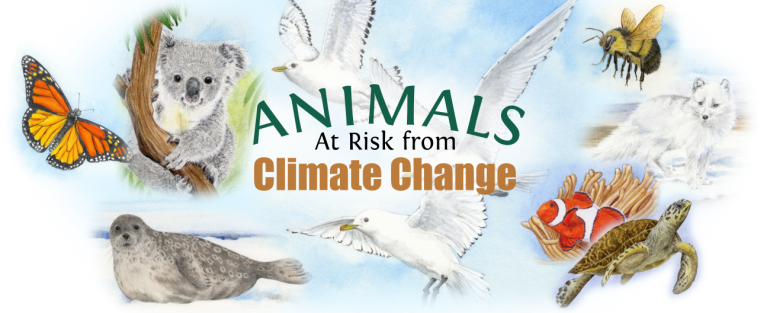
How to explain the complex interaction between biological traits and environmental conditions? “Animals at Risk from Climate Change” is an educational poster for environmental and earth science educators made by The Global Education Project,  a Canadian non-governmental organization with a 15-year history of publishing fact-packed educational wall posters and producing live events to educate about important issues.
The interaction of biological traits and environmental conditions that cause a species to be susceptible to climate change and the basics of the carbon cycle are made simple and understandable through illustrations, symbols and brief explanatory text–thoroughly documented to reliable sources.
“Animals at Risk from Climate Change” is an educational poster that presents a succinct overview of the fundamental impacts of greenhouse gases — the causes, effects and risks to all forms of life on the planet — . Based on studies from the IUCN Climate Change Specialist Group, the US EPA, NASA, NOAA and the IPCC, the poster features 25 animals that highlight the fundamental impacts of greenhouse gases on all forms of life on the planet.

By 25 animals selected for their vulnerability to climate change, the complex interaction of biological traits and environmental conditions that cause a species to be susceptible are made simple and understandable through illustrations, key graphics and brief explanatory text. Comprehensive and rigorously annotated to reliable sources, this resource is a valuable, timely and relevant educational aid.

To order or to view all of the elements on the poster, visit here

/in News/di /Lascia un commento

GUPES Green Gown Awards

The Green Gown Awards are the most prestigious recognition of environmental and sustainability best practice within the further and higher education sectors. The Awards provide the sector with benchmarks for excellence and are respected by Government, funding councils, senior management, academics and students.

The Global Universities Partnership on Environment and Sustainability Green Gown Awards are supported by UN Environment and the Global Universities Partnership on Environment and Sustainability and are open to Global Universities Partnership on Environment and Sustainability members.
Membership to Global Universities Partnership on Environment and Sustainability is free of charge and you can join here. Each Global Universities Partnership on Environment and Sustainability region can apply for any of the below categories. There is not a limit on the number of application each institution can enter.

Important Dates
12 October 2017 – Application Deadline
13 November 2017 – Finalists announced
4 January 2018 – Case study and video deadline for Finalists
TBC – Global Universities Partnership on Environment and Sustainability Green Gown Awards Ceremony Winners announced

Read more

/in News/di /Lascia un commento

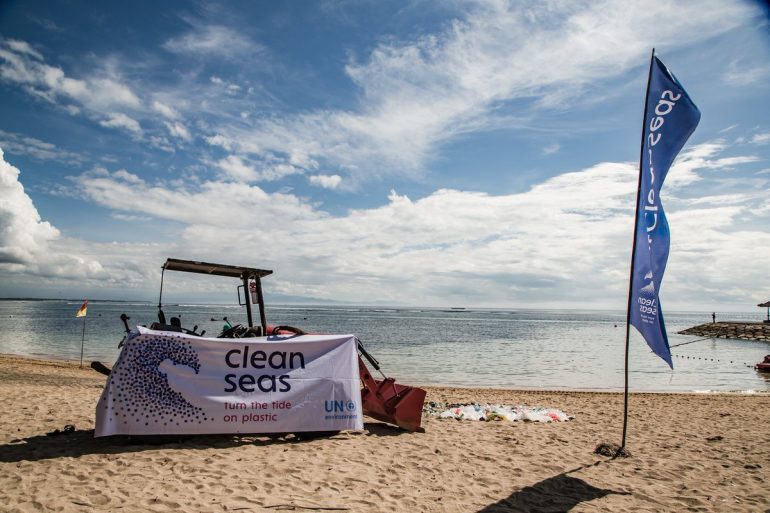
Canada joins CleanSeas campaign to combat plastic pollution in the ocean

During the  World Environmental Education Congress the Canadian Government announced a clear commitment to tackle plastic marine debris in the ocean by joining the United Nations CleanSeas campaign.
With approximately 8 million tonnes of plastic ending up in the ocean every year, the CleanSeas campaign is working with governments, the private sector and the general public to phase out the production and consumption of single-use plastics and microbeads within the next five years.
If no action is taken, there could be more plastic than fish in the oceans by 2050.

Canada has the longest coastline in the world and has been at the forefront of international efforts to protect the marine environment. In June, the Canadian Government published the Microbeads in Toiletries Regulations prohibiting the manufacture, import and sale of toiletries used to exfoliate or cleanse that contain plastic microbeads. Canada will contribute to the campaign though initiatives that target pollution prevention, conducting research of the impact of micro plastics in the aquatic environment and biota, and funding community-based programs, including shorefront cleanups.
«Our coastlines are important environmental links to the diversity of life on our planet. For Canadians, they define much of the natural beauty we hold dear. We are firm in our resolve to protect and enhance Canada’s coastlines and its oceans, and to play a leadership role internationally in addressing existing and emerging environmental concerns» said Jonathan Wilkinson, Parliamentary Secretary to the Minister of Environment and Climate Change Canada.
Erik Solheim, head of UN Environment said that «Canada’s continued commitment confirms that we are heading in the right direction with the fight against marine pollution. We look forward to working together to turn the tide on plastic pollution in our oceans».
The CleanSeas campaign recognizes the importance of environmental education and ocean literacy as tools to change knowledge, attitudes and practices with regards to the production and consumption of single use plastics. UN Environment has developed an online executive course on marine litter while programs such as Ocean Wise provide direct learning opportunities reaching about 400,000 people every year.

CleanSeas furthers a critically important message, said John Nightingale, CEO and president of Ocean Wise, one that is in line with the organization’s own mission. “As founder of the Great Canadian Shoreline Cleanup — which sees Canadians clean up shorelines in every territory and province — and now home to a major ocean plastic research laboratory, Ocean Wise applauds Canada’s commitment. We look forward to working even more closely with the Government of Canada across the country and around the world as part of the global UN CleanSeas campaign.”

The CleanSeas campaign also contributes to the goals of the Global Partnership on Marine Litter, a voluntary open-ended partnership for international agencies, governments, businesses, academia, local authorities and non-governmental organizations hosted by UN Environment.

Read more:
CleanSeas campaign’s website
Global partnership on marine litter
Ocean Wise

/in News/di /Lascia un commento

The Princess speech


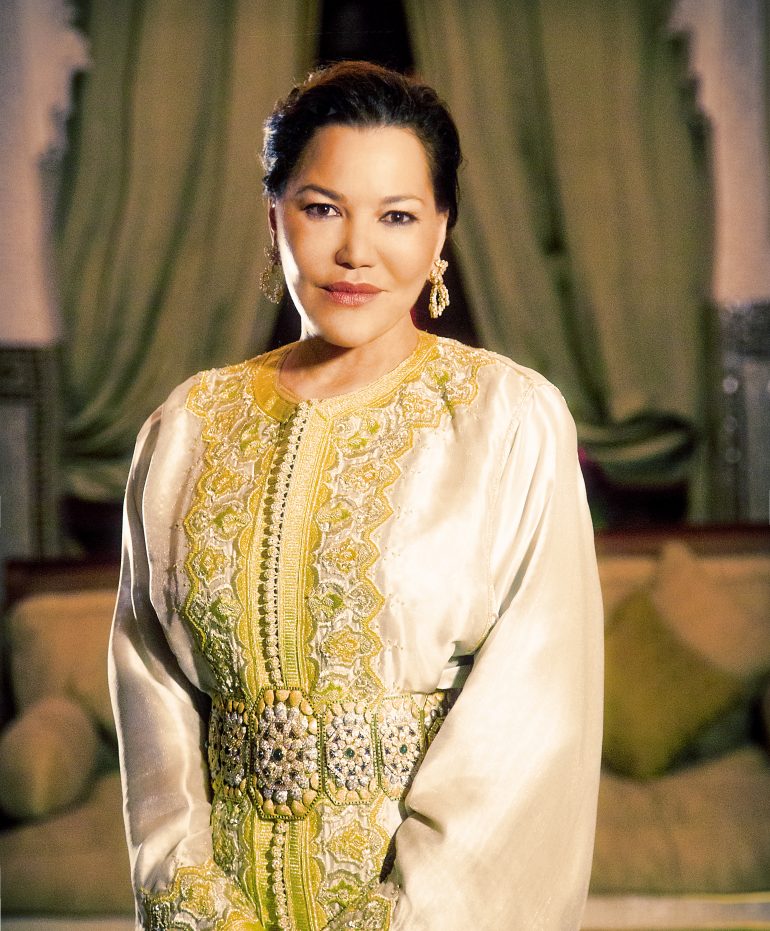
In her speech of the 9th WEEC at Vancouver, the Princess Lalla Hasnaa highlighted Morocco’s irreversible commitment to the environment, as host of COP22 in Marrakech, and its support to countries most vulnerable to global warming, including Africa and small island countries. «A staunch advocate of coexistence and dialogue since time immemorial, my country – Morocco – remains at the forefront of such an endeavor, which is based on international solidarity» she said.

Morocco promulgated a charter for the environment, which is part of a national Sustainable Development Strategy for 2030, a tool to consolidate public policies and transition towards a green and inclusive economy.

The Mohammed VI Foundation for Environmental Protection has aligned with this strategy since 2001, with its pilot programs for clean beaches, air quality, restoration of historic gardens, etc., which enable persistent work for education for sustainable development and diffusion of a culture of the environment, especially among the young ones.
The success of these programs, which combine concrete action and awareness raising, is based on the mobilization and joint work, under decisive coordination by the Foundation, and support from partners from a wide range of backgrounds: administrations, companies, associations, universities, etc.

In her speech, Her Royal Highness Princess Lalla Hasnaa supported the purpose of the Foundation’s programs, which is to help «learn or relearn essential acts to save resources, safeguard nature, protect biodiversity and promote solidarity.» in order to develop a culture of the environment.
This echoes the theme of the WEEC 9th edition, which is being held from September 9 -15, 2017 at the joint initiative of the WEEC International Secretariat and the Vancouver Institute for Environmental Education on the theme: “Culture and environment: weaving new connections”.
The Mohammed VI Foundation for Environmental Protection participates every two years in WEEC. It co-organized the 7th edition of 2013 in Marrakech, under the theme: “Environmental education in cities and rural areas: seeking greater harmony”.

/in News/di /Lascia un commento

The social WEEC

The countdown began: only a few days are left to the 9th World Environmental Education Congress Opening Ceremony.

We wait for you to the WEEC Permanent Secretariat desk, near the reception area.

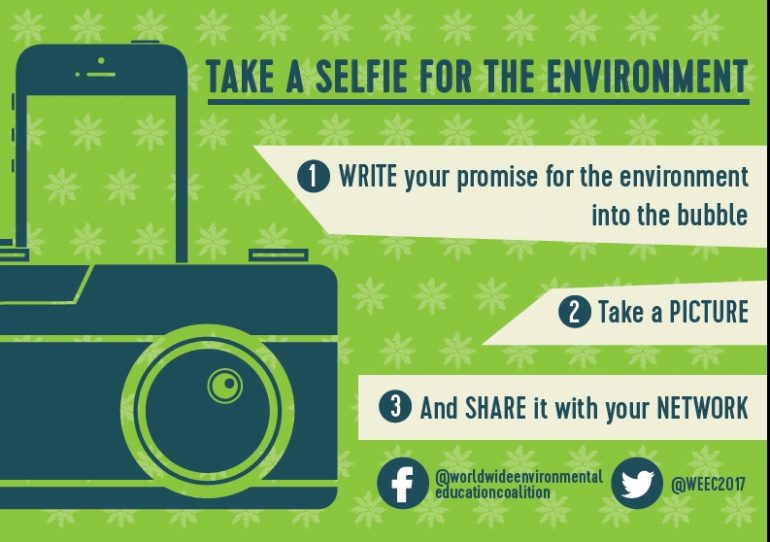
Here you can write your wish for the environment, take a picture and share photos, comments and every kind of impressions on your social media.

The main theme is the connections between culture and environment, but during the congress various formats are envisioned for the sharing of research and practice, divided in 14 sub-themes. These will include a number of symposia, novel format, paper sesions, round tables and interactive poster sessions.

/in News/di /Lascia un commento

Launch of the SDG Accord at WEEC 2017

The Environmental Association for Universities and Colleges (EAUC) has launched the Sustainable Development Goal Accord.
The purpose of the SDG Accord is twofold:

~ First it is to inspire, celebrate and advance the critical role that education has in delivering the Sustainable Development Goals (SDGs) and the value it brings to governments, business and wider society.

~Secondly, the Accord is a commitment learning institutions are making to one another to do more to deliver the goals, to annually report on each signatories progress and to do so in ways which share the learning with each other both nationally and internationally. An objective is that sector SDG reporting metrics will be presented at the annual UN High Level Political Forum.

Over the last 9 months a growing number of the worlds University and student sustainability networks have collaborated to create a unifying collaborative global mechanism to help step up to the challenge and the opportunity of the SDGs.

It represents a rare and powerful opportunity for WEEC delegates to support and learn from each other and raise the profile of education in delivering the SDG’S and a sustainable future for us all.

Please check more information here.