/in News/di

Deep-sea Atlas of the Eastern Mediterranean Sea
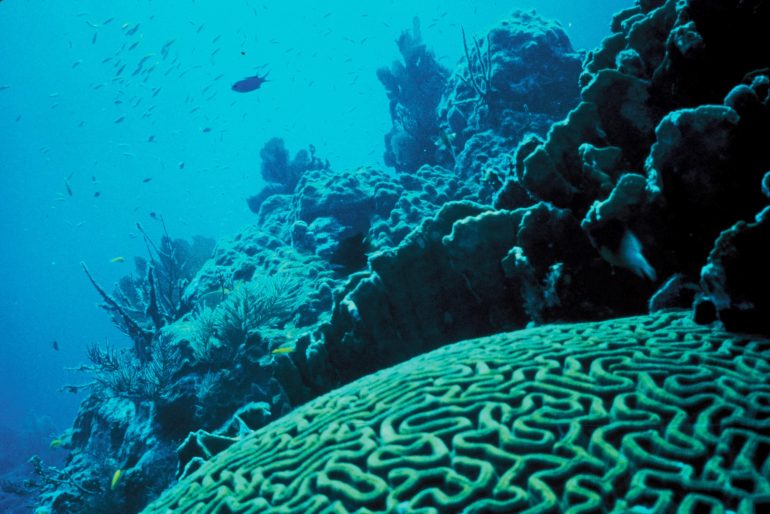
The IUCN Centre for Mediterranean Cooperation (IUCN-Med) and the Hellenic Centre for Marine Research present the Deep-sea Atlas of the Eastern Mediterranean Sea. Funded by the MAVA Foundation,  the Atlas is the first collective work to compile the existing knowledge about the deepest waters of the Eastern Mediterranean, focusing on the “hidden” biodiversity that it hosts and main threats. The report covers five sub-regions: the Eastern Ionian, the North and South Aegean, the Libyan and the Levantine Sea.

This publication has contributions of more than 48 experts  and aims to become a useful tool to support spatial and natural resource planning efforts and to contribute to the sustainable development of blue economy.

By combining information from other reports, expeditions, data on deep-sea bycatch and experimental fishing catches, as well as underwater videos, this new publication provides a general overview of the morphological and geological features, as well as data on the existing biodiversity and habitats, in particular benthic and pelagic communities. Over 46 seamounts and banks ridges, as well as the major marine canyons have been identified and described in this document. These areas can play a key role as hotspots of biodiversity, greatly affecting the productivity of offshore ecosystems and the distribution of pelagic top predators. In addition, potential sites of Essential Fish Habitats for five deep-water commercially exploited species have been identified.

“Although human has been related to the marine environment since the first steps of its evolution, our knowledge on the deep sea is extremely limited, and although great strides have been made in the last decades, the information has been very fragmented and covering just small snapshots” explains Chryssi Mytilineou, researcher of the Institute of Marine Biological Resources and Inland Waters of the Hellenic Centre for Marine Research. “The Atlas is the first step in concentrating our knowledge and identifying areas in the Eastern Mediterranean that we may need to protect”.

This report presents a first assessment of our knowledge about the vulnerable deep-sea ecosystems and has allowed to identify signs of high benthic biodiversity and other potential sites of conservation interest, that could require the establishment of binding protection areas or other effective conservation management measures.

“In the Eastern Mediterranean, enforcing the existing network of Marine Protected Areas requires increasing their coherence, connectivity and representativeness”, explains María del Mar Otero, Marine Biodiversity and Blue Economy manager at IUCN-Med. “Further designation of MPAs and Fishery Restricted Areas will be key to protect these vulnerable biodiversity hotspots, together with other measures to protect migratory and endangered fauna at open sea”.

The report also provided specific recommendations of potential measures to address some of the more pressing human activities that are presently or potentially impacting the vulnerable deep-sea ecosystems of the Eastern Mediterranean. Among these pressures are the significant concentrations of macroplastics identified in deep-sea areas, particularly near highly urbanised gulfs and submarine canyons.
Access to the publication here

/in News/di

UNRWA: Enhance students’ awareness towards environment

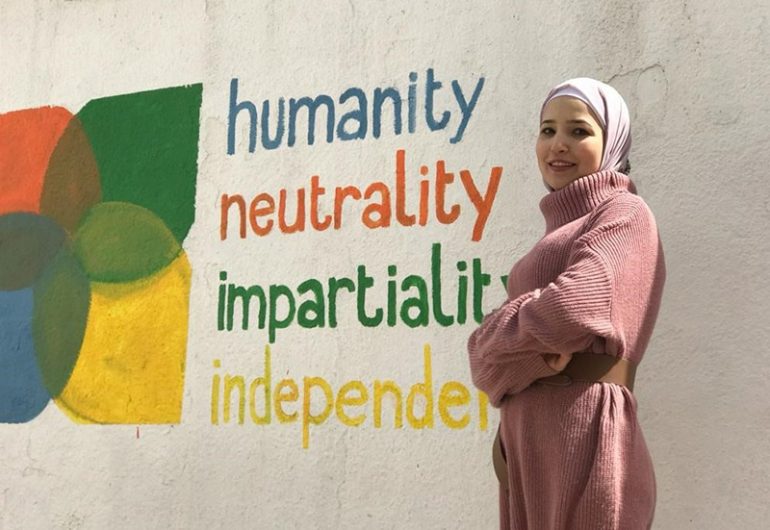
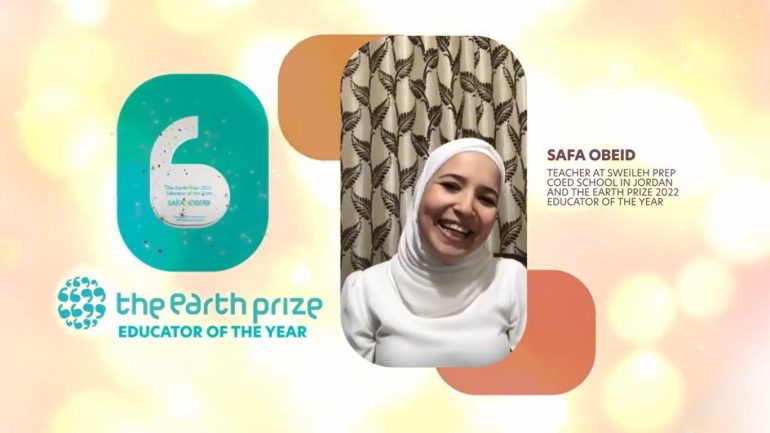
For the World Health Day, UNRWA celebrates Ms. Obeid, named the 2022 Earth Prize Educator of the Year. Ms Obeid, a teacher at the UNRWA Sweileh Preparatory Girls’ School in Jordan, was selected by the WEEC’s Secretary General Professor Mario Salomone.

Dr Oroba Labadi, Chief pf the UNRWA Field Education Program, underlines the importance of raising students’ awareness towards global environmental causes, “which is not limited to provide basic education but also in enhancing their knowledge, skills and build positive trends towards global environmental causes”. 

Indeed, what encouraged Ms Obeid to take part in the competition together with her students was her belief that Palestine refugee students can participate in international competitions and affect change in both local and international communities. 

”This award shows the impact of the professional in-service trainings that UNRWA regularly provides to us.” Ms Obeid Said.  

UNRWA and SDG 13 – Climate Action

Across its fields of operation, the UNRWA plays a key role in addressing environmental protection issues within the Palestine refugee community and has an obligation to minimize the negative environmental impact of its own operations. In addition, the Agency is prioritizing a range of environmental protection efforts that include for instance the installation of energy saving equipment, such as solar panels, water heaters and LED fittings, in a number of schools, health centres and other installations, as well as safe disposal of medical waste.  

Measures to protect water resources and improve environmental health in Palestine refugee camps are also being undertaken including the development of an integrated solid waste management system that will serve all Palestine refugee camps in Lebanon and the installation of solar power systems in 80 schools and six health clinics in Gaza.  

The Agency is also exploring current environmental behaviours and teaching practices in its schools and classrooms in order to see how to strengthen and build upon these practices in a coordinated and coherent way. Developing capacity of Palestine refugee youth in the design, manufacture and servicing of renewable energy technology and energy efficiency devices is important for job creation and stimulating the green economy. UNRWA has recently introduced courses on energy efficiency at its vocational training centres in Gaza and will look to expand these to other fields based on lessons learned.  

About UNRWA 

Following the 1948 Arab-Israeli conflict, UNRWA was established by United Nations General Assembly Resolution 302 (IV) of 8 December 1949 to carry out direct relief and works programmes for Palestine refugees. The Agency began operations on 1 May 1950. 

In the absence of a solution to the Palestine refugee problem, the General Assembly has repeatedly renewed UNRWA’s mandate, most recently extending it until 30 June 2023 

The United Nations Relief and Works Agency for Palestine Refugees (UNRWA) is funded almost entirely by voluntary contributions from UN Member States. UNRWA also receives some funding from the Regular Budget of the United Nations, which is used mostly for international staffing costs. 

The Agency’s services encompass education, health care, relief and social services, camp infrastructure and improvement, microfinance and emergency assistance, including in times of armed conflict. 

/in News/di

Safaa Obeid, UNRWA teacher in Jordan, is the winner of the Earth Prize Educator of the Year

© 2022 UNRWA Photo by Dima Ismail

Following the legacy of the original award, WEEC’s  Secretary-General, Professor Mario Salomone selected Ms Safaa Obeid , a teacher at the UNRWA Sweileh Preparatory Girls’ School in Jordan,  as the Earth Prize Educator of the Year and awarded a prize of US$ 12,500.

Ms. Obeid entered her students in the Earth Prize competition – an environmental sustainability competition for students between the ages of 13-19 – under the themes of concern to them as Palestine refugees in Jordan. These include, desertification of the Dead Sea by 2030, making camps more environmentally friendly and managing food waste in Jordan.

Ms. Obeid said:

“I am very proud to represent UNRWA in this international contest on environment sustainability and be awarded the “Educator of the Year” title. This amplifies my sense of responsibility towards my environment, my community and my students. I have been very keen to integrate environmental sustainability in the classroom by creating an enriching an environmental activity kit, which is user-friendly and easy to implement for the purpose of increasing my students’ awareness of environmental causes.”

In addition to Ms. Obeid’s students, 34 teams from 24 UNRWA schools and one vocational training centre registered their projects in the competition. Two UNRWA schools were named in the top 34 Earth Prize Scholar teams, namely the UNRWA Amqa Secondary Co-educational School in Lebanon and the UNRWA Gaza Training Centre, in Gaza.

The Earth Prize 2022 Educator of the year nominees were:

Pauline Herbommez, french teacher at Eton College, in Berkshire, England.  With other members of the school staff, Ms Herbommez helped create the Belkshire Schools Eco Network (BSEN) and the Environmental Action Group (E@E). The BSEN and E@E attended COP26.

Imani Hudaa, teacher at Raila Educational Centre in Kibra, Nairob, Kenya.  She has been involved in a number of school activities related the environment by encouraging learners to draw, act, dance and even write poetry about environment.

Ram Chandra Dahal, a faculty member at the Druk Gylalpo’s Institute in Bhutan. He believes that education is the key to making people live in coherence with nature and assume responsibility for its protection. At the school, he acts as a teacher, mentor, and the Coordinator for Emotional Area of Development.

Luc Arvisals, a teacher at Our Lady of the Snows in Canmore, Alberta, Canada. He has supported student work on a variety of projects: planning for rewilding of urban areas, institutionalising the use of aeroponic growing gardens at the school, fundraising for a solar testing system to gauge the economic viability of installing solar panels on the school.

Ruth Parry, has taught at the Institute Le Rosey in Switzerland for nine years. She has built links with over 20 local and international charities to support environmental and humanitarian issues, and has helped develop a whole school curriculum to support Service Learning projects and skill development.

Laurence Myers is the K-12 Service Learning Coordinator at the American School of Dubai, United Arab Emirates. He supports student work on a variety of projects including the elimination of plastic water bottles, composting all landscaping and food waste, and establishing school-wide sustainability goal. He provides training and support educators in using systems-thinking for sustainability.


/in News/di

Submission for the Zayed Sustainability Prize 2023 are open!

The Zayed Sustainability Prize, an evolution of the Zayed Future Energy Prize, is the UAE’s pioneering global award in sustainability and a tribute to the legacy of the late founding father of the UAE, Sheikh Zayed bin Sultan Al Nahyan.

Established in 2008, this annual award recognises and rewards the achievements of those who are driving impactful, innovative and inspiring sustainability solutions across five distinct categories: Health, Food, Energy, Water and Global High Schools.

The Zayed Sustainability Prize has officially announced that the 2023 cycle is now open for submissions.  Entries will be accepted until 6 July 2022 through the Prize’s online portal.

For details on the submissions process and eligibility, visit the website or read the press release.

/in News/di

UfM supports the preservation of the Mediterranean “biological supermarkets”

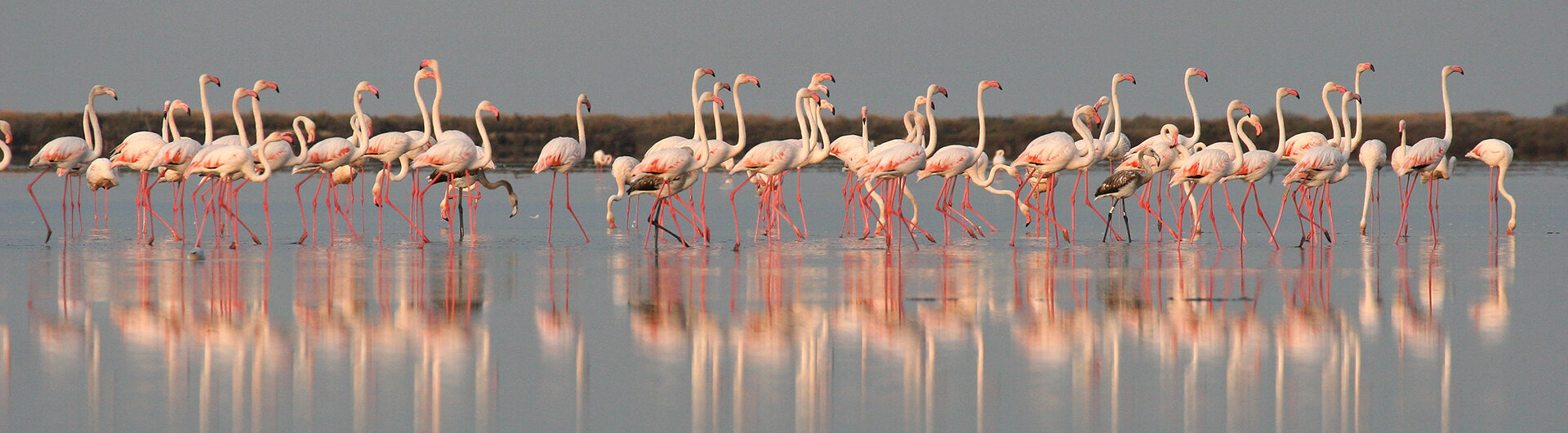
Ulcinj salina, Montenegro. © MedWet / C.Amico

The climate crisis, including droughts, is hitting the Mediterranean 20% harder than the rest of the world, but coastal wetlands play a vital role in mitigating future temperature rises. They currently store up to 40% of the world’s carbon and do it at a rate 10-20 times greater than temperate or boreal forests. In the Mediterranean regions, wetlands are among the most productive ecosystems, providing critical services for half a billion people.

Coastal fisheries and sustainable agriculture rely on healthy coastal wetland ecosystems, providing important low-carbon sources of nutrition for our growing population.
Each year, losing coastal wetland costs $ 7200 billion globally. wetlands’ ecosystem services are among the most productive habitats in the world. They can be considered as “biological supermarkets”: wetlands provide great volumes of food for many species, including our own.

With a view to fostering a more effective conservation of these crucial habitats, the UfM supports the Wetland-Based Solutions project, promoted by MedWet. Through the protection and restoration of key wetlands, the project proposes coastal wetlands as key assets for nature-based solutions’ implementation to counteract anthropogenic impacts, and in particular, climate change.

For more information

  • “Mediterranean wetland restoration: an urgent priority” Restoring Mediterranean wetlands: the urgent and essential Nature-based Solution to the region’s most pressing challengesDespite the vital roles they play, 48% of Mediterranean wetlands have been lost since 1970.
/in News/di

The Michele Panuccio Memorial Grant: in honour of his work, in support of young researchers

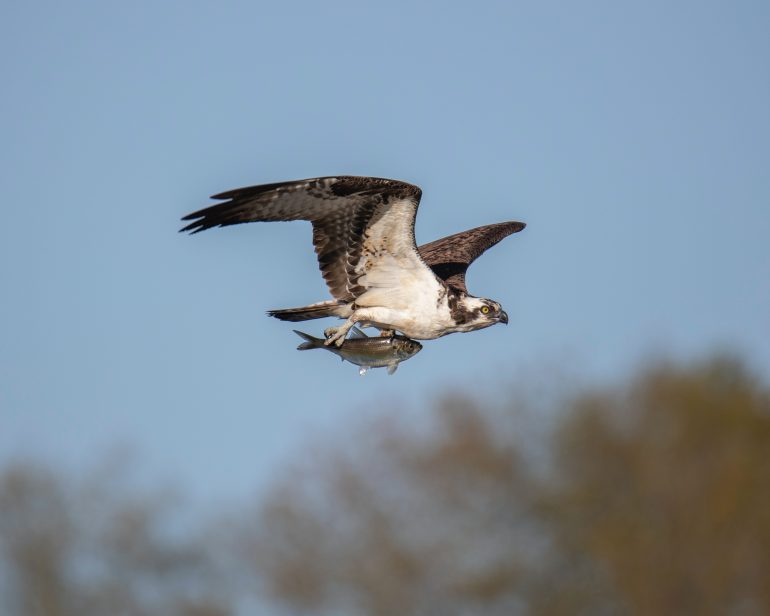
Photo by Keith Luke – Unsplash

Since its foundation as a non-profit organisation back in 1966, the Raptor Research Foundation (RRF) has continuously advanced the science, conservation and understanding of birds of prey. In its strive towards the accumulation and dissemination of scientific information about raptors, each year the Foundation organises scientific conferences, provides support, networking opportunities, competitive grants and awards for student researchers and conservationists.

A heart-felt opportunity

This year, the prestigious international institution has added a new award to its existing 12 grants: the Michele Panuccio Memorial Grant, dedicated to the late Italian ornithologist and ecologist (1976-2019). The award, annually available to both members and non-members of the RRF, provides financial support to young researchers (< 35 years old) for their field work on raptor migration and conservation in the European region. The Fund, established by Panuccio’s parents in 2021, supplies the winner with up to €1,500 to be used in support of research into:

• raptor behavior, such as differential migration between age and sex classes, the effect of weather and atmospheric currents on migration, social interactions, and orientation and navigation strategies, with a special focus on how raptors overcome large ecological barrier such as the Mediterranean Sea.

• raptor conservation, for which Michele developed a particular interest as park ranger at the Decima-Malafede Nature Reserve (Rome), where he learned the importance of natural protected areas management and monitoring for the conservation of local raptors.

• raptor monitoring, which has been a long-standing interest of Michele, and to which he devoted much of his final years at the Strait of Messina.

Continuing Michele’s work

“Michele will be remembered for the discovery of the migration strategy of the Greek Short-toed Snake Eagles, which avoid crossing the Aegean Sea by concentrating on the slopes of Mount Olympus en route to the Bosphorus. This strategy is like that followed by Italian conspecifics, which avoid the Channel of Sicily by crossing the Mediterranean at the
Strait of Gibraltar. In his final years, using both direct visual observation and radar monitoring, he established a standardised monitoring program at the Strait of Messina – one of the most important European migration bottlenecks.”
Ultimately, the Panuccio grant seeks to help advance fields that Michele worked on with contagious passion and meticulousness. It’s a testimony to his life and work, to “pass the baton” on to a new generation of researchers and hornitologists.

/in News/di

The IDée Network is recruiting to support research in Environmental Education (ErE)

The objective of the mission is to provide support for a research approach relating to the impact of associative action in Environmental Education (ErE) in Wallonia (and more broadly in FWB). The mission initially aims to draw up a state of the art in the field and to contribute, secondly, to the realization of an inventory through a participative dynamic with the actors concerned.

Teamwork

To do this, the project manager will benefit from the coordination and support of a multidisciplinary working group comprising resource persons from the ErE associative sector, the academic world and the SPW.

Expected profile

The person in charge of the mission has a master’s or a doctorate in human sciences and skills and/or experience in the following fields:

  • research experience in the field of education, educational assessment and/or behavioral and societal change
  • knowledge of the environmental association sector
  • knowledge in ErE and/or in the field of education
  • perspective and strategic thinking
  • writing ability (report, article, popularization)
  • ability to lead adult meetings
  • knowledge of English (good reading comprehension)

Contract offer

  • Fixed-term contract from March 2022 to December 2023
  • Commit as soon as possible
  • Conditions: quarter-time and possibility of a third-time
  • Base office at the IDée Network in Namur (Belgium) and teleworking (equipment provided)
  • Scale grid 329.02, level 4.2. + meal vouchers
  • Reimbursement of transport costs and teleworking package

    Send CV and cover letter by 20/2/22 at the latest to vanessa.rasquinet@reseau-idee.be

https://www.reseau-idee.be/fr/node/24944

/in News/di

New project to combat marine litter in the Mediterranean Sea lunched by Media Advisory_UfM and University of Siena

The COVID-19 pandemic has worsened the situation of marine litter in the Mediterranean as the use of single-use plastics such as gloves and masks has increased, threatening to stall and even reverse the progress achieved. Single plastic accounts for up to 50% of beach litter.

The new project “Plastic Busters: Fostering knowledge transfer to tackle marine litter in the Mediterranean by integrating Ecosystem-based management into coastal zone management” is led by the University of Siena and will facilitate the efforts of decision makers in effectively dealing with marine litter and achieve a good environmental status in the Mediterranean. The project will be implemented in Greece, Italy, Jordan, Egypt, Lebanon, Spain, and Tunisia over the next 2 years with a budget of over €1 Million. It is co-funded by the European Union under the ENI CBC Med programme.

The main actions of the project are: implementation of national hands-on training activities and an e-course on marine litter monitoring, assessment, prevention and mitigation; 4 pilot campaigns on marine litter monitoring and assessment; 4 demos showcasing marine litter prevention and mitigation measures; creation of a coastal cities network and a roadmap of policy priorities for a litter-free Mediterranean.

The new project is part of the UfM-supported Plastic Busters regional  initiative, kick-started in 2013 to tackle the issue of plastic waste in the Mediterranean by addressing its entire management cycle.
The press conference will focus on the need to promote and mainstream the results of completed marine litter related projects and will provide a collective reflection on future challenges and opportunities for effective action towards enhanced environmental protection.
The conference will be online on 26th January  at 4pm CEST.
The conference will be in English.
Speakers will be:
  • Maria Cristina Fossi – Professor at the University of Siena and Plastic Busters Director
  • Francesco Frati – Rector of the University of Sienna
  • Thomais Vlachogianni – Programme/Policy Officer at the Mediterranean Information Office for the Environment, Culture and Sustainable Development (MIO-ECSDE/ Greece)
  • Sana Ben Ismail – National Institute of Marine Sciences and Technologies, Tunisian partner of the project.

All the project’s partners will be present.

Registration to attend the event onsite must be done via the following email: silvia.casini@unisi.it
This e-mail must include the following information: Full name, Media organisation and position, Email address and mobile phone number.


/in News/di

Publication opportunities at the academic journal Éducation relative à l’environnement : Regards – Recherches – Réflexions

Potrebbe essere un'immagine raffigurante il seguente testo "Éducation relative al'environnement Regards Recherches- Réflexions REVUE ERE Publication de recherche Vol. 16-2 Numéro non thématique Varia VOLUME 16-2"

The academic journal “ Éducation relative à l’environnement : Regards – Recherches – Réflexions ” is open to publishing articles that have been presented at the Prague Congress – WEEC Network 2022. As the journal is French-speaking, the proposed articles must be submitted in French (or translated into French) and respect our publication guidelines. As the papers selected for this conference have been subjected to a rigorous selection process, authors can send their paper directly to us. Each paper is peer-reviewed.

Papers related to the Congress may be included in the Varia issue of the journal which will be published at the end of 2022. Articles should be sent to before May 10, 2022. As this will be a Varia issue and not a thematic issue, an editorial could contextualize the Congress publications. This editorial could be written in French by a WEEC official.

In addition, the journal is classified as category 1 by the High Council for the Evaluation of Research and Higher Education in France. It is freely available on the OPenEdition platform – https://journals.openedition.org/ere/ | https://journals.openedition.org/ere/4532

 For more information : revue.ere@uqam.ca

/in News/di

Éducation relative à l’environnement gives the chance to submit articles

The journal  Éducation relative à l’environnement  publishes articles either in the “Research – Reflections” section or in the “Insights” section. In both cases, the texts are subject to peer review.

The “Insights” section gives the opportunity to relate an observation, an experience, a practice or a project, including an analytical and critical perspective and highlighting what we can learn that can be transferred to similar situations. It can also deal with a topic, a question to be debated or present a bibliographical study on a subject having links with the field of education relating to the environment. It will be a short article, no longer than 3,500 words (or 6 pages). A “Insight” is thus a gateway to allow master’s or doctoral students to share the state of their research and students of a short program to present their project (including a critical look) .

Another part of the review features reading notes. These are reread and validated by the Editorial Committee and / or the journal team before publication. It is always possible to offer the  Éducation relative à l’environnement‘s journalists a reading note.

Whether for an article or a reading note, you will find all the information to submit a proposal here .