/in News/di

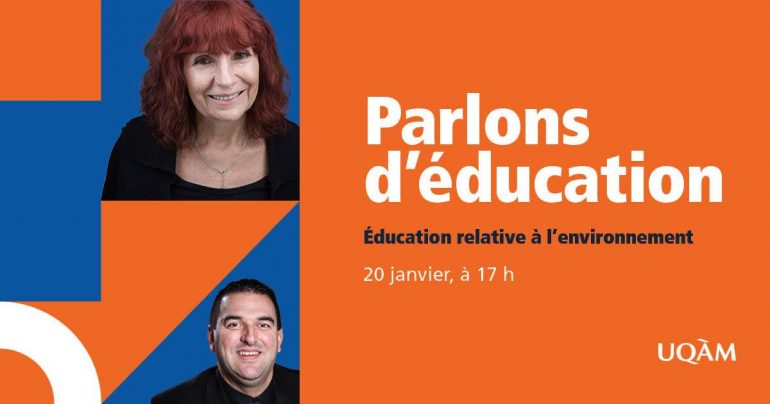
Let’s talk about education

Wednesday 20th January at 5 PM – 5.45 PM (Montreal local time)

During this webinar Parlons d’éducation (Let’s talk about education), Lucie Sauvé, WEEC Advisory Board member and associated professor at UQAM didactic Department, will answer Martin Duquette questions, deputy general director of CSSPI (Centre de services scolaire de la Pointe-de-l’Ille) about environmental education.

You can follow the event live at this page facebook.com/uqamdiplomes/

To participate you just have to register at event on Facebook or LinkedIn

This activity is organized by the Bureau des diplômés of Quebec University in Montreal in collaboration with the Conseil de diplômés of Environmental Science Faculty.

For further information: https://diplomes.uqam.ca/55-a-l-agenda/1093-parlons-d-education

/in News/di

Today, with the impact of the pandemic, sustainable solutions are a pressing and urgent need. If you have an innovative sustainability solution in the categories of Health, Food, Energy, Water or Global High Schools, apply to the #ZayedSustainabilityPrize.

The Zayed Sustainability Prize, an evolution of the Zayed Future Energy Prize, is the UAE’s pioneering global award in sustainability and a tribute to the legacy of the late founding father of the UAE, Sheikh Zayed bin Sultan Al Nahyan.
Established in 2008, this annual award recognises and rewards the achievements of those who are driving impactful, innovative and inspiring sustainability solutions across five distinct categories: Health, Food, Energy, Water and Global High Schools.

Submissions are open until 6th May 2021. Here you can see the Zayed Sustainability Prize submissions portal

/in News/di

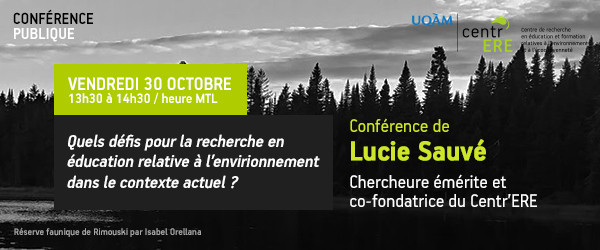
What challenges do research face today? Webinar with Lucie Sauvé

Lucie Sauvé, professor in the Department of Didactics at the University of Quebec at Montreal, emeritus researcher and co-founder of Centr’ERE, initiates the 2020-2021 series of conferences of Centr-ERE (research center in education and training on environmental education and citizenship).

Has this interminable episode of the pandemic allowed us to sufficiently feel the need for links between ourselves and with the living world, to encourage us to finally transform the way we live here, together? How does the current context invite us to rethink the deployment of research in environmental education?

The presentation will be followed by a discussion period.

Online event: Zoom link here

Facebook event


/in News/di

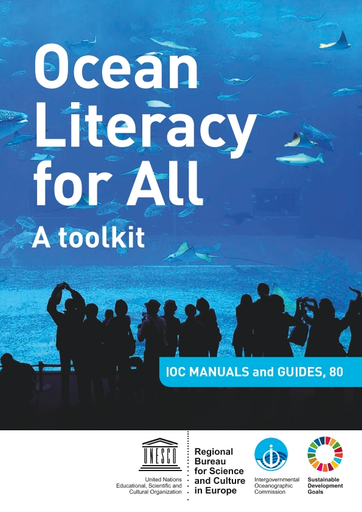
Ocean Literacy: a toolkit by Unesco

“The ocean is a source of food, energy, minerals, increasingly of medications; it regulates the Earth’s climate and hosts the greatest diversity of life and ecosystems, and is a provider of economic, social and aesthetic services to humankind – write Vladimir RyabininES/IOC-UNESCO and QianTangADG/ED in the foreward – Knowing and understanding the ocean’s influence on us, and our influence on the ocean is crucial to living and acting sustainably”.

It is made of two parts. The first part presents the history of ocean literacy, and describes its framework made of 7 essential principles, and connects them to international ocean science programs that contributes to enhancing ocean knowledge and observations. Moreover, marine scientists and educators were interviewed to share their professional experiences on ocean literacy as well as their views on its future. The last chapter of part 1 describes the existing challenges to marine education, as well as the path for the development of successful ocean literacy activities in the context of the 2030 Agenda. One of the most important factors identified is related to the creation of multi-sector partnerships among the education, government, and private sector that have jointly built ocean literacy programs for all formal educational levels from the primary school to the university level as well as for non-formal learners. Worldwide examples of such programs are presented.

The second part, after introducing the methodological approach based on the multi-perspective framework for ESD developed by UNESCO, presents 14 activities that could provide tested examples and support for the implementation of marine education initiatives. The aim is not to provide a one size-fits-all ready to use collection, but rather to offer support and examples of what could be then adapted for different geographical and cultural contexts. The resources are designed to be relevant for all learners of all ages worldwide and to find their application in many learning settings, while in their concrete implementation they will, naturally, have to be adapted to the national or local context

«We hope that this publication will inspire the readers – scientists, educators and learners – to take greater personal responsibility for the ocean, as well as to enable them to act as citizens, working through partnerships and networks, sharing ideas and experiences and developing new approaches and initiatives in support of ocean literacy. The ocean is the great unifier and it is our shared responsibility to preserve it for the current and future generations»

Read more

/in News/di

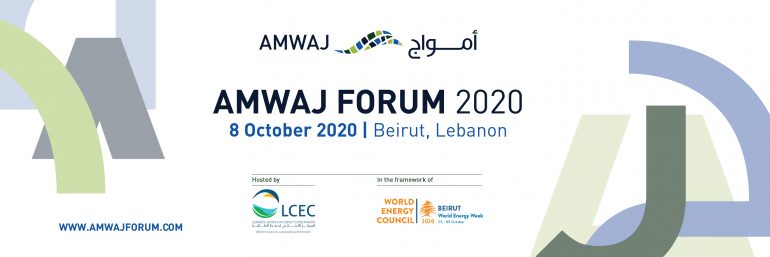
AMWAJ Forum 2020. Energy and water: challanges of the Mediterranean

AMWAJ (A Mediterranean Water And Journalism) is a platform that is focused on tackling water scarcity and energy challenges while identifying young talent that help provide innovative game-changing solutions. AMWAJ is also a regional incubator and facilitator for sustainable development that encourages an exchange of ideas and knowledge.

Through partnerships with leading organizations across the Mediterranean region, it is positioned to act as a network of networks in the water and energy sector. It creates links between researchers, media experts, industry and institutions, believing in interdisciplinary collaboration, institutional cooperation and intercultural communication. These are the bases of a future Euro-Mediterranean community.

AMWAJ provides enabling conditions for media and researchers to connect, empowering a new generation of reporters, experts and decision-makers with the knowledge and skills to communicate accurately and effectively the value of water and energy in society and to constructively policy-making through articles, photo essays, videos, exhibitions, reports, events, training, and other multimedia material. It bridges the gap between science, policy-making and society and contributes to the development of new discourses in the domain of the environment to accelerate sustainable development around the Mediterranean region.

It organizes a bi-annual conference bringing together research, media and policy that brings together a movement of hundreds of young professional journalists, researchers and entrepreneurs from the shared geographic space of the 43 countries that comprise the Union for the Mediterranean (UfM).

AMWAJ forum started under the patronage of His Royal Highness Prince Hassan of Jordan and PepsiCo MENA in 2016 and travsersed the Mediterranean in 2018 to Barcelona with the Government of Catalonia, the European Investment Bank and other partners.

The next edition of AMWAJ Forum ( co-organized by the Lebanese Center for Energy Conservation LCEC in partnering with the World Energy Week) will be in Sin el-Fil, Beirut, from 7 – 9 October 2020.

The 2020 edition will catalyse knowledge exchange, promote technical discussions and strengthen partnerships and networks amongst the Mediterranean water, energy and sustainability communities. It will serve as a platform for media, researchers, policymakers, entrepreneurs and civil society from around the Mediterranean to collaborate and exchange around these key regional topics. The forum’s ultimate objective is to communicate the value of water and energy in society accurately and effectively, while constructively influencing policy-making in these fields. All sessions will be moderated by Mediterranean journalists or representatives from communication offices.


/in News/di

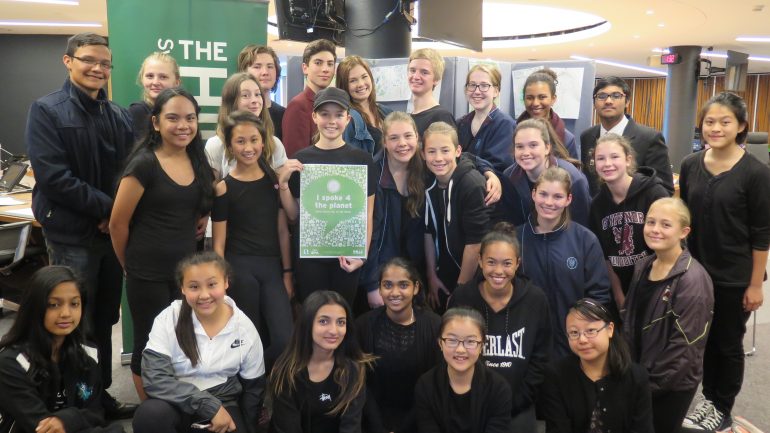
Speaking 4 the Planet, join the competition

Speaking for the Planet is an international Arts-based competition for high school students. These events have World Environment Day themes and the Sustainability Development Goals as their focus. The competition categories are speaking, drama,art, video-making and writing.

Kids 4 the Planet is the primary school equivalent.

This competition is by invitation and it is unfunded. Until now it involved schools from England, Slovenia, Hungary, Brazil, Canada, Thailand, Vietnam, US, Czech Republic, New Zealand, Kenya, Laos, Palau, Netherlands, Sweden.

Speaking 4 the Planet encourages participants to think differently. If we are to achieve sustainable communities, we will need people to be able to think creatively – often away from the mainstream – and express and support novel ideas in public arenas. We will need people who can persuade decision-makers and community members to choose sustainability options and directions. Speaking 4 the Planet provides opportunities for students to offer quirky solutions and build skills in communication, advocacy and change.

Let’s participate in the competition 2020 by Friday 25 September! The focus is the World Environment Day theme and the Sustainability Development Goals. Events are registered on the UN’s website. Events take much of a school day. They are normally held in schools or council chambers. The program includes welcome addresses from the hosts and sponsors, a video with information on the specific topic of the event.

A student and teacher Resource Pack is provided to help students prepare for the competition. The package includes the judging criteria, which are linked to curriculum requirements for speaking and drama.

Categories

Speech 3-4 minute speech. Participants send a video of themselves delivering the speech. A written copy of the speech will also need to be sent (in Word). In English.
Art Participants send 3 photos of the artwork they produce.
Meme In English.
Writing Participants are asked to write a (only!) 30 word piece on the topic. In English.

Topic

Bridging the needs of People and Planet: If we don’t get the human stuff right, we can’t get the environmental stuff right. This topic is deliberately linked to the theme of the 2021 World Environmental Education Congress, Building Bridges.

If you are interested in these initiatives, please write to the director, Phil Smith, to have more information (phil@speaking4theplanet.org.au).


See the 2019 edition
/in News/di

Happy World Oceans Day!

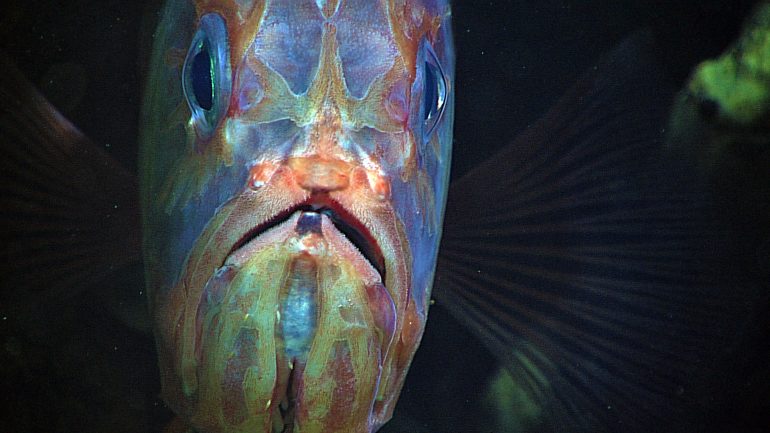
credit: NOAA, Office of Ocean exploration and research

Join the official UN Ocean Day virtual event 2020, today here

The United Nations celebrates World Oceans Day every year on 8 June. Many countries have celebrated this special day since 1992, following the United Nations Conference on Environment and Development, held in Rio de Janeiro.

In 2008, the United Nations General Assembly decided that, as of 2009, 8 June would be designated by the United Nations as “World Oceans Day”.

Every 8 June, we have an opportunity to raise global awareness of the benefits humankind derives from the ocean and our individual and collective duty to use its resources sustainably. Future generations will also depend on the ocean for their livelihoods!

Aquariums, science centers and research institutions, NGOs, communities and governments all around the world mobilize millions of people around events big and small. Let’s celebrate all that the ocean gives us every day: from the oxygen we breathe to the inspiration that moves our poets.


More than 170 events are planned. Plan your event here

https://vimeo.com/398659233

And for thw World Oceans Day 2020 several associations signed the following Open letter:

If we have learned anything from the Covid-19 pandemic it is that we are all inextricably connected with each other and the natural world. Without greater balance and cooperation we cannot survive as a species.
Human wellbeing is at the heart of what we do.  Our work, to protect the ocean is driven by the reality that humankind needs a healthy planet that can sustain life, for the sake of our homes, health, livelihoods and food.
Many have taken the rupture to our lives caused by Covid-19 to think about this and about how we can rebuild better, learning from the pandemic to achieve a greater balance and to protect the fundamentals which make life on Earth possible.
Doing so is a necessity. 
We do not have the luxury of choosing between paths which damage the natural world and those which do not.  If we continue to harm nature at the rate we have been, our world will not be able to sustain human wellbeing – from jobs to food security and health.
We have been given a stark warning. Once we emerge and start to rebuild, we need to do so in a way that protects the fundamentals that all human beings rely upon, foremost among these being a planet capable of sustaining human life. 
Governments will be put under pressure to drop environmental protections to make it easier for industry to operate; to privilege short term economics and job increases over other considerations. These will be presented as a choice – choose humans over nature – but it is not a real choice. For the good of humankind, we must achieve balance with the natural world, a coexistence which ultimately enables us to thrive.
If we do not achieve that balance, take action to do better now, the rupture in our lives will get bigger, we will face other, escalating global disasters.
We ask governments to protect human wellbeing and to make decisions which keep a functioning blue planet beneath our feet.

Aida
Deep Sea Conservation Coalition
David Suzuki Foundation
Ecology Action Centre
Global Fishing Watch
Global Ocean Trust
Greenovation Hub
High Seas Alliance
International Programme on the State of the Ocean
Marine CoLABoration
Marine Conservation Institute
Marine Conservation Society
New Economics Foundation
Oceans North
Our Fish
Seas at Risk
Turkish Marine Research Foundation
Thames Estuary Partnership
One Ocean
Shark Project International
Wild Trust
Zoological Society of London

/in News/di

100 Questions in 100 Pages, a free book from Gunter Pauli

Gunter Pauli, the founder of ZERI (Zero Emission Research and Initiatives) and the Blue Economy, invites everyone to reflect and ask questions, starting with those of his book “100 Questions in 100 Pages”. An invitation to question the origins and implications of this virus and to understand how to overcome the crisis, together, by using confrontation. A declaration of love to stimulate debates and change. The book is freely downloadable from the site in English, French, Italian, Spanish.
Written in less than a month to launch a challenge to all humanity, Gunter Pauli’s book invites you to think, ask questions and reflect, to be able to build a truly better world together, and try to understand how to evolve, how to get out of this crisis and what to do next.
Can radio frequencies wake up viruses that nearly 40% of all adults in the world have in their bodies? Should we cure symptoms or build up defense mechanisms? And why does simply asking questions generate such aggressive attacks? Additionally, what does freedom of speech have to do with health-care policies? How can we use the greatest infrastructure available on earth to reach everyone? What if all that is required is a light bulb? And is there a chance to transform the economy into a happier and healthier one? Here are some of the questions that Pauli asks himself in the book and how to get out of the chaos in which we are.

/in News/di

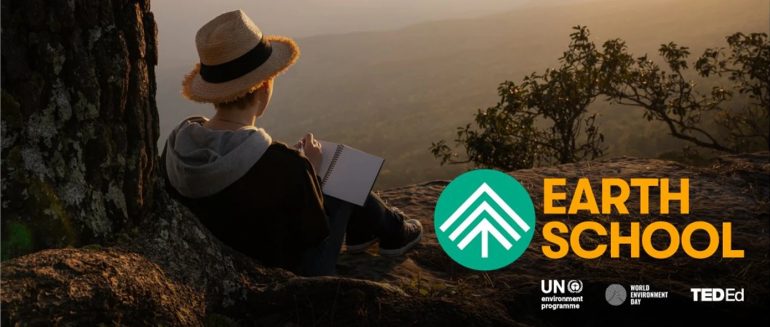
Welcome to the Earth School

Unep and several other organizations launch Earth School,  a month of daily adventures designed to leave the whole family marveling at our planet and excited for the future. Dive into 30 Days of videos, quizzes, and activities it will help students celebrate, connect with and explore the natural world, while learning about how dependent we are on our planet.
Now more than ever, we need to protect, nurture and care for Earth. With this Ted so join us to learn something amazing every weekday between Earth Day (April 22nd) and World Environment Day (June 5th). Within each lesson, you’ll find fascinating resources compiled by Earth experts and ideas for getting involved in ways that count. Join us to learn more, create, act and share your journey (#EarthSchool) towards a cleaner and greener life.

Today, over 1.5 billion children aren’t able to go to school. In response to this education crisis, Unep and TED-Ed – with the support of an incredible array of educators and partner organizations – launched Earth School,  30 days of nature-focused content and environmental adventures for learners of all ages. Each Quest includes a discovery video and quiz, combined with a series of engaging learning resources — all curated by environmental experts.

Week 1 The Nature of Our Stuff
Week 2 The Nature of Society
Week 3 The Nature of Nature
Week 4 The Nature of Change
Week 5 The Nature of Individual Action
Week 6 The Nature of Collective Action

Enjoy!


/in News/di

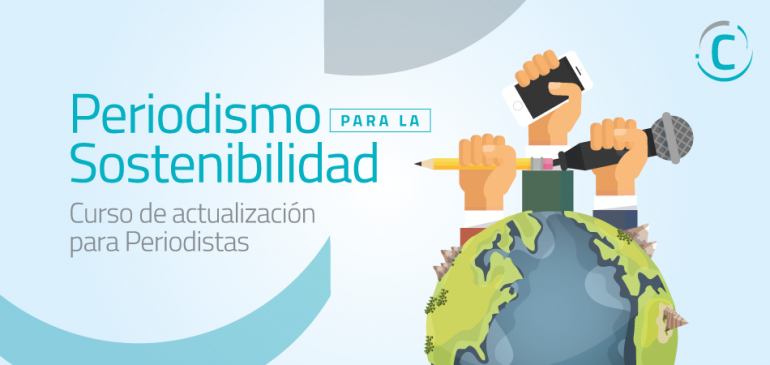
Journalism Update Course for Sustainability, 100% online

The Journalism Update Course for Sustainability is organised by CapacitaRSE – a pioneering center for teaching sustainability in Latin America – with the experience of 30 journalists or communicators (bloggers, podcasters or others) active in the field in the Spanish-speaking world.
Participating journalists will be able to review 100% online updated content on the Sustainable Development Goals and the Circular Economy and learn to interpret sustainability instruments such as reports and stock indexes, hand in hand with specialized teachers, between April 6 and 17 2020.

«Policies such as the Sustainable Development Goals govern the current response of the United Nations System to global causes such as the COVID-19 pandemic. We conceived this course as an opportunity to promote sustainable transformation and collective consciousness, a process in which journalists are key agents» says Estefanía Salazar, coordinator of the course.
The course will provide digital signature certification issued by CapacitaRSE in the State of Florida (USA) where it has its regional headquarters.

Form of participation:  4 modules within Google Classroom with two virtual question and answer sessions and delivery of a final report

Registration form and cost: Those interested can apply until April 5, 2020 at this link

Course dates: April 6 to April 17, 2020 (2 weeks)

For more information: Estefanía Salazar – e.salazar@clasesderse.com.ar
Twitter: @CapacitaRSE // Instagram: @cursosderse