/in News, Press, World EE Day/di , , e

8th World Environmental Education Day: celebrating today, October 14

October 14 marks the anniversary of the UNESCO Intergovernmental Conference on Environmental Education, held in Tbilisi, Georgia, in 1977. This conference, which concluded on October 26, was a milestone, reflecting the growing awareness and concern within society and institutions at the time. For the first time, environmental issues and education for environmental awareness were officially recognized at an institutional level, following the 1972 UN Conference on the Human Environment in Stockholm.

The main outcome of the 1977 conference was the Tbilisi Declaration, which set out the principles of environmental education. It emphasized that education should be global and community-based, continuous, and lifelong. It should engage people of all ages, particularly young people, to foster a sense of active responsibility for the environment.

Forty years later, in 2017, the WEEC (World Environmental Education Congress) network launched the first World Environmental Education Day in Vancouver, coinciding with its ninth global congress and the participation of the Georgian government. In 2024, we are celebrating the eighth World Environmental Education Day, and to mark this occasion, the WEEC network is compiling all projects and initiatives aimed at promoting environmental awareness.

Every project plays a crucial role in raising awareness about the need to rethink our relationship with the environment, develop the interdisciplinary skills needed to navigate today’s complex challenges, and cultivate a population that is mindful of environmental issues. We need action from everyone!

Projects for World Environmental Education Day

This year, between September 14 and October 30, organizations involved in environmental education, along with museums, parks, schools, and other institutions, are running awareness-raising projects.

To celebrate the eighth World Environmental Education Day, the WEEC network is gathering all relevant projects to highlight the growing interest in this field. At the end of October, a 2024 Final Report will be published, summarizing all submitted initiatives, which will also be promoted through our media channels.

Many projects have already been submitted, approaching the theme from different angles and using various methods, all of which are effective.

Some projects feature in-person activities following informal education models, giving participants hands-on experiences of environmental stewardship. For example, the Vellmari Association focuses on marine environment protection in the Balearic Islands, organizing communication campaigns about the role of marine ecosystems, research initiatives, and educational programs. They have launched the “Exploring the Oceans” project, designed to raise awareness among children and youth aged 8 to 17.

Other projects focus on creating networks. One initiative, currently in the planning phase, envisions a digital platform for sharing practical and theoretical knowledge among teachers, students, and anyone interested in environmental education.

While some projects are new, others build on the long-standing efforts of institutions and communities with a history of environmental education. One such project is led by Hardwood Education in partnership with People to People Kenya, which fosters knowledge exchange between teachers in the United Kingdom and Kenya.

Around the world, organizations are undertaking diverse initiatives—differing in approach, method, and audience—yet all united by the common goal of raising awareness for World Environmental Education Day.

Share your project with us!

Every action matters in our collective effort to create a more sustainable world, promote environmental education, and raise awareness about the issues that concern us all. The WEEC network, a global alliance of environmental educators, will manage these projects. The next WEEC congress will take place in Perth, Australia, in 2026—an opportunity to expand your knowledge, exchange experiences, and discuss best practices with experts in the field.

If you are running an initiative this October, we invite you to submit your project for inclusion. Want to get involved? Submit your project here and sign the petition to make October 14 the official World Environmental Education Day. Click here for more information and to sign. Every action counts!

<!– Card semplice con descrizione –>

<!– Card verticale –>

<!– Card senza descrizione –>
/in News, Press/di

Centre International Hassan II de Formation à l’Environnement joins the #8thWEED

World environmental education day is celebrated on October 14, 2024. This international initiative, established by the WEEC Network, aims to raise awareness about environmental issues through education. The day emphasizes the vital role of education in preparing new generations to tackle the challenges of climate change and sustainability, engaging teachers, students, policymakers, and citizens. This year marks the eighth edition of this important day.

The importance of educators

While World environmental education day targets everyone, teachers play a central role. As role models and guides, they are essential in passing on knowledge and values related to environmental protection. They are not just conveyors of information; they also inspire responsible behavior, shaping citizens who are aware of ecological challenges.

To enhance this role, a conference will be held on October 14 at the Centre International Hassan II
de Formation à l’Environnement, available in a hybrid format. The main goal is to equip teachers with tools and teaching methods to integrate the Sustainable Development Goals (SDGs) into their curricula, regardless of the subjects they teach. Experts in environmental education and sustainability will lead the event, offering practical and interactive activities designed to boost educators’ skills and encourage their students’ active participation in eco-friendly practices.

Objectives of the day

The conference has three key objectives:

  1. Enhance educators’ skills in environmental education: Provide practical tools to incorporate environmental issues into every subject, even for those without specific training in ecology.
  2. Facilitate the integration of SDGs into school curricula: Assist teachers in developing educational projects related to the SDGs that are relevant to their classes, fostering an eco-responsible culture among students.
  3. Build a community of practice among educators: Encourage the sharing of experiences and best practices among teachers from diverse backgrounds, enabling them to collaborate on sustainable initiatives in their schools.

Expected outcomes

The training day aims for tangible results:

  • Improved teacher capacity to address environmental issues: Participants will learn how to effectively integrate the SDGs into their curricula and engage students actively.
  • Concrete educational projects: Each teacher will be able to develop a project for implementation in the classroom, such as creating a school garden, establishing a recycling program, or organizing environmental awareness days.
  • Increased student involvement in environmental actions: Through interactive teaching methods, students will be motivated to participate in eco-sustainable initiatives within their schools.

The role of teachers

Teachers are crucial in raising awareness among new generations about environmental issues. This day aims to strengthen their role by providing the necessary tools to educate young people about sustainability and contribute to a future where environmental protection is a shared priority. Therefore, World environmental education day 2024 is not only a time for reflection but also a practical opportunity to train educators and engage students and communities in building a more sustainable world.

Join World environmental education day

In October, World environmental education day will feature numerous events and projects worldwide. Organizations, schools, and interested groups are encouraged to share their initiatives, promoting a global exchange of experiences and best practices. For more details on events or to get involved, visit the official website. At the end of October, the WEEC Network will publish the Final report 2024, compiling projects shared by educational institutions and organizations globally. This document will serve as a valuable source of inspiration and a concrete example of how education can promote sustainable and conscious behaviors.

Join this important initiative! Contribute by sharing your project, participating in events, and making your voice heard for a greener and more sustainable future. Together, we can make a difference!

To support World environmental education day, sign the campaign on change.org.

/in News, Press, World EE Day/di

Centr’ERE presents: journées de l’éducation relative à l’environnement 2024

From October 10 to 29, 2024, the Centre de recherche en éducation et formation relatives à l’environnement et à l’écocitoyenneté (Centr’ERE) at the Université du Québec à Montréal (UQAM) is hosting the “Journées de l’éducation relative à l’environnement.” This major event is centered around three significant dates: World Teachers’ Day (October 5), the “Discovery” of the Americas (October 12), and World Environmental Education Day (October 14), offering a thoughtful reflection on Indigenous and environmental issues.

The 2024 edition features a diverse program of seminars, conferences, round tables, and workshops that address environmental education through interdisciplinary and cross-cultural lenses. You can find the full program in the attachment (click here). Below is a preview of the key activities:

Program highlights

Study day: Ecosocial intervention education
Training and Engagement for the Socio-Ecological Transition
Thursday, October 10, 2024 | 8:30 AM – 5:30 PM
This day will explore ecosocial justice with contributions from experts in social work education, integrating academic insights and community-based practices.

Seminar: perceiving sound in our relationship to the world
Tuesday, October 15, 2024 | 9:00 AM – 12:00 PM
In collaboration with Canada Sound Week, this seminar examines ecology through sound, highlighting listening as a key tool for understanding the environment.

Workshop-seminar: textile circularity and ecocitizenship
Thursday, October 17, 2024 | 2:00 PM – 4:00 PM
This bilingual seminar delves into the environmental impact of the textile industry, promoting circular economy practices. The University of Havana will also share innovative approaches in textile sustainability.

Round table: trajectories, perspectives, and challenges in contemporary environmental education
Thursday, October 29, 2024 | 3:00 PM – 5:00 PM
A panel discussion on the future of environmental education, featuring leading experts in the field. The event will also mark the launch of a new book showcasing interdisciplinary contributions.

The full program, which offers both in-person sessions at UQAM and online participation via Zoom, is available now. Check the attachment (click here) for details, and join us in this collective reflection on environmental education and civic engagement!

For more information and to access online participation links, visit the official event page.

/in News, Press/di

8th World Environmental Education Day 2024

The 8th World Environmental Education Day, is approaching! It will be celebrated on 14 October,

The World Environmental Education Day was established on October 14th in order to celebrate the first intergovernmental conference on environmental education held in Tbilisi (Georgia) from October 14th to 26th 1977.

On October 14th, 1977, the United Nations Intergovernmental Conference on Environmental Education, organized by UNESCO and UNEP, opened in Tbilisi (Georgia’s capital), and ended on October 26th with a statement of great relevance still today.

Now, for the whole month of October, during the World Environmental Education Day educational institutions, environmental organizations, parks, museums and many other entities dedicate special events to raise public awareness of the importance of environmental education.

Learn more about the World Environmental Education Day: click here!

Are you ready to participate?

Everyone is invited to organise special events to highlight the importance of developing educational actions to build transversal skills; to focus on the complexity of the challenges in a world where everything is interconnected; to affect perception of the human relationship with the environment, to affect attitudes and therefore individual and collective behaviours; to make people protagonists of a change towards more environmentally friendly and equitable societies.

The event is coordinated by the global network of environmental educators, who meet every two years in the sector conferences known as WEEC, World Environmental Education Congress. These congresses offer a unique opportunity for experts to share best practices, discuss emerging challenges and strengthen global collaboration in environmental education. The next WEEC Congress will be held in Perth (Australia) in 2026.

If you want to take an active part in this important event, we invite you to join us in celebrating World Environmental Education Day.

How? You can:

  • Share your initiatives and projects filling the form here
  • Freely download the logo of the initiative
  1. Official logo of World Environmental Education Day 2024
  2. Logo officiel de la Journée mondiale de l’éducation à l’environnement 2024
  3. Logotipo oficial del Día Mundial de la Educación Ambiental 2024
  • Sign the campaign here

Every contribution, big or small, is essential to building a more sustainable world. All initiatives that take place in October can be included in this event. We will promote every event on our media channels
Together, we can make a difference and shape a future where harmony between humanity and nature is guaranteed for generations to come.

Join us in doing your part for a better world!


/in News, Press/di

WEEC 2028 – Call for bids

We are thrilled to announce the opening of the call for hosting the 14th World Environmental Education Congress, set to take place in 2028. This esteemed event will bring together leaders, experts, and professionals from the field of environmental education, offering a unique chance to advance and share environmental practices and knowledge on a global scale.

WEEC 2028 – Call for bids

14th World Environmental Education Congress (14th WEEC) to be held in 2028

The application is only open to public or private organisations involved in environmental education (such as universities, associations, foundations, governmental or local bodies, etc.).
Public or private non-profit organisations concerned with their country’s candidacy as the seat of the 14th WEEC in 2028 must send an Expression of Interest (EOI) as soon as possible and complete the Application Form before 31 December 2024.

The candidatures will be assessed primarily according to the following criteria:

  • Demonstrating they have relevant experience in the field of environmental education.
  • Demonstrating they have adequate experience as local, national, regional, and international event organisers.
  • Demonstrating they are skilled in creating networks at different levels and involving various institutions and organisations (national authorities, local institutions, Higher, Secondary and Primary education institutions, parks, museums, NGOs, mass media, etc.) in the organisation and participation in the Congress.
  • Demonstrating their ability to ensure broad international participation at the Congress.
  • Supporting and strengthening the WEEC International Network by allocating a budget to the Permanent Secretariat for the network activities. All proposals that exceed the minimum fee requirement will be positively evaluated.
  • Demonstrating they have adequate congress facilities (e.g. plenary hall to host at least 1,000 participants, approx. ten break-out rooms, offices for PS, exhibition area, catering area, e-poster exhibition area, technical equipment…). The Congress site must be accessible for international Congress attendees, including individuals with disabilities. The Local Organising Committee (LOC) is expected to provide security policies relevant to the Congress site and the participants. Availability of childcare is valued. Preference is given to venues with the best sustainability parameters (green certification, renewable energy, etc.).
  • Demonstrating that they can mobilise the necessary resources at the local and national levels (and possibly at the regional and international levels) to guarantee the Congress’s financial sustainability.
  • The LOC should demonstrate their commitment to containing Congress participation costs and facilitating the participation of people from disadvantaged countries or categories (e.g., young people, students, and accompanying persons) by reducing the fees and other costs of participation and overnight stays. A special participation fee can be considered for attending online. The online fee can be considered at least for the plenary sessions, preferably for the entire Congress. The LOC should also provide special discounts for those who have participated in previous Congresses or are WEEC network members.
  • Engaging to offer sponsorship to an adequate number of delegates from developing countries (if the bidder is in a developed country).
  • Ensuring that the administrative procedures allow the signing of the MoU and the timely meeting of the payment deadlines for the SP.
  • Guaranteeing the quality of the contents and the cultural project of the Congress, in continuity and total agreement with the results and the purpose of the cultural project of the previous Congresses and in close cooperation with the Permanent Secretariat that will co-chair the Congress.
  • Designing the final call for the Congress and the program according to the guidelines and advice of the Secretariat and the International Socio-Scientific Committee established by the Secretariat. The final program must be shared and approved by the SP. The program is typically planned for five days.
  • The LOC should also consider the YEEC (Youth Environmental Education Conference), a special side event involving young people from 15 to young professionals. The YEEC has its committee, programme, rooms, and special discounted rates for participants (free for those under 18).
  • Planning social events like an opening reception and a banquet/networking dinner and planning cultural events and field trips for the Congress participants to learn about local environmental education in the field (the cost of field trips can be included or excluded from the registration fee depending on the overall budget).
  • Guaranteeing cultural diversity and increased participation, also due to using several languages, such as English, French, and Spanish, at least both for the website and during the Congress plenary sessions or more.
  • Having preferably close relationships with the WEEC Congresses and the network in the past.
  • Guaranteeing the ecological consistency of the Congress by taking every measure to minimise the ecological/carbon footprint of the event and assuring its socio and eco-sustainability both as venues and as other aspects (i.e. transports, accommodation, social program outside, and so on).
  • Accepting a draft of a schedule proposed by the Permanent Secretariat.
  • Guaranteeing legacy and positive impact for the destination (providing criteria to measure the sustainability of the Congress), encouraging positive impact from a social, environmental, and cultural point of view, and fostering long-lasting benefits for local communities.
  • Ensuring the social and economic correctness of suppliers (products and producers that respect ethical requirements, workers’ rights, non-discrimination of women, minorities, etc.).
  • Establishing the Congress website (www.weec2028.org) approximately two years before the Congress opening day, according to guidelines provided by the PS. The website should give potential participants all the necessary information and an opportunity to pay for registration online and be linked to the WEEC Network website. The webmaster is expected to work closely with the WEEC Permanent Secretariat. After the Congress, the website will be transferred to the PS who will manage it in the following years.
  • Guaranteeing to produce the Congress proceedings within six months of the end of the Congress. The proceedings will be published online (pdf) on the Congress website and the SP website, with ISBN provided by the Permanent Secretariat.
  • Delivering the final financial report to the PS no later than 120 calendar days after the Congress.

The 14th WEEC in 2028 will be assigned indicatively by 30th April 2025.
The official announcement of the 14th WEEC will be at the 13th WEEC 2026 in Perth (Australia). Before this date, the winner will be under embargo.

Read the Candidacy Application form here


/in News, Press/di

Season of Creation 2024: “To hope and act with Creation”

The Season of Creation 2024 focuses on the theme, “To hope and act with Creation,” calling people worldwide to unite hope and action for the Earth’s well-being. This year’s symbol, “the firstfruits of hope,” is inspired by the biblical image of creation groaning in childbirth, awaiting renewal. The guiding scripture comes from the Book of Romans (Rom 8:19-25), where St. Paul describes creation’s eager anticipation for the revelation of the children of God.

A groaning earth

The image of creation groaning, like a mother in labor, draws attention to the deep wounds we’ve inflicted on the Earth through our irresponsible actions. The climate crisis, biodiversity loss, and human suffering all point to an imbalanced relationship with nature, which is too often treated as a resource rather than a gift. As St. Francis of Assisi reminds us in his Canticle of the Creatures, the Earth is both our sister and mother. To receive her care, we must care for her in return.

Yet, creation’s cry is not only one of pain, but also of hope. Just as labor pains signal the birth of new life, the Earth’s suffering invites us to act and hope for a better future.

Active hope and the firstfruits of hope

Christian hope is not passive or superficial. It is not merely about optimism or waiting for a utopia but about engaging in concrete action. To “hope” means to act—to transform pain and suffering into visible signs of change. As St. Paul tells us, “hope does not disappoint” (Rom 5:4), but it demands perseverance and patience.

The “firstfruits of hope” emerge when we work together to restore peace and harmony, not just among ourselves but with all creation. Actions like supporting the Fossil Fuel Non-Proliferation Treaty are tangible examples of hope coming to life. This treaty is a critical step toward a sustainable future and a real response to the ecological crisis.

The urgency of change

We are living in a time of urgency. Ecological conversion—a profound transformation of heart and mind—is difficult but unavoidable. Collective efforts toward sustainability and environmental justice are crucial signs of hope. Hope and action are inseparable; action springs from hope, and hope thrives through action.

The voices of the Earth and the poor must be heard. Communities displaced by climate change, indigenous populations, endangered species, and ecosystems at risk—all of these call us to a renewed respect for creation. Ecological justice is an essential part of our faith.

A call to action

The Season of Creation 2024 invites us to both reflect and act. It urges us to see creation as a part of God’s revelation, to respond to its groans with sustainable, concrete actions, and to embrace our responsibility as stewards of the Earth. Hope and action must move together. While we hope for a better world, we must act to make it a reality. Our actions—no matter how small—are the firstfruits of a greater hope, paving the way for a more just and sustainable future for all creation.

Discover more and share your Season of Creation activity here: https://seasonofcreation.org/

The partners participating in this initiative include: Anglican Communion Environmental Network, Integral human development, Dicasterium pro communicatione, A Rocha, Actalliance, European Christian Environmental Network, Lausanne/WEA Creation Care Network, Movimento Laudato Si’, The Lutheran World Federation, World Communion of Reformed Churches, World Council of Churches, The middle east council of churches, World methodist council, Centrumjp2, Comunidad de Vida Cristiana,  Comisión Diocesana de Ecología Integral, Guías Argentinas Católicas, Creation Justice Ministries, Cebi, Acción Católica Argentina, Associazione Comunità Papa Giovanni XXIII, Catolicos en red, Arquidiocese de Braga, Vatican news, Radio vaticana, Alfa&Omega, Aica, Aleteia, Exaudi, L’osservatore romano, The pope video, Pray as you go, Religion digital

/in News, Press/di

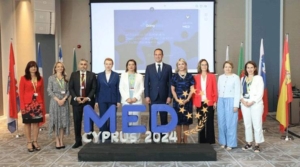
WEEC Network has taken part in the 𝑬𝑺𝑫 𝑭𝒐𝒓𝒖𝒎 Go Green, a comprehensive event that included the Med-9 and UNECE that was held in Limassol, Republic of Cyprus.

WEEC Network made a contribution to the Med-9 High-Level Forum on Education for Sustainable Development and Green Transition in the Mediterranean Region during the session ‘The Twin Transition: Digital and Green Sustainable Learning ‘. WEEC Network’s representative, Dr. Mariaclaudia Cusumano, presented the contribution ‘Cultures of Sustainability behind Spotlight.’ This presentation sheds light on the role of cultures in promoting sustainability for a sustainable future.

During the session, policies and strategies for integrating green and digital as sustainable learning have been discussed.

The session was not just a platform for the exchange of ideas but also a catalyst for enhancing cooperation and networking.

As WEEC Network, we presented what has been done both in Italy and at the International level; we focused on the Italian Education Global Citizen as a strategy to promote sustainable development through ESD in lifestyles, human rights, gender equality, and promotion of a peaceful and nonviolent Education as the appreciation of the diversity of culture. We presented the new Plan School- Regeneration, which aims to accompany the Ecological and Social Transition by facilitating activities of EE.
We stressed that numerous barriers still remain in the Italian Education System as many issues are not addressed:

  • Climate change.
  • Understanding of the complexity and interdependence of global challenges.
  • Adoption of awareness, sustainable choice in consumption, in nutrition model, as is an active lifestyle to promote youth health.
  • Understanding of Planetary limits, countering the culture of overconsumption.
  • Educating for critical thinking.

During our speech, we also stressed mainstream communication, particularly regarding fake news and miscommunication, an issue that has a devastating impact on the new generations throughout the toxicity of communication, especially in the context of social media.

It was also a great occasion to shed light on some best practices that are impacting Italy, such as ours.

  • Italian Universities have launched an initiative to promote Sustainable Development; academic Courses are directly linked to one or more of the SDGs for their promotion;
  • Italian Sustainable University Network, RUS has developed lesson zero, a mini course of providing students educational tools for sustainability literacy;
  • National Committee for for Sustainable Development for Agenda 2030, under the auspices of UNESCO, every November the Committee promotes a campaign for the week of ESD;
  • WEEC Italia has training teacher through Summer School,
  • Last but not least YEEC that we are building up for the next World Environmental Education Congress that will be held which will be held in 2026 in Australia as a platform to connect youth that are sharing similar sensibility of Sustainability at the global level.

The Med-9 Ministerial Summit for Education for Sustainable Development and Green Transition in the Mediterranean Region ended with a Non-Official Paper approved by high officials and experts of the Mediterranean countries, NGOs, Academia, and other stakeholders and facilitated by Prof. Michael Scoullos of the Union for the Mediterranean and and Ms. Aravella Zachariou, Head of the Unit of EESD of Cyprus to face the complex and serious challenges to face The global triple crisis which is particularly visible in the Mediterranean, the South and Eastern of Europe. It has merged the need to make a prominent effort to implement the Action Plan Towards 2030 of the Mediterranean Strategy on ESD. This includes cross-cutting themes among environmental issues, cultural, socioeconomic, democratization, gender, and youth, as well as peace, security, and human rights to ensure a sustainable future for all.

https://esdforumcyprus2024.com

/in Press/di

Inaugural Speaking 4 the Planet competition ignites environmental passion in Africa

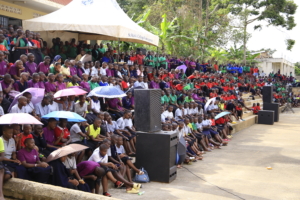
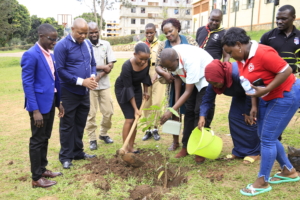
Africa witnessed a groundbreaking event as the inaugural Speaking 4 the Planet competition took center stage, hosted by St Mark’s College, Namagoma.

This momentous occasion marked a pivotal step in igniting environmental consciousness across the continent.

The competition, held under the theme “Use your philosophy as a club to address environmental challenges,” brought together eleven clubs, each presenting a compelling array of speeches, creative arts, and visual representations advocating for environmental preservation.


Event highlights:

Under the meticulous guidance of judges Jackie, John Paul, and Arnold, participants showcased their talents across three categories:

  1. Speech: Students delivered impassioned addresses, both junior and senior, highlighting the urgency of environmental conservation within a strict four-minute timeframe.
  2. Creative Arts: Clubs exhibited their creativity through dance, skits, or poetry, each performance limited to four minutes.
  3. Art Piece: A visually captivating aspect where participants articulated the essence of their artwork within a concise one-minute presentation.

Inspiration and dedication:

Leading the charge in organizing this transformative event was Bruno Muyunga, an environmental activist and IT specialist at St Mark’s College, Namagoma. Muyunga’s unwavering commitment stemmed from a deep-seated passion for protecting the environment, fueled by his childhood experiences of witnessing the natural world.

Attending the 12th World Environmental Education Congress in Abu Dhabi served as a catalyst for Muyunga, reinforcing the imperative for environmental education and awareness. Inspired by the global discourse on sustainability, he resolved to spearhead initiatives aimed at nurturing a generation equipped to safeguard the planet.

Impact and future prospects

The Speaking 4 the Planet competition transcended mere rhetoric, serving as a catalyst for tangible action and advocacy. By engaging diverse stakeholders and fostering dialogue on environmental stewardship, the event illuminated the path towards a more sustainable future.

As the winner, the Science Club emerged triumphant, symbolizing a collective commitment to environmental preservation.

Their prize, a symbolic goat, epitomized the profound connection between humanity and nature, underscoring the responsibility entrusted upon future generations.

Looking ahead, St Mark’s College, Namagoma, sets the stage for the next chapter in Africa’s environmental journey, with plans to host future iterations of the Speaking 4 the Planet competition. Through collective endeavor and unwavering determination, the seeds of change sown today promise a greener, more resilient tomorrow.

Acknowledgments

The success of the Speaking 4 the Planet competition would not have been possible without the invaluable support of collaborating partners, including the Sutherland Shire Environment Centre, AAEE, Paddy Pallin, and the WEEC Secretariat. Their unwavering commitment to environmental advocacy exemplifies the spirit of collective action and solidarity in safeguarding our planet.

As the curtains close on this inaugural event, Africa stands poised on the precipice of a new environmental awakening. The journey towards sustainability beckons, with each step forward guided by the shared vision of a harmonious coexistence between humanity and the natural world.

/in News, Press/di

WEEC Network Joins Campaign to Protect Right to a Clean, Healthy, and Sustainable Environment

We are pleased to announce that WEEC Network has officially joined the collective effort to advocate for the protection of the right to a clean, healthy, and sustainable environment across Europe.

In response to ongoing environmental challenges and the escalating triple planetary crisis, civil society organizations and social movements from various sectors are uniting to call upon the Member States of the Council of Europe to recognize and safeguard this fundamental human right through an additional protocol to the European Convention on Human Rights.

The importance of this initiative has already been recognized by international bodies such as the UN Human Rights Council and the UN General Assembly, as well as by over 160 countries worldwide. However, the Council of Europe, representing 46 Member States and over 700 million citizens, has yet to officially acknowledge this right within its legal framework.

By endorsing this campaign, WEEC Network joins dozens of organizations across Europe in urging European governments to take concrete steps to protect the environment and ensure the well-being of current and future generations.

The lack of adequate protection of the right to a healthy environment under the European Human Rights framework remains a pressing issue, particularly considering the significant public health impacts of air pollution and the disproportionate effects of climate change on vulnerable communities.

The proposed additional protocol would not only strengthen existing legal frameworks but also empower the European Court of Human Rights to safeguard environmental rights effectively. Furthermore, it would signal Europe’s commitment to addressing the environmental crisis and providing its citizens with enforceable environmental protections.

/in Press/di

MECCE Project announces third call for proposals for quality climate change communication and education case studies

The Monitoring and Evaluating Climate Communication and Education (MECCE) Project, a collaborative effort among over 100 prominent scholars and agencies, has unveiled its third funded case studies call for proposals. With an esteemed Advisory Committee including the likes of the IPCC, UNESCO, UNFCCC, and UNESCO Global Education Monitoring Report, MECCE aims to deepen the understanding of quality Climate Change Communication and Education (CCE) through insightful case studies.

Researchers, practitioners, and stakeholders are invited to submit their proposals until March 25th, 2024. The project seeks to fund a minimum of 10 case study research projects, offering up to CAD $10,000 per project. While all proposals will be given due consideration, this year MECCE is particularly interested in initiatives from Latin America and Eastern Europe. They are also keen on CCE initiatives focusing on public participation, public access to climate change information, and educational sectors such as pre-primary, primary, and higher education.

What is MECCE looking for?

MECCE is seeking case study proposals that delve into established quality CCE initiatives. The aim is to better understand how these initiatives contribute to the landscape of climate change education. Projects should offer clear research questions, methods, and approaches, primarily utilizing qualitative research methods.

Benefits of participation and eligibility

Participating in these case studies offers a range of benefits:

  • Receive funding: Up to $10,000 CAD to conduct in-depth research on a quality CCE initiative.
  • Contribute to knowledge: Help advance the understanding of quality CCE and ways to enhance CCE initiatives globally.
  • Global networking: Connect with a diverse network of CCE researchers and practitioners.
  • Showcase work: Display innovative CCE efforts through international platforms, including the MECCE Project’s data platform and digital library.
  • Optional activities: Opportunities for joint publications, blog posts, and cross-case study analyses.

Deliverables

Successful applicants will be expected to:

  • Participate in calls with the MECCE Project Office for updates and support.
  • Submit a comprehensive final report detailing the case study and its findings.
  • Provide a multimedia package showcasing the CCE initiative (e.g., photos, videos).
  • Publish findings in academic or professional publications, and present results to target audiences.

Application process and deadlines

Proposals should be submitted through the application portal by the deadline of March 25, 2024, at 11:59 pm EST.

For more information on the MECCE Project and to view previously funded case studies, visit mecce.ca. Don’t miss this opportunity to contribute to the advancement of Climate Change Communication and Education on a global scale!