/in Press/di

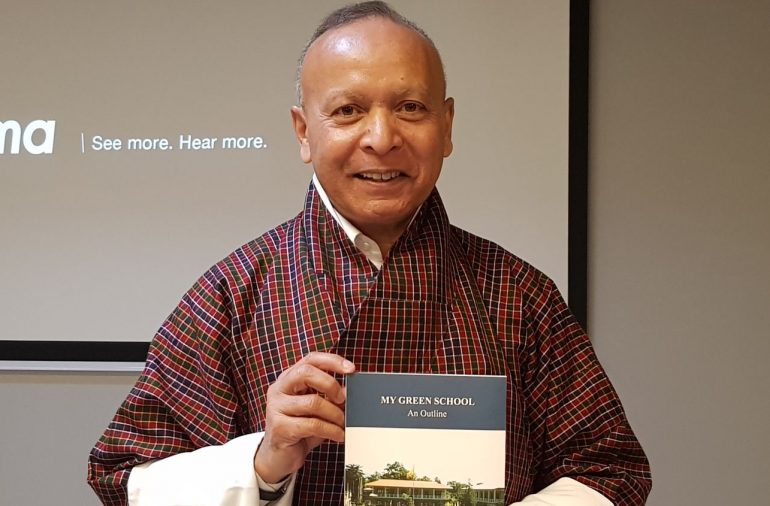
Former Minister of Education in Bhutan, Lyonpo Thakur S Powdyel, at 10WEEC

The WEEC Permanent Secretariat is proud to announce that Mr. Lyonpo Thakur S Powdyel (former Minister of Education in Bhutan) will be a key note speaker at 10th WEEC (Bangkok, Thailand, 3-7 November 2019)

Lyonpo Thakur is the founder and great supporter of the concept of Green Schools in Bhutan. He wrote a book called “My Green School”. He calls it a meditation on the core function of education. In “My Green School” he develops eight elements that are the vital claims that education systems and educators must affirm and advance to make teaching and learning more purposeful and integral. There are some fine examples or models of Green Schools in Bhutan, which Lyonpo Thakur can refer to.
Thakur S Powdyel was awarded the prestigious International Gusi Peace Prize in 2011 for Life-time Contribution to Education, and the Global Education Award in 2012 for Outstanding Contribution to Education. He has experience in speaking at many international meetings and conferences.
We hope you can find his speech very motivating and inspiring. We look forward to seeing you soon at 10th WEEC!

/in Press/di

Discover Thailand nature with the 10th WEEC

The Thai laws of 2002 and 2006 for the protection of the forest heritage as well as those for the protection of the most valuable areas, have allowed the slowing down of a process of progressive elimination of the forest component. At the beginning of 1900, 70% of the territory of Thailand was covered with forests, with fine mahogany trees, various types of walnut, oak and beech trees, as well as different types of pines. Gradually this natural “green lung” decreased to a skimpy 25% of the total around 2000. Since then there has been a vigorous swerve that led to the current stabilization, with a consolidated “green” presence of around 35% of the territory. Especially with many new areas for special protection or, in some cases, integral.
Particularly noteworthy are the areas of protection of teak and trees belonging to the Dipterocarpaceae, the Lauan, the Meranti, with large productions of resin and excellent wood. There are also giant bamboo forests with rods as high as eight meters and sections of 25 cm in diameter. Even these are duly protected or, as in the case of the Khao Sok (in the picture) reservation, even become an opportunity for revaluation also in terms of tourism and culture. The same applies to the large lotus plots and the three varieties of water lilies present, all well protected and followed by special groups of volunteers and “green policemen”.

The protection of animals, as well as forests has increased

Also the protection of the typical animals of the region has had, since the eighties, a particular attention. There are still areas where the cultivation of rice, cotton, hemp, pineapple, fruit palms is carried out, with traditional systems and, also with the use of buffalo, oxen and – sporadically – elephants with small ears, but – as you can imagine – by now all the crops are correctly mechanized, while maintaining little more than familiar extensions.
The use of these animals (and especially of the elephants) is, today, confined to some very isolated peripheral realities, or within didactic-information centers specialized in the promotion of the “Thai” traditions. A condition of protection that has been made explicit by the 1989 Delegation Law that has definitively freed all elephants registered in the Thai state from all forms of forced labor.
Serious damage to wildlife has been affected by poaching and the capture of particular exotic animals. Although it would be more appropriate to use the present time, since it is one of the most sanctioned crimes since 2000. The most sought-after animals are the tapirs, the rhinos and the elephants themselves. A similar fate has been left to gibbons, Khao monkeys and many types of birds.

This is a continuous struggle between local traffickers (linked to Chinese and Western sorting centers) and the various law enforcement agencies who, we recall, in the case of capturing the perpetrators, do not hesitate to apply very heavy penalties.
Similar conditions also reserved for the many producers of opium poppies, marijuana hemp and other hallucinogenic products (the “Thran” fungus among them).
A packet of hashish ready for use, if seized at the airport at the time of embarkation to leave Thailand, even if it is a few tens of grams, can lead to a minimum detention of three years. Pure fish industry, only partly Thai (mostly in Chinese and Malay), has contributed to the impoverishment and transformation of both marine and river biological variety. There are practically no more shrimps (the traditional “hakifs”) in free circulation conditions, as well as some types of crabs, particularly sought after for tasty meats.
However, since 1991 the centers of “fish culture” have increased with a gradual recovery, in special basins, of the traditional local fishery products.
Also the crocodiles and snakes, above all the cobras, the object of spasmodic hunting, although very forbidden, have also decreased. The first for particularly soft and shiny skins, the second for the poison (paid for by the weight of gold by the pharmaceutical industry) and for the variously spotted fleece.
Even the silk industry, for almost two hundred years the prerogative of the Chinese community, has been “recovered” thanks to government incentives that are making the Thai territory the third largest world producer of natural silk, that is the one that uses the worm in all its phases.
We are waiting for you in Thailand, at 10WEEC.

Pierluigi Cavalchini

/in Press/di

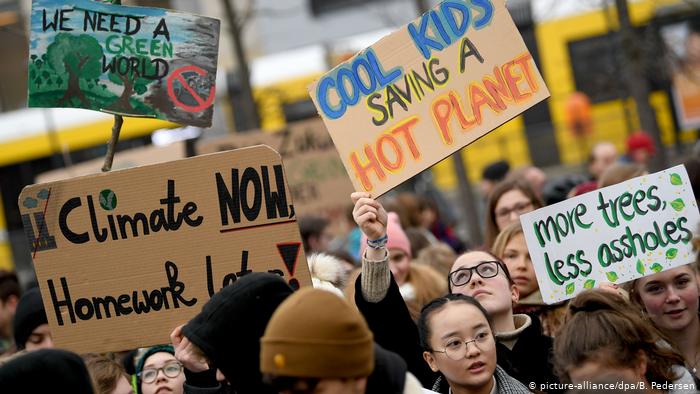
Women, young and middle class for the climate

Tous nos points de repères sont entrain d’être chamboulés. Nous ne devons plus chercher à regarder le vieux sage pour trouver la voie, il faut au contraire chercher la jeune écolière en grève assise seule dans le froid. Nous ne devons plus chercher les princes, s’il n’y en a déjà eu, il n’y en a plus, c’est dans les classes moyennes que se trouvent celles et ceux qui nous sauvent.

La vie est ailleurs et l’humanité aussi

Toutes et tous nous connaissons Greta maintenant, il suffit de dire Greta c’est bon, on sait de qui et de quoi il est question. Elle a 16 ans, il y a aussi Alexandria aux Etats unis, elle a 13 ans et il y en a aussi une dans le Colorado c’est Haven 12 ans, des jeunes filles qui coordonnent les actions pour le climat il y en a en Belgique, en Allemagne, en Australie… Ce sont encore des enfants, pas tout à fait des jeunes pour certaines. Elles sont déterminées, n’ont rien à perdre, elles savent intuitivement sans doute que les 40-70 ans qui mènent le monde se sont totalement fourvoyés, qu’ils mentent et qu’il ne faut surtout pas les suivre. Pour une raison simple, la vie est ailleurs et en conséquence l’humanité aussi.

Les pauvres, ne peuvent rien

Quand on regarde la carte des manifestions du 15 mars dans le monde on s’aperçoit qu’elles ont lieu dans les pays ayant les classes moyennes les plus développées, vivant dans les pays les plus libres. Bien peu de manifs dans les pays émergents où les populations dans leur grande majorité doivent se battre au quotidien pour leur survie. – le paysan qui doit tous les jours cultiver son riz pour nourrir sa famille ne peut pas s’occuper des affaires de la cité – dit le sage. Aujourd’hui il ne s’agit pas des affaires d’une ville particulière, il s’agit des affaires de la planète. Les plus de 7,5 milliards d’humains sur la planète sont concernés. Notre survie dépend de l’action de chacune et chacun d’eux. Nous avons besoin de tout le monde pour nous en sortir, pas un(e) dont la présence active pour la transition serait inutile. Les pauvres quand ils seront moins pauvres s’associeront à la lutte pour le climat.

Les riches ne peuvent rien

Aussi évident que les pauvres ne peuvent rien, les riches ne peuvent rien. S’ils pouvaient quelque chose ils l’auraient déjà montré. Ils ont toutes les manettes, les riches. Ils ont la presse dans des proportions insensées, en particulier en France, ils ont tous les leviers économiques en mains, ils ont le pouvoir politique pratiquement partout. Cela fait 60 ans et même plus qu’ils savent qu’il y a un problème avec l’environnement et ils ne font rien. C’est juste qu’ils ne peuvent rien faire. Pourquoi ? Il faudrait leur demander. Vu de notre fenêtre de la classe moyenne on peut penser que leur arrogance les aveugle. Ils se prennent pour des dieux comme dit Nicolas Hulot riche lui-même, il sait de quoi il parle. Les riches quand ils seront moins riche retrouveront la communauté et le sens des responsabilités.

Développer les classes moyennes pour sauver l’humanité

Il reste les classes moyennes. Ces classes moyennes, menacées d’érosion un peu plus chaque année par le bas il y a des milliards de pauvres dans le monde, 8 millions rien que en France, chiffre en constante augmentation, 600 000 de plus en 10 ans de 2006 à 2016. Les classes moyennes qui ne sont pas nourries par le haut, des riches tous les ans de plus en plus riches. De plus en plus de très riches, autant dire de plus en plus d’irresponsables qui se vivent hors communauté. C’est là dans ces classes moyennes que se trouvent celles et ceux qui se mettent debout pour le climat. Des personnes instruites ayant le sens des responsabilités, dotées d’un esprit critique développé, aptes à prendre des initiatives. Ce sont ces classes moyennes qui doivent augmenter dans le monde, ce sont elles qui peuvent nous sauver. En augmentant de façon très importante l’éducation à la transition pour toutes et tous tout au long de la vie.

Les vieux ne peuvent rien

Ce sont les plus âgés d’entre nous qui nous ont mis dans cette situation. Par avidité comme Gandhi l’a dit : « Il y a assez de tout dans le monde pour satisfaire aux besoins de l’homme, mais pas assez pour assouvir son avidité », par manque d’esprit critique et là on pense aux paysans qui se laissent embobinés par les marchands de produits phytosanitaires vendus par les coopératives et à tant d’autres qui achètent un tas de produits inutiles et souvent néfastes pour la santé, ravage de la publicité. Les vieux sont dans l’erreur par manque de culture écologique. Certaines et certains d’entre nous avaient un cours d’écologie en première et terminale au tout début des années 70, cela n’a pas été généralisé par les institutions éducatives. Les vieux peuvent faire leur examen de conscience et se mettre au service des jeunes. Durant nos vies pendant 30 ans on rêve, de 30 à 60 on tente de réaliser nos rêves et de 60 à 90 on aide les jeunes à réaliser leurs rêves. Quoi d’autre ?

Les hommes ne peuvent rien

Ce sont des femmes. Il y a les jeunes femmes certes et les très jeunes, elles sont sur la scène mais il y a aussi les plus grandes qui sont plus en coulisses. Sylvie qui plante une forêt avec ses élèves du primaire, Sophie qui met tout son collège en débat sur le climat, Lucie qui se met en grève de l’école posant la question du sens du métier d’enseignant et les leaders d’enseignant.e.s pour la planète, encore des femmes. Peut-être que les hommes ont moins de courage aujourd’hui, peut-être que les manettes dont ils ont encore le contrôle commencent à leur brûler les mains. Ils ne savent plus qu’en faire, ils doutent. Elles, elles sont appelées par la vie. Elles nous emmènent vers la vie.

L’émergence d’une citoyenne planétaire

« Selon les organisateurs de ce mouvement baptisé « Fridays for Future », plus d’un million d’étudiants, de lycéens et de collégiens ont défilé dans 2 000 villes de 125 pays, un record. » dit le Monde du 16 mars. Ailleurs il dit « 168 000 jeunes ont défilé vendredi dans plus de 200 villes en France ». A écouter les jeunes dans les rues de Montpellier le 15 mars, à sentir leur énergie et leur détermination, à entendre la force de la clameur qui sortait de leurs poitrines on se prend à retrouver une sorte d’espérance. Elles et ils sont entrain de faire émerger la citoyenne planétaire. Ce ne serait pas juste de la mettre au masculin, tant, en ces jours sombres, nous devons aux femmes.

Roland Gérard
/in Press/di

Air crash: environmentalism cries its victims

A great tragedy has hit the world of environmentalism. The Ethiopian Airlines aircraft crashed yesterday after take-off near Addis Ababa, caused the death of 157 people who were on board, including passengers and crew members.
Among the victims there are also many delegates who were directed to the Fourth Assembly of the United Nations on Environment in Nairobi.

The WEEC Permanent Secretariat gathers around the relatives of the victims. Mario Salomone, WEEC General Secretary recalls that everyone’s commitment is important for the future of the planet. «The pain for the loss of so many people actively involved in the protection of the environment – he said – must make us continue their meritorious work and must remind us that their life had a common and highly meritorious goal».

The assembly opens today (Monday, 11th) in silence to remember the victims of the plane crash. The goal of the forum is to understand how to save the planet from climate change and resource over-exploitation, and in this context until 15 March, heads of state and environment ministers, with NGOs, activists and multinational administrators will meet to discuss and make commitments, with a view to a global environmental pact.

The people on board had 32 different nationalities: 8 Italians, 32 Kenyans, 18 Canadians, 9 Ethiopians, 8 Chinese, 8 Americans, 7 French, 7 British, 6 Egyptian, 5 Dutch, 4 people with UN passports, 4 Indians, then citizens of Austria, Switzerland, Russia, Morocco, Spain, Israel, Belgium, Indonesia, Uganda, Yemen, Sudan, Serbia, Togo, Mozambique, Rwanda, Somalia, Norway, Ireland.
The many peoples fraternized by a tragic destiny are a symbol of the unity of humanity beyond borders, languages and cultures.

/in Press/di

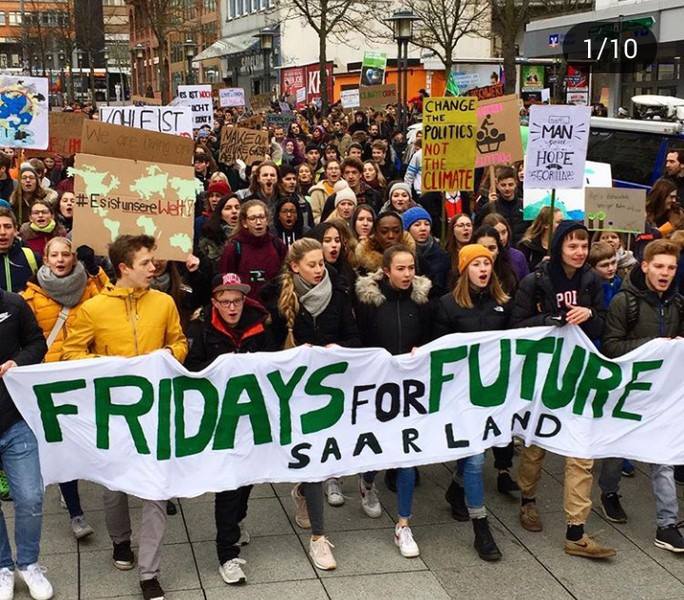
Fridays for future. Alongside young people all over the world

From the young Swedish student Greta Thunberg, the successful example of how the message on the urgency of change can reach hearts and consciences. She deserves all our applause and support. From his courageous gesture a movement is born that mobilizes groups of young people all over the world. The events of “Fridays for future” and the global strike of March 15th are a sign of hope that must leave its mark. This is why the WEEC Secretariat invites all the people involved in the defense of the environment and all the members of the largest international network of environmental educators to join, to be in the front line and to give maximum support to the campaign for the respect for commitments against global warming. «Greta» said among other things the WEEC Secretary General Mario Salomone «spoke also to the great people of the Earth, COP24 and the WEF of Davos. They heard her, but it is not said that they listened to her. It is up to all of us to help extinguish the burning house fire. Women and men of every generation side by side».

FR

A côté des jeunes du monde entier. L’éducation à l’environnement au premier rang de la bataille pour le climat

Le réseau d’éducation à l’environnement WEEC adhère à Fridays for Future en fournissant ses canaux d’information et ses bureaux. Greta Thunberg, jeune étudiante suédoise, montre comment le message sur l’urgence du changement peut atteindre les cœurs et les consciences. Journée de mobilisation du 15 mars contre la catastrophe climatique. Le Secrétaire général WEEC, Mario Salomone, lance un appel à l’adhésion.

Greta Thunberg mérite tous nos applaudissements et notre soutien. De son geste courageux est né un mouvement qui a mobilisé des groupes de jeunes du monde entier. Les événements de vendredi ” pour l’avenir ” et la grève mondiale du 15 mars sont un signe d’espoir qui doit laisser sa marque. C’est la raison pour laquelle le secrétariat du réseau environnemental du WEEC invite toutes les personnes impliquées dans la défense de l’environnement et tous les membres du plus grand réseau international d’éducateurs à l’environnement à se joindre à nous, à être en première ligne et à apporter un soutien maximal à la campagne pour la protection de l’environnement. respect des engagements contre le réchauffement climatique. « Greta – a notamment déclaré le secrétaire général du WEEC, Mario Salomone – s’est également entretenu avec les plus grands peuples de la Terre, la COP24 et le WEF de Davos. Ils l’ont entendu, mais on ne dit pas qu’ils l’ont écouté. Nous devons tous aider à éteindre l’incendie de la maison en feu. Les femmes et les hommes de chaque génération côte à côte ».


ES

Junto a los jóvenes de todo el mundo. Educación ambiental en primera fila en la lucha por el clima

La red de educación ambiental WEEC participa en Fridays for Future poniendo a disposición sus canales de información y oficinas. Empezando por la joven estudiante sueca Greta Thunberg, el exitoso ejemplo de cómo el mensaje sobre la urgencia del cambio puede llegar a los corazones y las conciencias. El 15 de marzo día de movilización contra la catástrofe climática. Desde el Secretariado General WEEC Mario Salomone un llamado a unirse.

Greta Thunberg merece todo nuestro aplauso y apoyo. De su gesto valeroso nació un movimiento que movilizó a grupos de jóvenes de todo el mundo. Los eventos del viernes “para el futuro” y la huelga global del 15 de marzo son un signo de esperanza que deba dejar su huella. Por este motivo, el Secretariado de la Red mundial de educación ambiental WEEC invita a todas las personas involucradas en la defensa del medio ambiente y a todos los miembros de la red internacional más grande de educadores ambientales a unirse, estar en la primera línea y dar el máximo apoyo a la campaña para el respeto por los compromisos contra el calentamiento global. «Greta» dijo el Secretario General de WEEC, Mario Salomone, «habló también a las grandes personas de la Tierra, la COP24 y el WEF de Davos. La escucharon, pero no se sabe si la entendieron. Depende de todos nosotros ayudar a extinguir el incendio de la casa. Mujeres y hombres de todas las generaciones lado a lado».

/in Press/di

Media Credentials for Journalists at WEEC2019

Press and Media are warmly welcome to attend the 10th World Environmental Education Congress in Bangkok (3-7 November 2019). In order to attend as press you need to submit an official press ID specifying media affinity to media@weecnetwork.staging.19.coop  and wait for an acceptance letter from the Organizing Committee in order to register as media. Fill the press accreditation form and send it to media@weecnetwork.staging.19.coop
Our  wish is for a distribution of press geographically and according to media type.

Journalists, including photographers, are required to submit one of the following:

  • A letter of assignment on the letterhead of the news organization being represented
  • Copies of 2 bylined environmental/science articles (or credited photos) published within the last year. Web links are acceptable, provided the full article is accessible.
  • A copy of official press credentials, such a press card issued by a recognized journalists’ association or a government-sanctioned press organization and/or a business card issued by a recognized news organization

Freelance journalists including photographers must submit one of the following:

  • A letter of assignment on the letterhead of the news organization being represented
  • Copies of 2 bylined environmental/science articles (or credited photos) published within the last year. Web links are acceptable, provided the full article can be accessed.
/in Press/di

WEEC2019, new Call: Patterns of Complexity in an Anthropocene Environmental Curriculum

We want to analyze how an experimental curriculum in Environmental Education in the era of Anthropocene requires a multi-disciplinary and a multi-scale approach. Through the presentation of examples and case studies, we intend to show how an environmental thinking framework has to include simultaneously:
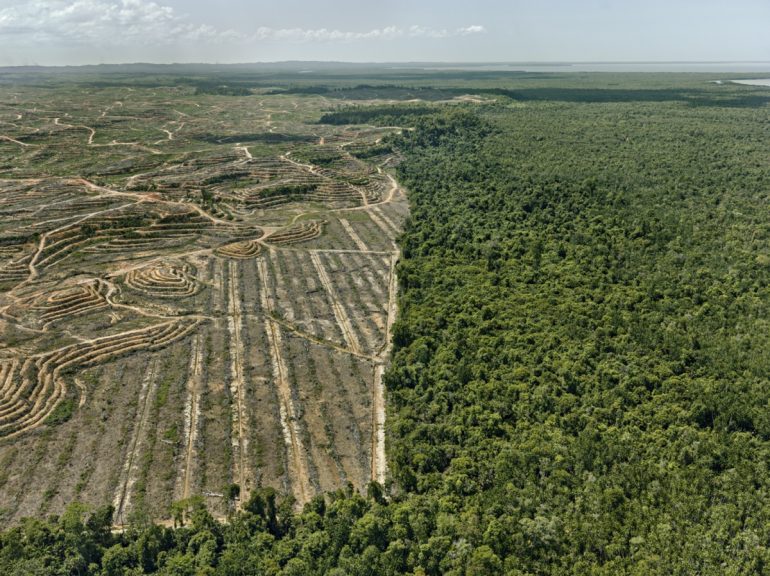
– a focus on local approach and on the implementation of small scale interventions, aimed at empowering small agents and local minorities;
– a focus on the realization of macro actions, planned in top-down perspective, and effective on a global scale.
Such capability of upscaling and downscaling within the same thinking framework characterizes the patterns of the theory of complexity, in particular reflecting self-similarities and recursive behaviors presented by multiscale systems. Environmental education in fact reveals itself as a complex topic, where multiple patterns of specific localities and macro complexities coexist and converge.
At the same time, the time frame of the Anthropocene we are supposedly living in calls for a strong multidisciplinary approach. No methodology or traditional field of research alone can make sense of the Anthropocene multiple environmental controversies. Anthropocene is both a fully natural and fully cultural construct.
The practice of ethnography typical of anthropological research is particularly fitted to identify and highlight small-scale contexts, and to pinpoint the role of local actors, minority groups and marginal societies, but it shows some limitations when confronted to quantitative information and big data, that are at the basis of all the environmental knowledge in the making. A productive pattern for an Anthropocene Environmental Curriculum has to be able to embrace heterogeneous methodologies and knowledge sources, and at the same time build the epistemological texture where uneven data can dialogue and develop.
The thematic cluster calls for papers that describe local and global scale case studies, used profitably in Environmental Education, which rely on and exemplify multi-scale thinking frameworks and multi-disciplinary approaches.

Call proposed by:
Elena Bougleux
– University of Bergamo, elena.bougleux@unibg.it
Jennifer Wells – CIIS San Francisco, jwells@ciis.edu

/in Press/di

Come promoting the WEEC with us!

Voir ci-dessous pour la version française
Ver abajo para la versión en español

We hope you can support the congress and its dissemination. How? Here you are some quick suggestions:

  • Send an invitation to participate to all your friends and colleagues. Many people could be interested in attending the Congress, but maybe they are not in our database. Ask them to subscribe our newsletter to be always in contact with us. If you like, help us also to spread the communication about WEEC 2019 using the “Save the date” stamp as signature of your e-mail and on social network and websites.
  • Promote your country delegation. Do you want to be the referent of your country? Surely you know many people interested in participating, but (for reasons of time and work) they need help in organising, that person can be you!
  • Do you know that you can get a discount using the group rateGroup of 5 persons and upto 9 persons, who registered together / same time, will get 10% discount on total fee. Group of 10 persons and above, who register together /same time, will get 20% discount on total fee. Organize your group (association, university, institution, group of friends and students)!
  • Pay before, pay less. The early bird registration is valid until  March 31st 2019. It is therefore useful to take advantage of it.
  • Send us your proposal for a Call. We launched the call for papers on specific topics we are going to receive. This initiative aims at promoting a collaborative process enriching and specifying topics listed on the program. So, you (or your colleagues) can send us your own thematic calls for papers we will share and will promote through the WEEC website, newsletter and Facebook. Proposals you like to develop with/to announce to colleagues from all over the world can be sent to: staff@weecnetwork.staging.19.coop (suitable deadline: March 31st 2019).  Of course, proponents will be the point of reference also BEFORE the congress and at the congress they will chair/coordinate thematic niches built on this basis.

We are sure that, thanks to your help, it will be a remarkable Congress!


FR
Nous espérons que vous pourrez soutenir le congrès et sa diffusion. Comment ? Voici quelques suggestions rapides:

– Envoyez une invitation à tous vos amis et collègues. Si vous le souhaitez, aidez-nous également à diffuser la communication sur le WEEC 2019 en utilisant le timbre ” Save the date ” comme signature de votre courrier électronique ainsi que sur les réseaux sociaux et les sites Web.

Promouvez-vous la délégation de votre pays. Voulez-vous être le référent de votre pays ? Vous connaissez sûrement beaucoup de personnes intéressées à participer, aidez-les à s’organiser !

– Savez-vous que vous pouvez obtenir un rabais en utilisant le tarif de groupe :  Groupe de 5 personnes et jusqu’à 9 personnes, qui se sont inscrits ensemble / en même temps, obtiendront 10% de réduction sur les frais totaux. Les groupes de 10 personnes et plus, qui s’inscrivent ensemble / en même temps, obtiendront un rabais de 20% sur les frais totaux.

– Payez avant, payez moins. L’inscription anticipée est valable jusqu’au 31 mars 2019. Il est donc utile d’en profiter.

– Envoyez-nous votre proposition d’appel. Nous avons lancé l’appel à communications sur des sujets spécifiques que nous allons recevoir. Cette initiative vise à promouvoir un processus de collaboration enrichissant et spécifiant les sujets énumérés dans le programme. Les propositions que vous aimez développer avec / à annoncer à des collègues du monde entier peuvent être envoyées à: staff@weecnetwork.staging.19.coop (date limite: 31 mars 2019). Bien entendu, les promoteurs seront le point de référence également AVANT le congrès et, lors du congrès, ils présideront / coordonneront les niches thématiques construites sur cette base.

Nous sommes sûrs que, grâce à votre aide, ce sera un congrès remarquable!

ES

Envía una invitación para participar a todos tus amigos y colegas. Si lo desea, ayúdenos también a difundir la comunicación sobre WEEC 2019 utilizando el sello “Guardar la fecha” como firma de su correo electrónico y en las redes sociales y sitios web.

– Promover la delegación de su país. ¿Quieres ser el referente de tu país? Seguramente conoces a muchas personas interesadas en participar, ayúdalos a organizarse!

– ¿Sabe que puede obtener un descuento utilizando la tarifa de grupo:  Grupo de 5 personas y hasta 9 personas, que se registraron juntas / al mismo tiempo, obtendrán un 10% de descuento sobre la tarifa total. Grupo de 10 personas o más, que se registren juntos / a la misma hora, obtendrán un 20% de descuento sobre la tarifa total.

– Paga antes, paga menos. La inscripción anticipada es válida hasta el 31 de marzo de 2019. Por lo tanto, es útil aprovecharla.

– Envíanos tu propuesta de convocatoria. Lanzamos la convocatoria de artículos sobre temas específicos que vamos a recibir. Esta iniciativa tiene como objetivo promover un proceso de colaboración que enriquezca y especifique los temas enumerados en el programa. Las propuestas que desee desarrollar con / para anunciar a colegas de todo el mundo se pueden enviar a: staff@weecnetwork.staging.19.coop (fecha límite adecuada: 31 de marzo de 2019). Por supuesto, los proponentes también serán el punto de referencia ANTES del congreso y en el congreso presidirán / coordinarán nichos temáticos construidos sobre esta base.

Estamos seguros de que, gracias a su ayuda, ¡será un Congreso extraordinario!

/in Press/di

WEEC2019. New Call: The environment and indigenous development challenges

The World Bank estimates that there are about 370 million Indigenous people living worldwide in over 90 countries, accounting for 4,8% of the world’s population. Almost 80 percent of these are located in Asia and more than one-third in China alone. This type of ancestral knowledge and expertise on how to adapt, mitigate and reduce disaster risks has been internationally recognized as a support for the modern methods to cope with the imminent effects of climate change. Further, indigenous education can be an example of what a sustainable life means: a non-anthropocentric experiential transmission of coexistence with nature, based on mutual respect and a deep sense of belonging. Any knowledge (epistemology) can “be useful or useless, politically salient or meaningless, socially relevant or irrelevant, empirically testable or irrefutable, ideologically open or blind, without reference to whether it is indigenous or scientific” (Arun Agrawal). However, conitnuing pressure to maintain living standards in the industrial countries imply devastating socio-economic and territorial changes for indigenous peoples all over the world. The Their livelihoods are contaminated by raw material extraction and deforestation processes, and actions that force them to enter into market dynamics as the only way to survive and protect their territory.
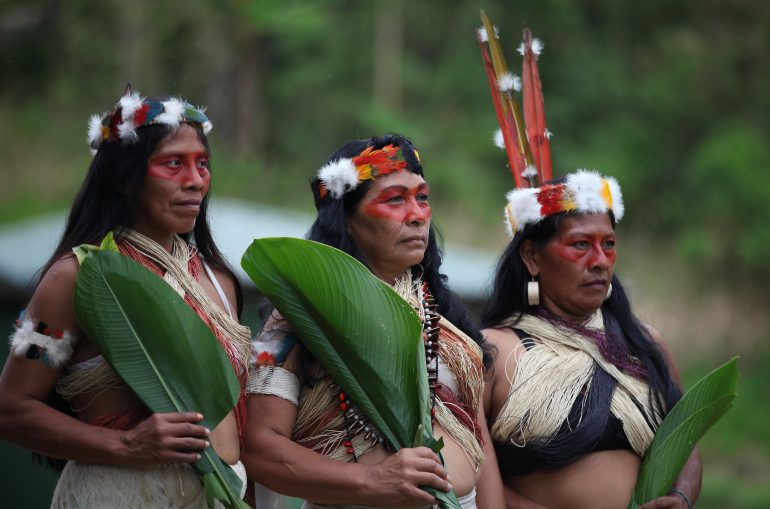
In this context, some significant figures have begun to shown their influence in facilitating change: among others the Bora(1) leader, Liz Chicaje Churay, was awarded with the Franco-German Human Rights Prize and Rule of Law Award for her work in favor of the territorial security of the indigenous communities of Peru(2); Ruth Buendía, Asháninka(3), won The Goldman Environmental Prize (South and Central America) for her leadership skills in raising awareness about the impact of Peruvian energy development and its threats using digital simulations of how the Ene River Valley would be flooded during construction. Today more and more leaders from indigenous communities are involved in environmental defense issues. Another example is Rusbel Casternoque, a leader of the indigenous community Kukama Tarapacà, who is actively fighting for a prior consultation process in the case of “Hidrovia Amazonica”(4), worried about the environmental impacts that would fall on the territory, in particular regarding the issue of food and livelihood sources for communities along the rivers courses there. It should be stressed that among the indigenous peoples we must also not only isolated communities, but those who have integrated into the urban centres or live on reserves (see for example First Nations communities in Canada).

These are many examples of how indigenous cultures are in tension with the industrialized West. With our research we need to raise awareness about the many connections between environmental stewardship and indigenous cultures; at the same time, new technologies and the mass media give a voice and a face to all persons, stimulating proactive processes of change.

In line with this aim, we welcome contributions (in the form of oral sessions, papers, posters, round table sessions or workshop) engaging with any of the following (and associated) topics:

The 21st century indigenous communites and cultural values
Ancestral knowledge and experiential education techniques
Indigenous adaptation measures assisting in current environmental remediation
Tensions between indigenous cultures and globalization processes
Forms of environmental education occurring in Indigenous communities
Modern tools useful for the improvement of life in indigenous communities

Enquiries: staff@weecnetwork.staging.19.coop –  Flavia Napoletano in cooperation with David Zandvliet

References

The World Bank (2018) “Indigenous people”,

Arun Agrawal (2009) Why indigenous knowledge?, 39:4; 157-158, DOI:10.1080/03014220909510569

1Indigenous peoples originally settled in Colombia, nowadays in the north-east of Peru after the rubber exploitation.
2Her actions led the creation of the Yaguas National Park.
3Asháninkas are the demographically largest Amazonian indigenous people of Peru.
4The project involves dredging some areas of the Amazon River (Brazil and Peru) and its tributaries (Marañón, Ucayali and Huallaga), to ensure “safe navigation throughout the year”.