/in Press/di /Lascia un commento

“Gilets jaunes”. A special focus on the Francophonie by Roland Gerard
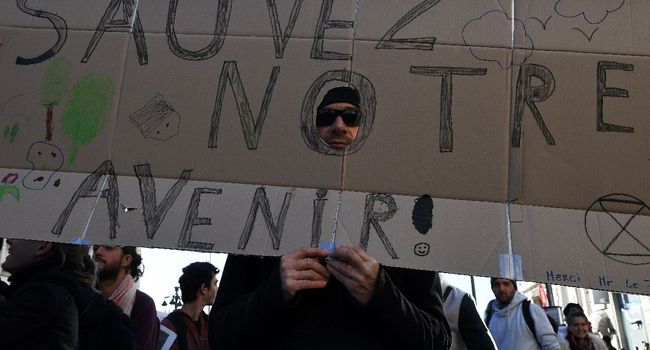
Cet été Nicolas Hulot le ministre de l’écologie, a démissionné du gouvernement en disant en direct à tous les français sur France inter : « … je ne veux plus me mentir… ». Comme quelqu’un qui y croyait avant et qui n’y croit plus maintenant. Parce que c’est vrai, tout est là pour qu’on y croie. Les chiffres et les cris d’alerte des scientifiques, les paroles des politiques, les textes signés lors des grandes conférences internationales, tout est là pour qu’on croie, tant le péril est évident, qu’on va faire quelque chose. Alors forcément un temps on y croit… Et puis la réalité s’impose et la prise de conscience vient. Le constat est terrible. « Ils » ne font rien. Il n’y a pas de « nous ». Ce serait stupide d’y croire plus longtemps. Des milliers d’enfants dans des centaines de villes dans le monde comme Greta Tunberg à Stockholm se mettent en grève pour le crier.

Gilets jaunes

Depuis la fin de l’année 2018 et maintenant début 2019 la France est secouée par une crise très grave qui se traduit par de grandes violences et de grandes inquiétudes. Les gilets jaunes en sont la marque. Cela peut sembler étrange mais quand on réfléchit un peu au chemin parcouru ces quarante dernières années, nous avons avec l’histoire de l’éducation à l’environnement, une clé de compréhension de ce désespoir et de cette rage qui monte.

Tous ensemble

Depuis au moins quarante ans en France les acteurs de l’éducation à l’environnement dans leur diversité s’organisent entre eux afin de faire avancer leur pratique éducative dans le corps social français. Dans leur cheminement ils ont créé de nombreuses associations qui sont autant de corps intermédiaires. Le Réseau Ecole et Nature, les GRAINE (Groupe Régional Animation Initiation Nature Environnement) et le Collectif Français pour l’Education à l’Environnement vers un Développement Durable (CFEEDD) sont les plus connus. Après des assises nationales qui ont réuni en 2000, 2009 et 2013 des milliers de personnes toutes parties prenantes, dont des ministres, des acteurs associatifs, des fonctionnaires des collectivités et de l’État, des acteurs syndicaux, des acteurs des entreprises et de l’université … des espaces de concertation pour l’EEDD ont été créés. Tout cela a été porté à bout de bras par les acteurs de la société civile et quelques fonctionnaires éclairé(e)s.

Petite pousse pleine d’espérance qui faute de soin meurt

Mais l’État, comme la plupart des collectivités n’attache pas d’importance à cette organisation des acteurs. A moins qu’il la redoute. On peut dire que les autorités publiques, qu’elles soient nationales ou régionales ou encore plus locales, le plus souvent, il y a heureusement des exceptions, se désintéressent de l’EEDD et la laisse volontiers livrée à elle-même. Il a fallu aux acteurs de la société civile française déployer une énergie considérable pour créer des organisations, faire des assises, organiser le forum international francophone Planet’ERE 2 en 2001 à l’UNESCO avec 1500 participants de 42 pays ! Créer une ONG internationale francophone, s’impliquer dans le World Environnmental Education Congress (WEEC)… Ils n’auront pas de soutien ou si peu, en tout cas jamais à la hauteur des enjeux.

Petite plante spontanée qui pousse pleine de vigueur et après quelques temps meurt sur son rond point privée d’eau quand elle a soif, d’ombre quand il faut de l’ombre, de soleil quand il faut de la lumière, sans soin dans l’indifférence de tous.

Sans corps intermédiaires rien ne va

Ce mouvement des gilets jaunes qui s’est déclenché en novembre 2018 en France et se poursuit avec une grande vigueur en janvier 2019 et qui secoue la France est le symptôme d’un dérèglement profond dans la société française. Nous sommes face à l’absence de corps intermédiaires entre l’autorité publique et le citoyen.

Or sans corps intermédiaires rien ne va. Les associations, les syndicats, les partis politiques… sont des corps intermédiaires, or pour de multiples raisons, ceux en place depuis des années sont affaiblis, ils disparaissent, des nouveaux n’arrivent pas à naitre. Ils sont considérés soit comme sans valeur ou comme contre pouvoir, éventuellement un jour dangereux, donc à éliminer.

Sans eux pourtant l’individu se retrouve sans aucun lien avec l’autorité publique, sans lien avec son prince, sauf, la loi qui s’impose à lui, l’impôt qui s’impose à lui, sauf des média publics dont il doute, sauf un pauvre bulletin de vote qui tous les ans semble peser moins lourd. Il n’a en réalité aucune prise, il ne sait comment agir pour que les choses aillent un peu mieux à son goût dans la société. Il ressent une impuissance incompatible avec le statut de citoyen qu’on lui promet par ailleurs.

« Citoyen » un statut historique et qui a du sens dans l’âme française. Oui, il passerait bien au jaune le gilet de l’éducateur à l’environnement en France. Il avait toutes les raisons de croire que « nous » allions faire quelque chose, l’éducateur à l’environnement. Oui « nous » société civile et autorités publiques locales, régionales et nationales main dans la main, et même les entreprises avec, oui le secteur marchand, dans le dialogue, dans la concertation, dans le respect mutuel, la coconstruction… et rien. On ne peut plus se mentir. Rien.

Quand « essentiel » ne veut rien dire

Ils ont dit les Etats dés 1972 à Stockholm (déjà !) dans le principe 19 : « Il est essentiel de dispenser un enseignement sur les questions d’environnement aux jeunes générations aussi bien qu’aux adultes… », Ils l’ont répété à Rio en 92 en disant dans le principe 10 : « La meilleure façon de traiter les questions d’environnement est d’assurer la participation de tous les citoyens concernés, au niveau qui convient. » et encore lors de toutes les conférences jusqu’à l’accord de Paris de la COP 21 qui le répète en 2015 dans son article 12… et rien… pas d’effet, pas d’action… « Essentiel » ne veut rien dire ! Une ministre même, Delphine Batho, devant 1200 personnes en 2013 à Lyon lors des troisièmes assises a dit que l’EEDD devait devenir une « grande cause nationale » et rien… Ils ont unilatéralement effacé le mot « environnement » et imposé « l’éducation au développement durable » qui venait du haut, concept qui a enlevé de la clarté, provoqué de la fragmentation et fait perdre des heures de palabres pour rien. Mot qu’aujourd’hui on n’entend plus nulle part. Ils ont créé un observatoire de l’éducation à l’environnement en 2004, comme préconisé dans le Plan National d’Action créé par la société civile en 2000, cet observatoire n’a jamais rien produit et n’existait plus en 2006. Pendant près de dix ans animée par la société civile, une réelle concertation autour de l’EEDD a existé entrainant jusqu’à six ministères, elle est morte aujourd’hui de n’avoir pas été soutenue alors que, ce qu’était cette concertation et ce qu’elle faisait, était dans la droite ligne des recommandations de l’UNESCO soutenu par la France. Mais qu’elle France ? Une France qui acquiesce quand des barons régionaux inondent les chasseurs de subventions et assèchent encore plus le tissu de ceux qui aux cotés de la jeunesse et de tous les citoyens s’engagent pour la faune, la flore, la fin du réchauffement… Ils portent atteinte au sens des mots.

La maison brûle.

Comme l’ancien ministre, les éducateurs à l’environnement français ne peuvent plus se mentir eux non plus. On les a trahis, c’est la réalité, on pourra les traiter de naïf, de candide, la réalité c’est qu’ils ont cru en l’existence d’un prince bienveillant et à l’écoute du peuple, or rien, jamais rien. Donc forcement la colère monte, la rage vient, on se rend compte qu’on s’est bien fait avoir, on nous a promenés en bateau. L’UNESCO dit que les Etats devraient avoir des plans d’action pour l’EEDD, la France n’en a pas et elle s’en fout, mieux, cela l’arrange. Comment ne pas finir par le croire que ça l’arrange. Comme l’arrange le fait de ne plus donner aucun moyen aux associations qui sont vues plus comme des contre pouvoirs que comme des forces de propositions constructives. Alors forcément la situation se tend. Mais il y a des français qui ne se contentent pas de ça et pas seulement dans l’éducation à l’environnement. Ils sont constructifs, ils connaissent leur affaire, ils sont sincères et rigoureux, on se moque d’eux, ils agiront quand même autrement, localement sans doute, ils ne peuvent eux regarder ailleurs quand  « la maison brûle »

Insupportable pour celui qui aime son pays.

Maintenant c’est nous tous qui ne pouvons plus nous mentir. Voilà maintenant une immense colère qui s’exprime, voilà qu’on dit que pour nous « essentiel » ça a du sens, voilà qu’on dit que « participation de tous les citoyens concernés » ça a du sens, voilà qu’on dit qu’on ne veut plus entendre parler de « double discours » mais qu’on dise clairement « mensonge » et « tromperie ». C’est pour ça aussi tous ces gilets jaunes, c’est pour ça aussi ces 2 millions de signatures pour soutenir une action en justice pour le climat «  l’affaire du siècle » contre l’Etat français. Il est urgent de réactiver l’éducation à la citoyenneté, l’écart entre le souverain et le citoyen ne peut plus devenir plus grand, il faut agir, cette situation est devenue insupportable pour celui qui aime son pays.
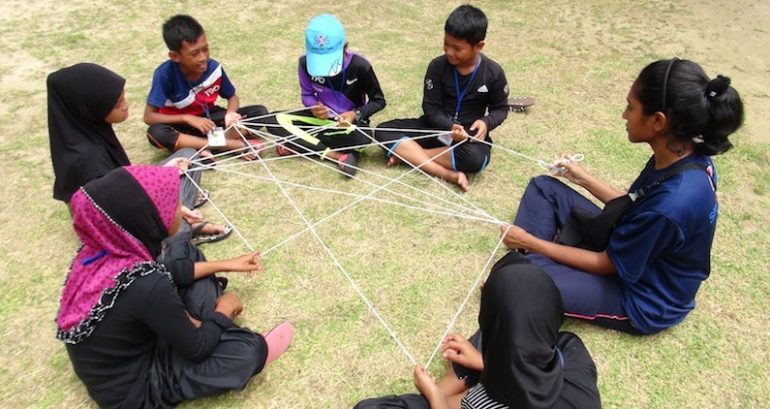
Roland GERARD

/in Press, World EE Day/di /Lascia un commento

Final Report of the World EE Day 2018, see you in 2019

Last days of 2018, this is the time to look back at what has been done, as the first edition of the World Environmental Education Day, held from 14 to 26 October. But it is also the moment to look ahead, and start thinking about the next edition, in October 2019. It is already available the logo of the World EE Day 2019. Schools, parks, environmental education centers, public institutions, associations, museums are invited to join the World Environmental Education Day organising special events to highlight the importance of environemtal educational actions all over the world.
The World EE Day wants to focus on the complexity of the challenges in a world where everything is ever more interconnected.

Ask us the logo and share with us your contents from the World EE Day 2018. Send us reports, photos, videos… and we will share it on the Weec Network.

Several associations, universities, parks and institutions sent us information about their events in 2018. We already presented a selection of interesting case histories in this article.

Now we propose a new group of exemples.
In Izmir, Turkey, the Permaculture Park for young children presents its activities: «Our first aim is to create ‘Permaculture Park’ for young children who are kindergarden students, elementary school students, high school students and disabled students in Izmir, will learn system of agricultural and social design principals and they will practice by gardening, by growing plants in our Permaculture Park. The other aim is to create our own organic compost which includes recycled material including decayed vegetables, fruit, grass clippings and organic waste in Izmir (in Kültürpark, Izmir Fair area). Therefore, we will reduce the rate of trash which goes into landfill area. Next step is to make mulch composting. Finally, we will get on our own organic soil. Then we will organize some workshop activities and invite some people who are interested in permaculture activities. To sum up, we want to give them an opportunity to emphasize the goal of sustainable agriculture and to be environmentally conscious. And every young child or teenager will ‘touch the soil’».

In Iran the UNESCO Chair on Environmental Education presented the ‎“Coordination meeting of specialized workgroups of UNESCO Chair on ‎Environmental Education in Islamic Republic of Iran for establishment of national online environmental education network”‎. UNESCO Chair on Environmental Education in Islamic Republic of Iran seeks to pursue the ‎following objectives through research, educational and cultural approach:‎
– Enhancement of national and international status of environmental education through ‎Communicating between academics, local and civil communities, decision-makers and ‎researchers to create innovative ways of education and sharing information and ‎knowledge regarding Environmental Education, ‎
– Development and promotion of environmental culture
– Enhancement of the public participation in environment protection ‎
– Promotion of environmental literacy in form awareness raising, change of attitude and ‎environmental behaviors of citizens.
– Promotion of Islamic-Iranian approach in the field of environmental education ‎

In October 2018, UNESCO Chair on Environmental Education in Islamic Republic of Iran held ‎several meetings regarding running national online environmental education network with ‎participation of different educational workgroups of the chair such as waste management, ‎climate change, HSEE, carbon management, green business, participatory environmental ‎protection, green management, religions and environmental education, women and ‎environmental education, environmental education through toys and games, energy and ‎environmental education, environmental pollutions, water management, citizenship and ‎environmental education, Startup and innovative ideas regarding environmental education and ‎ecotourism. In these meetings determined all mentioned workgroups should:‎

‎-‎ Identify various audiences, needs and expectations of learners, developing learning ‎goals and objectives, identifying instructional strategies, creating educational contents, ‎implementing and evaluating the impact of their training and educational activities.‎
‎-‎Collaboration with national and international institutions, specialized research and ‎development organizations, NGOs and environmental researchers.‎
‎-‎Publication of scientific articles, books, newsletters and providing electronic content. ‎‎-‎Presentation of educational and research projects based on demand and supply in ‎various environmental topics. ‎
‎-‎Holding lectures, seminars and conferences on environmental education.‎
‎-‎Providing encyclopedia in environmental education
‎-‎Establishment of exhibitions, festivals and environmental events related to the activities ‎of national environmental education network. ‎

The UNESCO Chair on Environmental Education in Iran also held a Specialized Meeting on the role of social networking to improve environmental education ‎regarding green small business, ‎a meeting with ‎the participation and collaboration of members of Amirabad neighborhood sub-council entitled ‎‎“the role of social networking to improve environmental education regarding green small ‎business” in October 2018.‎

At first, the benefits of eco-friendly local businesses were mentioned‏.‏‎ A green small business is ‎one which takes measures to provide family-supporting profits and benefits, also reduce its ‎impact on the environment and preserves or enhances environmental quality. Green businesses ‎may be committed to environmental and social initiatives, such as the use of renewable energy ‎sources and energy-efficiency measures; the reduction of greenhouse gases emissions and other ‎environmental pollutants; the conservation of natural resources and energy; reduction of ‎material usage in order to enhance recyclability and reusability through green marketing such ‎as implementing a green supply chain, green products design, packaging, pricing and ‎promotion are benefits to society and the environment.‎
Local homogeneous groups in different areas of green small business were formed in the next ‎step. Their educational needs recognized as follows:‎
‎-‎ Family typology: Psychology topics, needs, etc.‎
‎-‎ Individual resilience: flexibility, compatibility, collaboration, understanding risk, ‎problem solving, etc. ‎
‎-‎ Community resilience: social connectedness for resource exchange, cohesion, response, ‎and recovery, social and economic well-being of the community, effective risk ‎communication, integration and involvement with different entities, etc. ‎
‎-‎ Green marketing: such as green product, green price, eco-labels that has economic ‎impact on local economy with emphasis on low-energy solutions, sustainable products, ‎non-toxic ingredients, low waste (or emissions), chemical free, recycled materials.‎
‎-‎ Specialized training in various fields: organic food, eco-friendly toy seller, ‎organic gift shop, eco-friendly beauty and health productions, financially and ‎ecologically sustainable alternative for waste sorting and reusing, green store, etc. ‎

Finally, UNESCO Chair on Environmental Education in Islamic Republic of Iran ‎announced its readiness to hold a series of training sessions on the above subjects.‎

In Portugal the Instituto Nacional de Investigação Agrária e Veterinária, I. P. (INIAV), in cooperation with an Oeiras School organized a visit to the Pecan tree collection – Carya illinoinensis (Wangenh) K. Koch, located at INIAV Campus in Oeiras (Portugal). During the visit 18 pupils of 8th level, 2 teachers and 1 researcher participated in outdoor environmental activities that highlighted some aspects of this plant bio-geography and its value for agriculture as a nut tree.

In Spain the Faculty of Educational Sciences of the University of A Coruña (Galicia, Spain) was carrying out during this week and on the occasion of the World Day of Environmental Education activities of cleaning and categorization of waste, both inside the Faculty and in the exterior, with the participation of students and teachers.

The Manifesto World Day of Environmental Education was also posted on the Faculty’s website and on the Instagram of the environment, insisting on the need to continue throughout the course developing activities that allow action to make the Faculty and the campus more sustainable.

/in News, Press/di /Lascia un commento

Mio-Ecsde reconfirmed the Weec member Bonelli in its Board

The 23rd AGM – Annual General Meeting of MIO- ECSDE– was successfully held in Athens on 23rd October side by side with the closing of ACT4Litter Conference and SWIM-H2020 SM training on Marine Litter.
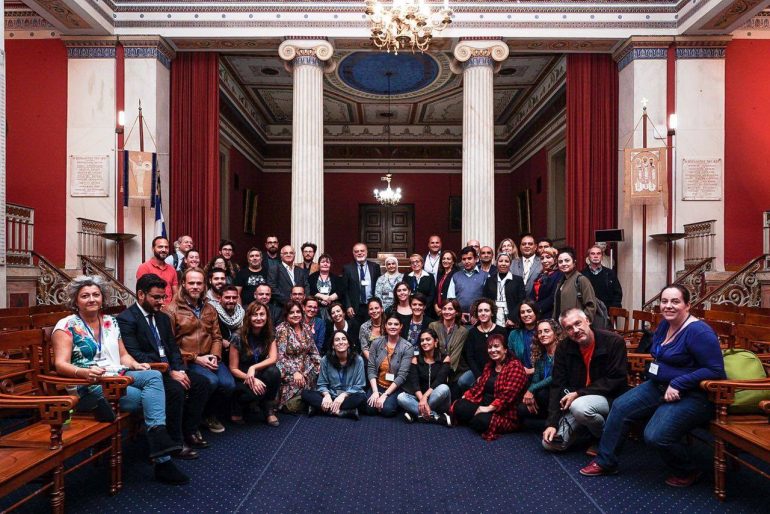
Before the AGM, a session about NGO’s accountability was attended by the representatives of the many organizations (127) from all the countries of both shores of Mediterranean in MIO network.

The AGM showed once again the strength of MIO in running relevant Projects, Actions and Events related to Sustainable Development, involving different partnership, and in particular, associations of the network. Very important is the role MIO played in diplomacy of civil society in Mediterranean, the accountability and the resilience, also when for several years the funds were reduced.

A new important entry in MIO Board is the representative of associations from Syria. The majority of members of the board were reconfirmed as well as Patrizia Bonelli from Institute for Environment and Education caring the WEEC Secretariat.

/in Press/di /3 commenti

Next congress in a year. Save money now with the early bird

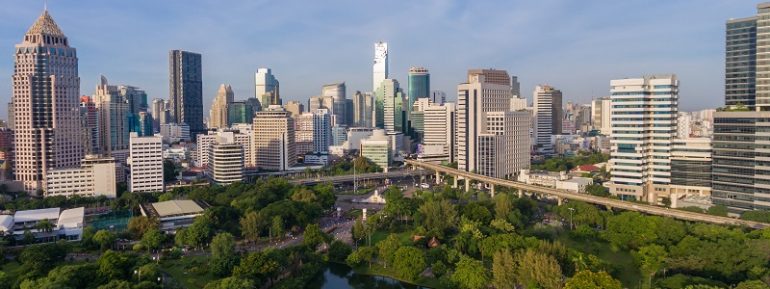
Bangkok Thailand city skyline at central business district of Sathorn street. Drone aerial view. Public park Lumpini in the front.

Until December 31st it is possible to register at 10th Weec, the World Environmental Education Congress, by taking advantage of the special early bird fee.  Do not miss this opportunity to be part of the world’s largest environmental education network and to meet other professionals in the same sector.

Now you can register for the Congress and propose your abstracts.

Stay in touch and save the date! The next Weec Congress will be in Bangkok (Thailand) exactly in a year: 3-7 Novembre 2019.

/in Press/di /Lascia un commento

World EE Day: the first events took place all over the world

Did you enjoy the World Environmental Education Day? What did you organise? Several associations, universities, parks and institutions sent us information about their events. Let’s go to have a look in this first report, and remember that you can still send us your event even after 14th October!

In Italy the Weec Network Permanent Secretariat organised the public speech of Gunter Pauli, during the Innovation and Science Festival held near Turin.

A group of associations and universities (RESS education research and socual studies, CEAS university center for sustainability, GEP group education and peace, GISCEL group action and study linguistic education) organised the seminar “Immigration and climate change: a question to be investigated”. The seminar has been focused on the knowledge of the little known and discussed issue of environmental migrations to try to clarify the connection between environmental factors and social, economic, political, cultural dynamics and highlight the importance of a training commitment in this regard.

The park Parco fluviale Gesso e Stura organised two events.“ Meteorologies for a day”, a scientific educational laboratory for children. What’s the weather going to do tomorrow? Of course, we can not foresee the future but we can learn to understand and measure the “signals” that the natural environment sends us. By constructing particular instruments we can try to become small meteorologists… even just for one day!
“Butterfly effect”Special World Environmental Education Day. Guided tours with the curator at the exhibition “Butterfly effect: different worlds in one life”. From caterpillar to butterfly, from leaves to flowers: the conquest of the wings. Surprising adaptations, strange and complex symbiosis, unexpected curiosities about these small fragments of the landscape: countless pieces of the great puzzle of nature.

Another park, Parco del Serio, organised the “Autumn party at the botanical garden”. Educational workshops dedicated to the discovery of agri-food products.

The environmental organisation Academia Kronos, association specialized in shipments abroad to study the phenomenon of global warming, organised courses on Environmental Education, Environmental Communication, Naturalistic Cinematography, Alternative Energies, Experts on Climate Change.

EUROPE

In Hungary the Hungarian Institute for Educational Research (Founder and network centre of the Hungarian Eco-school Network for 14 years) managed a 4000-member mailing list. In their biweek news, they urged their member schools (more than 1000 schools) to celebrate the EEDay in or around 14th October. And – as member of the Science for Carpathians academic and transdisciplanary network – they also facilitated a workshop on 16th October on the 5th Forum Carpaticum (fc2018.hu) dealing with the possibilities of formal education.

In Spain the academic institution Resclima, in collaboration with A Eira do Ceesg (Working group on Environmental Education of the Professional Association of Social Educators of Galicia) celebrated the World Environmental Education Day with the organization of a “Photocall for Climate Change Education”, in which it has been highlighted the strategic centrality of Environmental Education in mitigation and adaptation policies to face the climate crisis. It took place on October 17th, at the central module of the Faculty of Educational Sciences (South Campus) of the University of Santiago de Compostela (Galicia, Spain).

In Greece the Environmental Education Center of Samos in cooperation with 2nd Kissamos Primary School of Chania visited the Elos Lake in the Prefecture of Chania. 46 pupils and 4 teachers participated in outdoor environmental activities.

In Lithuania the Žemaitijos nacionalinis parkas organised two events. A pre-event: laboratory for kids and teenagers in the local library with different indoor and outdoor activities, such as building a small soil model in glass jars, drawing and writing, debating about environment, environmental edication and finding out together daily practises for a “greener” society.
Main event: celebration of the entire anniversary (October 14th-26th) with online quizzes and other enjoyable games for everyone, every day on a different topic related with environmental issues, such as pollution, wastes, energy sources, food production, climate change, ecc.

AFRICA

In Mali the NGO AADECOM  Association of Support to Community Development of Mali, engaged in the development of Mali, contributed to the World EE Day with the following objectives: to promote and support in Mali as well as on the African and even worldwide scale, any initiative aimed at promoting education for sustainable development and international solidarity and contribute to improving the daily life of local populations. Set up awareness-raising, training and support actions for the populations targeted by the two associations. Promote environmental education and local tourism with a focus on youth participation. Promote the green economy through sustainable management of natural resources and an effective fight against global warming. Develop a synergy of action to mobilize resources internally and externally to finance projects to be implemented as part of the implementation of this EDDSI approach.

The African Network for Sustainable Development Education -ANSDE, an environmental organization of the civil society based in Cameroun, that works for the education and information orgnised his work on the streets and markets to sensitize on the use of plastic, showing that plastic waste has colonised our lifes and our marine and its marine animals are in danger because of our manner to live and use plastic waste. «So we have to change our way of living – they explained – if we don’t want to disappear from the earth».

The University of Kinshasa, Department of Environmental Sciences (Democratic Republic of Congo) organized a special event for 2000 students comprising a sanitation sensitization day for youth in the secondary school Mont Amba and also for students of other departments of the university. An accent will be on plastic waste collection since it is valorized by the department in making cobblestone from the mixture Plastic-Sand. The day ended with a conference on “Benefits of Environmental education in the development of developing nations”.

The World EE Day was also an opportunity to give space to dreams and individual projects like that of Hicham Filalizehri, from Morocco that wants to share his dream «to create an environmental library in a rural natural area in Morocco».

AMERICA

Two proposals from Canada.

The Manitoba Museum, Museum or Informal Educational Center (Canada) explained that we use energy in almost every aspect of our lives, and finding sustainable sources of energy is the key to affecting climate change. At the Green Science workshop, visitors could do hands-on experiments and learn all about different forms of alternative energy including… Hydroelectricity! «Come harness the power of moving water to turn on light bulbs with our Water Wheel activity. See how certain types of light bulbs use up more energy than others and learn more about the energy that powers most of Manitoba».
Hydrogen gas! It’s been called the energy of the future – and it’s so easy to make, you can even do it at home! Feel the energy from just a small amount of hydrogen gas created right in front of your eyes, and make a “hydrogen generator” that you can take home with you!
Solar Power! Who says gathering energy can’t be fun? Grab a magnifying glass and focus some light energy on to solar panels on top of toy cars, planes, boats and…. grasshoppers!? Read about some myths and misconceptions regarding solar energy and find out about Earth’s energy budget

The environmental organisation Burrard Inlet Marine Enhancement Society/Mossom Creek Hatchery proposed the Salmon Sunday (October 21st). Deep in the forest on the north shore of Port Moody, the Mossom Creek Hatchery and Education Centre is open to the public between 11 am and 1:30 pm. Visitors can check out the nature education centre displays, explore short trails along the creek and through the forest and can chat with dedicated volunteers who are committed to sharing nature with the community. A variety of very popular school field trip programs are available and Salmon Sunday is a great time for teachers to find out more about what is on offer.

AUSTRALIA

The environmental associazion AAEE Queensland Chapter invited members across Queensland to celebrate World Environmental Education Day by joining with their communities to take a Nature Walk and enjoy casual conversations in their local environment. This is aimed as a low-key way to reconnect with EE colleagues and the community in a relaxed, family-friendly social activity.

ASIA

In Iran the Farzanegan highschool went to park and by playing theatres about global warming and it’s effects, try about public advocacy trough out art. «Also we have drawing and painting on the as long as 50 m paints in the park about climate change and global warming, the 14th October».

In Vietnam on 21 October 2018, Gaia Nature Conservation organised a fieldtrip for approximately 400 students aged from 12-14 years old to experience the nature and to learn about wildlife.

Other report are coming and publishing soon.

/in Press, World EE Day/di /1 commento

World Environmental Education Day 2022. Fill the form

From 10 to 25 October schools, parks, environmental education centers, public institutions, associations, museums are invited to join the World Environmental Education Day. How? Organising special events to highlight the importance of environmental educational actions all over the world.
[contact-form-7 id=”2209″ title=”Environmental Education Day 2022″]

Do you want to subscribe to the Charter of Principles of the World Environmental Education Congress? Go to this page

/in News, Press/di /Lascia un commento

Incredible Impacts, the WEEC into the winners shortlist

The WEEC Network is in the final shortlist of 12 entries for the 2018 Incredible Impacts Programme organised by BestCities Global Alliance and the International Congress and Convention Association (ICCA).
The Incredible Impacts Programme celebrates the ‘beyond tourism’ value of international association meetings to create a powerful platform to advocate their positive societal impact. A panel of independent judges from the association world will determine three meetings that have shown the greatest impact, and award grants of USD 7,500 on behalf of BestCities and ICCA.
Shortlisted associations represent a broad range of sectors including leadership; scientific innovation; humanitarianism; environmental issues; music; disease; disability, and child neglect.

Paul Vallee, Managing Director of BestCities said: “The Incredible Impacts Programme is a showcase of global excellence of lasting legacies within the meetings and events industry. We have been overwhelmed by the work submitted, which demonstrates the breadth of impact being delivered by associations. A core goal of BestCities is to nurture and develop the purpose of events beyond traditional planning, focusing on vital areas including legacy development, sustainability and accessibility. It is hugely encouraging to see these values being replicated by associations the world over, who are making lasting contributions to the destinations they visit.”

Dennis Speet, ICCA Interim CEO, added: “This is the second edition of the Incredible Impacts Programme and the quality of legacy projects we have received is truly astounding. The variety of industries represented in the submissions demonstrates the wide-ranging and deeply positive impact that the work of international associations has when it comes to finding solutions to societal challenges. We hope that this year’s superb entries inspire other associations and meeting planners to consider how they can create a legacy with their meetings and leave a long-lasting impact on their host destinations.”

The final judging will now take place with the winners to be announced after 10 September 2018.
With the WEEC Network the final shortlist includes: Soroptimist International. The International Society for the Prevention of Child Abuse and Neglect. European Association for Palliative Care. International Council on Social Welfare. Down Syndrome International. African Women in Leadership Organisation. International Association of Science Parks and Areas of Innovation.  International Actuarial Association. The International Society for Music Education. Society for Ecological Restoration. Union for International Cancer Control.

/in Press, World EE Day/di /Lascia un commento

World EE Day, ask us the official logo

Are you ready for the World EE Day? From 14 to 26 October schools, parks, environmental education centers, public institutions, associations, museums are invited to join the World Environmental Education Day organising special events to highlight the importance of environemtal educational actions all over the world.

The World EE Day wants to focus on the complexity of the challenges in a world where everything is ever more interconnected.

If you need a more environmental friendly world, more livable and more equitable join the EE Day. If you are planning an event between14 to 26 October (or around those days)  ask us the official logo of the World EE Day (using this mail: secretariat@weecnetwork.staging.19.coop). We will share your events on our channels to create a real and useful network.

Please remember to read the appeal and support the campaign on change.org

/in News, Press/di /3 commenti

10th WEEC Call for paper

For the first time the World Environment Education Congresses lands in Asia, in a country like Thailand, rich in history, nature, art and traditions.
It is the Tenth World Environmental Education Congress, an event that we want to celebrate with a congress rich in themes and suggestions.

The title of the 10th WEEC (Local knowledge, communication and global connectivity) refers to the relationship between local knowledge and global connectivity.
On the one hand, local knowledge (based on direct relationship with places, experience, heritage inherited from generation to generation) offers contextualized solutions, technologies appropriate to diversity of situations, sense of belonging, emotional involvement, participation opportunities and concrete action.

On the other hand, humans are linked by a common destiny: they are now connected by thousand powerful channels of communication and are mutually interconnected by the effects of everything that happens on the globe. Continuous exchanges of materials and information are the hallmark of the phase that humanity has come to. More than ever, the classic statement of environmental thought that every local thing is global and vice versa is true.

As always, researchers of all disciplines and all people (individuals and organizations, public and private) operating in some way in environmental knowledge and values are invited to participate in the 10th WEEC: academics, teachers, journalists, science disseminators, practitioners, operators of parks, museums, eco-museums, local authorities, associations, etc., because the environment is transversal to every aspect of human knowledge and involves deeply attitudes, behaviors and reflexive critical action at all ages and in every aspect of personal and social life .

Presentations can be used to describe and / or discuss and comment on theoretical positions, researches, criticalities, educational challenges, methods, good/best practices, and educational tools.

Presentations may have different formats, but all of them will obviously have a reference to the educational aspects and sub-themes listed here.

Of course, each group of participants will be maybe fascinated by specific paths through the themes. For example:

1. Teachers and trainers, interested in their work in schools, will focus on Methods and Science about Teaching and Learning EE and sustainability education.

2. NGO’s and civil society will be engaged and interested in change towards a sustainable society, in cooperation for EE and sustainability education, in experiences, outcomes, educational challenges.

3. Politics and media in bringing international contracted goals into reality, and systemic work in politics and media.

4. Vulnerable groups and the call for Eco-justice will focus on strategies, experiences, challenges and solutions for change.

The organisers of the 10th WEEC 2019 would like to stress that the sub-themes are suggestions and not watertight compartments or sealed boxes. So, interaction and cross-disciplinary papers and discussion amongst the delegates will be encouraged.

SUB-THEMES

Section 1: Local Sphere

Theme 1: Understanding and social use of science: science-society-technology-environment and participation.

Theme 2: Ageing Society and sustainability.

Theme 3: Sufficiency Economy for sustainability, sustainable consumption and lifestyles.

Theme 4: Waste and Pollution Management through Environmental Education.

Theme 5: Learning based on sustainable and solidary agriculture.

Theme 6: Disaster Preparedness, Climate change adaptation and mitigation.

Theme 8: Natural Resources and Livelihood.

Theme 9: Research, Design and Innovation.

Theme 10: Eco-citizenship, democracy and mobilization: participatory processes and citizen’s involvement in democratic decision-making processes.

Theme 11: Stakeholders in dialogue: educating public and private organisations for a common task.

Section 2: Environmental Education and Communication Sphere

Theme 11: Science Communication and Social Media.

Theme 12: Interpretation of Science and the Environment.

Theme 13: Environmental Education Programs: Non-Formal Education.

Theme 14: Environmental Ethics, Philosophy and Culture.

Theme 15: The political dimension of Environmental Education.

Theme 16: Environmental Promotion and Networking.

Theme 17: Digital Technology Learning and Environmental Education.

Theme 18: Early Childhood Education and Environmental Education.

Theme 19: Environmental/Sustainability Education, Teachers education and Methodologies for a really effective, empowering, and transformative education.

Section 3: Global Connectivity Sphere

Theme 20: World Green Remediation: education as crucial tool for social, environmental and climate justice and equity in a greener society.

Theme 21: “Common good” and future well-being without poverty.

Theme 22: Urban Ecosystem and Sustainability.

Theme 23: Health, risks and safety, and food sustainability.

Theme 24: Gender Equality, Environmental Education and Sustainability.

Theme 25: Educational policies between renewal and not honoured commitments.

Theme 26: Global Challenge and Policy.

Theme 27: Community and Global Responsibility.

Theme 28: Consciousness and Ecological Tourism.

Theme 29: Peace as a socio-ecological issue.

Submit your abstract here

/in News, Press/di /Lascia un commento

WEEC2019, discovering the themes

The title of the 10th WEEC (Local Knowledge, Communication and Global Connectivity) refers to the relationship between local knowledge and global connectivity.

On the one hand, local knowledge (based on direct relationship with places, experience, heritage inherited from generation to generation) offers contextualized solutions, technologies appropriate to diversity of situations, sense of belonging, emotional involvement, participation opportunities and concrete action.

On the other hand, humans are linked by a common destiny: they are now connected by thousand powerful channels of communication and are mutually interconnected by the effects of everything that happens on the globe. Continuous exchanges of materials and information are the hallmark of the phase that humanity has come to. More than ever, the classic statement of environmental thought that every local thing is global and vice versa is true.

As always, along with the title theme of the congress, various other arguments relevant to environmental education, divided into 8 thematic niches, will be dealt with.

1.Water for Life, Marine Ecology and Conservation, Ecological Services and Biodiversity
2.Food Security and Sustainable Agriculture
3.Air Pollution and Atmospheric Education, Climate Change and Disaster Preparedness
4.Sustainable Energy for All
5.Green Industry, Social Responsibility and Economics Balancing
6.Waste Management, Green Innovation and Urban and Environmental Society
7.Sustainable Life Style and Human Well-Being, Environmental Promotion and Communication
8.Arts, Lifelong Learning in Environment, Global Challenge and Networking