/in Press/di

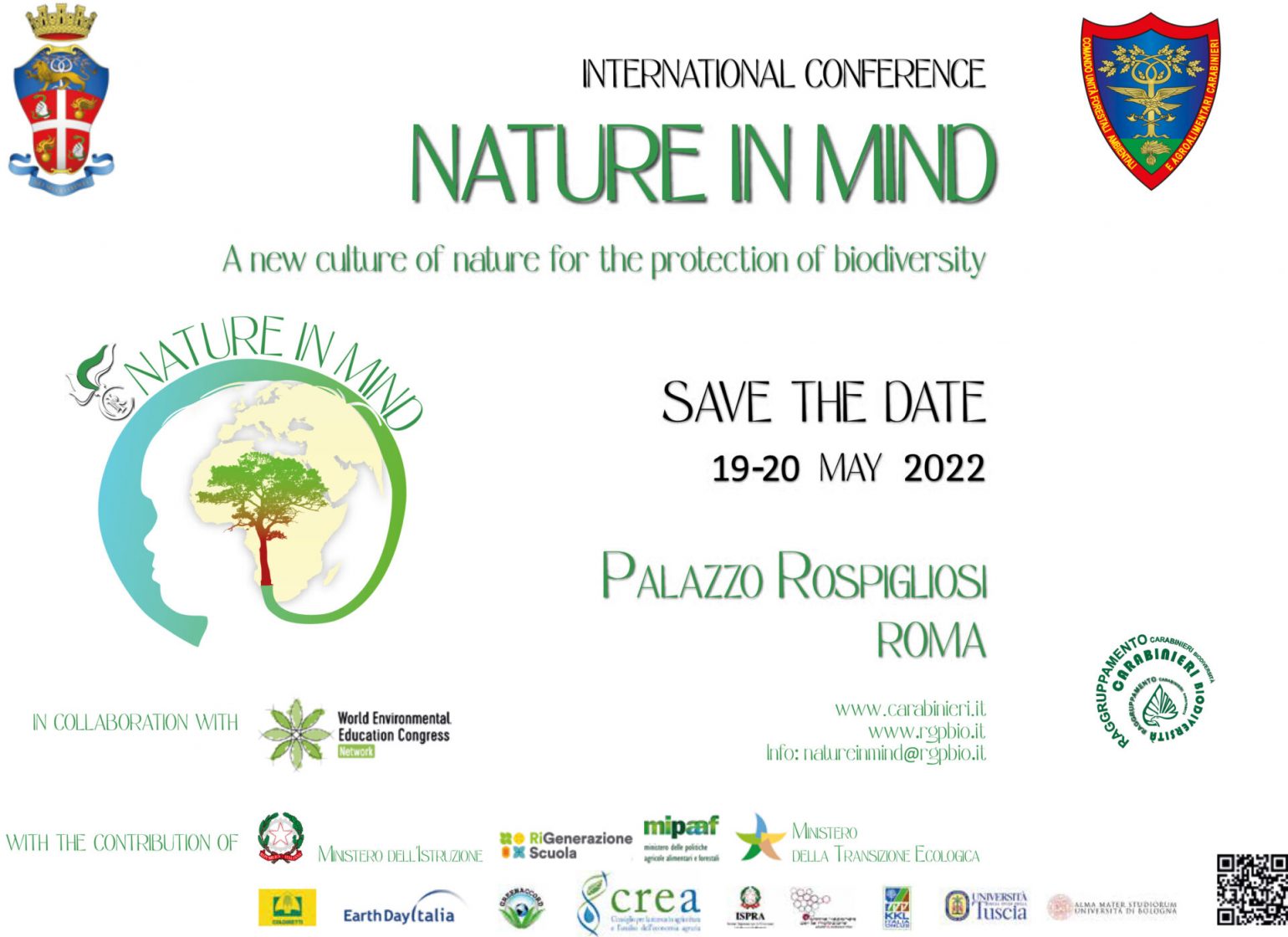
Nature in Mind, international conference in Rome

Nature in Mind, an international conference promoted by the Italian Carabinieri brought together voices from all over the world and from every sector. From Pope Francis to the President of the Italian Republic Sergio Mattarella, high-level interventions and networking. Wide presence of the WEEC network

/in Press/di

13th WEEC2026: the Call for bids is open!

Who will be the host of the 13th WEEC in 2026?

The Call for Bids to submit the application is open and the deadline to submit the application is 30th September 2022.

The Permanent Secretariat would like to remind you that only the public or private non-profit organizations (universities, foundations, associations, …) can apply the candidacy of their own country as the seat of the 13th WEEC in 2026.

The candidatures will be assessed mostly according to the following criteria:

1. Having preferably close relationships with the WEEC congresses and the Network in the past, and, in any case, joining the Network and endorsing its mission, vision and strategy.
2. Guaranteeing the quality of the contents and the cultural project of the Congress, in continuity and total agreement with the heritage and the spirit of previous Congresses and in close cooperation with the Permanent Secretariat that will supervise and co-chair the congress.
3. Designing the final call for the congress and the programme according to the guidelines and the advice of the Secretariat and the International Socio-Scientific Committee established by the Secretariat.
4. Demonstrating they have relevant experience in the field of environmental education.
5. Demonstrating they have adequate experience in organizing events at local, national, regional, and international levels.
6. Demonstrating they have adequate congress facilities.
7. Demonstrating they are skilled in creating networks at different levels and getting various institutions and organizations (national authorities, local institutions, Higher, Secondary and Primary education institutions, parks, museums, NGOs, mass media, etc.) to be involved in the organization and participation to the Congress.
8. Demonstrating their ability to ensure broad national and international participation at the Congress.
9. Engaging to strengthen the WEEC International Network, inter alia by allocating a budget for the network’s activities.
10. Demonstrating they can mobilize the necessary resources at the local and national level (and possibly at the regional and international level as well) to guarantee the financial sustainability of the Congress.
11. Demonstrating their commitment to contain the costs of participation to the Congress and facilitate the participation of people from disadvantaged countries or categories (e.g. young people and students), by reducing the costs of participation and overnight stays as much as possible.
12. Engaging to offer sponsorships to an adequate number of delegates from developing countries (if the bidder is in a developed country).
13. Guaranteeing the cultural diversity and facilitating participation, also thanks to the use of several languages as English, French and Spanish at least both for the web site and during the Congress.
14. Guaranteeing the ecological consistency of the Congress by taking every measure to minimize the ecological/carbon footprint of the event and assuring its socio and eco-sustainability both as venues and as other aspects (i.e. accommodation, social program outside, and so on).
15. Accepting the time schedule proposed by the Permanent Secretariat.

The winner will be assigned indicatively by 31st December 2022.
The official announcement of the 13th WEEC will be at 12th WEEC 2024 in Abu Dhabi, on 1st February 2024

Please ask for the official application form to: secretariat@weecnetwork.staging.19.coop
or download it here:

Call for bids_2026

WEEC 2026_application form

/in Press/di

Nature in Mind: the value of biodiversity

“By Leaves We Live”
“This is a green world, with animals comparatively few and small, and all dependent on
the leaves. By leaves we live. Some people have strange ideas that they live by money.
They think energy is generated by the circulation of coins. Whereas the world is mainly a
vast leaf colony, growing on and forming a leafy soil, not a mere mineral mass: and we
live not by the jingling of our coins, but by the fullness of our harvests.”
(Sir Patrick Geddes, 1854-1932)

On the occasion of the 30th anniversary of the Convention for Biological Diversity, signed on May 22 nd, 1992 in Rio de Janeiro,  Italian environmental police force, in collaboration with WEEC Network,  wants to celebrate, with a 2-day International Conference – Nature in mind – the value of biodiversity in the name of a greener and more sustainable future. 

International Day for Biological Diversity is the occasion to reflect on our responsibilities towards the environment and to consider the possibility of creating a new culture of nature.
The scientific comprehension of natural processes and the new awareness about the importance of the compliance of our behaviours with the law are two equally important and strictly integrated elements which aim at the conservation of nature.

Environmental education thus becomes education to environmental “legality”: a set of knowledge that becomes “culture”, environmental culture, that has to represent the fundamental part of the most deeply rooted education of citizenship, necessary to build a better future for the next generations.

The Conference Nature in Mind, which will be held in a mixed form (in person and remotely), will address various topics thanks to the interventions of distinguished Italian and international speakers
following the ideal path of seven Sessions:

  1. Opening Session
  2. One Health – Nature and Well-being
  3. At the Nature School
  4. Education and Nature
  5. School, city, territory
  6. Education, infosphere, mass culture and Nature
  7. Voices from the world

For the registration, have a look here.


/in Press/di

11th WEEC: Hybrid, young and integrated

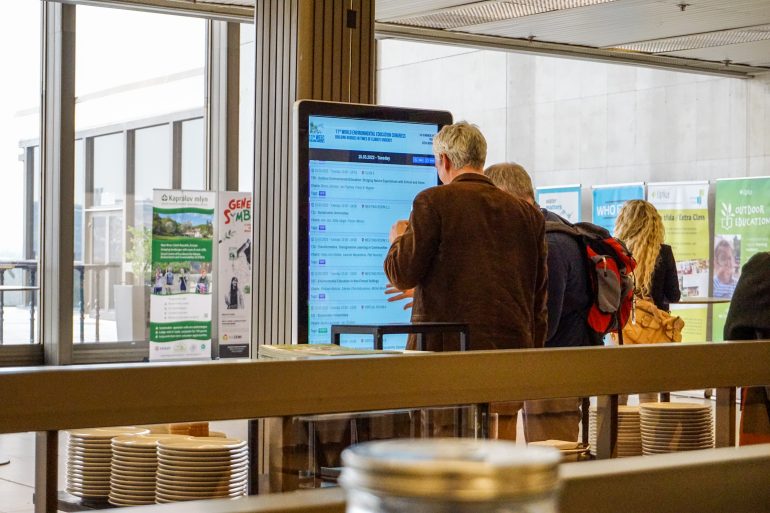
The 11th edition of the WEEC world environmental education congress has come to an end.
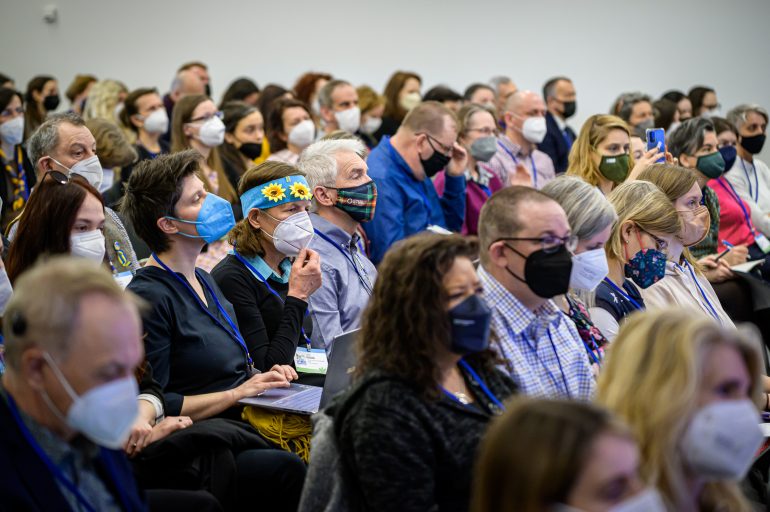
A special edition, held in Prague (Czech Republic) from 14 to 18 March 2022, characterized during its organization, by two years of pandemic. This has led to a change in the travel and training habits of all environmental educators, teachers and researchers, associations and institutions.

The WEEC adapted to the new context proposing for the first time a hybrid edition. It was a bet, which we can say we have won: about a third of the delegates participated online, making the participation possible for those who couldn’t or didn’t move (for health reasons, uncertainty linked to travel or for the costs).
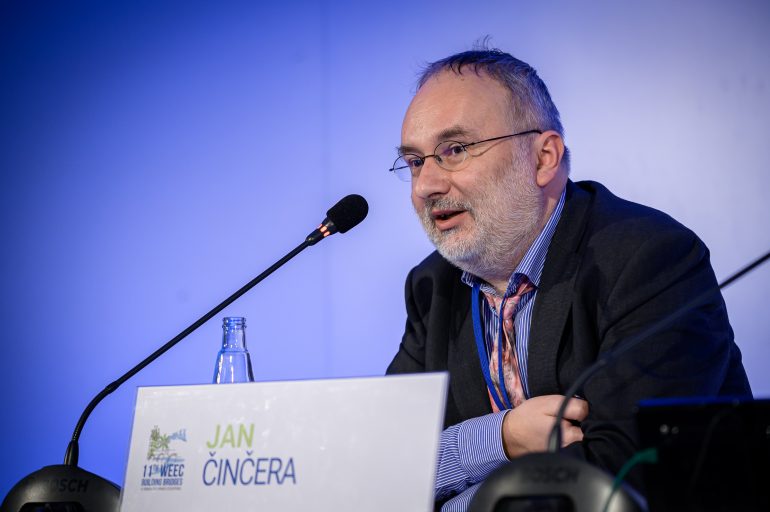
The hybrid congress – which will probably remain in the next editions – will open the door to many new delegates, becoming more and more inclusive and welcoming. Environmental education is not for “a select few”, it must involve associations, parks, young people… and the 11th congress in Prague did it. «The future belongs to hybrid congresses – said Prof. Jan Cincera, co-chair of the congress and LOC organiser – I was quite sceptical about this, however in reality it worked very well. There may not be a covid in the next few years, but we will be certainly dealing with the carbon footprint. The key is to professionally provide and set up the interactive platform to suit the needs of the event. We were the first hybrid WEEC in history, but probably not the last».

The youth congress was a great success, it gathered over 120 participants from 22 countries and allowed children to compare themselves with each other and also with the adult congress. «The linking the “big” congress with the youth congress worked very well – added Cincera – In the future, I could imagine a higher level of integration between the two events. The YEEC organizers did a great job!»

An online platform with recordings of all content is built, extending the congress beyond its runtime, a participatory way, for creating a wider community. «The linking of the “academic” and “field-based, practice-oriented” parts also worked very well. Again, I could imagine a higher level of integration. Both “theorists” and “practitioners” have their own unique perspectives and it is important that they meet from time to time».

The 11WEEC is a new stage of the path started in 2003, with inspiring debates, conferences, and presentations. Every congress is a milestone for environmental education worldwide «but the congresses should above all be an opportunity of coagulation for a flow of energies, proposals, regenerative learning experiences, and best practices – explained Prof Salomone, Secretary General of the WEEC Network – It is crucial to fill the time between a congress and the next one, not only as individuals or education bodies but as a worldwide network.
As permanent secretariat, our human and technical resources are limited but are at the disposal of the worldwide community of researchers, teachers, and educators.
So, many positions are open at the network: positions for volunteers, for goodwill people. We must enhance initiatives and prepare at best the next congress thanks to the help of a large community».

/in Press/di

Higher levels of integration, roadmap for future events

The future belongs to hybrid congresses. I was quite sceptical about this, however in reality it worked very well. There may not be a covid in the next few years, but we will be certainly dealing with the carbon footprint. The key is to professionally provide and set up the interactive platform to suit the needs of the event. We were the first hybrid WEEC in history, but probably not the last.

An online platform with recordings of all content is a “game-changer”, extending the congress beyond its runtime. The only question is how much it will be used in the coming months.

It’s important to do congresses of this type in a participatory way, involving people from the wider community. It was challenging sometimes (there were a lot of people to coordinate), but it definitely paid off.

The linking the “big” congress with the youth congress worked very well. In the future, I could imagine a higher level of integration between the two events. The YEEC organizers did a great job!

The linking of the “academic” and “field-based, practice-oriented” parts also worked very well. Again, I could imagine a higher level of integration. Both “theorists” and “practitioners” have their own unique perspectives and it is important that they meet from time to time.

The conditions were not easy… but it was manageable. The support from our partners helped a lot: Charles University, Praha.eu, Ministerstvo životního prostředí, Skupina ČEZ, Kongresové centrum Praha, Embassy of Switzerland in the Czech Republic, British Chamber of Commerce Czech Republic – thank you!

And thanks so much to everyone who was in it with us!
Jan Činčera

/in Press/di

WEEC congress: flow of energies around the world

Photo by Petr Zewlakk Vrabec

Dear friends and colleagues,

We are nearly at the end of this eleventh congress. A new stage of the path started in 2003 is done.

Now we once again have a new long way to go.

We listened to many debates, conferences, and presentations, we paid attention to the voice of youth. Probably, we leave with a storm of ideas, with inspiring suggestions.

Despite everything – I said at the opening of the congress.

We are going to announce the twelfth congress in 2024.
Before the announcement, I’d like to thank the co-organisers again: the Masaryk University with a wonderful Jan Cincera and AIM group, their staffs, the institutions which gave their patronage, the partners, and the sponsors.

I’d also like to remind you that it is crucial to fill the time between a congress and the next one, not only as individuals or education bodies but as a worldwide network.

Local, national, regional meetings are welcome, as thematic groups and initiatives, webinars, forums, discussions of papers.

As permanent secretariat, our human and technical resources are limited but are at the disposal of the worldwide community of researchers, teachers, and educators.

Every congress is a milestone for environmental education worldwide. But the congresses should above all be an opportunity of coagulation for a flow of energies, proposals, regenerative learning experiences, and best practices.

So, many positions are open at the network: positions for volunteers, for goodwill people. We must enhance initiatives and prepare at best the next congress thanks to the help of a large community.

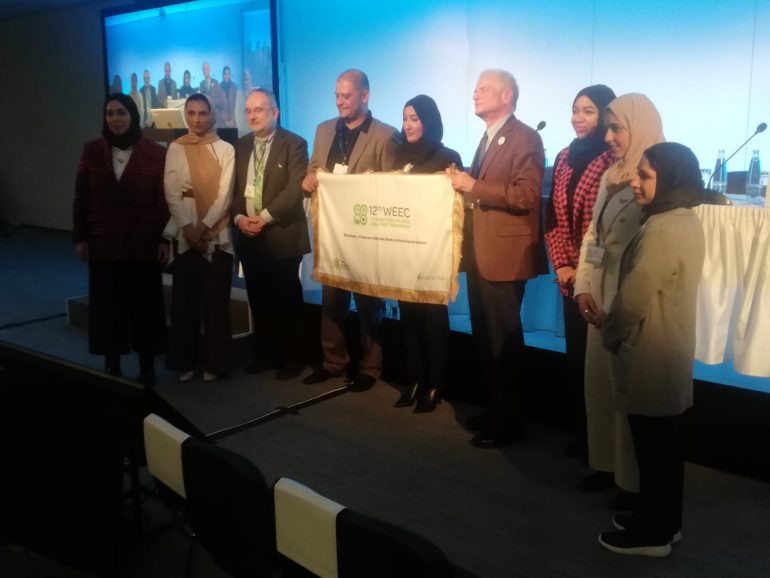
And now, it is an immense pleasure to invite the distinguished representative of the following local organising committee in 2024.

While I remind you that the call for hosting the 13th congress in 2026 is open, I announce that the 12th world environmental education congress will be in Abu Dhabi (United Arab Emirates).

Congratulations!
I thank so much to the Environment Agency of Abu Dhabi for its engagement, its enthusiasm, and its strong competencies. Applause!

I invite H.E. Dr. Shaikha Salem Al Dhaheri and Mr Ahmed Baharoon to take the podium to present the congress’s title and main aims.

Please!

/in Press/di

The 12th WEEC will be held in Abu Dhabi in 2024

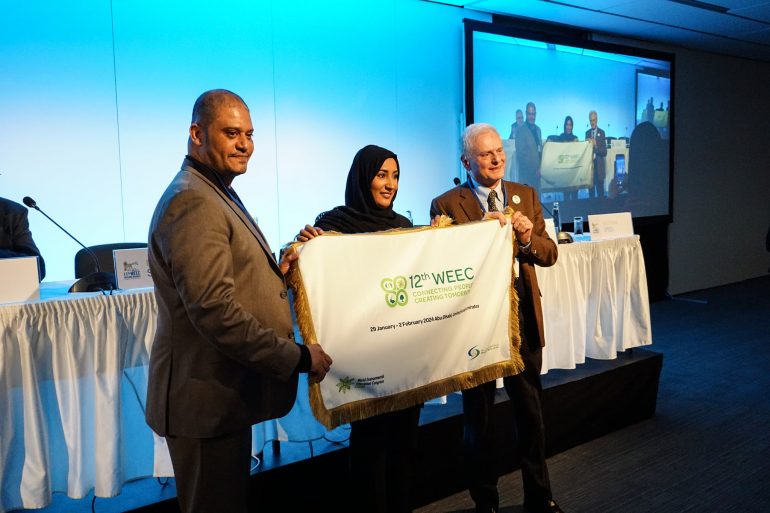
Dr. Shaikha Salem Al Dhaheri, Secretary-General of EAD (in the middle) with Ahmed Baharoon, Executive Director, Environmental Information, Science and Outreach Management, EAD on the left and Prof Mario Salomone Secretary General of the WEEC Network on the right

Honourable Attendees,

Ladies and Gentlemen,

I would like to express my happiness in announcing the selection of the United Arab Emirates to host the twelfth round of the World Conference on Environmental Education in the Emirate of Abu Dhabi in 2024. This event will be held under the patronage of His Highness H.H. Sheikh Hamdan bin Zayed Al Nahyan, Chairman of the Board of Directors of the Environment Agency – Abu Dhabi (EAD), with the theme “Connecting People, Creating Tomorrow.”

I would also like to take this opportunity to thank the Organising Committee of WEEC for selecting the UAE. We are so honoured that an event as important as WEEC will be on our home soil, and we will work around the clock to ensure that it is a great success and platform for positive change. I am confident that the UAE, with its advanced and distinguished capabilities, will be able to make this important conference a success and achieve its desired goals. We will strive to support efforts to exchange knowledge and dialogue between specialists and those who are interested in the field of environmental education, from individuals, institutions, networks and alliances.

It is an absolute honour to be here with you today at the World Environmental Education Congress 2022 in Prague.

WEEC is a unique event because it brings together a range of specialists and professionals dedicated to environmental education. We all know that instigating change in communities to adopt environmentally friendly behaviour is only possible through rigorous environmental education.

We are fortunate in our day and age that governments have started adopting strategies to place the environment very high up on the national agenda. We are also lucky that more individuals in society are becoming increasingly aware of the importance of saving the planet – especially our children.

But we still have a long way to go, and that is why events like WEEC are critical as a sounding board to ensure that environmental education continues across all countries.

The UAE is a country that values the environment greatly, and our leadership provides us with unconditional support so that all environmentalists and organisations can achieve their goals – especially as a woman. And that is why I am very proud to be an Emirati woman working in the field of environment.

There are more women joining the field, and I know that several of them in my team decided to pursue this career path because they were inspired through environmental education. This reflects its importance and the only way we can empower the upcoming generations to become advocates and ambassadors for the environment, is by proving them immense access to more knowledge.

In Abu Dhabi, through EAD we have more than 20 years experience in environmental education. We first started in 1999 with our very first Nature Bus and today, EAD is implementing many pioneering environmental awareness programmes in more than 85% of public and private schools in the Emirate of Abu Dhabi. Throughout the past years, we have received many prestigious awards in recognition and appreciation for our distinguished efforts and innovative programs in the field of environmental awareness.

On a final note, I invite you all to Abu Dhabi to participate in WEEC in 2024. We await you with open arms and our hearts and minds. We aim to continue the legacy of WEEC, which brings together like-minded individuals who play a very significant role when it comes to environmental education.

Thank you

/in Press/di

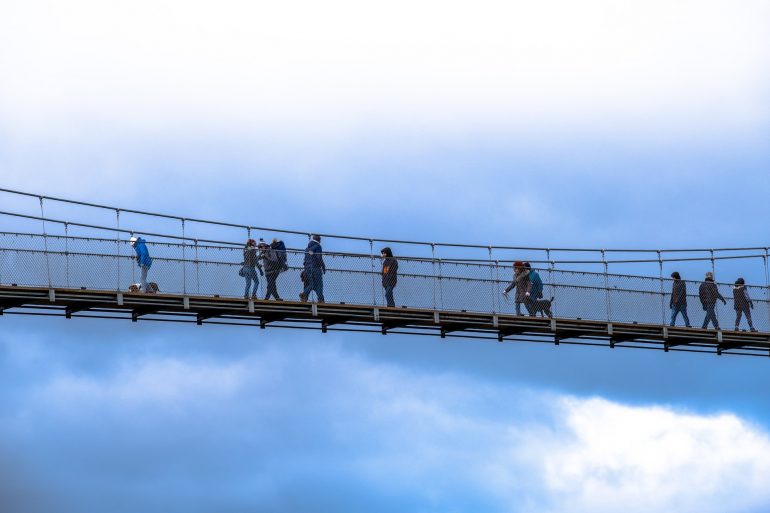
Building bridges for a better world

Photo by Marc-Antoine Dubé – Unsplash

The guiding theme of the 2022 edition of the World Environment Education Congress international conference underscores the vital need for Building Bridges as a compelling affirmation of the warrant of our times. As the world increasingly becomes a global village with the relentless expansion of the world-wide web of connections among peoples and nations spanning multiple spheres, developments in one part of the globe can have varying degrees of impact on societies and communities who may otherwise be separated by neat geographical boundaries and distinct cultures.

“Only connect”, is the timeless advice of sage E.M Foster, after all!

Whether it is the impact of global warming and climate change, the consequences of natural disasters or human-induced catastrophes, the virus-pandemic or social inequities, the human family is in it all together. Old certainties are no longer certainties. It is, therefore, important to weave a common fabric for mutual survival and mutual flourishing as the human of the species that shares this little space with a multitude of other beings who call this Planet Earth their home.

Building bridges among peoples and nations, professions and occupations, sectors and disciplines, individuals and institutions, and indeed between humans and humans is, therefore, a vital strategy to navigate through these challenging times of unprecedented global upheavals and uncertainties.

As important as it is to build new bridges relevant to the rapidly changing needs of societies against the backdrop of a fast-globalising world, it is vital to repair the many broken bridges which have been neglected in mankind’s headlong rush towards an uncertain future unaided by the benefit of time-tested foundations that have stood us in good stead through the ages.

We have to begin by re-building the most basic of relationships – the relationship between us the human beings and Mother Nature. We need to feel again the soil under our feet, feel again the air that we breathe, feel again the water that we drink, and discover the many gifts that lie hidden everywhere.

We need to reclaim with our senses the sights that our eyes are meant to see, the sounds that our ears are meant to hear, the sensations that our hands are meant to feel, the smell that our nostrils are meant receive, and the taste that our tongue is meant to register.

As the human of the species, we need to feel the delicate intimations of our Mother Nature with our bodies, with our heads, and with our hearts, above all. We need to seek refuge in the womb of Mother Nature and be born again with the gifts that we have long forsaken and forfeited.

We were all born human – just human – with the same gifts and blessings, the same faculties to think, to feel, to imagine, to create, to dream, and to marvel at the mystery of Nature’s work. Over time, however, we trifled with and trivialised our supreme humanity and froze into races, tribes, castes, communal bands and divisive affiliates.

We need to re-connect with the humanity that we have lost and feel together again – just like us humans that we are meant to be.

Then again, we need to re-build our relationships with the great foundations that have set us apart from other species – beliefs in the indestructible nature of Truth, the distinction between Right and Wrong, and the tension between Good and Bad. Humans and only humans have the unique ability to make these distinctions that sustain individuals, families, societies, nations, and indeed Life itself.

We need to build bridges between what we say and what we do, between our public self and our private self, between our conscience and our action. We need to re-connect our role with its soul, above all else.

Our lives, our families, our institutions, our neighbourhoods, our societies, our nations, and indeed our dear Planet Earth will either flourish or flounder on the quality of our relationships. We need to build bridges to the sunnier side of life.

A better world, a more beautiful world, is possible. Building and re-building our vital relationships, connecting and re-connecting with what nourishes us and sustains us and the generations to come, I humbly submit, may be the way to go.

* * *

Thakur S Powdyel

Former Minister of Education
Royal Government of Bhutan
/in Press/di

The voice of the South of the world

Photo by Larm Rmah, Unsplash

For this 11th edition of the WEEC, a congress in which the Mohammed VI Foundation for the Protection of the Environment always takes great pleasure to participate, I come, on behalf of HRH Princess Lalla Hasnaa, to bring the voice of the South. I do so with all the more conviction as almost 10 years have passed since the congress we hosted in Marrakech in 2003, where we launched an appeal. You may remember it.

I hope you do. Because we called for the strengthening of cooperation in the service of environmental education, especially from the countries of the North to the countries of the South who face particular circumstances that challenge their ability to carry out the essential efforts of education for sustainable development.

While some significant progress was made for the people and the planet in those events, there is a genuine question to be put forward when it comes to the global ownership of that progress, from a civil society perspective. Indeed, again, there were few civil society representatives from the Global South in those events.

And this is far from being an exception of this forum. It is unfortunately still, in 2022, a common reality that we must urgently and meaningfully address. Just a few weeks ago, the Foundation sent a delegation to UNEA 5 and UNEP @50.

But you know very well that in this great event, the most interesting thing, forgive me for saying it, is all the contacts that are made in the corridors, this conviction and this shared human warmth for education for sustainable development. And you know how much we, the people of the South, need this contact, this dialogue and this warmth.

You can see this for yourself in this large room that brings us all together. Many representatives from the South did not have the means to travel, regardless of the Covid-19, so, with the new uses that we have learned from this pandemic, they are following the words that I am saying to you right now behind the screen of their computer.

In addition, while the Global South is connected by similarities in challenges, it is also enriched by the diversity of our contexts and paths. As such, it is not enough to just include a few global south voices, the inclusion of the Global South must not be a monolith but instead must reflect the spirit of leaving no one behind.

We do not lack ideas and practices. We even have some to transmit. In Morocco, in Africa, in South America, the populations have environmental practices that are thousands of years old, certainly developed out of necessity but also out of concern for nature. In the South, the circular economy is not an empty word. Nothing is thrown away, everything is recycled, everything is transformed. Low Tech, whose virtues are being rediscovered, is a daily reality. Indeed, we draw our ideas from nature itself, for lack of access to technology, to industry, and this is perhaps a good for a bad.

Through several programs that we have coordinated with our partners across Africa, such as the African Youth Climate Hub and the African Green Universities and Youth Education Network, we have listened and we have learned. And then we have co constructed with African Youth. And what we have co constructed is based on the fact that African Youth are not looking for generic support.

African Youth are looking for partnerships and advice to fully seize the opportunities that they identified themselves, through solutions they have designed themselves. This is the new African Reality and it is largely led by youth.

The policies put in place for the protection of heritage against climate change are not always contextualized with the needs of the South, which sometimes finds itself alone and isolated to deal with disruptions to heritage values ​​and the lives of communities, considerably limiting their ability to access, benefit from and practice their culture.

We must therefore work together to reconcile ourselves to our territories and our practices through the appreciation of our heritage in all its forms of expression, source of inspiration and witness to our transcendence, heritage reminds us that the well-being of Man must converge with the well-being of nature.

Let’s do it together. Let’s really unite. This is the wish that I formulate here, in the name of the South. It is a wish, it is a call for solidarity at all levels and all over the world for the benefit of the people and the planet, leaving no one behind.

/in Press/di

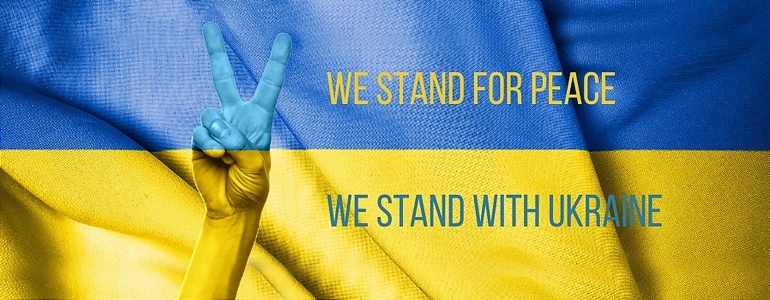
We stand for peace!

To our friends in Ukraine
Dear environmental and sustainability education community, dear colleagues and friends,

our team is responsible for the organization of the 11th World Environmental Education Congress. We started with the idea of “building bridges” to highlight the need for mutual understanding among different perspectives in our field. There is no sustainability without mutual understanding.

These days, we experience the attack of the army of the Russian Federation on Ukraine. We are horrified. We cannot stay polite and neutral. There is no sustainaibility without peace. There is no place for environmental education in a battle zone. We want to promote understanding, but we cannot accept the perspective of those who started this brutal invasion. We are educators and researchers, not politicians. We are people of words, not weapons. Words are what we use now.

We stand for peace!

To our friends in Ukraine – we are with you. The Congress virtual platform with the online program is open to you and you can use it as a safe space to spread the word.
Let us know how we can help you.

We ask our colleagues in Russian Federation – use your influence to stop the war. Do not let your politicians lead the war in your name. You are members of our community. We believe that any of us has the potential to contribute to peace which is a fundamental premise to a sustainable world.

To all of us – let’s use our influence to stop the war. Let’s promote peace. If you have a chance to invite and contact any of your Ukrainian colleagues, let them know about this possibility.

There is no sustainability without peace. Stop the war! Stop the Russian aggression in Ukraine!

On behalf of the local organizing team of the 11th World Environmental Education Congress

Jan Činčera, Masaryk University, Mario Salomone WEEC Secretary General