/in Press, World EE Day/di

Celebrating the World EE Day 2020, experiences and activities all around the world

The third edition of the World Environmental Education Day took place from 14 to 26 October 2020.  The Weec Network invited all the stakeholders of the environmental education to join the World Environmental Education Day organising special events to highlight the importance of environmental educational actions all over the world.

The aim of EE Day is to focus on the complexity of the challenges in a world where everything is ever more interconnected. Several associations, environmental education centres, schools and institutions sent us information about their events in 2020. We would like to thank all those who wanted to promote environmental education this year, despite the pandemic.

Here we present a selection of interesting case histories.


Bénin
Cercle de Recherche pour l’Identification et la Promotion des Alternatives du Développement Durable (CRIPADD)

CRIPADD is convinced that an environmental education program for children is essential to raise environmental awareness. It is with this in mind that they initiated an animation campaign for the benefit of schoolchildren at the public primary school of Hio. It will focus on environmental themes drawn from their environment.

This initiative was set up after the momentous decision to ban mangrove cutting in Avlékété, an area of ​​impressive biodiversity, but overexploited. However, the decision of environmental protection is putting many families in economic difficulty.


Bhutan
Royal Education Council
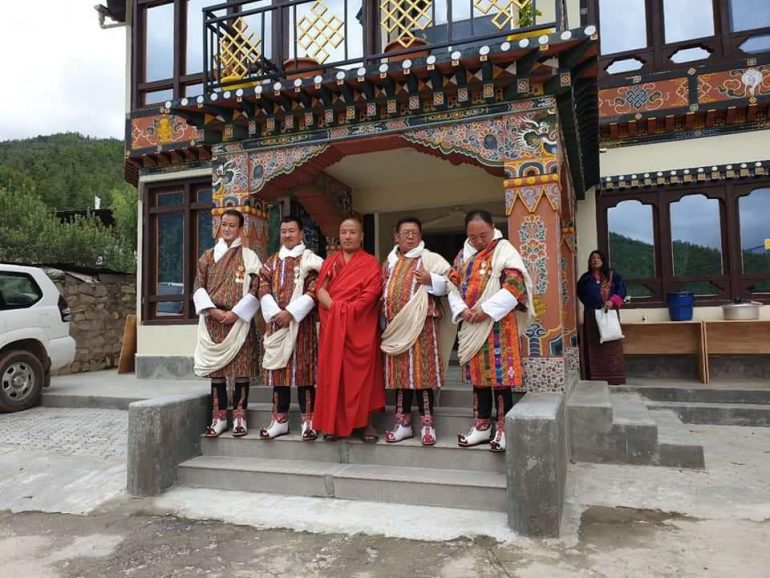
Environmental education is one of the national priorities towards achieving the goals of Gross National Happiness. To this effect, Environmental Science for classes 9 to 12 was introduced as optional subject with the aim of developing youths who are in peace and harmony with the tangible and intangible environment. As a consequence, nature is used sustainably for the wellbeing of people and the nature.


Canada

International Francophonie (Francophonie internationale)
Revue Éducation relative à l’environnement

The Revue Éducation relative à l’environnement, part of the Université du Québec à Montréal (UQAM), has set up a Google discussion group (mailing list) concerning the field of Environmental Education. In this group, members can exchange information (announcements of colloquia, seminars or webinars; publications; call for contributions for an event; call for publication; links to a website or webpage, etc.), ask subscribers research questions on the subject of the list, help other subscribers by answering the questions asked, receive information… as long as it is in the field of Environmental Education. The language used by this group is French. This list is moderated and you will have the possibility to unsubscribe at any time.

To be a member of this group, send an email at revue.ere@uqam.ca


Chile
Fundación Cosmos
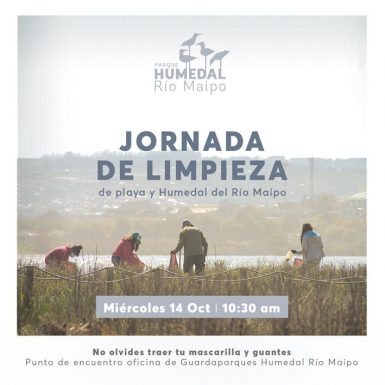
Fundación Cosmos manages the Rio Maipo Wetland Nature Sanctuary located on the central coast of Chile. This is one of the most important coastal wetlands in the area, both because it is home to more than 180 species of birds, and because of the environmental services it provides to local communities and the ecosystem in general. However, it is not free from threats and factors that deteriorate it and affect its biodiversity, such as the presence and accumulation of rubbish that reaches it through high tides or the flooding of the Maipo River. To commemorate World Environmental Education Day, they have organised a community rubbish clean-up, which is more important than ever, given the arrival of migratory birds in the wetland. Through the clean-up, the Fudación generates awareness about the origin of the rubbish and the possible destiny of the waste that we all produce, encouraging a change in behaviour with respect to it.


France
Association Centre de découverte du son

The Association Centre de découverte du son will organize a nature outing: “Sons Buissonniers”. Walks will be organised in search of musical instruments that nature can offer. Magical moments where a blade of grass turns into a whistle, fruit into percussion. Then pupils will discover how to manipulate and have fun with these sound objects.


France
Litt’Obs

Litt’Obs will organise an educational discovery of rays and sharks with a school public as part of the Festival Baie des Sciences in St-Brieuc, on 14th of October.


Italy
Department of Education Studies at University of Bologna

An informal group of professor and students engaged on environmental education is organizing a web event (in Italian) addressed to students of the Department of Education Studies at University of Bologna, on the 16 October, 11 am-1 pm.
Title: Educazione ambientale, scuola, Indicazioni Nazionali (Environmental education, school and National Guide-lines), relator Prof. Stefano Piastra.


Italy
“MAREARTE” Project, travelling exhibition

The “MareArte” project was born from an idea of the artist Diego Racconi as a collective of small paintings by international artists, received through the postal system. The theme of the works develops on the relationship between Man and the Sea, transforming art into a valid tool of awareness, through which to send a message to the community, stimulating virtuous behaviour and raising awareness of respect for the environment. The large participation of the artists with their personal postcards led to the development of the initiative by organizing a traveling collective exhibition, in which some specific works created by the artist Diego Racconi are also presented for a charity action in support of reality. that deal with the recovery of marine animals. The exhibition is structured and proposed thanks to the collaboration of various institutional bodies involving them for the promotion of the initiative in their own territory and is sent through the postal system from location to location in the various destinations, through a tour and a travel route using the postal system. The initiative focuses on environmental sustainability issues and for this reason the invitation to participate in the initiative is also extended to children, precisely to involve the new generations on ecological environmental issues and sustainability objectives. All the works received will be collected at the end of the exhibition in an artist’s book and will therefore not be returned. The Exibition is now hosted at the Museo Barca Lariana (MBL) – Pianello del Lario, Como, Italy


Madagascar
Institute of People and Nature (IPN)
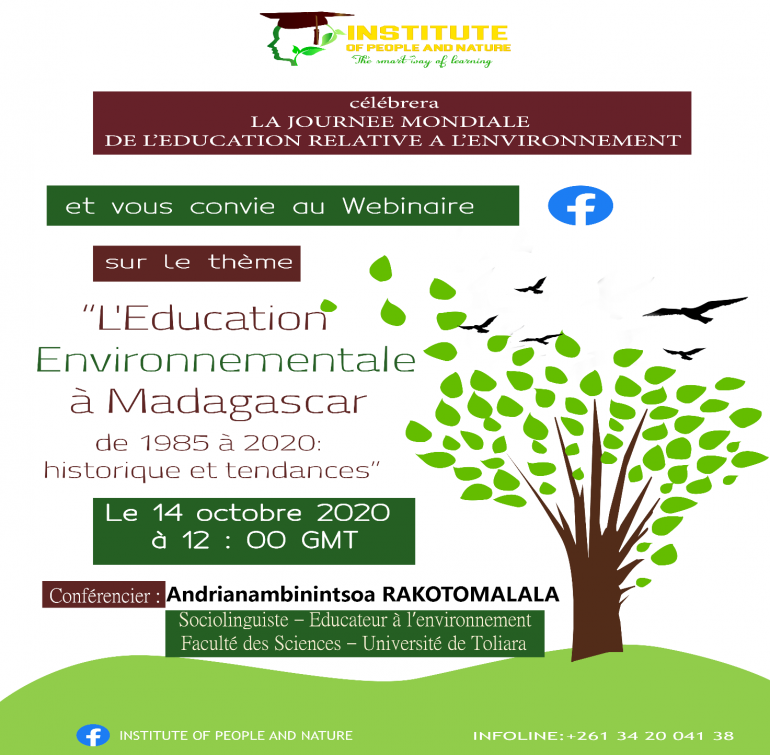
The Institute of People and Nature (IPN) will take part at the celebration of the World Environmental Education Day with a webinar on “Environmental Education in Madagascar from 1985 to 2020: background and trends”. The main objective is to inform the audience about the EE actions taken in Madagascar Island since the start in 1985, their impacts and current trends. The target groups are: Members of IPN group (217 members from Malagasy public and private Universities); and Environmental Education, Conservation and Sustainable Development professionals, University students worldwide interested in EE and environment-related issues in Madagascar. It will take place on 14th October at 12:00 GMT. The webinar will be conducted in French. The speaker is Andrianambinintsoa RAKOTOMALALA (Environmental Educator – Sociolinguist, Faculty of Science, University of Toliara, MADAGASCAR)


North-Macedonia
School of OOU Vlado Tasevski, Skopje

The school of OOU Vlado Tasevski will organise a Climate Action Project and Climate Change and Environment Activities on: Climate Change and biodiversity loss; the effects of climate change; the solutions; pedagogy and education; sustainable education; and SSGoals.


Turkey
SUGEP

The Sustainable Development Youth Leaders Education program will develop knowledge, skills and attitudes about sustainability. This program not only increases knowledge and awareness, but also improves skills and enables individuals to make more informed decisions about the environment.

There are a few methodologies that will create a solution-oriented project approach to many issues such as global climate change, gender equality, disruption of ecological balance, separation of biodiversity, ending hunger and poverty, sustainability cities, clean and sustainability energy, life in water. They will find knowledge to improve have academic and personal skills through organizational skills, speaking in front of the community, speaking a speech, preparing a project report.


Uruguay
National Network of Environmental Education for Sustainable Human Development of Uruguay (RENEA), Montevideo

From 5 to 7 November, a virtual meeting will set up. Experts from all over the region are invited to present their experiences and reflections on Latin American environmental education. Environmental education for sustainable human development implies an ethical, political and social commitment in a given time and space with the formation of a citizenship committed to participating democratically in decision-making and the execution of actions aimed at a socially equitable development, supportive and balanced between human needs and environmental care. In this very special year, environmental educators have faced new challenges and generated new learnings. It is more than ever a good time to meet, this time virtually, to continue the tradition of reflecting and building environmental education together.


USA
California Institute of Environmental Design and Management (CIEDM)

CIEDM will support WEED2020 by participating in the global campaign with following actions:

1. Raise public awareness of WEED2020 by spreading its campaign messages through its social medias, along with those of other environmental awareness events in and around October 14-25, such as Earth Science Week, International Day for Disaster Reduction, and Image a Day without Water;

2. Maintain and enhance through physical works the ecological and environmental services of the homestead pocket forest at Arcadia EcoHome as a registered pollinator site, a certified wildlife habitat, a certified pollinator habitat, and a verified ocean friendly garden.

We invite you to sign our campaign on Change to ask the United Nations, institutions, private and public organizations of five continents, to recognize and celebrate every year, on October 14th, the World Environmental Education Day.
/in Press/di

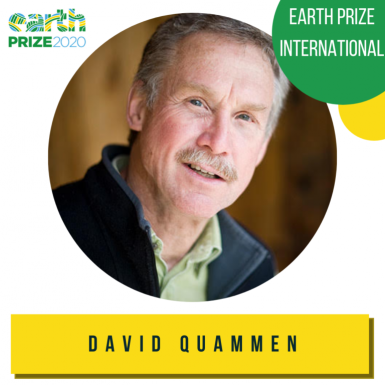
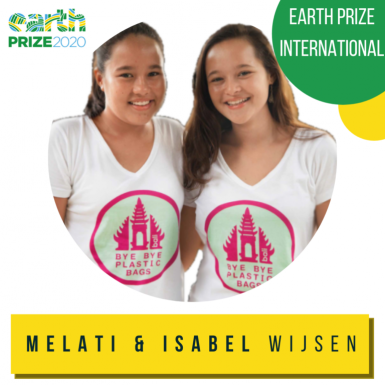
David Quammen and Melati and Isabel Wijsen are the international winners of Earth Prize 2020

The Third Edition of Earth Prize international took place in Italy (Lake Maggiore 10-11 October). The Prize confirmed to be a real landmark for people involved in the field of environmental education. Earth Prize international is organized by WEEC Network and City of Luino, with the contribution of Lombardy Region.

The international winners are:

David Quammen, American science, nature, and travel writer. He is nominated for his activity of divulgation about the existing link between human activities and new zoonoses. The book Spillover: Animal Infections and the Next Human Pandemic written in 2012, was rediscovered in this delicate historic moment due to Covid-19.
“Pigs, mosquitoes and chimpanzees can be the vectors of the next pandemic – Ebola, SARS, or dormant and still only partially known viruses, and a small spillover can transmit them to humans. Being informed, aware, ready to accept what science teaches us – you can read in the motivation of the award – is the first step to avoid being caught unprepared by the next pandemic, the next Big One, as Quammen calls it, whose name we still do not know”.

David Quammen’s speech is available here


Melati e Isabel Wijsen, two young Indonesian environmental activists who are involved in numerous initiatives to reduce plastic consumption in Bali. With the “Bye Bye Plastic Bags” initiative, they have managed to reach Governor Pastika’s attention, achieving the important result of banning polystyrene, plastic bags and straws from the island since 2018.
But they didn’t stop there and gave birth to youthopia a global movement that aims to train up a generation of changemakers and give them the tools to make a difference.
The two sisters are awarded “for their social commitment and for the involvement of young people in environmental initiatives”.

Melati’s interview is available here

A special mention goes to Phil Smith – Spaking 4 the planet and  NAAEE – North American Association for Environmental Education.

Phil Smith is the founder of Speaking for the Planet, an arts-based sustainability competition. It’s an event encouraging sustainability education for high schools. It uses performative arts such as public speaking, drama, and writing, to engage young people in thinking and creating a better world to live in. This initiative receives the Earth Prize nomination for its commitment in raising awareness among the younger generations, giving them the opportunity to share ideas, thoughts, and feelings though visual language.

The North American Association for Environmental Education is committed to promoting excellence in the field in order to accelerate environmental literacy and civic engagement. During the lockdown, this year they offered a rich tool containing initiatives of environmental education: seminars, webinars, online courses, certifications and much more. NAAEE is nominated for its commitment in creating a more sustainable future and in encouraging people to never stop learning.

/in Press/di

Australia, US and Indonesia among the international nominations of Earth Prize 2020

The third edition of Earth Prize International for environmental education and landscape will be held in Luino-Lake Maggiore (Italy), at the border with Switzerland, on  October 10th and 11th.

Streaming of the live video will be available on Facebook.

To attend the whole prize: https://www.facebook.com/WEECEducazioneSostenibile

To attend the international part (at 7.30 pm Italian time) https://www.facebook.com/Earthprize

The categories into which the 2020 Award is divided are: Earth Prize/Italy, Earth Prize/International, EarthPrize/Landscape, Blue Prize, Asvis Award.

The international nominations include: American writer David Quammen (for the book Spillover), Australian professor Philip Smith (creator of the Speaking4theplanet competition), the North American Association for Environmental Education (NAAEE for their Guide about EE and Covid), and Melati and Isabel Wijsen, Indonesian sisters and founders of Bye Bye Plastic Bags, an NGO driven by youth who says NO to plastic bags.

Earth Prize International is promoted by the WEEC Network (World Environmental Education Congress) and the City of Luino. It is supported by the Lombardy Region with the patronage of many associations involved in environmental protection,

The international prize gives recognition to those who have contributed with their ideas, actions or innovations to the transition toward a more sustainable lifestyle, by sharing best practices, producing literary and popular works, appearing on films and television broadcasts, realizing landscape projects, communication campaigns, studies and research that contribute to environmental education along all ages of life. Earth Prize wants to be a multiplier of positive actions for the environment and the quality of life.

/in Press/di

CALL: Environmental Education experiences at the time of COVID-19

As educators and environmental educators of the WEEC Network, having overcome these difficult months of lockdown, we feel more than ever the importance of dedicating a focus to teaching methodologies.

For this reason, we are launching a call addressed to all educators and environmental educators: we are looking for testimonials and stories on how the way of working and doing environmental education has changed and what strategies and tools have worked in this period.

Send us your testimony by August 31!

The objective is to activate a comparison on the good practices that emerged, on the methodologies adopted and on the feedback obtained. The testimonies and experiences collected will be shared in the next events of the WEEC Network 2020.

In environmental education, the relationship with nature and outdoor activities are fundamental. How to respond to the paradox that in recent months it has been necessary to do environmental education through a screen at home? Was the opportunity also taken for education in a new and truly interactive use of new technologies? And how can the relationship with nature “at a distance” be maintained?

FILL THE SURVEY: Call EA and covid-19


/in Press/di

From Bhutan with love, a poem for doctors from all over the world

I follow the news with a heavy heart. I see images of health workers, care-givers, and people in the front-lines and pay my tributes to their courage and sacrifices.
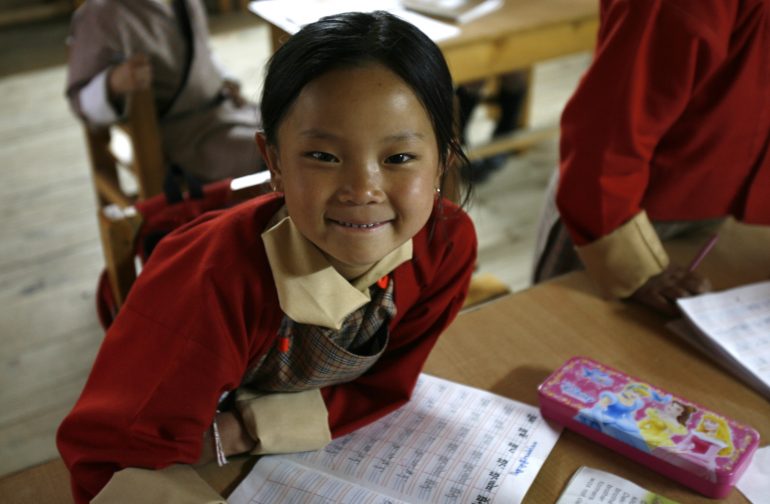
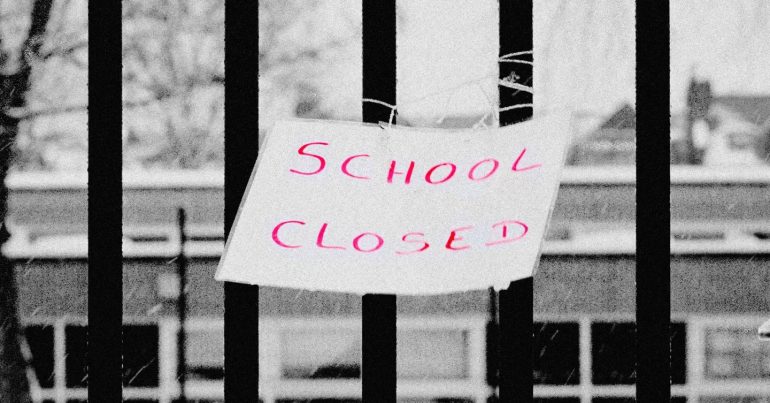
Here is a little tribute to the medical personnel and the brave-hearts around the world.

TS Powdyel

Thank you forever…

Did you ever think…

This would come?

No, no one ever did.

Hippocrates was no diviner

No, not Florence Nightingale either…

This is all you were told:

Life is sacred: Life is precious

Preserve it… honour it… celebrate it…

This is what you hold in your hand today.

But the scourge is all over:

It is here, there

It has exploded everywhere.

And there you are…

Right in the eye of the storm!

Today, you are not a doctor…

No, nor a nurse…

You’re life unto life

Yes, precious life

Unto precious life

Your vital role dissolves with its precious soul today…

When you go in today

Wrapped in your multi-layered PPE

Tight from head to toe

A single thought reigns supreme in your mind:

These lives are in my hand

No matter what lies beyond…

Thank you for the precious lives you save everyday

Putting selfless service before your own dear self


Thank you for the hunger and the thirst you put aside

And the mask-scars and the heart-aches that will abide

Even as the pressing call of nature you put on hold…

Thank you forever… God bless you evermore…

We see you take your fight to the end

Till you know you cannot bear it anymore…

We see your drained-out colleague drop on the floor

And cry with you for the battles forever lost.

Heart-broken today for the lives that the virus cost…

Hold on, Doctor… heal on, Sister…

Forge on every front-line hero…

And the brave-hearts behind you…

This battle must be fought and won

And Life has to go on…


Thank you for the world…

And, thank you for Life…

The sun will rise again…

Thank you forever…

God bless you evermore…

/in Press/di

Covid-19 crisis and the Life-Principle of Learning

As a teacher, I believe that the first principle of education is the affirmation and celebration of life. Life is precious and every bit worth preserving and honouring. Little wonder, here is the emphatic command of the King Himself on behalf of Life, Milu Rinpoche: ‘Not a single life should be lost to coronavirus’.

The whole world is coming around!

All our teaching and learning will go only so far and no further if this basic principle of education is missing. As unusual as the current situation is, it may provide a welcome opportunity to re-discover the fundamental goal of education – that is Sherig – meaning ‘deep learning’. We will then be able to locate the core purpose of education as it ought to be.

The scourge of the coronavirus has forced education systems around the world to find alternative ways of teaching the students and engaging them meaningfully during these uncertain periods of home-stay while at the same time hoping to ‘cover the sacrosanct syllabus’!

The Ministry of Education has formulated versatile plans and our fellow-teachers are making valiant efforts to marshal technology to reach out to their students. All this is as it ought to be in the given ongoing situation. And, the results, I would like to believe, must match the inputs.

In the unlikely event that current public security interventions warrant extension, an additional option could require the students to explore diverse and original formats to represent their previous year’s or semester’s learning and submit credible samples of work for assessment at the end of the designated period.

Knowledge is power but how knowledge is internalised and represented is success.

This alternative would provide greater diversity in learning and in representing what is learnt, free learning from undue dependence on expensive gadgets especially in disadvantaged areas, relieve teachers to focus on more purposeful support and monitoring, and build greater integrity in learning.

Above all, such alternatives would emphasise depth over breadth, insights over information, quality over quantity, education over qualification, among other advantages.

The intent of Every Village a School: Every Home a Classroom, and Educating for Gross National Happiness initiatives was to pave the way for learning blessed with integrity.

For now though, precious Life is absolute Priority Number 1.

We are all in it together… in our efforts, in prayers, in our hope…

Thakur S Powdyel
Former Minister of Education in Bhutan, Starter of Green School in Bhutan

/in Press/di

Coronavirus and EE. Situation, proposals, perspectives: the debate is open

Environmental Education is in quarantine too.
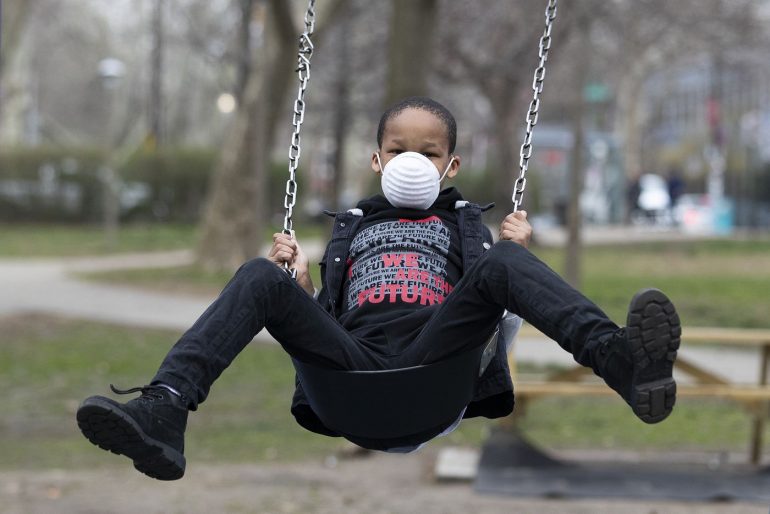
What are we learning from this crisis? What is the impact of the Covid-19 emergency on several activities? And how can environmental education help address this and other crises? What are the best practices for continuing to do environmental education using the Internet and e-learning? Is it necessary for schools and universities to be more focused on social and ecological sustainability? What are the prospects for the future? What are we going to do when the emergency is over, and the fear has passed? Will everything come back as before? What will have changed for the better or for the worse? Is there a risk in the future of a further reduction in the funds available for environmental education and the Green New Deal?

The WEEC Network opens the debate on these and other questions, to try to better understand the situation of environmental education in all countries in the days of Coronavirus.

Send us news, comments, stories, proposals. We will publish them on the WEEC network website.

/in Press/di

Coronavirus Covid-19 Crisis: EE is a fundamental tool to build resilience

The world environmental education network (WEEC) is close to everyone in these long months who are experiencing painful moments and a situation of social isolation all over the world.

For teachers at schools and universities, the pandemic means that they have to give up their relationship with millions of young students. Online courses are a remedy that cannot replace the educational relationship, and there is a digital divide that increases the disadvantage of people living in socio-economic conditions, thus creating even greater educational poverty.

Measures to tackle the infection also deprive young people and adults of the opportunity to go outdoors, go to natural parks, take advantage of museums, theatres, libraries and other educational opportunities.

For environmental education, all this is a heavy brake: the Coronavirus crisis paralyses all environmental education activities.

At the same time, today the environmental education also has a more significant task. The origin of the pandemic and its impacts, which mainly affect people weakened by a polluted environment and unhealthy lifestyles, remind everyone of the importance of restoring the balance of the planet upset by global warming and the destruction of Nature.

Environmental education has a pivotal role and is a crucial tool to build resilience in the face of disasters and catastrophes, natural or made by humans.

/in Press/di

WEEC 2023: the Call for Bids is open

Who will be the next lucky one to win the chance to host the 12 WEEC congress?
The Call for Bids to submit your application is officially open, send us an Expression of Interest (EOI) before 31st July 2020.

Please ask for the official application form to: secretariat@weecnetwork.staging.19.coop

Deadline to submit the application: 31 July 2020

The Permanent Secretariat would like to remind you that only the public or private non-profit organizations (universities, foundations, associations, …) can apply the candidacy of their own country as the seat of the 12th WEEC in 2023.

The winner will be assigned indicatively by 31st December 2020.

The candidatures will be assessed mostly according to the following criteria:

1. Having preferably close relationships with the WEEC congresses and the Network in the past, and, in any case, joining the Network and endorsing its mission, vision and strategy.
2. Guaranteeing the quality of the contents and the cultural project of the Congress, in continuity and total agreement with the heritage and the spirit of previous Congresses and in close cooperation with the Permanent Secretariat that will supervise and co-chair the congress.
3. Designing the final call for the congress and the programme according to the guidelines and the advice of the Secretariat and the International Socio-Scientific Committee established by the Secretariat.
4. Demonstrating they have relevant experience in the field of environmental education.
5. Demonstrating they have adequate experience in organizing events at local, national, regional, and international levels.
6. Demonstrating they have adequate congress facilities.
7. Demonstrating they are skilled in creating networks at different levels and getting various institutions and organizations (national authorities, local institutions, Higher, Secondary and Primary education institutions, parks, museums, NGOs, mass media, etc.) to be involved in the organization and participation to the Congress.
8. Demonstrating their ability to ensure broad national and international participation at the Congress.
9. Engaging to strengthen the WEEC International Network, inter alia by allocating a budget for the network’s activities.
10. Demonstrating they can mobilize the necessary resources at the local and national level (and possibly at the regional and international level as well) to guarantee the financial sustainability of the Congress.
11. Demonstrating their commitment to contain the costs of participation to the Congress and facilitate the participation of people from disadvantaged countries or categories (e.g. young people and students), by reducing the costs of participation and overnight stays as much as possible.
12. Engaging to offer sponsorships to an adequate number of delegates from developing countries (if the bidder is in a developed country).
13. Guaranteeing the cultural diversity and facilitating participation, also thanks to the use of several languages as English, French and Spanish at least both for the web site and during the Congress.
14. Guaranteeing the ecological consistency of the Congress by taking every measure to minimize the ecological/carbon footprint of the event and assuring its socio and eco-sustainability both as venues and as other aspects (i.e. accommodation, social program outside, and so on).
15. Accepting the time schedule proposed by the Permanent Secretariat.

The 12th WEEC in 2023 will be assigned indicatively by 31st December 2020.

Official announce of the 12th WEEC: at 11th WEEC 2021 in Prague (Czech Republic), during the closing ceremony.

E-mail: secretariat@weecnetwork.staging.19.coop

/in Press/di

Call for submissions: selected papers form the 10WEEC

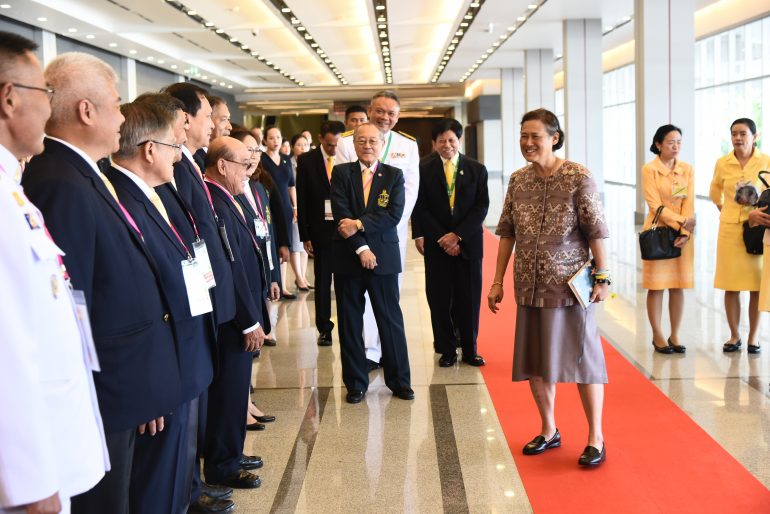
Princess Maha Chakri Sirindhorn, 10WEEC Opening Ceremony

The Tenth World Environmental Education Congress (WEEC) was recently held in Bangkok, Thailand, and was organized under the title theme of Local and Global Connectivity. The Local Organizing Committee for the congress was the Faculty of Environment, Kasetsart University (Thailand) in cooperation with the WEEC Permanent Secretariat (Italy). We would like to thank you for your participation in this important international meeting.

The success of the congress has been well documented with more than 1000 attendees and several UN agencies participating. Attendees hailed from many over 70 countries and presented papers across sub-themes embracing a diversity of approaches in the conceptualization and implementation of EE worldwide. Many attendees remarked that the cultural aspects of the congress were especially timely and that the practice of inviting educators (both formal and informal) to dialogue with policy makers and academics is important.

Papers selected for inclusion in this peer reviewed volume will focus on the multidisciplinarity of EE. In addition, submissions will have been previously accepted for presentation at the Bangkok meeting and address one or more of the interconnected congress sub-themes. Submissions can be directed towards an educator or researcher audience (or both) but should involve original research or curriculum development work. All submissions for the volume must be written in English.

SUBMISSION PROCESS

The first stage of the submission process will be to indicate your willingness to have your abstract considered for inclusion in this edited and peer reviewed volume. To be considered, please send a brief email to the lead editor (Dr. David Zandvliet, dbz@sfu.ca and cc’d to the Conference Chair: Prof Surat Bualert Surat.b@ku.ac.th) and include your original abstract submission ID from the congress, a three hundred word (max) edited abstract, and a brief listing of the relevant congress subthemes. Please also include a full list of authors and their relevant institutional affiliations in this communication.
In the second stage of the process the editorial team will review the abstracts submitted, and invite full submissions from selected author teams for the next stage of peer review. Unfortunately, not all abstracts submitted will be invited to present their work in this volume, however, those not accepted could alternatively be considered for publication in other venues. Abstracts selected for an invitation to the book project will receive an email letter from the editorial team. This letter this will include further information about page limits, submission format, etc. so that the full submissions can be edited and submitted in a timely manner for the next stage of the process.

In the final stage of the process, the editorial team will provide detailed feedback to author teams regarding their full paper submission in preparation for final copy editing of the publication to the publisher. After a final external peer review of the entire volume, the final book will then be published as part of the Culture and Environment Series with DIO Press (New York). Finally, as we hope to have the entire submission and review process conducted within the next 6-8 months, it is important that authors respect the timelines for transition of their submitted work to the final published volume. Appended is a detailed timeline with key dates that proposals will need to meet for inclusion in the publication.

SUBMISSION TIMELINE

Email your ID, abstract and proposal summary to the editor. (dbz@sfu.ca) Mar. 1st, 2020
Invited author teams are notified and given submission requirements. Mar. 15th, 2020
Full chapter drafts are sent to the editor in preparation for peer review. May. 1st, 2020
Editorial feedback on full proposals will be returned to author teams. June. 15th , 2020
Final copy-edited chapter drafts will be submitted to the editor for compiling. Sept. 15th, 2020
Full peer reviewed volume will be submitted to the Publisher. Oct. 30th, 2020