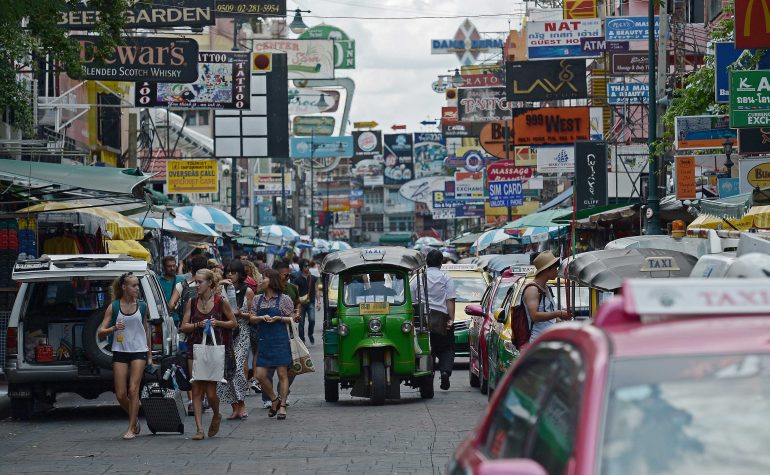
 The data of the International Monetary Fund speak for themselves: today Thailand is the second largest economy in Southeast Asia after Indonesia and, with a higher average income, acts as a point of reference for its less fortunate neighbors. The economy of the nation has diversified and, especially in recent years, has taken on more characteristics of “resilience”, the great capacity for adaptation and prediction of the epochal changes taking place. In this perspective, public investments should remain a key factor and increase in the coming years, in line with the government’s infrastructure plans to attract private investment. “They should”, because the year 2018 has seen the best results since the military-led government came to power in 2014, with economic growth reaching 4.6% of GDP even if a new decline is expected in the 2019 and in 2020 (3.9% and 3.7% respectively). This forecast, confirmed by all the major international analysts, is caused by the global slowdown in the commercial system and the growing trade tensions between the United States and China. Inflation for the moment remains at 0.9% and is expected to remain at around 1.1%; a condition that should be compensated by the favorable wage impact with new hires and increased activity in most sectors. The general government deficit and public debt remained relatively stable in 2018, estimated by respectively -0.8% and 41.3% by the IMF. Exports of goods and services (71% of GDP) should maintain good performances, despite the slowdown in China. It is fair to recall that in the period between the nineties of the last century and 2000 a high level of indebtedness was registered, absolutely not absorbed in the following decades. On the other hand, household consumption, which accounts for around 50% of GDP, should remain constant, keeping current real income levels, without leading to further improvements. Hence the difficulties inherent in public debt. For this reason, the Thai National Strategic Plan (2017-2036) focuses on improving the business environment and tends to strengthen the country’s competitiveness and economic performance in the medium to long term. Especially through the development of new railway lines, roads and highways, with new ports and airports. The continuous control of power by the Government in the reassurance has reassured many foreign investors previously discouraged by the potential instability. Therefore it is likely that an improvement over the next decade can be expected.
Increased regional competition, however, could reduce Thailand’s attractiveness as an investment destination. Years of internal political struggles and repeated “coups d’etat” have pushed the country away from its traditional alliance with the United States and even more so from China. The tensions between the new king Maha Vajiralongkorn, the ruling military junta and the political opposition intensified during the recent political elections (March 2019), the outcome of which led to a substantial strengthening of the previous power block. The unemployment rate remained low in 2018 (0.7%) and is expected to remain at the same level in the coming years. This “official” unemployment rate in Thailand is among the lowest in the world, especially due to the low birth rate (with a radical reversal, starting in 1980) and, in particular, due to the presence of a vast “informal sect ”, which employs most of the workforce (street vendors, motorcycle-taxis and independent).
The main economic sectors
Thailand has a workforce of 38.5 million out of a total population of 69.2 million. Its economy is still heavily dependent on agriculture and livestock, which represents 11% of GDP and employs 34.8% of the entire workforce. We are faced with one of the leading producers and exporters of rice, now also strong in the rubber, sugar, corn, jute, cotton and tobacco sectors. Even if, as we will see later on, the problems and contradictions are not lacking, especially in this phase of “passage”.
Thailand was once one of the major exporters of hardwoods, particularly primary Teak and Dipterocarpus alatus, known in Thai as yang wood. In 1989 the government imposed a ban on deforestation following a catastrophic landslide in the southern part of the country, which was largely attributed to deforestation caused by a series of repeated “clean-up” operations that began after the Second World War.
Some cuts for local uses have continued and, although other types of timber from Thai forests have been illegally exported, the ban has generally been successful. There have been many efforts to conserve existing forests and expand forest reserves, although the various governments, despite considerable financial commitments, have had two orders of opposition: on the one hand the traditional agricultural populations, accustomed to radical interventions of enrichment of the land (even with fire) including the habit of freely disposing of unconstrained lumber. On the other side the oppositions of the great timber traders who saw their revenues drastically reduced. Many “multinationals” of wood – local in nature – operate today in Laos, Cambodia, MyamMar, the Malacca peninsula, while maintaining the registered office in Thai territory.
The manufacturing sector represents 35.0% of GDP and is well diversified. The main Thai industries are those of components, steel production and electronics in all its aspects. Thailand is also known as an assembly center for international automotive brands. Also the productions concerning the equipment related to mechatronics, computers, the production of cement and stone derivatives, to wood, both in semi-finished and finished furniture, are flourishing. The “plastics” sector maintains a good level, having passed from the most traditional production techniques and put on the market (with products with a high polluting rate) in search of “green paths” with the creation and creation of “similar materials” derived from rice, palms, roots, leaves, legumes.
The textile sector employs less than a quarter of the workforce than it had in 1980 and this is because wage claims have led to an equalization of costs compared to Europe, Russia or America, making local production no more profitable. By far the most important sector for the Thai economy is tourism, both of pure fruition (of sea, jungle and mountain) and of a religious cultural nature.
The Thai government has bet a lot on this, increasing the number of guides, cultural promoters, organizers of short theme tours, support services (catering, hospitality, transport) by only 300% in 2010-2018. ) with the corresponding tripling of appropriations. To confirm this, the tertiary sector, including financial services (According to the “ILO 2017 White Paper”), is on the rise and contributes 56.3% of GDP. It employs 44.6% of the active population.
The prestigious productions
Before the sixties the economy of the “Gentile Country” was mainly based on the production of rice and other foods and goods mainly intended for internal use. Only some fine qualities of wood, especially the “tek” and tin were intended for export. Then also began the production of surplus of “Thai rice” appreciated above all in the Asian and American markets. We will have to wait until the second post-war period to have a significant leap in productive activity. In fact, the governments of the time undertook a serious and organic development policy based on the transition from traditional agriculture to the production of fabrics, consumer goods and, lately, parts of electronic and mechatronic components. Remaining in the agricultural sector, the one that has changed the most, it is recalled that the varieties of high-yielding rice were adopted only from the 60s of last century, rice crops are much less profitable than in other parts of Asia eastern, mainly due to the hydrography changed after the construction of large hydroelectric complexes and the tendency to intensive cultivation but with a low technological percentage. Now the main rice producing areas of Thailand are limited to the Chao Phraya basin and the Khorat plateau. However, agricultural production has diversified to meet the demands of the domestic and global markets. Among the crops produced for the market there are manioc, maize (oriental maize), kenaf (a jutelike fiber), longan, mango, pineapple, durian, cashews, countless varieties of vegetables and flowers. Growing crops such as rubber, coffee, sugar cane and particular fruits are mostly produced in large companies. Once tobacco was an important specific crop in the area, but decreased considerably due to the fall in foreign demand. More on agriculture and animal husbandry. The north-east of Thailand has long been known for its Indian buffalo and its livestock. As agriculture has become increasingly mechanized, the demand for water buffalo, once used for plowing and digging, has decreased significantly. Now it is bred especially for meat and some dairy derivatives. In this regard it is useful to remember that the breeding of livestock (autochthonous and imported) has undergone a radical transformation in the last five years, as well as for the large pig and poultry farms. There are no longer, by law, large companies “forced concentration” of animals, with narrow spaces of movement and obvious suffering of the “guests” but, slowly, it has gone to less invasive animal husbandry, with small farms or, if still large, with areas of movement and free feeding for the animals.
Bird flu in Southeast Asia at the beginning of the 21st century prompted the government to order the destruction of large numbers of chickens, leading to a general decline in poultry production and heavy revenue losses for producers. Immediately recovered, however, with the promotion of new companies with “green” management criteria and well-designed and distributed government incentives.
Finally, a reference to what, with rice and raw wood, was the main source of wealth destined for export: the subsoil.
The pond has long been one of Thailand’s most precious mineral resources, and the country has become one of the largest producers in the world. However, fluctuations in the world tin market have led to a reduction in production. Today, Thailand is the tenth in global global tin production. Other important resources are: coal (lignite), zinc, gypsum, fluorite, tungsten, limestone (from the finest to the most crude), different varieties of marble. Rubies and sapphires are extracted along the eastern coast of the peninsula and on the border with Laos and MyanMar (Burma) and, over time, have also become one of the main items of Thai economic activity.
Industrial expansion has increased the demand for electricity and fossil fuels. Electricity in Thailand comes mainly from hydroelectric power stations in the central plains, in the north, in the north-east and in Laos, with additional energy coming from thermal power stations that use natural gas and lignite. Thailand has significant reserves of offshore natural gas and less abundant onshore oil resources. In the 1990s a controversial pipeline for the transport of natural gas from Myanmar to Thailand was built, which was only partially realized in the end. At the beginning of the 21st century, the nation’s dependence on imported oil and natural gas for the energy had decreased considerably and is now only 14% of consumption dependent on foreign countries.
A bit of history…
From 1963 to 1997 the Thai economy was one of those with the highest growth rate. It is precisely in this period that various industries began to operate, especially in the Bangkok area and focus on exports. There was therefore a strong urbanization of the large urban areas and a progressive depopulation of the countryside. Those who continued to devote themselves to agriculture increasingly turned to machines to compensate for the shortage of workers, causing a shift in the rural economy from subsistence to market-oriented agriculture. Most investments in new technologies in the agricultural sector came from the savings of family members who had gone to work in the cities. It was exactly in that time frame that the main protests of the inhabitants of the plains and hills materialized. The large reservoirs to produce electricity by harnessing the rivers brought about considerable alterations in the delicate equilibrium of the water systems both upstream and downstream of the plants. Deforestation also proceeded at a rapid pace to make room for new monoculture crops, roads and commercial and industrial areas.
These protests, with the growing concerns of the middle class on the environment, have spurred the governments of the late twentieth and early twenty-first century to undertake projects with greater sensitivity to environmental issues than had been demonstrated by previous governments.
Export-oriented industries and financial institutions, particularly those created in the 1980s and 1990s, have relied heavily on foreign capital, making the Thai economy more vulnerable to changes in global economic conditions. In 1997, a sudden and rapid decline in the Thai currency, the baht, triggered a financial crisis that spread rapidly to other Asian countries. The crisis not only exposed Thailand’s excessive dependence on foreign capital, but also focused on the consequences of uneven development and weaknesses in various sectors of the economy. At the beginning of the 21st century, the economy had begun to recover, but the economic crisis and the emergence of a more democratic political order meant that economic policies became the subject of intense public debate.
A coup in September 2006 rekindled uncertainties over the future of the Thai economy. While announcing, rescinding and subsequently resetting various restrictions on foreign investment, the interim government promoted the king’s philosophy of “sufficiency economy”, an ideal emphasizing self-sufficiency and moderation in consumption, without rejecting capitalist investments. On this model it is moving, substantially, even today, even if the economies of scale reward – and will reward – more and more economies with highly committed plants and strategies (both of means and of men and capital) leading to the emergence, at the long China, neighboring India and even Indonesia. A nation, however, that makes flexibility its best weapon and that knows how to keep up with the times.
by Pier Luigi Cavalchini

 World mobilization and strike week for the Earth from 20 to 27 September, announced by Fridays for future, while in New York on the 23rd António Guterres, Secretary General of the United Nations, convenes the leaders of the planet for a summit leading to concrete actions for the climate. «Join the ‘Week for Future and Climate Justice’ of Fridays for future and take to the streets next to the young», this is the appeal of the Secretary General of the WEEC network Mario Salomone.
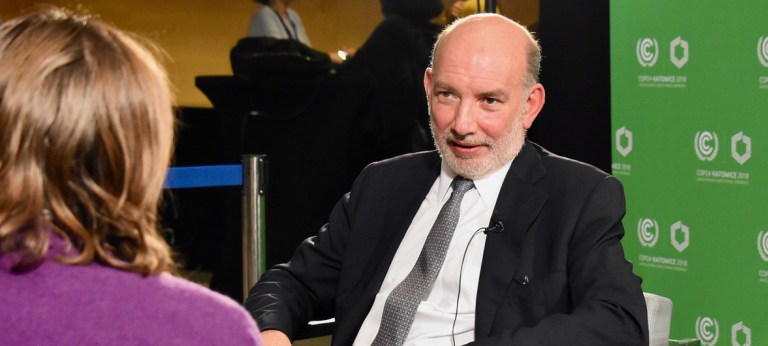 Guterres also appointed a special envoy, Mexican diplomat Luis Alfonso de Alba (in the photo), with the task of ensuring that every country in the world has the tools, vision and political will necessary for ambitious climate action, benefit of all aspects of society.
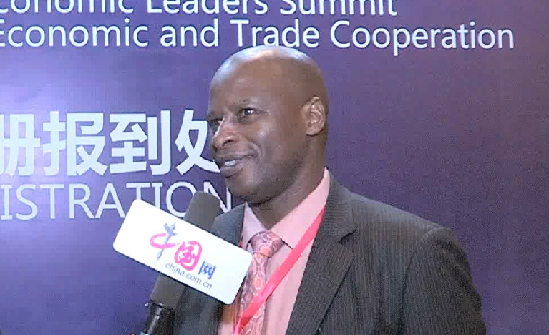 Dr. Denis Nkala, Regional Coordinator and Representative The United Nations office for South-South Cooperation (UNOSSC), Asia and the Pacific Office, will be at the
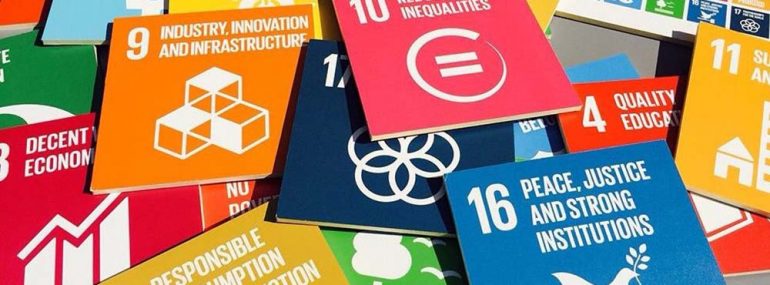 The Annual SDG Accord Report 2019, titled Progress towards the Global Goals in the University and College sector was launched some days ago in New York at the UN High Level Political Forum. The SDG Accord – says Iain Patton CEO, EAUC-The Alliance for Sustainability Leadership in Education – is a high profile international initiative that the Global Alliance developed to allow the tertiary education sector to demonstrate its commitment to playing its part in meeting the SDGs, and sharing best practice. This is a partnership initiative, endorsed by the UN’s HESI and many other global partners. It was launched in 2017, at 9WEEC in Canada, and it currently has official commitment to its tenets from 110 institutions, 103 support organisations and 817 individuals – all spread across 85 countries.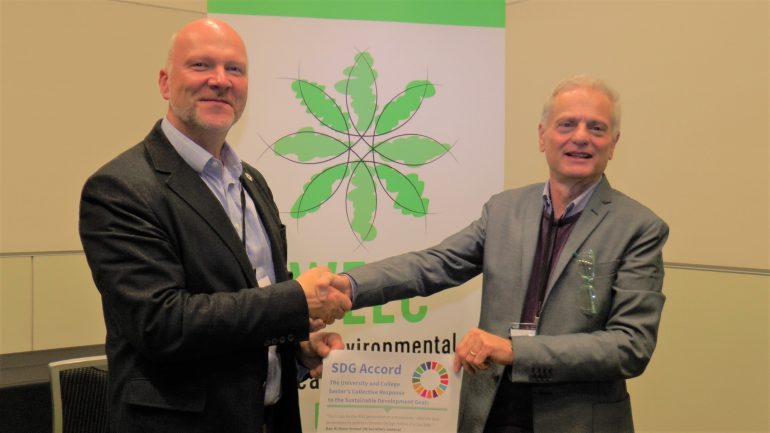
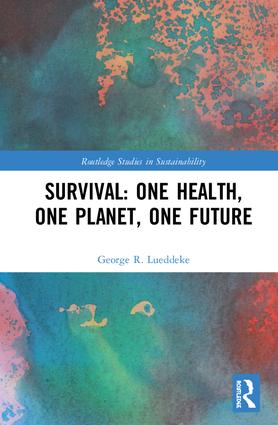 This book highlights two of our greatest social problems: changing the way we relate to the planet and to one another, and confronting how we use technology for the benefit of both humankind and the planet.
 George R. Lueddeke MEd PhD is an educational advisor in higher and medical education and chairs the global One Health Education Task Force for the One Health Commission and the One Health Initiative. He has published widely on educational transformation, innovation and leadership and been invited as a plenary speaker to different corners of the world.
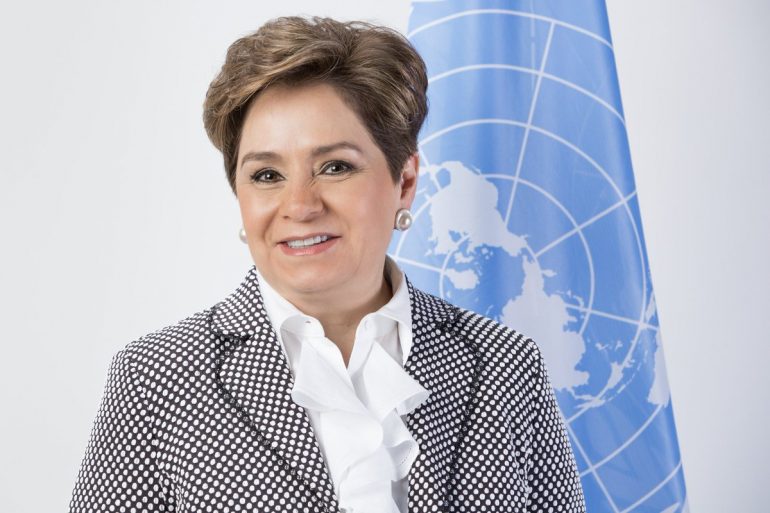 We are very proud to announce that the UNFCCC, the United Nations Framework Convention on Climate Change , has agreed to give its patronage to the 10th World Environmental Education Congress.
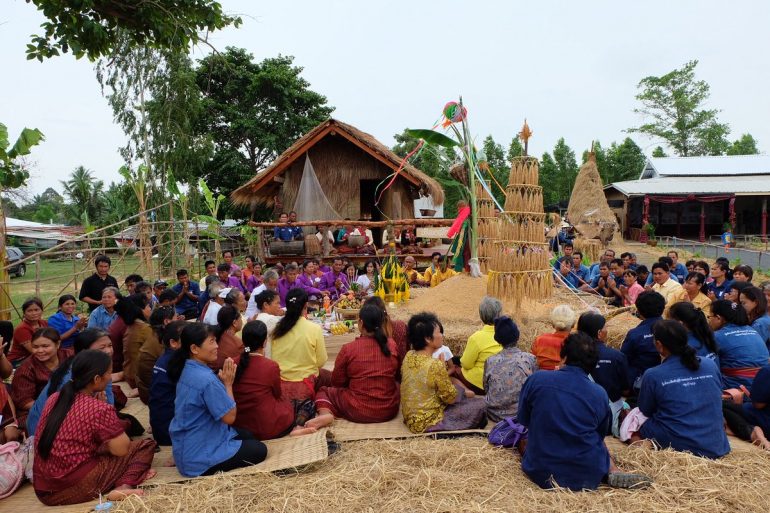 During the 10th WEEC Congress, for the first time, you can attend a Youth Camp.
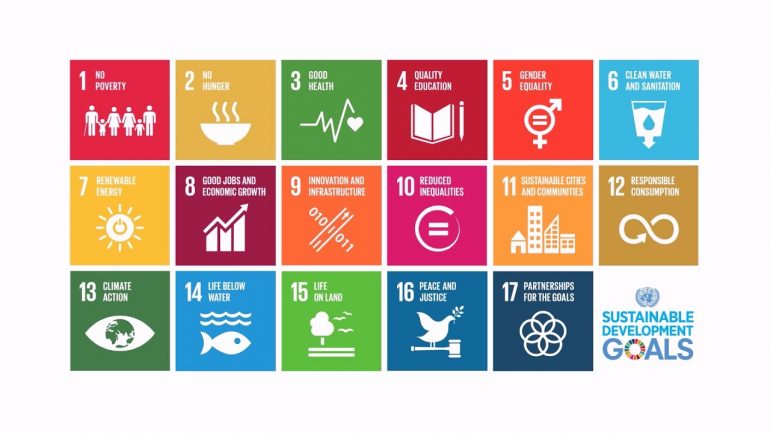 The WEEC Permanent Secretariat is very proud to announce that UNESCO and UNEP agencies gave – once again – their patronage to the World Environmental Education Congress, that will be held in Bangkok from 3 to 7 November 2019.
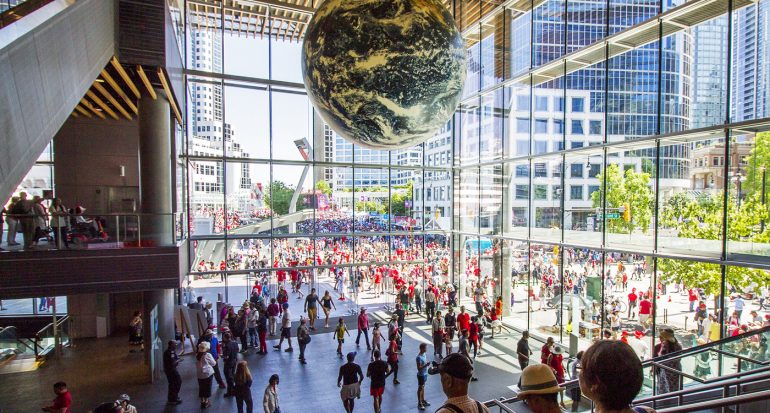 Take a look of our last edition,
 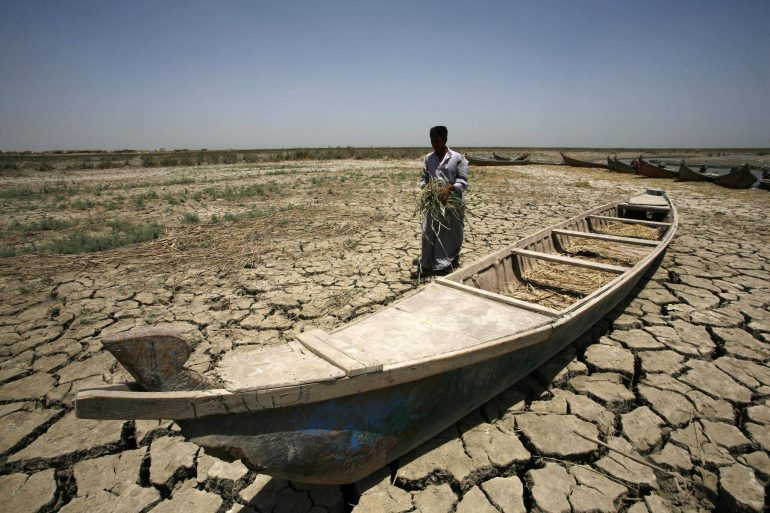 Water quality and quantity are very crucial for sustaining life in many parts of the world. In many parts of the world communities are suffering from water scarcity due to population growth, climate change and technological development.