weecnetwork
  • Home
  • About
    • Who We Are
    • Charter of principles
    • Board and Past Socio-Scientific Committees
    • Secretary General
    • Permanent Secretariat
    • World Environmental Education Day
  • Activities
  • Our Partners
  • Congress
  • News
  • Menu Menu
  • Facebook
  • Youtube
  • LinkedIn
1 March 2018/in News/di weec /Lascia un commento

Strategy for ESD, the commitment of Italian Institutions

1 March 2018/0 Comments/in News/by weec

by Patrizia Bonelli

The Italian Strategy for ESD was updated by the Ministry of Education in the Plan for Education to Sustainability on July the 28th 2017. The plan meets the goals of Agenda 2030 on sustainability.
Actually the road map towards the implementation of ESD in Italy has been long and difficult, marked by the following steps:
2009, 2010, 2014: Guide-Lines for Environmental Education
2015 Strategy for ESD law 221
2016 Agreement for PON (National Operative Program)
2015 Reform of school art.6 law107underlining the importance of: Knowledge and respect for environment Active & democratic citizenship
20/22 November 2016 States General – Paper of Rome
Signed by the Minister of Education & the Minister of Environment

18 July 2017 the Strategy presented to HLPF of UN by the Minister of Environment
28 July 2017 updating of Italian Strategy for ESD by the minister of Education in the Plan for Education to Sustainability
PON, National Operative Programme 2014/2020, for schools financed by Structural European funds is an important step but the most relevant is certainly the meeting of States General (Paper of Rome) which included scientific community, civil society, productive and economic world and Institutions. They agreed upon the Strategy for ESD for the implementation of agenda 2030 including strategies, projects, methods, actions. They identified priority areas in climate change, green economy, legality and environment protection.

The most important supporting principles of the paper of Rome take advantage from the existing opportunities as the alternation school –work to involve students from secondary schools in start-up and projects of research thanks to agreements between schools and public and private companies and enterprises.

The updating of the Strategy on ESD presented on the 28th of July 2017 is based on:
20 actions in 4 macro areas that intend to assure that all the buildings of the Ministry will be perfectly sustainable, from the central buildings to all the schools and Universities (5 million euro). Moreover, all the staff and teachers will be trained to promote awareness and ability in education for sustainability. For that purpose, 20 million euro are provided to introduce ESD in the schools of every order and level.
University and research are encouraged and economically supported in the offer of training, courses and graduation in ESD at any level. Scholarships for students’ mobility is financed by 65 Ph.D. grants coherent with the goals of agenda 2030.

Information and Communication will be widened not just to disseminate official positions and documents, but also good practices of single schools and research of universities for sustainability.

The institutional effort of the Ministry of Education (MIUR) has been always carried on in synergy with the Ministry of Environment (MATTM) but the Minister of Education is particularly involved in many strategic choices as Vector 4 of Agenda 2030 asks for “quality education as fundamental axis of SD being a crossing element for the change offering awareness and ability in communication”.
Knowledge is fundamental to fight poverty, to support economy, to promote an open and inclusive society.
Thanks to the Three-dimensional approach of ESD: environmental-social-economic, the challenge may turn into opportunities.
As a matter of fact, sustainability doesn’t relay just on education and didactics but also in the context and buildings.
Schools and Universities, as micro worlds, need to become completely sustainable, in the buildings themselves, to reduce energy and water consumption (production or storage), in the correct management of waste. Finally, ESD has to be included in programmes and curricula during all the scholastic years and beyond towards long life learning and no formal or informal education. Support, inclusion and empowering have to be ensured to no governmental organizations supplying no formal or informal education and methods of active education.
In the National Education System, ESD is not considered just a further discipline, it is included in the main teachings; in the Ministerial guide lines of 2015 each discipline is re-examined from the point of view of ESD.
Moreover, territorial agreements are strongly supported to involve Local Authorities and Civil Society to contribute to ESD programs with central administration and schools.
The plan behind the updating of the Strategy of ESD presented on the 28th July 2017, has been built thank to a working group of experts, ministerial directors and managers who worked to facilitate networking and collaboration among experts and educators in ESD for the promotion of actions and for the dissemination of knowledge and skills, lifestyles and models of sustainable production and consumption.
The working group made proposals for dissemination of ESD addressed to any level of education and upper education, actions for the development and support of research and university didactics sustainability oriented, the construction of informal education, the support of the good governance of administration.
The plan meets the goals of Agenda 2030 and make of sustainability the main axis which shapes all the policy of the Ministry of Education: from buildings, to teachers’ training, from the central administration to the access to the university, to didactics and research.
Moreover, the plan was informed by the supporting principles of ESD from UN documents to the Paper of Rome (States General). The Teaching coming from the Ministry of Environment that promoted The States General.

The Paper of Rome recommends to face ESD in an inter-disciplinary and trans-disciplinary optics, according to a systemic vision of knowledge. To use interactive, participative, innovative methodologies, requiring an emotional and behavioural involvement, besides rational thought. It proposes to ensure teachers and educators a kind of training, arousing also the ability to build interdisciplinary routes and innovative participative teaching methodologies, and also to assess their efficacy.
It also invites to involve in education and training a wide network of actors: educators, students, parents, associations, institutions, societies, universities, research teams, an alliance between school and out of school world and to enjoy the reciprocal benefits. In the end, the Paper of Rome advises and insists to start from a stronger link with the territory, through concrete experiences on the field and exploration of the places.

0 0 weec https://weecnetwork.staging.19.coop/wp-content/uploads/2025/01/WEEC-Logo_200.png weec2018-03-01 16:14:342018-03-01 16:14:34Strategy for ESD, the commitment of Italian Institutions
27 February 2018/in News/di weec /Lascia un commento

Sao Paolo University is looking for a researcher, postdoc level, in environmental governance

27 February 2018/0 Comments/in News/by weec

The Institut of Energy and Environment (IEE) from São Paulo University (USP) wishes to appoint highly qualified candidates for one new research positions at postdoctoral level.
This vacancy is linked to the Thematic Project “Environmental Governance of the Macrometropole Paulista facing climatic variability” funded by the Sao Paulo Research Foundation – FAPESP. This proposal consists of an integrative approach between the scientific production of the thematic research project and the perspective of a necessary process of social learning involving society and managers focused on the Socio-environmental Governance of Sao Paulo’s Macrometropolis, characterized by the perspective of interdisciplinary academic innovation and with the aim of contributing to public management in the region based on the results achieved by the subprojects that make up this thematic project.

Planned activities are directed to the consolidation of scientific production, educational strategies and scientific dissemination around the object of study, the Macrometropolis, promotion of a feedback process incorporating different knowledge and promotion of means to increase academic knowledge in order to subsidize opportunities for social and environmental governance. The work will be carried out at the Institute of Energy and Environment (IEE) of the University of São Paulo (USP). Candidates must have previous proven experience in interdisciplinary work, especially in the areas of urban planning, climate change and the environment. As well as empirical experience in fieldwork, research and project management.

Application via the Internet: until March 8, 2018;
Dissemination of the results, with the classification of the selected ones: until March 18, 2018; Start of the scholarship: April 20, 2018.
Duration of the scholarship: 2 years with the possibility of renewal by 1 year and another 1, depending on the candidate performance.
Amount of the grant: R $ 7,174.80, approximately € 1,800 or US $ 2,225.


0 0 weec https://weecnetwork.staging.19.coop/wp-content/uploads/2025/01/WEEC-Logo_200.png weec2018-02-27 18:30:492018-02-27 18:30:49Sao Paolo University is looking for a researcher, postdoc level, in environmental governance
9 February 2018/in News/di weec /1 commento

Oxford Spring School in Ecological Economics

9 February 2018/1 Comment/in News/by weec

The School will take place at St Hilda’s College, Oxford and will address key elements of the new economy transformation, exploring the cutting edge methods and policy applications in ecological economics, with a particular focus on Green Economy for Countries, Cities and Regions: Ecosystems, Economy, Policy. With a clear sustainable development focus, it will draw on the expertise of a range of disciplines: economics, ecology, physics, environmental sciences, finance, politics, international relations, sociology, psychology, complex systems theory, etc. to address the current challenges: climate change, biodiversity loss, resource depletion, water shortages, social cohesion and achieving sustainability.
The course will be composed of theoretical and applied modules and will address the key elements of the environment-economy interaction: the foundations of ecological economics, methodological approaches, finance for the green economy, ecological conflicts, the story of REDD, economic instruments, regulation, environmental taxes, environmentally extended input-output analysis, multiple criteria methods, as well as renewable energy, regenerative cities, ecosystem service and case studies from around the world. The Summer School will feature interactive simulation games.
The lecturers will include the leaders in the field of ecological economics: Dr Joachim Spangenberg (SERI Germany), Prof. Juan Martinez-Alier (Autonomous University of Barcelona), Dr Stanislav Shmelev (Environment Europe Ltd), Prof. Robert Ayres (INSEAD), Dr Stefan Speck (European Environment Agency), Ambassador Kevin Conrad (Coalition for Rainforest Nations), Prof. Dave Elliott (The Open University), Prof. Herbert Girardet (The Club of Rome), Prof. Irina Shmeleva (Institute of Sustainable Development Strategies).
The course is designed for multiple points of entry and could be helpfulfor PhD students, government experts, representatives of international organizations and business. The course will give participants an opportunity to explore key methodologies for ecological-economic analysis and to apply these to various case studies. Oxford and SummerWinter Schools in Ecological Economics organized by Environment Europe attracted participants from over 40 countries, including Canada, USA, Mexico, Ecuador, Costa Rica, Brazil, Colombia, Peru, UK, France, Germany, Austria, Spain, Italy, Malta, Portugal, Belgium, Czech Republic, Denmark, Sweden, Bosnia, Latvia, Ghana, Nigeria, Jordan, Sri Lanka, China, India, Taiwan, and Australia, including UNEP, UNDP, IUCN, OECD, ILO, DEFRA staff, NGOs, academia and business, including Shell and Deloitte.

0 0 weec https://weecnetwork.staging.19.coop/wp-content/uploads/2025/01/WEEC-Logo_200.png weec2018-02-09 13:33:502018-02-09 13:33:50Oxford Spring School in Ecological Economics
9 February 2018/in News/di weec /Lascia un commento

Environmental data from below

9 February 2018/0 Comments/in News/by weec

The 7th STS Italia Conference will be hosted at the University of Padova, Italy, June 14 through 16, 2018, by the Italian Society of Science and Technology Studies, in collaboration with the FISPPA Department and the University of Padova. The focal theme of the 7th STS Italia Conference will be Technoscience from Below.
The conference will be an opportunity to present empirical and theoretical work from a variety of disciplines and fields: sociology, anthropology, design, economics, history, law, philosophy, psychology and semiotics.  By focusing on Technoscience from Below, the 7th STS Italia Conference will offer the opportunity to explore alternative co-productive paths of science, technology, and innovation.
The conference will be articulated in 26 tracks, clustered in five main thematic streams: 1) Participation, citizen engagement and democracy from below; 2) The shaping of biomedicine, medical expertise and healthcare from below; 3) Innovation, design and standardization from below; 4) Imaginaries, knowledge and networks from below; 5) Including and connecting from below.

The panel on “Environmental data from below” is about the governance of the environment, inextricably linked to data. Interventions, policies and future scenarios for sustainability are all based on data generated and analysed
within specific institutional settings, such as supranational agencies, environmental protection agencies and official statistics.
In this sense, the activities of analysis, publication and diffusion of environmental data actively contribute to shape and delimit the field of environmental governance’s authority through expertise.
Whatever the strategy pursued by decision makers may be (e.g. to defuse possible conflicts; to enlarge consensus), procedures of data collection and analysis, as well as
their purpose, tend to be restricted to within accredited settings and further performed in institutional loci.
Currently, these patterns may be bypassed by new trajectories of engagement that develop alternative processes of empowerment for non-experts.
Social movement research has signalled the growing tendency of grassroots movements, NGOs and activists to contest official data. Statactivism is conceptually a
specific kind of participation as well as contestation by non-institutional actors using
data analysis. Other research fellowships refer to data activism as particularly focusing
on digital technologies adopted for the collection of data. This general tendency invests the environmental domain as well, and it offers new forms of participation through data. Indeed, environmental movements as well as other concerned groups not only put the role of institutional expertise under scrutiny; they can also contribute to developing alternative forms of scientific knowledge production. Thus, participation is transforming through the challenge of creating evidence and the organisation of data collection from below. This contrasts with solicited forms of participation through data, such as citizen-science projects.
An S&TS perspective, paying attention to socio-technical assemblages of data  infrastructures and the practices related to them, may bring a better understanding of these ongoing processes.
Therefore, the present track aims to gather theoretical as well as empirical proposals focussed on combinations of heterogeneous actors in relationship to data collection, management and sharing of environmental issues, such as (but not only limited to):
– heterogeneous assemblages for the generation of environmental data from below;
– design and creation of ad hoc infrastructures for data collection, analysis and sharing of environmental data;
– practices of maintenance and management of bottom
– up data infrastructures;
– analysis of expertise aligned for the implementation of data infrastructures from
below;
– practices of civic hacking for the environment; and
– the role of alternative baselines as new tools of political environmental participation

Convenor: Paolo Giardullo, University of Padova (Italy) paolo.giardullo@unipd.it

Conference website

Call for abstract beforeFebruary 15th

0 0 weec https://weecnetwork.staging.19.coop/wp-content/uploads/2025/01/WEEC-Logo_200.png weec2018-02-09 13:27:202018-02-09 13:27:20Environmental data from below
4 February 2018/in News/di weec /1 commento

Opportunities for Environmental Education, a new free resource

4 February 2018/1 Comment/in News/by weec

“The current secondary school curriculum, for all its faults, does provide numerous opportunities for schools, teachers and students to explore a wide range of the world’s most pressing issues. The power of this handbook lies not just in its careful analysis of what the curriculum says, but also in its excellent exemplification of how teachers are seizing opportunities to explore these issues with their students. The case studies of practice are particularly useful in helping us see what’s possiblein today’s schools. There is something here for everyone: for experienced practitioners there will be insights from other people’s work; and for those just starting out, a wide range of teaching and learning opportunities are carefully set out for scrutiny, evaluation and adaptation”, says Prof William Scott, NAEE Chair of Trustees.

NAEE’s new secondary school curriculum report illustrates how Key Stages 3 and 4 provide numerous opportunities for schools, teachers and children to explore a wide range of the world’s most pressing issues.  This is the latest in a number of reports that NAEE will be publishing from time to time and is freely available to download here.

NAEE’s primary school report illustrates how the new foundation and primary curriculums provide numerous opportunities for schools, teachers and children to explore a wide range of the world’s environmental and sustainability issues.
The report is freely available to download here.

0 0 weec https://weecnetwork.staging.19.coop/wp-content/uploads/2025/01/WEEC-Logo_200.png weec2018-02-04 19:19:252018-02-04 19:19:25Opportunities for Environmental Education, a new free resource
1 February 2018/in News/di weec /2 commenti

Coastal Zone Canada Conference, July 14-19, 2018

1 February 2018/2 Comments/in News/by weec

Coastal Zone Canada 2018, the bienniel conference of the Coastal Zone
Canada Association, will be held from July 14-19, 2018, in beautiful
St. John’s, Newfoundland, Canada.
The broad theme of the conference is “Seeking Practical Solutions to Real Issues: Communities Adapting
to a Changing World”.
The Coastal Zone Canada Association expects to attract some 300 coastal zone
practitioners including field scientists, managers, environmental
organizations, policy makers, and government bodies.  Effective
management of complicated coastal zones is founded on efficient
exchange of information among different groups, and education is an
important foundation of that information exchange.  
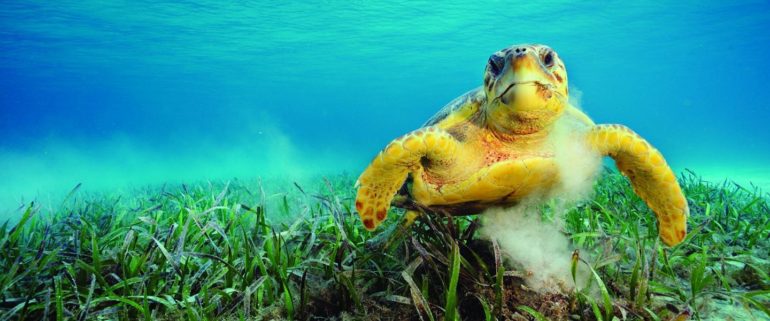
The CZC18 will have much to offer to environmental educators working in marine
and coastal environments, are you ready to present a work?
Tha Call for abstracts is open here.

Please visit the web site for more information on the conference themes and structure.

0 0 weec https://weecnetwork.staging.19.coop/wp-content/uploads/2025/01/WEEC-Logo_200.png weec2018-02-01 11:26:512018-02-01 11:26:51Coastal Zone Canada Conference, July 14-19, 2018
24 January 2018/in Press/di weec /2 commenti

Ocean & Marine Education – Call for Best Practices

24 January 2018/2 Comments/in Press/by weec

WEEC Network is starting an inquiry, devoted to investigate ongoing projects, experiences and tools (handbooks, multi-media, etc.) related to ocean and marine education, inspired by the fact that the year 2018 marks the beginning of a new decade of action under the auspices of the United Nations on the theme “Water for Sustainable Development“.

Send us (as soon as possible) the name of the project (or the tool), a short description and a website reference. Please send us also your academic profile, a short bio or your area of interest.

Who can join this?
Anyone! Experts, Professors, Phd/Researchers, local centres, associations or practitioners, people from the civil society, citizens.

What’s going to happen with the submitted information?
The results of this outreach will be spread through the WEEC website, a report about the theme and during the next 10th WEEC 2019 in Bangkok.

Any question?
Write us at water@weecnetwork.staging.19.coop

Thank you!

0 0 weec https://weecnetwork.staging.19.coop/wp-content/uploads/2025/01/WEEC-Logo_200.png weec2018-01-24 10:14:282018-01-24 10:14:28Ocean & Marine Education – Call for Best Practices
13 December 2017/in News/di weec /1 commento

Future of Food Journal, call for papers

13 December 2017/1 Comment/in News/by weec

Future of Food: Journal for Food, Agriculture and Society is proud to announce the Volume 5. Number 2 (Autumn 2017) of the journal on the theme of  “Food security with equity through social and technological innovations“.  This journal is an open-access journal.
The individual paper can be accessed at this link (Please click the cover page).
The journal is now calling for research papers, reports and book reviews for Volume,6 Number 1 of the journal (Spring 2018), which will focus on the theme of “Healthy ecosystems for/from sustainable agriculture.” Research papers are accepted until the 15th of February, 2018.

Please contact managing  editors for further information.
The journal is indexed by the several institutes including SCOPUS and Emerging Sources Citation Index® – Web of Science (Clarivate Analytics, formerly Thomson Reuters’ IP & Science branch), & United Nations Water.

0 0 weec https://weecnetwork.staging.19.coop/wp-content/uploads/2025/01/WEEC-Logo_200.png weec2017-12-13 19:30:152017-12-13 19:30:15Future of Food Journal, call for papers
29 November 2017/in News/di weec /Lascia un commento

Uqam EE course, admission until December 1st

29 November 2017/0 Comments/in News/by weec

The 1st of December is the admission deadline for the Second cycle on environmental education (UQAM, Québec University, Montreal). This training is for people involved in  integrating environment, education and citizenship issues. It focuses on the development of skills in the design, facilitation and management of environmental education and training projects in various intervention settings: at school, in the community, in the workplace, in the media, parks, museums, interpretation centers, in the context of international cooperation, etc.
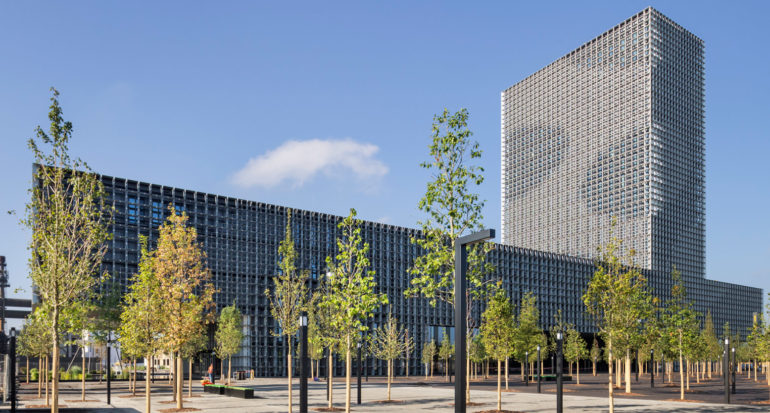
The students are invited to explore the different dimensions of environmental education, including its importance and significance for human development and social transformation.

More information here

Submit a request of admission here


0 0 weec https://weecnetwork.staging.19.coop/wp-content/uploads/2025/01/WEEC-Logo_200.png weec2017-11-29 15:42:252017-11-29 15:42:25Uqam EE course, admission until December 1st
24 November 2017/in News/di weec /Lascia un commento

Post Doc position in Luxembourg

24 November 2017/0 Comments/in News/by weec

The University of Luxembourg is building a transdisciplinary team of researchers who engage in transformative sustainability science. The University invites applications for 3-year full-time post doc position in this team (the position is extendable to 5 years). Preference will be given to candidates who combine academic expertise relating to research on social-ecological-technological systems with a focus on water or land-use with practical experience in the implementation of scenario approaches, co-design processes, or citizen science. Familiarity with the field of Science Technology Studies is considered very helpful.
This position is part of the project NEXUS FUTURES that is funded by the Luxembourg Ministry for Sustainable Development and Infrastructures and the University of Luxembourg.  The project seeks to foster transformative learning for sustainable water and land-use governance by engaging stakeholders in collaborative systems mapping and scenario approaches, as well as by co-designing a citizen science tool set for use in river-partnerships and in schools (see attached project description).
As most project-related work with stakeholders is conducted in German and academic publications will be written in English, candidates have to be fluent in both languages. French is an asset, as most relevant policy documents and legislation in Luxembourg are in French.

The University is tri-lingual, one of Europe’s most international, and presents a safe space to acquire an additional working language. Luxembourg offers a very high quality of life, a very open international community, short paths to government, and a high degree of influence in the EU. The contract offers competitive compensation, excellent health care and rarely matched paid time off.

Applicants should submit online a letter of motivation, C.V., writing samples, and three letters of recommendation. Review of applications will commence immediately and will continue until the position is filled. Early applications are encouraged.
For further information and to apply read here.

0 0 weec https://weecnetwork.staging.19.coop/wp-content/uploads/2025/01/WEEC-Logo_200.png weec2017-11-24 13:35:172017-11-24 13:35:17Post Doc position in Luxembourg
Page 27 of 41«‹2526272829›»

Tags

7weec 10weec 11WEEC 12WEEC abstract submission Abu Dhabi Award Books Call Canada circular economy climate change conference congress COVID19 Earth Prize education education for sustainability environmental education featured Italy IUCN journals Mario Salomone Mediterranean ocean plastic Prague school SDG slider sustainability sustainable development UN Unep Unesco university UQAM water WEEC weec2017 WEEC2019 weec2022 WEEC Network World Environmental Education Day

International Secretariat

Corso Moncalieri, 18
10131 Torino – Italy
tel.+39 0114366522
secretariat@weecnetwork.org

LEGAL NOTICE

Privacy Policy
Cookies Policy
Facebook

Discover all the activities on our Facebook Page

Instagram

Follow our Instagram Profile!

Linkedin

Join our Linkedin world

Join The Newsletter

Resta aggiornato sulle ultime novità e tendenze del mondo digitale! Iscriviti alla nostra newsletter per ricevere contenuti esclusivi, consigli pratici e aggiornamenti direttamente nella tua casella email.

© Copyright - weecnetwork || Powered by 19.coop
  • Facebook
  • Youtube
  • LinkedIn
Scroll to top