Tag Archive for: Award

/in News/di

UNRWA: Enhance students’ awareness towards environment
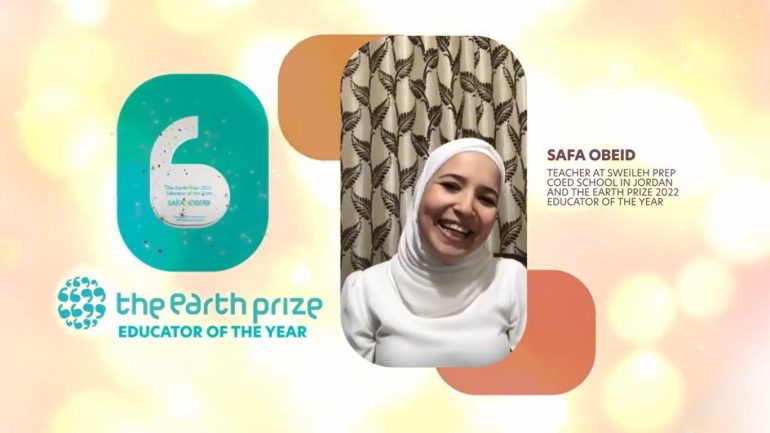
For the World Health Day, UNRWA celebrates Ms. Obeid, named the 2022 Earth Prize Educator of the Year. Ms Obeid, a teacher at the UNRWA Sweileh Preparatory Girls’ School in Jordan, was selected by the WEEC’s Secretary General Professor Mario Salomone.

Dr Oroba Labadi, Chief pf the UNRWA Field Education Program, underlines the importance of raising students’ awareness towards global environmental causes, “which is not limited to provide basic education but also in enhancing their knowledge, skills and build positive trends towards global environmental causes”. 

Indeed, what encouraged Ms Obeid to take part in the competition together with her students was her belief that Palestine refugee students can participate in international competitions and affect change in both local and international communities. 

”This award shows the impact of the professional in-service trainings that UNRWA regularly provides to us.” Ms Obeid Said.  

UNRWA and SDG 13 – Climate Action

Across its fields of operation, the UNRWA plays a key role in addressing environmental protection issues within the Palestine refugee community and has an obligation to minimize the negative environmental impact of its own operations. In addition, the Agency is prioritizing a range of environmental protection efforts that include for instance the installation of energy saving equipment, such as solar panels, water heaters and LED fittings, in a number of schools, health centres and other installations, as well as safe disposal of medical waste.  

Measures to protect water resources and improve environmental health in Palestine refugee camps are also being undertaken including the development of an integrated solid waste management system that will serve all Palestine refugee camps in Lebanon and the installation of solar power systems in 80 schools and six health clinics in Gaza.  

The Agency is also exploring current environmental behaviours and teaching practices in its schools and classrooms in order to see how to strengthen and build upon these practices in a coordinated and coherent way. Developing capacity of Palestine refugee youth in the design, manufacture and servicing of renewable energy technology and energy efficiency devices is important for job creation and stimulating the green economy. UNRWA has recently introduced courses on energy efficiency at its vocational training centres in Gaza and will look to expand these to other fields based on lessons learned.  

About UNRWA 

Following the 1948 Arab-Israeli conflict, UNRWA was established by United Nations General Assembly Resolution 302 (IV) of 8 December 1949 to carry out direct relief and works programmes for Palestine refugees. The Agency began operations on 1 May 1950. 

In the absence of a solution to the Palestine refugee problem, the General Assembly has repeatedly renewed UNRWA’s mandate, most recently extending it until 30 June 2023 

The United Nations Relief and Works Agency for Palestine Refugees (UNRWA) is funded almost entirely by voluntary contributions from UN Member States. UNRWA also receives some funding from the Regular Budget of the United Nations, which is used mostly for international staffing costs. 

The Agency’s services encompass education, health care, relief and social services, camp infrastructure and improvement, microfinance and emergency assistance, including in times of armed conflict. 
/in News/di

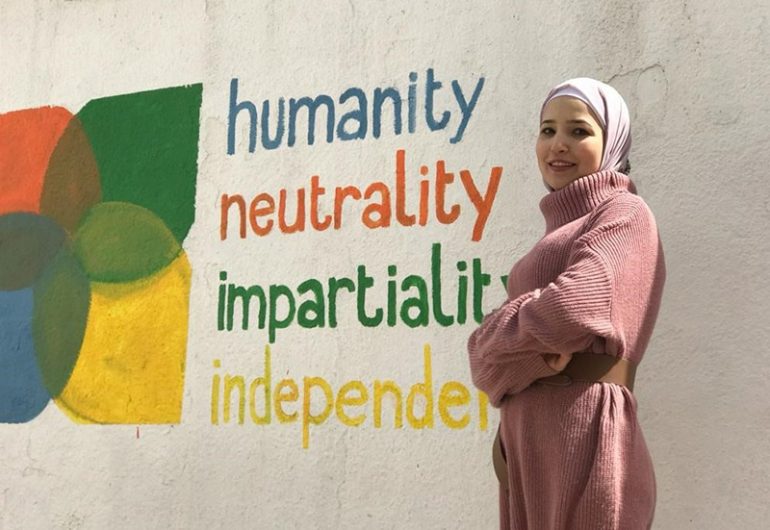
Safaa Obeid, UNRWA teacher in Jordan, is the winner of the Earth Prize Educator of the Year

© 2022 UNRWA Photo by Dima Ismail

Following the legacy of the original award, WEEC’s  Secretary-General, Professor Mario Salomone selected Ms Safaa Obeid , a teacher at the UNRWA Sweileh Preparatory Girls’ School in Jordan,  as the Earth Prize Educator of the Year and awarded a prize of US$ 12,500.

Ms. Obeid entered her students in the Earth Prize competition – an environmental sustainability competition for students between the ages of 13-19 – under the themes of concern to them as Palestine refugees in Jordan. These include, desertification of the Dead Sea by 2030, making camps more environmentally friendly and managing food waste in Jordan.

Ms. Obeid said:

“I am very proud to represent UNRWA in this international contest on environment sustainability and be awarded the “Educator of the Year” title. This amplifies my sense of responsibility towards my environment, my community and my students. I have been very keen to integrate environmental sustainability in the classroom by creating an enriching an environmental activity kit, which is user-friendly and easy to implement for the purpose of increasing my students’ awareness of environmental causes.”

In addition to Ms. Obeid’s students, 34 teams from 24 UNRWA schools and one vocational training centre registered their projects in the competition. Two UNRWA schools were named in the top 34 Earth Prize Scholar teams, namely the UNRWA Amqa Secondary Co-educational School in Lebanon and the UNRWA Gaza Training Centre, in Gaza.

The Earth Prize 2022 Educator of the year nominees were:

Pauline Herbommez, french teacher at Eton College, in Berkshire, England.  With other members of the school staff, Ms Herbommez helped create the Belkshire Schools Eco Network (BSEN) and the Environmental Action Group (E@E). The BSEN and E@E attended COP26.

Imani Hudaa, teacher at Raila Educational Centre in Kibra, Nairob, Kenya.  She has been involved in a number of school activities related the environment by encouraging learners to draw, act, dance and even write poetry about environment.

Ram Chandra Dahal, a faculty member at the Druk Gylalpo’s Institute in Bhutan. He believes that education is the key to making people live in coherence with nature and assume responsibility for its protection. At the school, he acts as a teacher, mentor, and the Coordinator for Emotional Area of Development.

Luc Arvisals, a teacher at Our Lady of the Snows in Canmore, Alberta, Canada. He has supported student work on a variety of projects: planning for rewilding of urban areas, institutionalising the use of aeroponic growing gardens at the school, fundraising for a solar testing system to gauge the economic viability of installing solar panels on the school.

Ruth Parry, has taught at the Institute Le Rosey in Switzerland for nine years. She has built links with over 20 local and international charities to support environmental and humanitarian issues, and has helped develop a whole school curriculum to support Service Learning projects and skill development.

Laurence Myers is the K-12 Service Learning Coordinator at the American School of Dubai, United Arab Emirates. He supports student work on a variety of projects including the elimination of plastic water bottles, composting all landscaping and food waste, and establishing school-wide sustainability goal. He provides training and support educators in using systems-thinking for sustainability.


/in News/di

The Michele Panuccio Memorial Grant: in honour of his work, in support of young researchers

Photo by Keith Luke – Unsplash

Since its foundation as a non-profit organisation back in 1966, the Raptor Research Foundation (RRF) has continuously advanced the science, conservation and understanding of birds of prey. In its strive towards the accumulation and dissemination of scientific information about raptors, each year the Foundation organises scientific conferences, provides support, networking opportunities, competitive grants and awards for student researchers and conservationists.

A heart-felt opportunity

This year, the prestigious international institution has added a new award to its existing 12 grants: the Michele Panuccio Memorial Grant, dedicated to the late Italian ornithologist and ecologist (1976-2019). The award, annually available to both members and non-members of the RRF, provides financial support to young researchers (< 35 years old) for their field work on raptor migration and conservation in the European region. The Fund, established by Panuccio’s parents in 2021, supplies the winner with up to €1,500 to be used in support of research into:

• raptor behavior, such as differential migration between age and sex classes, the effect of weather and atmospheric currents on migration, social interactions, and orientation and navigation strategies, with a special focus on how raptors overcome large ecological barrier such as the Mediterranean Sea.

• raptor conservation, for which Michele developed a particular interest as park ranger at the Decima-Malafede Nature Reserve (Rome), where he learned the importance of natural protected areas management and monitoring for the conservation of local raptors.

• raptor monitoring, which has been a long-standing interest of Michele, and to which he devoted much of his final years at the Strait of Messina.

Continuing Michele’s work

“Michele will be remembered for the discovery of the migration strategy of the Greek Short-toed Snake Eagles, which avoid crossing the Aegean Sea by concentrating on the slopes of Mount Olympus en route to the Bosphorus. This strategy is like that followed by Italian conspecifics, which avoid the Channel of Sicily by crossing the Mediterranean at the
Strait of Gibraltar. In his final years, using both direct visual observation and radar monitoring, he established a standardised monitoring program at the Strait of Messina – one of the most important European migration bottlenecks.”
Ultimately, the Panuccio grant seeks to help advance fields that Michele worked on with contagious passion and meticulousness. It’s a testimony to his life and work, to “pass the baton” on to a new generation of researchers and hornitologists.

/in News/di

Earth Prize: registration deadline extended to November 30th

Due to the overwhelming positive response and the significant number of requests for more time to sign up,  the Earth Foundation has decided to extend the registration deadline for the competition by one full month.
The new deadline to register is Tuesday, November 30th.

Students and supervisors will now have until the end of next month to:
– Register individually on the website to access all their learning content and mentorship.
–  Create (for supervisors) and join (for students) their teams.
–  Complete and submit their team motivation letter and a problem definition form, which will grant teams access to the Submissions Phase of The Earth Prize.

All participants will then have until January 31st, 2022 to submit their ideas for the competition.

Remember: if you pre-registered back in the summer, you will still need to register officially on the Earth Prize website by November 30th in order to compete for The Earth Prize.

The teachers who have registered already can send the school’s logo so it can be featured on the Participating Schools page on The Earth Foundation’s website. You can send it directly to info@theearthprize.org
If you still have questions regarding the competition,  you check out the webinar here, where you can hear directly from participating teachers about their experiences with The Earth Prize thus far.

/in News/di

The Earth Prize: registration is officially open


Photo by Mika Baumeister – Unsplash

Until October 31st secondary education students and teachers can register for the competition through the website, where they will then be able to:

–  Watch the bespoke learning videos covering key environmental sustainability concepts and featuring young change-makers from around the world such as Tom Szaky, Founder of TerraCycle, and Boyan Slat, Founder of The Ocean Cleanup.

– Form teams and start working on their ideas.

– Ask questions to The Earth Prize Mentors: 30 student experts from 26 top universities across 18 countries.

If you know of any secondary school teacher or student who might be interested in participating in the competition, please share this initiative with them.  The Earth Prize wants to reach as many schools and students all over the world as possible.

/in News/di

Frontiers of Knowledge Awards 2021

The BBVA Foundation Frontiers of Knowledge Awards, undertaken in collaboration with the Spanish National Research Council (CSIC), recognize and reward world-class research and artistic creation, prizing contributions of singular impact for their originality and significance.

These are the categories

·   Basic Sciences (Physics, Chemistry, Mathematics)

·   Biology and Biomedicine

·   Information and Communication Technologies

·   Ecology and Conservation Biology

·   Climate Change

·   Economics, Finance and Management

·   Humanities and Social Sciences

·   Music and Opera

Award content: 400,000 euros, a diploma and a commemorative artwork in each of their eight categories.

Candidates: One or more natural persons of any nationality, without limitation of number, that have made independent or convergent contributions to a given advance. The awards are also open to scientific or cultural organizations that can be credited with exceptional contributions to scientific knowledge, cultural creation or the fight against climate change.

Awards may not be granted posthumously.

Nominations will be submitted by scientific or artistic societies, public or private R&D centers, hospital departments and biomedical research centers, schools of music, orchestras, public agencies and scientific, cultural and environmental organizations, and any other organizations stated in the call conditions.

Information and enquiries: awards-info@fbbva.es

The closing date for submissions is June 30, 2021, at  23:00 GMT.

Click here for further information and full entry conditions

/in News/di

Zayed Sustainability Prize 2022 Expands Global Reach with Submissions from Record 151 Countries

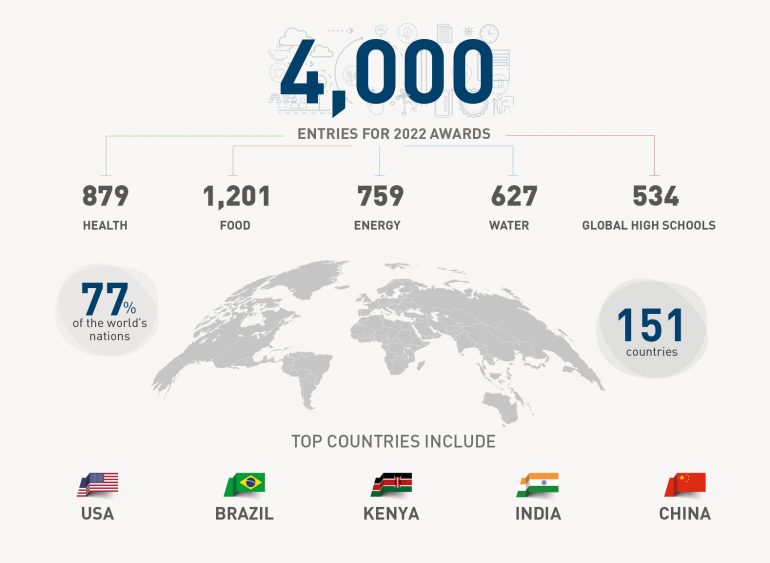
Following a six-month submissions phase amidst the prevailing restrictions imposed by the global COVID-19 pandemic, the Zayed Sustainability Prize, the UAE’s pioneering global award in sustainability, has officially closed entries for its 2022 awards. With a remarkable 4,000 applications received, the Prize marked a notable 68.5% increase in submission entries compared to the previous cycle.

Attracting submissions from a record 151 countries, representing over three quarters of the world’s countries, the Prize proves to be truly global in its reach and impact. This includes a significant number of entries from innovative, knowledge-based economies, all hoping to have their world-changing solutions and technologies recognised and scaled amidst a rapidly evolving global landscape.

The submissions for the upcoming awards, to be held in January 2022, reflect the current global climate in the lead up to COP26 and in the wake of post-pandemic recovery, with Food (1,201) and Health (879) as the top categories to attract a high number of pioneering solutions, followed by Energy (759) and Water (627). With 534 submissions, the Global High Schools category is perhaps one of the most inspiring results as completing entries in the face of extensive disruption and school closures is a clear sign of the global youth’s commitment to a sustainable future.

H.E. Dr. Sultan Ahmed Al Jaber, UAE Minister of Industry and Advanced Technology and Director General of the Prize, said: “As the international community continues to unite around ambitious climate action in the lead up to COP26, the high level of participation registered this year further demonstrated that creative sustainable solutions can come from every part of the world, and importantly can deliver tangible economic benefits along with social progress.”

Since its launch in 2008, the US$3 million Prize has, directly and indirectly, transformed the lives of over 352 million people across 150 countries. Its global impact continues to grow, as it further catalyses humanitarian outreach and sustainable development. Each category winner receives a prize fund of US$600,000. The Global High Schools category winners split the amount among six high schools from six world regions, each receiving up to US$100,000.

The winners of the 2022 awards will be announced at the Prize’s awards ceremony that will take place during Abu Dhabi Sustainability Week, in January 2022

/in News/di

European Natura 2000 Award: Call for top conservation initiatives open

The European Commission has launched the 2022 edition of the European Natura 2000 Award. The Award, in its sixth edition, honours leading nature conservation achievements connected to Europe’s Natura 2000 network of protected areas.
The Award raises awareness about Natura 2000, the work carried out by different organisations and individuals to safeguard these vital natural assets, and the health, cultural, societal and economic benefits the network provides to us all, as well as its value in its own right.

The award recognises excellence in the management of Natura 2000 sites and conservation achievements, showcasing the added value of the network for local economies, and increasing public awareness about Europe’s valuable natural heritage. It recognises good practices at Natura 2000 sites in five different categories: Conservation on land, Marine conservation, Communication, Socio-economic benefits, and Cross-border cooperation.
The sixth award, the Citizens’ Award, provides the public the opportunity to vote for their favourite finalist.

The Award is open to any organisation or person involved in Natura 2000, including public and local authorities, businesses, NGOs, landowners, educational institutions and individuals.

The application period runs from May 21st, the Natura 2000 Day, to September 2021 and the Award Ceremony will take place around Natura 2000 Day in May 2022.

Over the previous five editions, the Natura 2000 Award has received over 500 applications, and has celebrated 121 finalists and 29 winners. And the Citizens’ Award has received an enthusiastic response so far with over 190,000 votes cast between 2015 and 2020.

Visit the Award website now and find out how to apply!