Tag Archive for: climate change

/in News/di

African youth against climate change, a new hub is born
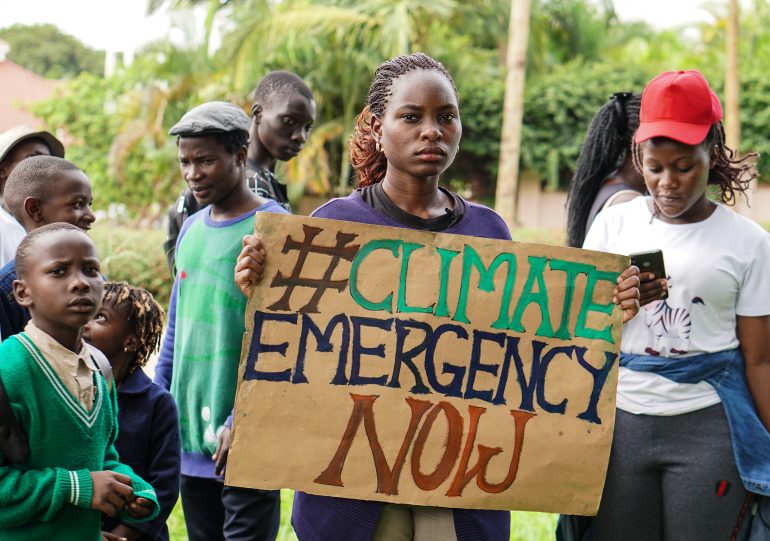
A major new initiative to fight climate change was launched by Her Royal Highness Princess Lalla Hasnaa, President of the Mohammed VI Foundation for Environmental Protection, at the 2019 Climate Action Summit of the United Nations. The initiative, focused on promoting the ideas and solutions of young Africans, was launched on the sidelines of the United Nations General Assembly. Her Royal Highness, as a globally committed actor, has, for several decades, systematically placed young people and citizens at the center of the Foundation’s activities.

This initiative was born out of a partnership between the Mohammed VI Foundation for Environmental Protection, YOUNGO (group of children and young people at the United Nations Framework Convention on Climate Change), the Mohammed VI Polytechnic University, the OCP Group, as well as young people who were at the heart of the co-construction of this initiative.

The Mohammed VI Foundation for Environmental Protection brings to this initiative its 18 years of experience in education for sustainable development in Morocco, as well as a significant emphasis on Africa, digital technology and international cooperation . YOUNGO makes use of more than 200 youth-led NGOs for young people, as well as its technical expertise. The Mohammed VI Polytechnic University contributes with its approach based on learning by doing (learning by doing), its network of African experts as well as its cutting-edge resources. Finally, the OCP Group provides its support and expertise as a representative of the private sector.

The African Youth Climate Hub will offer young Africans the opportunity to establish and foster a generational movement to fight climate change. The Hub will educate, inspire, empower and mobilize young people to create lasting change in their schools, communities and professional ecosystems, at all levels.

The aim is to create a forum where young Africans can discuss their ideas for combating climate change. The ideas deemed most relevant to the key targets of the Hub will be developed in an incubator before being refined and then deployed. The Hub hopes to bring together the most committed and innovative young African thinkers on climate change, create a learning center and help people find green jobs in Africa.

«Africa is affected by climate change and at the same time constitutes a rich breeding ground for solutions. There has never been a more inclusive and impact-oriented space, allowing young Africans to come together and share their ideas for solutions adapted to their continent». This was stated by Meryem Hdia, a 21-year-old Moroccan woman, youth ambassador for the Hub. «This new platform will allow young Africans to create their own solutions to climate change. It is about developing ideas that will have a real impact on the lives of people around the world».

The African Youth Climate Hub will enable young Africans to identify and connect with the different groups and organizations that need to rely on their ideas to integrate best practices and amplify the impact of their actions. The Hub aims to generate forums involving the main stakeholders and young people, to reduce differences in capacity and to promote an active intergenerational approach.

But the Hub is not limited to ideas: the objective is to generate tangible results with support mechanisms put in place to make ideas happen. Among these mechanisms, the establishment of a network to facilitate cross-border and intergenerational connections, an incubator and a knowledge center.
The African Youth Climate Hub will be based at the Hassan II International Center for Environmental Training in Rabat, Morocco. An annual meeting of the Hub will be held at the Center and will allow young people from all over the African continent to share their knowledge, exchange their best practices, etc.

Contacts: contact@youthclimatehub.org


/in Press/di

“It is not enough to just say you will do it, but you have to say we will do it”

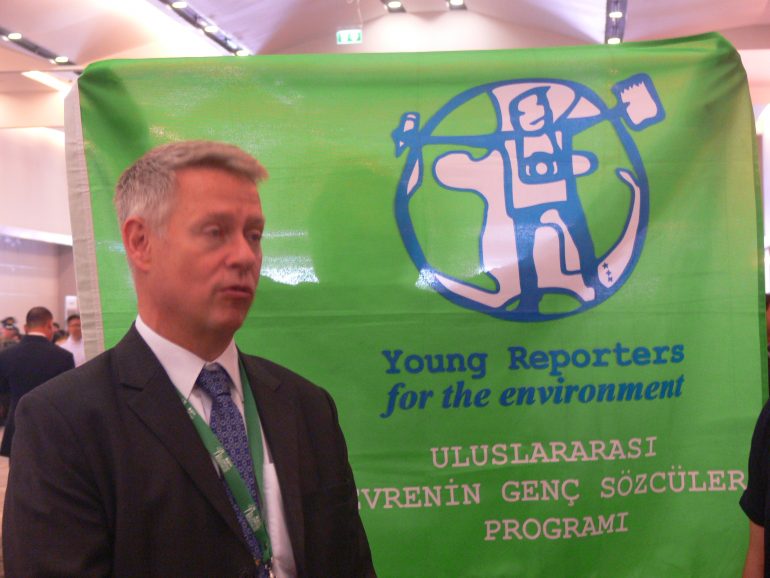
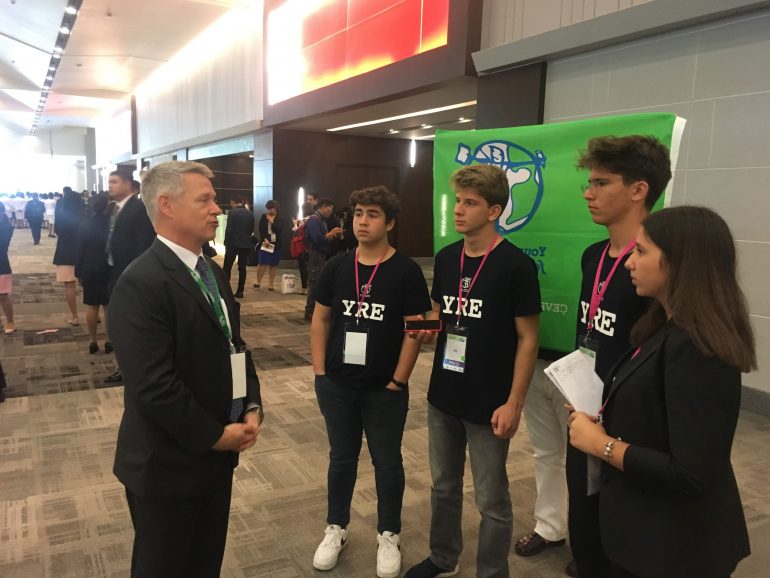
During the WEEC2019 conference in the Bangkok city of Thailand we had a chance to meet Niclas Svenningsen who was really kind and showed great interest into our being there and interview.
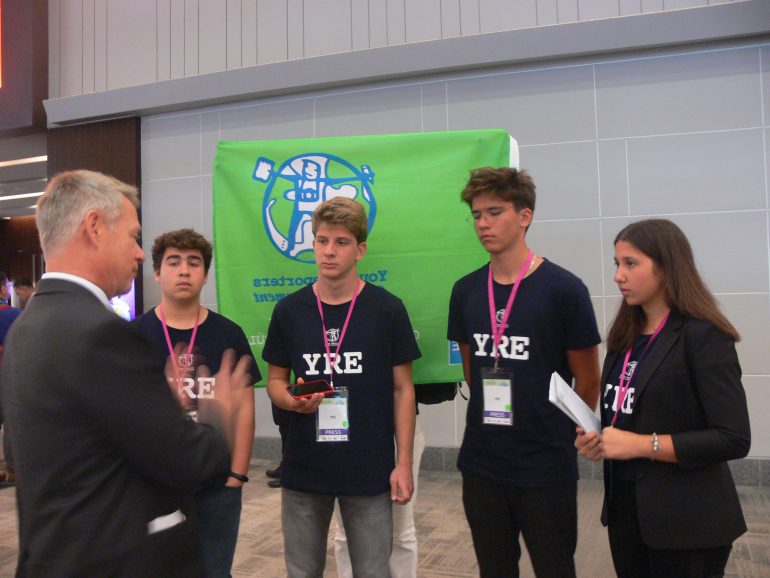
Just after his speech in the opening ceremony, We, timidly, went next to him and asked him if he could spare some time to us for an interview. He, sincerely and very welcomingly, accepted our offer and started to find a quiter place to help us. At that moment all of our hesitations faded away.

We proposed him a couple of questions about environmental education, communication and global connectivity which are the main themes of 10th World Environmental Education Congress held in Thailand and he sincerely answered all of our questions. In short, It was an informative interview for everone. Here you can find the details.

Hallo Mr Svenningsen, Could please you present yourself for YRE students?

«My name is Niclas Svenningsen. I am working for the United Nations Framework Convention on Climate Change. I am responsible for our work on what we call as Global Climate Action, which is basically everything that is not so much negotiations, but engaging everybody else into this fight against the climate change».

In your speech, you mentioned that you conduct a programme called Action for Climate Empowerement of UNFCC. Can you explain the programme more in details?
«Action for Climate empowerement is something that has been in UNFCCCs since the very begining of 1992 and it contains six elements: Education and Training, public information, awareness and Access to engagement and then also international cooperation, but it’s really about the education and to have everybody involve in climate action basically».

“This is a war that you can not win with soldiers or bombs”. What do you think about today’s environmental situation? What are your expectations for the future?

«Well, it’s a big question. Today’s environmental situation could be better. We are at war against our planet. This is a war that you can not win with soldiers or bombs. You need to have intelligence and you need to work together. I’m optimistic, I think we can win this fight… I think we can do something about it, yet we need leaders who lead».

How can the environmental education be widespread to all around the World?

«That’s what I hope to learn from this conference. Every government under the Paris agreement, they have a commitment, a climate action plan. And that climate action plan also needs to include an element on ACE (Action for Climate Empowerment). They have to say how they are going to implement ACE. Today we need more ACE focal points. These focal points work with an industry of economy, infrastructure, transport, energy, the whole government and then with the rest of the society. We work for government to make them put effort on it . It is not enough to just say you will do it but you have to say we will do it».

Do you think the environmental movement efforts of today are enough? Why/ Why not?

«I can tell you that it’s getting better. I think that environmental movement have been there for many many years. However, I assume that the voice that has been out there through “Firdays For Future”, Greta Thunberg and many many others have really made all of us unconfortable for politicians which is good. It shouldn’t be confortable to not to do something, it should be unconfortable to do something. So we need more but we are improving.

Alin Aşım(15)

Ali Özek(16)

Young Reporters for the Environment (Turkey)

/in Press/di

UNFCCC: Special Message to the 10th WEEC

Niclas Svenningsen, UNFCCC, with the Young Reporters for Environment. WEEC2019 (3-7 November 2019)

Your Royal Highness Princess Maha Chakri Sirindhorn

Dr Sumet Tantivejkul, Honorary Chairman of the World Environmental Education Congress 2019 Steering Committee

Distinguished delegates

Ladies and Gentlemen

Dear friends.

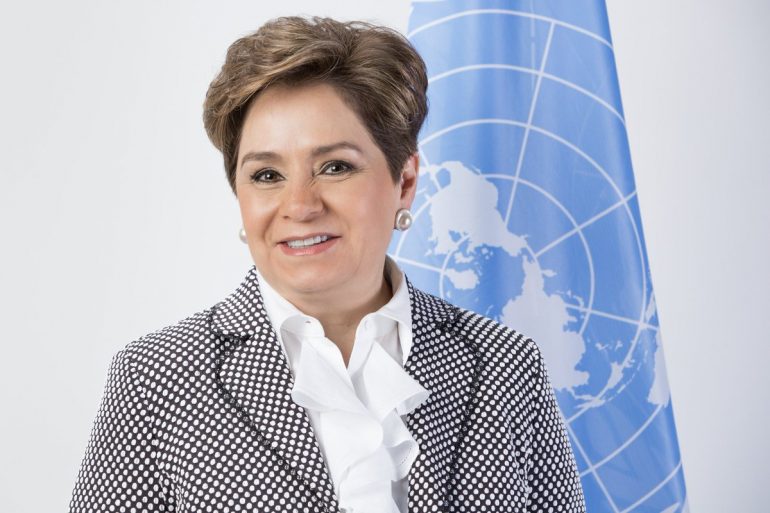
On behalf of the United Nations Under Secretary-General and Executive Secretary of the United Nations Framework Convention on Climate Change, her excellency Patricia Espinosa, I am honoured to deliver this message to this the 10th World Environmental Education Congress.

The United Nations Framework Convention on Climate Change – UNFCCC – was established at the Earth Summit in Rio de Janeiro in 1992. The purpose of the convention is to bring together all governments of the world to work jointly in addressing the threat of climate change and to ensure that global warming does not reach levels that will be irreparably harmful to our society and to our planet.

This is a task that may seem easy, but which in fact is very complicated. It took more than 20 years for our 198 parties to the Convention – the world’s governments – to agree on a common plan. This common plan is known as the Paris Agreement, which was adopted in 2015. This agreement is essentially a blueprint for international cooperation around climate change. It states the responsibilities that every government has, and it defines how they must work together to reach the specific objective of the Paris Agreement: to keep global warming below 2 degrees Celsius, with the ambition to limit it to 1.5 degrees C.

It took more than 20 years to agree on this plan. Not because governments don’t want to do anything, but because addressing climate change requires a complete re-thinking of how we do things. It is not about banning an individual chemical or changing a single sector, but it requires us to think differently about everything: How we produce food, how we manufacture everything from clothes, to vehicles to buildings, how we travel and transport things, how we generate and consume energy, how we take care of our forests, oceans, rivers and lakes, how we build our cities and how we do business. Addressing climate change simply affects all walks of life and society.

It took more than 20 years to achieve the Paris Agreement. In that period, global greenhouse gas emissions increased by 40% pushing the levels of greenhouse gases in the atmosphere to levels we haven’t seen on this planet for at least 3.6 million years. And we are feeling the impact now. With temperature records being broken every year, with melting ice caps and glaciers, with extreme storms, droughts and weather events. And we see the impact on food production, on infrastructure, on the economy and on the health and lives of people all over the world. From wild fires in California, to typhoons in Japan, flooding in Jamaica, landslides in China and starvation in Africa. It is all linked to our changing climate.

If you follow the climate change negotiations, you will be familiar with discussions on finance, on technology, capacity building, on mitigation, on adaptation, on national climate action plans and so on. However, the fundamental aspect of our work is a different one: It is all about people.

Whether you are a student, a teacher, a business owner, a mayor of a city, or even the president of a country, your decisions will have an impact on the climate footprint of yourself, of your university, of your company, city or country. It is our decisions, as individuals and as representatives of our community, organization or country that in the end decide if we will be successful in tackling the climate crisis. And to be able to take the right decisions, we need to be informed. We need to be educated. And we need to have access to information.

This is why the issue of education, training, public awareness, access to information and public participation is so fundamental to our work on climate change in the United Nations. Already in 1992, this was defined as a priority. In the Paris Agreement, it was again confirmed as a top priority for all countries and all governments to address. In UNFCCC we refer to this issue as Action for Climate Empowerment, with the nice acronym A-C-E, or just ACE.

Under the Paris Agreement, every country is required to develop their national climate action plans – also known as “Nationally Determined Contributions” – NDCs, that describes what the country will do to fight climate change, to reduce emissions and increase adaptation. These climate action plans need to be regularly updated until we reach the Paris Agreement objective.

What does it really mean? Science tells us that it means that we must cut our emissions by 45% by 2030. It means that we have to achieve a climate neutral society – a society where we are not emitting more greenhouse gases than the planet can absorb – by 2050.

Ladies and gentlemen; cutting emissions by 45% in just 10 years from now, and achieving a climate neutral society by 2050, requires that we take action now. Clearly, this is not a job for future generations. But for us. Now. Here. Today. That action will not happen if we, as individuals, and decision makers, and if everybody who have a say about the direction that society is going, are not fully aware, informed, and educated.

And what is it they need to know? They need to know that – Yes – climate change is a formidable threat to our society and planet. A threat that is both global and personal for most of us. But they also need to know that tackling climate change is not a threat. It is not something that will impact us negatively. On the contrary, climate action means that we innovate, renew and improve how we do things. Think about energy without smoke, products without waste, travel without congestion, food without artificial chemicals. In every way, a climate neutral future is a positive one. But we need to be bold to take the steps needed to go there.

This is why we in UNFCCC consider that the work of the World Environmental Education Congress is so essential. This is why Patricia Espinosa, was very happy to also provide her personal patronage to this conference. We believe that the work you do here today can, and will, help the world’s governments to step up and fully implement ACE as part of their national commitments to tackle climate change. This is also why we are very grateful to Thailand, to her Royal Highness, Princess Maha Chakri Sirindhorn, to host and welcome this important event. This is the first time the UNFCCC attends WEEC. We pledge that it is not the last time.

Ladies and gentlemen. On behalf of Patricia Espinosa, Executive Secretary of UNFCCC, I wish us all a productive, progressive and successful World Environmental Education Congress.

Thank you!

/in Press/di

UNFCCC gives its patronage to the 10WEEC

We are very proud to announce that the UNFCCC, the United Nations Framework Convention on Climate Change , has agreed to give its patronage to the 10th World Environmental Education Congress.
Patricia Espinosa, UN Climate Change Executive Secretary, says: «The UNFCCC places great value on the role of education as part of addressing climate change. Both in the UNFCCC Convention and the Paris Agreement, the importance of enhancing education, training, transparency, awareness and public participation in the fight against climate change is emphasized. This Action for Climate Empowerment (ACE) agenda is accelerating solutions and facilitating the work of governments in the implementation of these issues in their countries.
Your invitation is therefore very welcome and timely, as we are now in the process of building capacity to strengthen ACE across all dimensions of our work. I recognize that WEEC offers a valuable opportunity to cooperate and provide mutual support in this important area of work».

/in Press/di

Water conservation and reuse: a key to a sustainable education

Water quality and quantity are very crucial for sustaining life in many parts of the world. In many parts of the world communities are suffering from water scarcity due to population growth, climate change and technological development.
Proposal for a round table session at 10WEEC by: Prof. Abidelfatah Nasser, Beitberl College of Education, Beitberl, Israel and WEEC Permanent Secretariat, WaterWeec Dept.

Presentation which will be discussed are in the area:

– Case studies to enhance the awareness and literacy
– Studies to determine level of awareness and attitudes
– Determine conception of the water cycle
– Studies to determine influence of intervention on changing the attitudes and awareness

Contacts: water@weecnetwork.staging.19.coop

Read here the Call Water proposal for roundtable session

/in News/di

Universities and Colleges for the Climate Summit. A letter to sign here!

In advance of the Secretary General’s Climate Summit on September 23, networks and institutions working in Further and Higher Education are coming together to add their support to this letter that would be shared with key government officials and the media in advance of this event.
The aim is to get as many networks and institutions as possible on board in order to showcase the commitments towards the attainment of SDG 4 (Education) and 13 (Climate Change).

As at 21st May 2019, networks from the Higher Education Sustainability Initiative (HESI), Global Alliance, EAUC – The Alliance for Sustainability Leadership in Education and Second Nature have already agreed to support this letter. Collectively, they represent over 500 individual institutions.

Mario Salomone, Secretary General of the WEEC Network, already signed the letter and invites everybody to sign and share it.

Who can sign: Ideally, the president or chancellor of respective institutions will sign on to this letter on behalf of the institution. However any faculty or staff member of the institution can sign on to reiterate pre-existing commitment. Networks that represent higher and further education institutions can also sign on to the letter.

Deadline: The current deadline for signing on to this letter is August 1st 2019.

Click here to sign

Climate Emergency Letter
As institutions and networks of higher and further education from across the world, we collectively declare a Climate Emergency in recognition of the need for a drastic societal shift to combat the growing threat of climate change.
The young minds that are shaped by our institutions must be equipped with the knowledge, skills and capability to respond to the ever-growing challenges of climate change. We all need to work together to nurture a habitable planet for future generations and to play our part in building a greener and cleaner future for all.
We are today committing to collectively step up to the challenge by supporting a three-point plan which includes:
Mobilizing more resources for action-oriented climate change research and skills creation;
Committing to going carbon neutral by 2030 or 2050 at the very latest;
Increasing the delivery of environmental and sustainability education across curriculum, campus and community outreach programmes.
We call on governments and other education institutions to join us in declaring a Climate Emergency and back this up with actions that will help create a better future for both people and our planet.

Click here to sign

Current representation:
23 institutions representing approx. 200,000 students
14 networks representing approx. 6,000 institutions

/in Press/di

Women, young and middle class for the climate

Tous nos points de repères sont entrain d’être chamboulés. Nous ne devons plus chercher à regarder le vieux sage pour trouver la voie, il faut au contraire chercher la jeune écolière en grève assise seule dans le froid. Nous ne devons plus chercher les princes, s’il n’y en a déjà eu, il n’y en a plus, c’est dans les classes moyennes que se trouvent celles et ceux qui nous sauvent.
La vie est ailleurs et l’humanité aussi

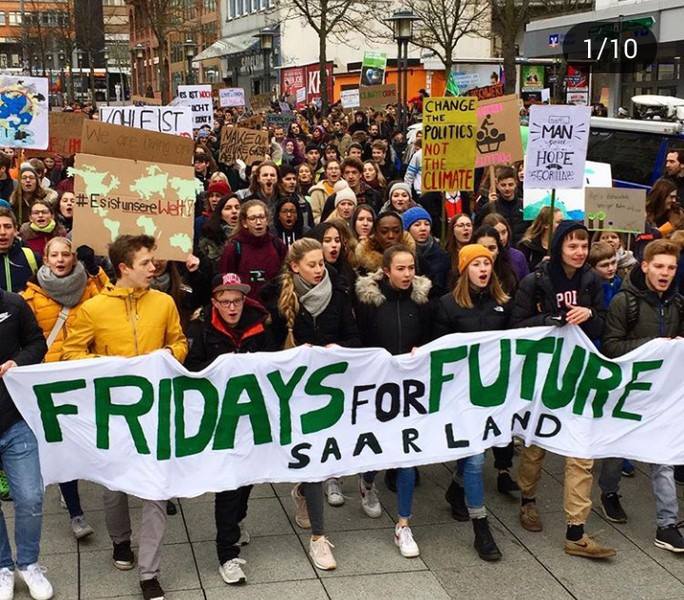
Toutes et tous nous connaissons Greta maintenant, il suffit de dire Greta c’est bon, on sait de qui et de quoi il est question. Elle a 16 ans, il y a aussi Alexandria aux Etats unis, elle a 13 ans et il y en a aussi une dans le Colorado c’est Haven 12 ans, des jeunes filles qui coordonnent les actions pour le climat il y en a en Belgique, en Allemagne, en Australie… Ce sont encore des enfants, pas tout à fait des jeunes pour certaines. Elles sont déterminées, n’ont rien à perdre, elles savent intuitivement sans doute que les 40-70 ans qui mènent le monde se sont totalement fourvoyés, qu’ils mentent et qu’il ne faut surtout pas les suivre. Pour une raison simple, la vie est ailleurs et en conséquence l’humanité aussi.

Les pauvres, ne peuvent rien

Quand on regarde la carte des manifestions du 15 mars dans le monde on s’aperçoit qu’elles ont lieu dans les pays ayant les classes moyennes les plus développées, vivant dans les pays les plus libres. Bien peu de manifs dans les pays émergents où les populations dans leur grande majorité doivent se battre au quotidien pour leur survie. – le paysan qui doit tous les jours cultiver son riz pour nourrir sa famille ne peut pas s’occuper des affaires de la cité – dit le sage. Aujourd’hui il ne s’agit pas des affaires d’une ville particulière, il s’agit des affaires de la planète. Les plus de 7,5 milliards d’humains sur la planète sont concernés. Notre survie dépend de l’action de chacune et chacun d’eux. Nous avons besoin de tout le monde pour nous en sortir, pas un(e) dont la présence active pour la transition serait inutile. Les pauvres quand ils seront moins pauvres s’associeront à la lutte pour le climat.

Les riches ne peuvent rien

Aussi évident que les pauvres ne peuvent rien, les riches ne peuvent rien. S’ils pouvaient quelque chose ils l’auraient déjà montré. Ils ont toutes les manettes, les riches. Ils ont la presse dans des proportions insensées, en particulier en France, ils ont tous les leviers économiques en mains, ils ont le pouvoir politique pratiquement partout. Cela fait 60 ans et même plus qu’ils savent qu’il y a un problème avec l’environnement et ils ne font rien. C’est juste qu’ils ne peuvent rien faire. Pourquoi ? Il faudrait leur demander. Vu de notre fenêtre de la classe moyenne on peut penser que leur arrogance les aveugle. Ils se prennent pour des dieux comme dit Nicolas Hulot riche lui-même, il sait de quoi il parle. Les riches quand ils seront moins riche retrouveront la communauté et le sens des responsabilités.

Développer les classes moyennes pour sauver l’humanité

Il reste les classes moyennes. Ces classes moyennes, menacées d’érosion un peu plus chaque année par le bas il y a des milliards de pauvres dans le monde, 8 millions rien que en France, chiffre en constante augmentation, 600 000 de plus en 10 ans de 2006 à 2016. Les classes moyennes qui ne sont pas nourries par le haut, des riches tous les ans de plus en plus riches. De plus en plus de très riches, autant dire de plus en plus d’irresponsables qui se vivent hors communauté. C’est là dans ces classes moyennes que se trouvent celles et ceux qui se mettent debout pour le climat. Des personnes instruites ayant le sens des responsabilités, dotées d’un esprit critique développé, aptes à prendre des initiatives. Ce sont ces classes moyennes qui doivent augmenter dans le monde, ce sont elles qui peuvent nous sauver. En augmentant de façon très importante l’éducation à la transition pour toutes et tous tout au long de la vie.

Les vieux ne peuvent rien

Ce sont les plus âgés d’entre nous qui nous ont mis dans cette situation. Par avidité comme Gandhi l’a dit : « Il y a assez de tout dans le monde pour satisfaire aux besoins de l’homme, mais pas assez pour assouvir son avidité », par manque d’esprit critique et là on pense aux paysans qui se laissent embobinés par les marchands de produits phytosanitaires vendus par les coopératives et à tant d’autres qui achètent un tas de produits inutiles et souvent néfastes pour la santé, ravage de la publicité. Les vieux sont dans l’erreur par manque de culture écologique. Certaines et certains d’entre nous avaient un cours d’écologie en première et terminale au tout début des années 70, cela n’a pas été généralisé par les institutions éducatives. Les vieux peuvent faire leur examen de conscience et se mettre au service des jeunes. Durant nos vies pendant 30 ans on rêve, de 30 à 60 on tente de réaliser nos rêves et de 60 à 90 on aide les jeunes à réaliser leurs rêves. Quoi d’autre ?

Les hommes ne peuvent rien

Ce sont des femmes. Il y a les jeunes femmes certes et les très jeunes, elles sont sur la scène mais il y a aussi les plus grandes qui sont plus en coulisses. Sylvie qui plante une forêt avec ses élèves du primaire, Sophie qui met tout son collège en débat sur le climat, Lucie qui se met en grève de l’école posant la question du sens du métier d’enseignant et les leaders d’enseignant.e.s pour la planète, encore des femmes. Peut-être que les hommes ont moins de courage aujourd’hui, peut-être que les manettes dont ils ont encore le contrôle commencent à leur brûler les mains. Ils ne savent plus qu’en faire, ils doutent. Elles, elles sont appelées par la vie. Elles nous emmènent vers la vie.

L’émergence d’une citoyenne planétaire

« Selon les organisateurs de ce mouvement baptisé « Fridays for Future », plus d’un million d’étudiants, de lycéens et de collégiens ont défilé dans 2 000 villes de 125 pays, un record. » dit le Monde du 16 mars. Ailleurs il dit « 168 000 jeunes ont défilé vendredi dans plus de 200 villes en France ». A écouter les jeunes dans les rues de Montpellier le 15 mars, à sentir leur énergie et leur détermination, à entendre la force de la clameur qui sortait de leurs poitrines on se prend à retrouver une sorte d’espérance. Elles et ils sont entrain de faire émerger la citoyenne planétaire. Ce ne serait pas juste de la mettre au masculin, tant, en ces jours sombres, nous devons aux femmes.

Roland Gérard

/in Press/di

Fridays for future. Alongside young people all over the world

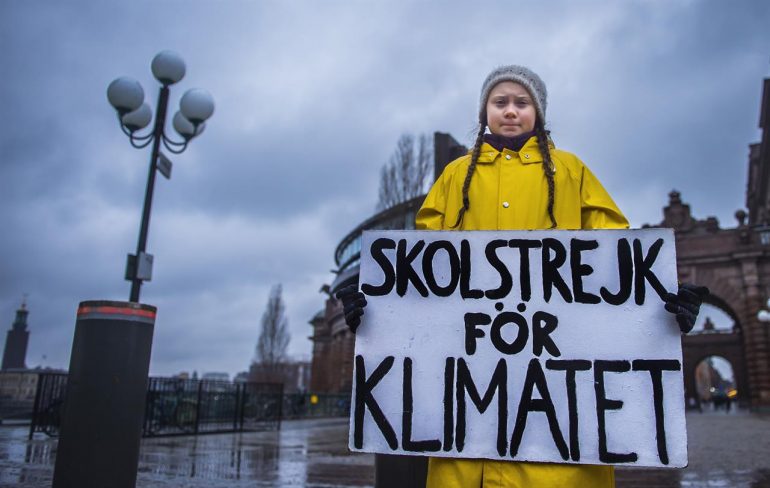
From the young Swedish student Greta Thunberg, the successful example of how the message on the urgency of change can reach hearts and consciences. She deserves all our applause and support. From his courageous gesture a movement is born that mobilizes groups of young people all over the world. The events of “Fridays for future” and the global strike of March 15th are a sign of hope that must leave its mark. This is why the WEEC Secretariat invites all the people involved in the defense of the environment and all the members of the largest international network of environmental educators to join, to be in the front line and to give maximum support to the campaign for the respect for commitments against global warming. «Greta» said among other things the WEEC Secretary General Mario Salomone «spoke also to the great people of the Earth, COP24 and the WEF of Davos. They heard her, but it is not said that they listened to her. It is up to all of us to help extinguish the burning house fire. Women and men of every generation side by side».
FR

A côté des jeunes du monde entier. L’éducation à l’environnement au premier rang de la bataille pour le climat

Le réseau d’éducation à l’environnement WEEC adhère à Fridays for Future en fournissant ses canaux d’information et ses bureaux. Greta Thunberg, jeune étudiante suédoise, montre comment le message sur l’urgence du changement peut atteindre les cœurs et les consciences. Journée de mobilisation du 15 mars contre la catastrophe climatique. Le Secrétaire général WEEC, Mario Salomone, lance un appel à l’adhésion.

Greta Thunberg mérite tous nos applaudissements et notre soutien. De son geste courageux est né un mouvement qui a mobilisé des groupes de jeunes du monde entier. Les événements de vendredi ” pour l’avenir ” et la grève mondiale du 15 mars sont un signe d’espoir qui doit laisser sa marque. C’est la raison pour laquelle le secrétariat du réseau environnemental du WEEC invite toutes les personnes impliquées dans la défense de l’environnement et tous les membres du plus grand réseau international d’éducateurs à l’environnement à se joindre à nous, à être en première ligne et à apporter un soutien maximal à la campagne pour la protection de l’environnement. respect des engagements contre le réchauffement climatique. « Greta – a notamment déclaré le secrétaire général du WEEC, Mario Salomone – s’est également entretenu avec les plus grands peuples de la Terre, la COP24 et le WEF de Davos. Ils l’ont entendu, mais on ne dit pas qu’ils l’ont écouté. Nous devons tous aider à éteindre l’incendie de la maison en feu. Les femmes et les hommes de chaque génération côte à côte ».


ES

Junto a los jóvenes de todo el mundo. Educación ambiental en primera fila en la lucha por el clima

La red de educación ambiental WEEC participa en Fridays for Future poniendo a disposición sus canales de información y oficinas. Empezando por la joven estudiante sueca Greta Thunberg, el exitoso ejemplo de cómo el mensaje sobre la urgencia del cambio puede llegar a los corazones y las conciencias. El 15 de marzo día de movilización contra la catástrofe climática. Desde el Secretariado General WEEC Mario Salomone un llamado a unirse.

Greta Thunberg merece todo nuestro aplauso y apoyo. De su gesto valeroso nació un movimiento que movilizó a grupos de jóvenes de todo el mundo. Los eventos del viernes “para el futuro” y la huelga global del 15 de marzo son un signo de esperanza que deba dejar su huella. Por este motivo, el Secretariado de la Red mundial de educación ambiental WEEC invita a todas las personas involucradas en la defensa del medio ambiente y a todos los miembros de la red internacional más grande de educadores ambientales a unirse, estar en la primera línea y dar el máximo apoyo a la campaña para el respeto por los compromisos contra el calentamiento global. «Greta» dijo el Secretario General de WEEC, Mario Salomone, «habló también a las grandes personas de la Tierra, la COP24 y el WEF de Davos. La escucharon, pero no se sabe si la entendieron. Depende de todos nosotros ayudar a extinguir el incendio de la casa. Mujeres y hombres de todas las generaciones lado a lado».

/in News/di

School strike for climat, Greta and the others

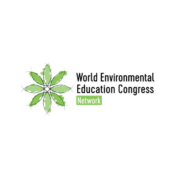
Tout a commencé en août dernier quand une jeune suédoise de 15 ans (elle en a 16 aujourd’hui) désormais célèbre, Greta Thunberg (photo) a décidé de faire la « grève de l’école pour le climat » au motif que pour un jeune cela n’a aucun sens de préparer son avenir alors que l’inaction des adultes quant à la crise climatique prive précisément la jeunesse d’avenir.
Dans le sillage de Greta

Comme une véritable héroïne, elle était seule assise sur les marches du parlement suédois. Elle est revenue avec sa pancarte semaine après semaine. Puis elle a été rejointe, puis des élèves en Australie ont fait grève eux aussi, puis elle est allée à la coop 24 où elle a eu des parole fortes, puis des élèves en Allemagne, en Suisse, en Belgique… se sont mis en grève et on manifesté pour le climat en se revendiquant de ce mouvement de grève de l’école pour le climat, agissant de façon explicite dans le sillage de Greta. Cela n’est pas encore enclenché dans la réalité en France mais les décisions sont prises, ça va bouger. Les jeunes belges sont en particulier impressionnants. Ils ont décidé de se mobiliser tous les jeudis. Ils sont passés de 3 000 à 35 000 en 3 semaines à défiler pour le climat à Bruxelles. Certains manifestants n’ont pas plus de 10 ou 12 ans ! Greta à fait sensation à Davos, le mouvement ne cesse de se renforcer. A l’appel de Greta, le 15 mars sera une journée internationale de grève de l’école pour le climat.

Les profs entrent en action

En France un collectif des enseignants pour la planète s’est constitué. Ils se sont rencontrés dans le tout nouveau mouvement extinction rébellion. Ils disent « L’urgence écologique n’est plus à démontrer. Elle est à enseigner, et elle doit nous mobiliser à chaque instant, dans nos salles de classe, salles des profs mais aussi dans la rue et dans nos luttes! C’est le sens de la création de ce collectif Enseignant.e.s pour la planète! » Ils sont déjà en quelques semaines près de 3 000 à avoir signé.

Un appel circule dans les milieux de l’éducation

“…nous déclarons que nous ne voulons plus être les instruments d’une propagande rassurante, qui rend invisible la catastrophe écologique. Nous devons au contraire dire à nos élèves que la situation est gravissime, sur le climat qui s’emballe, la biodiversité qui disparaît, la pollution qui pénètre jusque dans nos cellules, et qu’aucun diplôme ni aucune formation ne les protégera contre cela…”. L’excellent quotidien de l’écologie Reporterre a publié un article sur le sujet.

Le développement durable en question

Nous pouvons aussi lire dans l’appel : “…Les médias, les scientifiques nous l’ont assez répété. Nous le savons mais nous nous taisons. Dans nos salles de classe, nous avons accepté trop longtemps d’enseigner le « développement durable », entretenant chez les élèves l’illusion que la situation était sous contrôle, prise au sérieux par les gouvernements du monde…”. Beaucoup d’acteurs de l’éducation à l’environnement apprécieront cette remise en question du développement durable. Ce concept, parachuté du haut dans les années 90, a encombré les réflexions, les échanges et les actions en faveur de l’environnement dans le monde éducatif depuis plus de 20 ans. Adoptons pour de bon le terme « transition » qui lui vient de la base et clairement aujourd’hui, à toutes et tous, s’impose.

Les Educations nationales n’ont pas assuré

De voir tous ces enfants et ces jeunes dans l’émoi cela devrait nous alarmer au plus haut point. Ils disent l’incapacité des adultes à mettre en œuvre ce qu’il faut pour stopper l’effondrement que nous vivons. Il n’y a pas qu’en France, il semble bien que ce soit dans tous les pays que les systèmes éducatifs étatiques n’ont pas assuré. Ils n’ont pas tenu compte des recommandations faites par les grandes conférences internationales sur l’environnement. Dés à Stockholm en 1972, il avait été dit et acté dans le principe 19 qu’il est  « essentiel de dispenser un enseignement sur les questions d’environnement aux jeunes générations aussi bien qu’aux adultes … »cela n’a pas été fait ou alors vraiment du bout des doigts. Il faut totalement repenser l’éducation.

En nous, on le sent, l’espoir renait

Nous n’avons pas besoin de jeunes obéissants qui savent apprendre par cœur et bardés de diplômes. Nous avons besoin de jeunes autonomes, confiants en eux, sachant prendre des initiatives, sachant travailler en groupe, des jeunes créatifs, proches de la nature pour l’avoir beaucoup fréquenté dès leur plus tendre enfance. Il y va maintenant de la survie de l’espèce humaine. Soit nous savons prendre les bonnes initiatives, nous-mêmes, pour notre économie domestique et celle de nos territoires locaux partout dans le monde ou alors nous continuerons d’aller à la catastrophe. Avec Greta, avec ces dizaines de milliers de jeunes qui se lèvent dans tous les pays, en nous, on le sent, l’espoir renait, aidons les !

Roland GERARD