Tag Archive for: climate change

/in News/di

Equator Prize 2019, the call for nominations is open
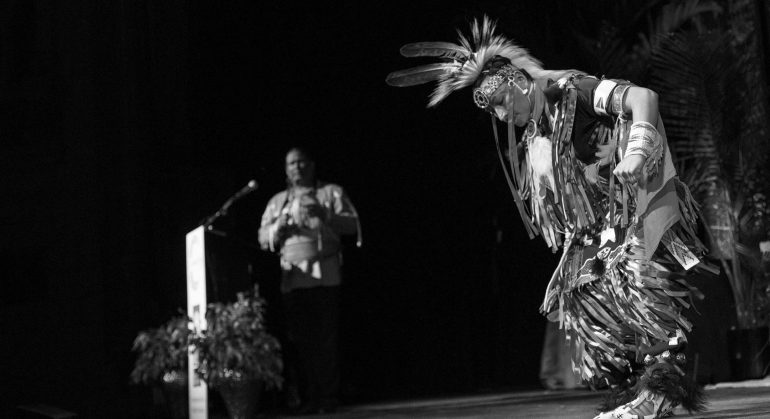
The Equator Prize 2019 will be awarded to outstanding community and indigenous initiatives that are advancing nature-based solutions for local sustainable development. Each winning group will receive USD 10,000 and will be invited to participate in a series of policy dialogues and special events during the United Nations General Assembly and the Secretary-General’s Climate Summit in New York in September 2019, culminating in a high-level award ceremony at the beginning of Climate Week.

The Equator Prize 2019 will have a special focus on

–        initiatives that protect, restore or sustainably manage natural environments
–        initiatives that promote local models for climate-smart food and agricultural production systems
–        innovative ways to finance nature-based solutions for sustainable development and climate change

The nomination deadline will be 26 February 2019.
Nominations can be submitted in 8 languages. For further information and to nominate visit the website or contact prize@equatorinitiative.org
/in News/di /Lascia un commento

Campus, casa, cidade: laboratories of change

The University of Coruña and Alcoa foundation organise the Educating for Sustainability Course, under the title Campus, casa, cidade: laboratorios do cambio.
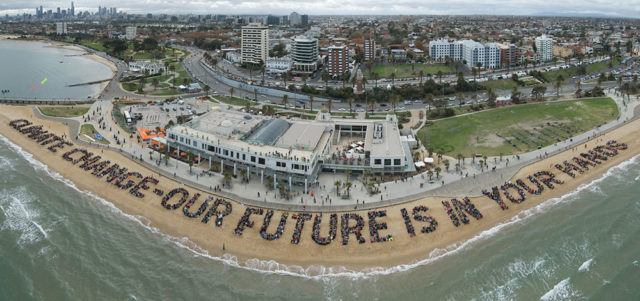
This project has the objective to advance a community and university formation, share basic concepts of environmental and social sustainability and develop a capacity to act on priority issues.
The program includes lectures, theoretical-practical training sessions, field work and monitored and autonomous field works. It combines individual and group work, in the use of apartment, at the campus or at the campus as places of study and experimentation.
With a calendar distributed from March to June, you can choose the topic, place and time of your participation.

Contamination, waste, climate change, resources, health … activities include the calculation of the ecological footprint, the water footprint, noise maps and water consumption, audits of water and energy consumption in the home, and all through the Use of ICTs as tools for participatory georeferencing and networking

Read the program here

Mario Salomone, Secretery General of the  WEEC (World Environmental Education Congress) will be present with a conference on March 13th, h 17:00, Faculty of Educational Science, with a speech focus on the education for sustainability.

campuscasacidade_triptico

/in News/di /4 commenti

RESCLIMA international seminar: Education for climate change

The 4th RESCLIMA international seminar: Education for climate change in the educational system and the 2nd meeting of the Rede internaional de pesquisadores em educação ambiental e justiça climática (REAJA) will take place in Santiago de Compostela (Spain) on October 26 and 27, 2018.

The registration period is open, as well as for the submission of proposals to present communications and posters, whose deadline is the next March 15.

The climate change is the big challenge of the XXI century. Urge to be aware of human vulnerability this threat, as well as accepting the biggest responsibility of the companies that most contributed emissions of greenhouse gas (GHG), which contrasts with the lower capacity of the answer to the effects of an out-of-control climate. Alarms in the scientific community warn that we have little time to react. In a few years there will have to be a major social, economic and energy transformation to avoid the collapse of civilization as we know it.
At this crossroads, the slowness of climate policies are surprising. Climate changes occupy a marginal place in the public area and are far from being a priority issue for decision-makers or the general population.
The fundamental objective of educational and communication programs in the next decade should be to convert the climate changes into a relevant and significant problem.

The RESCLIMA project addresses the relationship between science and popular culture in social representations of climate change: contributions to education and communication on climate risks. It explores the complex logic involved in the construction of popular knowledge and the role that scientific culture plays in popular thinking on climate change. RESCLIMA responds to the need for greater understanding of the ‘social factor’ in climate change, to better inform the design of policies, programmes and educational/communicational resources regarding general and specific socio-environmental issues. This web site is designed to facilitate public interface with the project, to make known its most prominent results from the very earliest phases, and to generate multi-directional information pathways with other researchers and with society in general.

Read the program in Spanish

Read the program in Portuguese

/in News/di /Lascia un commento

Animals at Risk from Climate Change Poster

How to explain the complex interaction between biological traits and environmental conditions? “Animals at Risk from Climate Change” is an educational poster for environmental and earth science educators made by The Global Education Project,  a Canadian non-governmental organization with a 15-year history of publishing fact-packed educational wall posters and producing live events to educate about important issues.
The interaction of biological traits and environmental conditions that cause a species to be susceptible to climate change and the basics of the carbon cycle are made simple and understandable through illustrations, symbols and brief explanatory text–thoroughly documented to reliable sources.
“Animals at Risk from Climate Change” is an educational poster that presents a succinct overview of the fundamental impacts of greenhouse gases — the causes, effects and risks to all forms of life on the planet — . Based on studies from the IUCN Climate Change Specialist Group, the US EPA, NASA, NOAA and the IPCC, the poster features 25 animals that highlight the fundamental impacts of greenhouse gases on all forms of life on the planet.

By 25 animals selected for their vulnerability to climate change, the complex interaction of biological traits and environmental conditions that cause a species to be susceptible are made simple and understandable through illustrations, key graphics and brief explanatory text. Comprehensive and rigorously annotated to reliable sources, this resource is a valuable, timely and relevant educational aid.

To order or to view all of the elements on the poster, visit here

/in News/di /Lascia un commento

COP22 international climate change conference. Informal consultations kick off in Skhirat


Two days of informal consultations took place in Rabat, Morocco on 9 September, 2016. Invited by the Moroccan incoming Presidency of the 22nd Conference of the Parties (COP22/CMP12)140 delegates and climate negotiators from over 50 countries kicked off the closed-door meeeting to advance on discussions around key issues.
 
The opening session to the two-day closed-door consultations included remarks from Salaheddine Mezouar, COP22 President and Morocco Minister of Foreign Affairs and Cooperation, Patricia Espinosa, Executive Secretary, United Nations Framework Convention on Climate Change (UNFCCC), Aziz Mekouar, COP22 Ambassador for Multilateral Negotiations, Hakima El Haite, COP22 Special Envoy and Morocco High-Level Climate Champion. French COP21 Climate Ambassador Laurence Tubiana was also on hand as well as a video message to delegates from COP21 President Segolene Royal.
 

Like COP22 President Salaheddine Mezouar, UNFCCC Executive Secretary Patricia Espinosa also stressed the need to make significant progress on the $100 billion roadmap and for countries to increase their capacity to fight global warming.  The Executive Secretary stated that “success for Marrakech means carrying the historic Paris Agreement forward and implementing it to transition towards a low-carbon economy”.


/in News/di /Lascia un commento

Nature based Solutions at the Mediterranean Climate Change Conference

The MedCOP Climate 2016, 18- 19 July 2016, is organized by the Region of Tanger-Tétouan-AlHoceima. It gathered representatives from Mediterranean countries, including the private sector, civil society, and regional and international organizations.

The conference is a milestone for the Mediterranean countries to discuss the Paris Agreement adopted in December 2015, while preparing for the upcoming COP22 in Morocco and an operational road map for mitigation and adaptation.

This COP22 is now the climate COP of Action, with the significant challenge of bringing together stakeholders into a dialogue for action and involvement from governments and civil society.

For more information, visit the MedCOP Climat website here.

/in News/di /Lascia un commento

Union for Mediterranean (UfM) Climate Change Expert Group gathers in Paris

The COP21 triggered special momentum for tackling climate change globally. All the UfM Member States signed the Paris Agreement in New York on 22 April 2016 and they are now preparing for the COP22 in Marrakech in November 2016. As part of this preparation, the French Ministry for Environment, Energy and the Sea, and COP21 Presidency, hosted on 12 May, 2016 the 4th Union for the Mediterranean Climate Change Expert Group (UfMCCEG)  in the Oceanographic Institute of Paris.

More than 50 climate expert representatives from UfM member countries, key international organisations working in the field of climate change such as the United Nations Environmental Programme (UNEP) and the European Bank for Reconstruction and Development (EBRD), as well as civil society representatives gathered  in Paris. Participants will follow up on the Paris Agreement and on the implementation of actions related to the fields of local authorities, private sector investments and capacity building. A work programme for 2016 aiming at enhancing the Mediterranean climate agenda under a regional umbrella of medium-term strategy was adopted at the end of the meeting.

Keeping the global temperature rise to below 2oC, the target set by the Paris Agreement, calls for actions that cannot only rely on nationally-determined contributions. A coordinated regional approach on Climate Action is needed to successfully achieve this target in the Mediterranean, one of the most sensitive areas in terms of the impact of climate change.

/in News/di /Lascia un commento

Climate change 2015

Le collectif Paris éducation 2015
Renée-Paule Blochet – Jacqueline Charron : Présidente et secrétaire de l’Association « les Amis de circée »
Pierre Calame, Président honoraire Fondation Charles Léopold Mayer – FPH
Maryse Clary, Maître de conférences à l’Université d’Aix-Marseille
Roland Gérard, Président du CFEEDD et du Réseau Ecole et Nature
Thierry Lerévérend : Directeur de la Fondation pour l’Education à l’Environnement en Europe (FEEE)
Philippe Meirieu, Professeur à l’université de Lyon et vice-président EELV de la Région Rhône-Alpes
Richard Pétris, Directeur de l’association « Ecole de la Paix »
Yves Reinkin, Député honoraire du Parlement de la Fédération Wallonie-Bruxelles. Ancien Vice-président de la Commission éducation de l’Assemblée parlementaire de la Francophonie (APF)
Michèle Rivasi, Députée au Parlement européen
Philippe Saugier, Consultant européen éducation et changements globaux