Tag Archive for: climate crisis

/in News, Press/di

Season of Creation 2024: “To hope and act with Creation”

The Season of Creation 2024 focuses on the theme, “To hope and act with Creation,” calling people worldwide to unite hope and action for the Earth’s well-being. This year’s symbol, “the firstfruits of hope,” is inspired by the biblical image of creation groaning in childbirth, awaiting renewal. The guiding scripture comes from the Book of Romans (Rom 8:19-25), where St. Paul describes creation’s eager anticipation for the revelation of the children of God.

A groaning earth

The image of creation groaning, like a mother in labor, draws attention to the deep wounds we’ve inflicted on the Earth through our irresponsible actions. The climate crisis, biodiversity loss, and human suffering all point to an imbalanced relationship with nature, which is too often treated as a resource rather than a gift. As St. Francis of Assisi reminds us in his Canticle of the Creatures, the Earth is both our sister and mother. To receive her care, we must care for her in return.

Yet, creation’s cry is not only one of pain, but also of hope. Just as labor pains signal the birth of new life, the Earth’s suffering invites us to act and hope for a better future.

Active hope and the firstfruits of hope

Christian hope is not passive or superficial. It is not merely about optimism or waiting for a utopia but about engaging in concrete action. To “hope” means to act—to transform pain and suffering into visible signs of change. As St. Paul tells us, “hope does not disappoint” (Rom 5:4), but it demands perseverance and patience.

The “firstfruits of hope” emerge when we work together to restore peace and harmony, not just among ourselves but with all creation. Actions like supporting the Fossil Fuel Non-Proliferation Treaty are tangible examples of hope coming to life. This treaty is a critical step toward a sustainable future and a real response to the ecological crisis.

The urgency of change

We are living in a time of urgency. Ecological conversion—a profound transformation of heart and mind—is difficult but unavoidable. Collective efforts toward sustainability and environmental justice are crucial signs of hope. Hope and action are inseparable; action springs from hope, and hope thrives through action.

The voices of the Earth and the poor must be heard. Communities displaced by climate change, indigenous populations, endangered species, and ecosystems at risk—all of these call us to a renewed respect for creation. Ecological justice is an essential part of our faith.

A call to action

The Season of Creation 2024 invites us to both reflect and act. It urges us to see creation as a part of God’s revelation, to respond to its groans with sustainable, concrete actions, and to embrace our responsibility as stewards of the Earth. Hope and action must move together. While we hope for a better world, we must act to make it a reality. Our actions—no matter how small—are the firstfruits of a greater hope, paving the way for a more just and sustainable future for all creation.

Discover more and share your Season of Creation activity here: https://seasonofcreation.org/

The partners participating in this initiative include: Anglican Communion Environmental Network, Integral human development, Dicasterium pro communicatione, A Rocha, Actalliance, European Christian Environmental Network, Lausanne/WEA Creation Care Network, Movimento Laudato Si’, The Lutheran World Federation, World Communion of Reformed Churches, World Council of Churches, The middle east council of churches, World methodist council, Centrumjp2, Comunidad de Vida Cristiana,  Comisión Diocesana de Ecología Integral, Guías Argentinas Católicas, Creation Justice Ministries, Cebi, Acción Católica Argentina, Associazione Comunità Papa Giovanni XXIII, Catolicos en red, Arquidiocese de Braga, Vatican news, Radio vaticana, Alfa&Omega, Aica, Aleteia, Exaudi, L’osservatore romano, The pope video, Pray as you go, Religion digital
/in News, Press/di /Lascia un commento

Perth selected as host for 13th World environmental education congress (WEEC) in 2026

The World Environmental Education Congress (WEEC) Permanent Secretariat and the Australian Association of Environmental Education (AAEE) announced Perth as host for the 13th World Environmental Education Congress (WEEC) in 2026.

Following the resounding success of the 12th World Environmental Education Congress (WEEC) held in Abu Dhabi in January and February 2024, the WEEC Permanent Secretariat takes great pride in announcing that Wadjuk Noongar Country – Perth, Western Australia – has been selected as the host city for the 13th WEEC in 2026.

The WEEC Permanent Secretariat will partner with the Australian Association of Environmental Education (AAEE) to bring this premier international congress dedicated to the progression of environmental education and the advancement of education for sustainability worldwide.

“After twelve world congresses, the environmental education community starts a journey towards new goals from Australia”, said Mario Salomone, WEEC Secretary-General. “The environmental approach to the knowledge is a key for a paradigm shift and must be more and more at the centre of the formal and non-formal education. The global project on learning implemented in close collaboration with the Club of Rome will bring to the congress in Perth updated data, inspiring thoughts, and new mindfulness”.

The WEEC serves as a platform for global dialogue, learning, and exchanging ideas on environmental education programs. “The work we are doing in Australasia on environmental education and education for sustainability positions us as a leading destination,” said Dr Lisa Siegel, President of AAEE. “We welcome environmental educators locally and from around the world to attend WEEC 2026 to benefit from international discourse and showcasing best practices.”

AAEE Vice Presidents Dr Jennifer Pearson and Mr Jason Pitman, both in Western Australia, will co-chair the organising committee for the 13th WEEC. “We are thrilled to showcase Western Australia’s rich environmental and cultural heritage to delegates from around the world,” said Dr Pearson. “From sustainable initiatives in early learning to the growing impact of place-based education efforts, the 13th WEEC presents a unique opportunity to share our knowledge and learn from our global counterparts.”

“The 13th WEEC in 2026 will facilitate stronger connections between countries in the Oceania region and beyond,” added Mr Pitman. “By sharing our responses to the climate crisis and exchanging international perspectives on living more sustainably, we aim to foster collaboration and galvanise collective action in the global community.”


Information and updates

For further information and updates on the 13th WEEC 2026, please visit:

www.weecnetwork.staging.19.coop or www.aaee.org.au

Alternatively, please get in touch with the Local Organising Committee via:

Dr Jennifer Pearson, Co-chair, jopearson189@gmail.com

Mr Jason Pitman, Co-Chair, jason.j.pitman@gmail.com

And with the international Permanent Secretariat:

secretariat@weecnetwork.staging.19.coop

/in News/di

UfM supports the preservation of the Mediterranean “biological supermarkets”

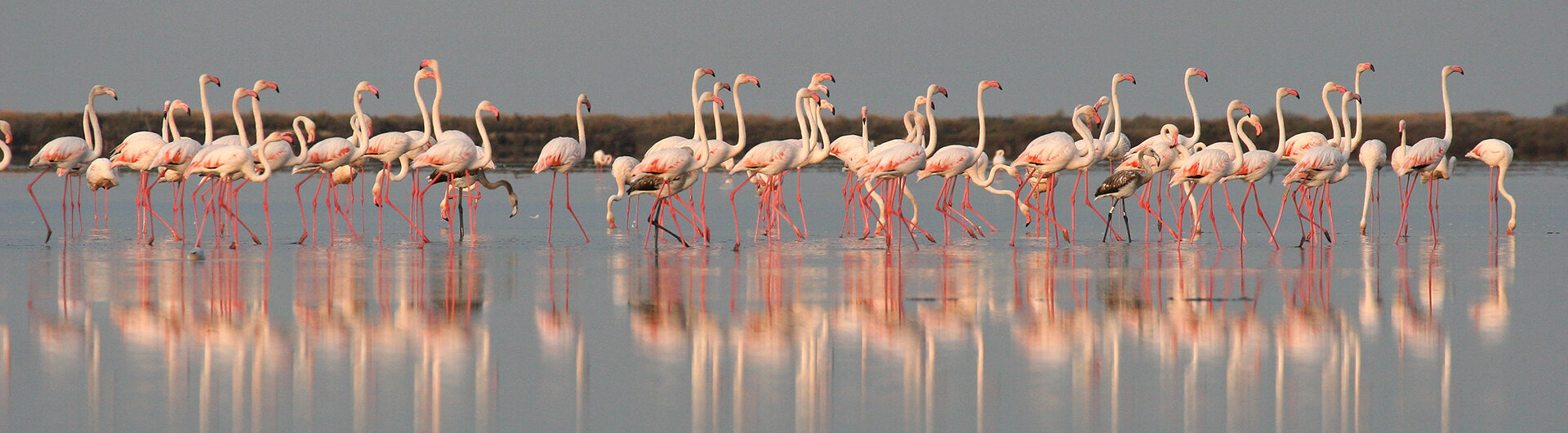
Ulcinj salina, Montenegro. © MedWet / C.Amico

The climate crisis, including droughts, is hitting the Mediterranean 20% harder than the rest of the world, but coastal wetlands play a vital role in mitigating future temperature rises. They currently store up to 40% of the world’s carbon and do it at a rate 10-20 times greater than temperate or boreal forests. In the Mediterranean regions, wetlands are among the most productive ecosystems, providing critical services for half a billion people.

Coastal fisheries and sustainable agriculture rely on healthy coastal wetland ecosystems, providing important low-carbon sources of nutrition for our growing population.
Each year, losing coastal wetland costs $ 7200 billion globally. wetlands’ ecosystem services are among the most productive habitats in the world. They can be considered as “biological supermarkets”: wetlands provide great volumes of food for many species, including our own.

With a view to fostering a more effective conservation of these crucial habitats, the UfM supports the Wetland-Based Solutions project, promoted by MedWet. Through the protection and restoration of key wetlands, the project proposes coastal wetlands as key assets for nature-based solutions’ implementation to counteract anthropogenic impacts, and in particular, climate change.

For more information

  • “Mediterranean wetland restoration: an urgent priority” Restoring Mediterranean wetlands: the urgent and essential Nature-based Solution to the region’s most pressing challengesDespite the vital roles they play, 48% of Mediterranean wetlands have been lost since 1970.