Tag Archive for: conference

/in News/di /Lascia un commento

Conference: Indigenous Territories and Expansion of Extractivism
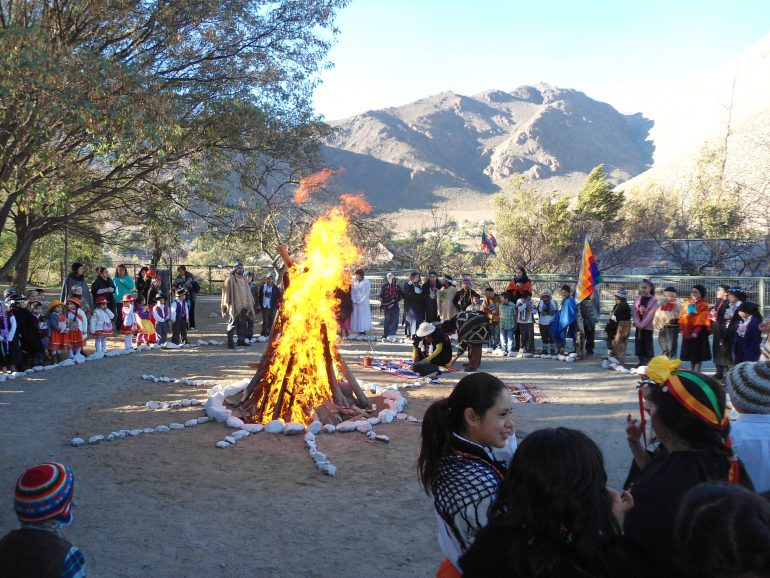
For more than two decades, Chile’s indigenous Diaguita Huascoaltinos have faced the powerful extractive model that has emerged in Chile. Since 2000, this community has resisted attempts to locate Pascua Lama, a Chile-Argentina binational mining project, the Canadian gold company Barrick Glod Corporation. This project was initially approved in 2000, following 10 years of exploration.
Highly contested because of the multiple impacts on the region, especially on the glaciers and being located on usurped territories in the Diaguita Huascoaltina community, this project provoked one of the longest socio-ecological conflicts in Chile. The construction of the mine was initiated in 2010, but the project had to face a determined social opposition and legal recourse accusing it of irreparable environmental damage. These struggles have borne fruit. The activities of the mine had to be paralyzed in 2013. And finally, in October 2018, the Environmental Court of Antofagasta region where the project is located, decreed the definitive closure of Pascua Lama.
The territory has, however, been heavily affected by all these years of mining activity, the habitat of several species, damaged and rivers, contaminated by acidic waters. As well, threats to the territory continue: another mega mining project in Canada, Nueva Union (copper, gold and molybdenum), resulting from the pooling of the Relincho and El Morro mining projects of the Canadian Teck and Goldcorp, has begun its Exploration in the Indigenous Conservation Territory, which is already having impacts on the Cordillera Ecosystem and the flora and fauna, protected by the Diaguita Huascoaltina community. The intended life of this project is 38 years, with the possibility of expansion. The asymmetrical struggle for the defense of the territory continues to face this new gigantic mining project.
Event co-organized by Centr’ERE – Center for Research and Education and Training related to the environment and eco-citizenship of the University of Quebec in Montreal and CDHAL- Center for Human Rights in Latin America, November 27th.
Read more

/in News/di /Lascia un commento

ACT4LITTER: Closing regional conference

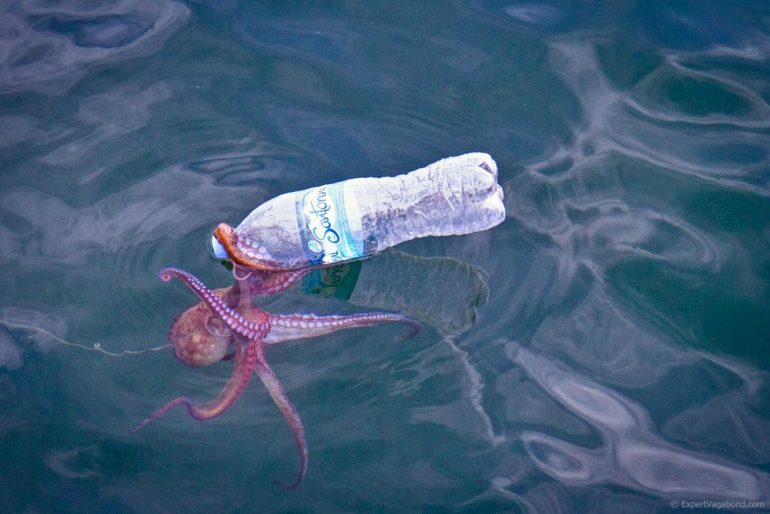
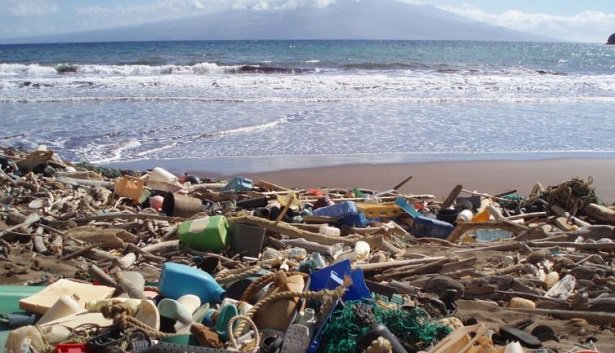
The main objective of the closing ACT4LITTER conference (Athens, October 24th) is to showcase the collective response of the Mediterranean to curb the problem of marine litter. The event is orgnised by Mio-Ecsde in collaboration with Regional activity centre for sustainable consumption and production, San’Anna Institute of management, Med Pan and founded by European Union Life+. It brings forward recent scientific advances with regards to marine litter and its impacts in the region and will provide an opportunity to key stakeholder groups active on the science-policy-society interface to share their compelling stories and hands-on experiences.

The conference features initiatives that address the whole management cycle of marine litter, from prevention, monitoring and surveillance to mitigation measures, carried out at European, Mediterranean, national and local level.
Special emphasis is given to litter that is building up in what should be pristine coastal and marine protected areas, where marine biota and endangered species dwell. Working together at all levels is what it takes to deal with this ‘wicked’ problem.

/in News/di /1 commento

A plastic-free Mediterranean Sea in the making

Mediterranean Members of Parliament and key stakeholders discuss the state of play and realistic steps forward (Brussels, November 21st, European Parliament).

Most Mediterranean countries, on both shores, are at a moment when Parliaments are deciding on measures to curb the use of single use plastics and mainly plastic bags. Are the most informed decisions being made? What should the next steps be?

The root causes of marine litter in the Mediterranean are the same as anywhere else in the world: a complex combination of production and consumption patterns, irresponsible behavior of individuals and economic sectors, lack of policy and legislative frameworks, weak solid waste management practices, misconceptions related to possible solutions, fragmented understanding of the problem due to the lack of fit-for-purpose data.

Large amounts of plastic waste leak into the marine environment from sources on land and at sea, generating significant environmental and economic damage. They are estimated to account for over 80% of marine litter. Single-use plastic items are a major component of the plastic leakage and are among the items most commonly found on beaches, representing some 50% of the marine litter found.

Being one of the most affected seas by marine litter worldwide, Mediterranean decision makers are gradually reacting. Understanding and knowledge of the problem has been substantially enhanced in the past few years, with several studies shedding light on the amounts, distribution, sources and impacts. As a result, bold moves are taking shape on the EU side driven by the Marine Strategy Framework Directive and measures and pilot actions are advancing in the non-EU countries under the Regional Plan for Marine Litter Management in the Mediterranean of the Barcelona Convention.
The Searica Intergroup together with the informal Circle of Mediterranean Parliamentarians for Sustainable Development (COMPSUD) and the contribution of other key actors is exploring through this meeting realistic options on how to effectively curb plastic pollution in the Mediterranean region.

Program

16:30 – 16:45 Welcome remarks by Ms Gesine MEISSNER, MEP, President of the European Parliament Intergroup Seas, Rivers, Islands and Coastal Areas (Searica)
16:45 – 17:10 Outlining the marine litter challenge in the Mediterranean.
Mapping certainties and uncertainties: a prerequisite for better decision-making.
Dr. Thomie Vlachogianni, Marine Litter expert, MIO-ECSDE

Keeping litter on land
Prof. Moh Rejdali, Chairman of COMPSUD, Member of the Moroccan Parliament

Promising measures and lessons learned from the implementation of the Regional Plan on Marine Litter Management in the Mediterranean
Mr. Gaetano Leone, UN Environment MAP Coordinator

Putting the plastics challenge at the heart of EuroMed policy and actions
Ms Alessandra Sensi, Head of Sector, Environment and Blue Economy, Union for the Mediterranean Secretariat

17:10 – 18:00 Panel Discussion, incl. Q&A: Doing the right thing and doing it right: where are the difficulties?

Introduced and moderated by Mrs. Estaras Ferragut, MEP, Board Member of the Intergroup – Mediterranean
Prof. Michael Scoullos, MIO-ECSDE Chairman & Team Leader of the EU SWIM-H2020 Support Mechanism

Mr. Michel SPONAR, Deputy Head of Unit, Directorate General for the Environment, European Commission

Plastic Producers or Plastic Recyclers/Converters

MP (South)

MP (EU)

18:00 – 18:50 Panel Discussion, incl. Q&A: What are the next steps forward? Introduced and moderated by Mr. Davor Skrlec, MEP

Ms Francoise Bonnet, Association of Cities and Regions for Sustainable Resource Management

Fisheries Association/Aquaculture

Mr. Fouad Makhzoumi, MP, Lebanon

Tourism sector

MP

18:50 – 19:00 Conclusions
A MEP and Prof. Scoullos

/in News/di /1 commento

Australia, call for contributions AAEE conference 2018

The Australian Association for Environmental Education (AAEE) and the 2018 AAEE Conference Organising Group invite you in Australia, to the Gold Coast, between 21-25 October 2018 for the 20th Biennial Conference and 3rd Research Symposium. The Call for Contributions is open here.
The Conference theme of Creating Capacity for Change builds on AAEE’s strong tradition of sharing the latest in environmental education theory, policy and practice to support excellent environmental and sustainability education and build capacity for change in children, young people and adults.
The Conference will discuss the ways in which environmental and sustainability educators can respond to the environmental, social and political challenges and how to build – in ourselves and in others – the capacity for change.
With an already strong base of environmental and sustainability education participants, this conference continues to share and build knowledge and capacity through a multi-disciplinary, multi- sector approach that encourages and enables a diversity of insights and practices from different sectors to be shared and discussed. The aim is also to promote the key role played by environmental and sustainability education in developing and empowering individuals, communities and societies.

The Conference program, which includes social activities such as the welcome reception and conference dinner, will provide an ideal opportunity to network with colleagues, old and new.
«We invite you to join us on this journey of learning, sharing, collaborating and showcasing the best that environmental and sustainability education has to offer» say Jo Ferreira and Cam Mackenzie, Conference Co-Convenors and organisers of the 8WEEC congress in 2011.

/in Press/di /1 commento

Italian National Days of the WEEC Network

The Italian National Days of the WEEC Network, Environmental education and sustainability held in Naples,  April 20-21 2018,  had as main objective the cultural exchange between diversified realities operating within the EAS.
This goal gave rise to the need for a national meeting in which the fruitful exchange of experiences and the relationships between the participants became elements of growth of the network and its future development.
A second objective is to enhance the initiatives of those who work today in various capacities in the EAS, in schools, in natural and urban contexts, in the business world and in the university, through the presentation of innovative experiences for methodologies, languages or implementation contexts.
The choice of Naples as a symbolic city wants to encourage the participation of all the people of “good will” who, especially in Southern Italy, find themselves reuniting different realities, both social and sensitization to sustainability.

The WEEC Italy Network, launched in 2013 following the WEEC World Congress in Marrakech and consolidated in the successive World Congresses in Gothenburg and Vancouver, at the EAS European Days in Bergamo, thanks to the first National Workshop held at the CNR in Porano in 2016 and the cycle of meetings (also transmitted in streaming) “Tessere Nuove Connessioni” to Oxy.gen of the Parco Nord Milano in 2017, is today an aggregative subject able to enhance the effort of diversified energies in the country, public and private, that beyond geographical affiliations recognize themselves in a common manifesto of values to promote a sustainable society through educational processes.

Read the program here

Videos

Photo: Natural Reserve WWF “Cratere degli Astroni”, near Naples

/in News/di /Lascia un commento

Marseille, Global Responsibility, now

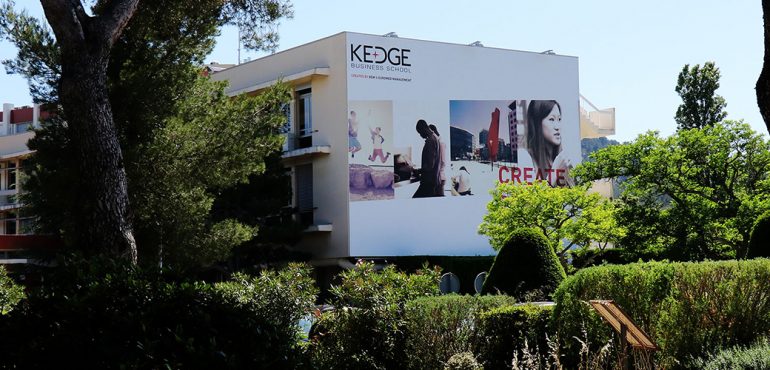
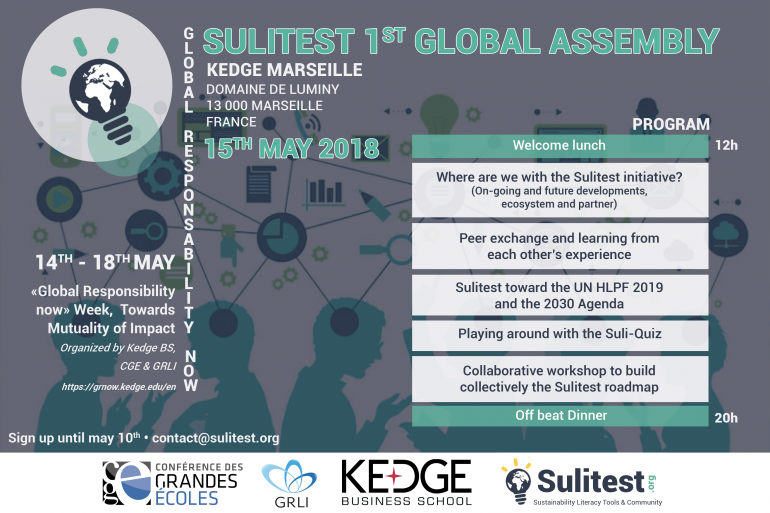
Global Responsibility, now ” is organized from 14-18 May 2018, by Kedge Business School in collaboration with the Globally Responsible Leadership Initiative (GRLI) and the Conférence des Grandes Ecoles (CGE) in Marseille, France. During this week, networks and initiatives from around the globe – local student organizations, regional interest groups, international partnerships and UN-level initiatives – will convene to move towards accelerating systemic impact.

For many years, the responsibility of higher education & learning institutions for building a sustainable world has been highlighted. All over the world, faculty, administrators, learning facilitators and students have developed initiatives at local, regional and international levels to help transform society, business and education. These initiatives have generated positive energy and goodwill, inspired further actions and innovations and led to undeniable progress. However the collective impact of these initiatives still somehow falls short of the deep transformation required at individual and collective level to make the change sustainable.

Networks and initiatives from around the globe, with representation at various levels – local student organisations, regional interest groups, international partnerships and UN-level initiatives – will convene 14-18 May and move towards accelerating systemic impact. The event will also work to strengthen and accelerate the global partnership for sustainable development with a specific emphasis on SDG 17.

The Sulitest Conference (15th May) is one of the highlights scheduled during the first days of the event. It’s focus is to gather for the first time all major players of the Sulitest community: university full players, partners, companies, regional chapters (RNEC), our advisory board and administrative council.

You can register here

Venues

/in News/di /Lascia un commento

Environmental data from below

The 7th STS Italia Conference will be hosted at the University of Padova, Italy, June 14 through 16, 2018, by the Italian Society of Science and Technology Studies, in collaboration with the FISPPA Department and the University of Padova. The focal theme of the 7th STS Italia Conference will be Technoscience from Below.
The conference will be an opportunity to present empirical and theoretical work from a variety of disciplines and fields: sociology, anthropology, design, economics, history, law, philosophy, psychology and semiotics.  By focusing on Technoscience from Below, the 7th STS Italia Conference will offer the opportunity to explore alternative co-productive paths of science, technology, and innovation.
The conference will be articulated in 26 tracks, clustered in five main thematic streams: 1) Participation, citizen engagement and democracy from below; 2) The shaping of biomedicine, medical expertise and healthcare from below; 3) Innovation, design and standardization from below; 4) Imaginaries, knowledge and networks from below; 5) Including and connecting from below.

The panel on “Environmental data from below” is about the governance of the environment, inextricably linked to data. Interventions, policies and future scenarios for sustainability are all based on data generated and analysed
within specific institutional settings, such as supranational agencies, environmental protection agencies and official statistics.
In this sense, the activities of analysis, publication and diffusion of environmental data actively contribute to shape and delimit the field of environmental governance’s authority through expertise.
Whatever the strategy pursued by decision makers may be (e.g. to defuse possible conflicts; to enlarge consensus), procedures of data collection and analysis, as well as
their purpose, tend to be restricted to within accredited settings and further performed in institutional loci.
Currently, these patterns may be bypassed by new trajectories of engagement that develop alternative processes of empowerment for non-experts.
Social movement research has signalled the growing tendency of grassroots movements, NGOs and activists to contest official data. Statactivism is conceptually a
specific kind of participation as well as contestation by non-institutional actors using
data analysis. Other research fellowships refer to data activism as particularly focusing
on digital technologies adopted for the collection of data. This general tendency invests the environmental domain as well, and it offers new forms of participation through data. Indeed, environmental movements as well as other concerned groups not only put the role of institutional expertise under scrutiny; they can also contribute to developing alternative forms of scientific knowledge production. Thus, participation is transforming through the challenge of creating evidence and the organisation of data collection from below. This contrasts with solicited forms of participation through data, such as citizen-science projects.
An S&TS perspective, paying attention to socio-technical assemblages of data  infrastructures and the practices related to them, may bring a better understanding of these ongoing processes.
Therefore, the present track aims to gather theoretical as well as empirical proposals focussed on combinations of heterogeneous actors in relationship to data collection, management and sharing of environmental issues, such as (but not only limited to):
– heterogeneous assemblages for the generation of environmental data from below;
– design and creation of ad hoc infrastructures for data collection, analysis and sharing of environmental data;
– practices of maintenance and management of bottom
– up data infrastructures;
– analysis of expertise aligned for the implementation of data infrastructures from
below;
– practices of civic hacking for the environment; and
– the role of alternative baselines as new tools of political environmental participation

Convenor: Paolo Giardullo, University of Padova (Italy) paolo.giardullo@unipd.it

Conference website

Call for abstract beforeFebruary 15th

/in News/di /2 commenti

Coastal Zone Canada Conference, July 14-19, 2018

Coastal Zone Canada 2018, the bienniel conference of the Coastal Zone
Canada Association, will be held from July 14-19, 2018, in beautiful
St. John’s, Newfoundland, Canada.
The broad theme of the conference is “Seeking Practical Solutions to Real Issues: Communities Adapting
to a Changing World”.
The Coastal Zone Canada Association expects to attract some 300 coastal zone
practitioners including field scientists, managers, environmental
organizations, policy makers, and government bodies.  Effective
management of complicated coastal zones is founded on efficient
exchange of information among different groups, and education is an
important foundation of that information exchange.  
The CZC18 will have much to offer to environmental educators working in marine
and coastal environments, are you ready to present a work?
Tha Call for abstracts is open here.

Please visit the web site for more information on the conference themes and structure.

/in News/di /Lascia un commento

Environmental and Ecological Education Panel Athens Greece

The Athens Institute for Education and Research (ATINER), a world association of academics and researchers based in Athens, organizes A Panel on Environmental and Ecological Education, 22-23 May 2017, Athens, Greece as part of the Twelfth Annual International Symposium on Environment, 22-23 May 2017, Athens, Greec. 

Proposals for presentation  need to received  by email to atiner @ atiner.com, before 24 October 2016. The registration fee is 540 euro and includes accommodation during the days of the conference, participation to all sessions of the conference, breakfasts, two lunches and all taxes. If you need more information, please let me know and our administration will send it through to you.

The language of the conference is English for both presentations and discussions. Abstracts should be 200-300 words in length and it should include names and contact details of all authors. All abstracts are blind reviewed according to ATINER’s standards and policies. Acceptance decisions are sent within four weeks following submission. Papers should be submitted one month before the conference only if the paper is to be considered for publication at ATINER’s series.

/in News/di /Lascia un commento

2016 World Summit of Local and Regional Leaders

The 2016 World Summit of Local and Regional Leaders, themed ‘Local Voices for a Better World,‘ opened on Wednesday, 12 October 2016, in Bogotá, Colombia, and will continue through Saturday, 15 October. The World Summit, organized by United Cities and Local Governments (UCLG), is the largest global gathering of mayors, councilors, representatives of local governments, and other interested policymakers and practitioners.

Four major deliverables are expected from the 2016 World Summit. The Global Agenda of Local and Regional Governments for the 21st Century will reflect the discussions held in the Summit’s plenaries and policy dialogues, highlighting local and regional authorities’ priorities that are not currently included in global development negotiations surrounding Habitat III and the Sustainable Development Goals (SDGs).

Accompanying the Global Agenda will be the launch of the 4th Global Report on Local Democracy and Decentralization (GOLD IV), providing analysis, innovative examples and case studies from around the globe to support the recommendations of the Global Agenda. Another major output will be the Bogotá Statements, which will capture the major challenges that local and regional governments have identified during the Summit. The fourth and final expected outcome is the Key Recommendations of Local and Regional Governments to Habitat III.

To learn more visit here.