Tag Archive for: environmental education

/in News, Press, World EE Day/di , , e

8th World Environmental Education Day: celebrating today, October 14

October 14 marks the anniversary of the UNESCO Intergovernmental Conference on Environmental Education, held in Tbilisi, Georgia, in 1977. This conference, which concluded on October 26, was a milestone, reflecting the growing awareness and concern within society and institutions at the time. For the first time, environmental issues and education for environmental awareness were officially recognized at an institutional level, following the 1972 UN Conference on the Human Environment in Stockholm.

The main outcome of the 1977 conference was the Tbilisi Declaration, which set out the principles of environmental education. It emphasized that education should be global and community-based, continuous, and lifelong. It should engage people of all ages, particularly young people, to foster a sense of active responsibility for the environment.

Forty years later, in 2017, the WEEC (World Environmental Education Congress) network launched the first World Environmental Education Day in Vancouver, coinciding with its ninth global congress and the participation of the Georgian government. In 2024, we are celebrating the eighth World Environmental Education Day, and to mark this occasion, the WEEC network is compiling all projects and initiatives aimed at promoting environmental awareness.

Every project plays a crucial role in raising awareness about the need to rethink our relationship with the environment, develop the interdisciplinary skills needed to navigate today’s complex challenges, and cultivate a population that is mindful of environmental issues. We need action from everyone!

Projects for World Environmental Education Day

This year, between September 14 and October 30, organizations involved in environmental education, along with museums, parks, schools, and other institutions, are running awareness-raising projects.

To celebrate the eighth World Environmental Education Day, the WEEC network is gathering all relevant projects to highlight the growing interest in this field. At the end of October, a 2024 Final Report will be published, summarizing all submitted initiatives, which will also be promoted through our media channels.

Many projects have already been submitted, approaching the theme from different angles and using various methods, all of which are effective.

Some projects feature in-person activities following informal education models, giving participants hands-on experiences of environmental stewardship. For example, the Vellmari Association focuses on marine environment protection in the Balearic Islands, organizing communication campaigns about the role of marine ecosystems, research initiatives, and educational programs. They have launched the “Exploring the Oceans” project, designed to raise awareness among children and youth aged 8 to 17.

Other projects focus on creating networks. One initiative, currently in the planning phase, envisions a digital platform for sharing practical and theoretical knowledge among teachers, students, and anyone interested in environmental education.

While some projects are new, others build on the long-standing efforts of institutions and communities with a history of environmental education. One such project is led by Hardwood Education in partnership with People to People Kenya, which fosters knowledge exchange between teachers in the United Kingdom and Kenya.

Around the world, organizations are undertaking diverse initiatives—differing in approach, method, and audience—yet all united by the common goal of raising awareness for World Environmental Education Day.

Share your project with us!

Every action matters in our collective effort to create a more sustainable world, promote environmental education, and raise awareness about the issues that concern us all. The WEEC network, a global alliance of environmental educators, will manage these projects. The next WEEC congress will take place in Perth, Australia, in 2026—an opportunity to expand your knowledge, exchange experiences, and discuss best practices with experts in the field.

If you are running an initiative this October, we invite you to submit your project for inclusion. Want to get involved? Submit your project here and sign the petition to make October 14 the official World Environmental Education Day. Click here for more information and to sign. Every action counts!

<!– Card semplice con descrizione –>

<!– Card verticale –>

<!– Card senza descrizione –>

/in News, Press, World EE Day/di

Centr’ERE presents: journées de l’éducation relative à l’environnement 2024

From October 10 to 29, 2024, the Centre de recherche en éducation et formation relatives à l’environnement et à l’écocitoyenneté (Centr’ERE) at the Université du Québec à Montréal (UQAM) is hosting the “Journées de l’éducation relative à l’environnement.” This major event is centered around three significant dates: World Teachers’ Day (October 5), the “Discovery” of the Americas (October 12), and World Environmental Education Day (October 14), offering a thoughtful reflection on Indigenous and environmental issues.

The 2024 edition features a diverse program of seminars, conferences, round tables, and workshops that address environmental education through interdisciplinary and cross-cultural lenses. You can find the full program in the attachment (click here). Below is a preview of the key activities:

Program highlights

Study day: Ecosocial intervention education
Training and Engagement for the Socio-Ecological Transition
Thursday, October 10, 2024 | 8:30 AM – 5:30 PM
This day will explore ecosocial justice with contributions from experts in social work education, integrating academic insights and community-based practices.

Seminar: perceiving sound in our relationship to the world
Tuesday, October 15, 2024 | 9:00 AM – 12:00 PM
In collaboration with Canada Sound Week, this seminar examines ecology through sound, highlighting listening as a key tool for understanding the environment.

Workshop-seminar: textile circularity and ecocitizenship
Thursday, October 17, 2024 | 2:00 PM – 4:00 PM
This bilingual seminar delves into the environmental impact of the textile industry, promoting circular economy practices. The University of Havana will also share innovative approaches in textile sustainability.

Round table: trajectories, perspectives, and challenges in contemporary environmental education
Thursday, October 29, 2024 | 3:00 PM – 5:00 PM
A panel discussion on the future of environmental education, featuring leading experts in the field. The event will also mark the launch of a new book showcasing interdisciplinary contributions.

The full program, which offers both in-person sessions at UQAM and online participation via Zoom, is available now. Check the attachment (click here) for details, and join us in this collective reflection on environmental education and civic engagement!

For more information and to access online participation links, visit the official event page.

/in Press/di

MECCE Project announces third call for proposals for quality climate change communication and education case studies

The Monitoring and Evaluating Climate Communication and Education (MECCE) Project, a collaborative effort among over 100 prominent scholars and agencies, has unveiled its third funded case studies call for proposals. With an esteemed Advisory Committee including the likes of the IPCC, UNESCO, UNFCCC, and UNESCO Global Education Monitoring Report, MECCE aims to deepen the understanding of quality Climate Change Communication and Education (CCE) through insightful case studies.

Researchers, practitioners, and stakeholders are invited to submit their proposals until March 25th, 2024. The project seeks to fund a minimum of 10 case study research projects, offering up to CAD $10,000 per project. While all proposals will be given due consideration, this year MECCE is particularly interested in initiatives from Latin America and Eastern Europe. They are also keen on CCE initiatives focusing on public participation, public access to climate change information, and educational sectors such as pre-primary, primary, and higher education.

What is MECCE looking for?

MECCE is seeking case study proposals that delve into established quality CCE initiatives. The aim is to better understand how these initiatives contribute to the landscape of climate change education. Projects should offer clear research questions, methods, and approaches, primarily utilizing qualitative research methods.

Benefits of participation and eligibility

Participating in these case studies offers a range of benefits:

  • Receive funding: Up to $10,000 CAD to conduct in-depth research on a quality CCE initiative.
  • Contribute to knowledge: Help advance the understanding of quality CCE and ways to enhance CCE initiatives globally.
  • Global networking: Connect with a diverse network of CCE researchers and practitioners.
  • Showcase work: Display innovative CCE efforts through international platforms, including the MECCE Project’s data platform and digital library.
  • Optional activities: Opportunities for joint publications, blog posts, and cross-case study analyses.

Deliverables

Successful applicants will be expected to:

  • Participate in calls with the MECCE Project Office for updates and support.
  • Submit a comprehensive final report detailing the case study and its findings.
  • Provide a multimedia package showcasing the CCE initiative (e.g., photos, videos).
  • Publish findings in academic or professional publications, and present results to target audiences.

Application process and deadlines

Proposals should be submitted through the application portal by the deadline of March 25, 2024, at 11:59 pm EST.

For more information on the MECCE Project and to view previously funded case studies, visit mecce.ca. Don’t miss this opportunity to contribute to the advancement of Climate Change Communication and Education on a global scale!

/in Press/di /Lascia un commento

Empowering Uganda’s youth: Muyunga Bruno’s quest to Speaking 4 the Planet

In the heart of Uganda, Muyunga Bruno, an IT Officer, Environmental Activist, and student mentor at St. Mark’s College Namagoma, is passionately leading a movement to safeguard the natural world for future generations.
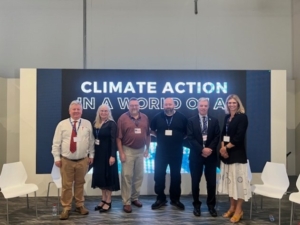
Bruno’s love for preserving the environment traces back to his childhood, surrounded by Uganda’s stunning landscapes. However, he’s witnessed a troubling trend of environmental decline over the years. “Gone are the days when you could hear frogs in the evening,” he mourns, pointing to the loss of once-vibrant habitats due to human activities.

Recently returning from the 12th World Environmental Education Congress (WEEC) in Abu Dhabi, Bruno is reinvigorated. “Numerous factors, especially climate change, have profoundly impacted our environment,” he observes, stressing the urgent need for education and action.

At the WEEC, Bruno noted a critical knowledge gap, especially among younger community members. “Children and youths must learn the importance of preserving our environment,” he insists, noting the lack of guidance from previous generations on conservation efforts.

With this insight, Bruno is launching the “Speaking 4 the Planet” Environmental Speaking Competition at St. Mark’s College Namagoma. Set for April 13, 2024, the event aims to empower students to tackle environmental challenges using their voices and beliefs. It will involve various school clubs, including debate, wildlife, Red Cross, Interact, Scripture Union, mathematics, ICT, entrepreneurship, Swahili (East African Community), and cultural clubs.

Inspired by Mr. Phil Smith, who leads “Speaking 4 the Planet,” Bruno envisions expanding this initiative beyond his school. “I don’t plan to limit this to just our competition,” he shares, detailing ambitions to reach more schools, communities and neighboring countries.

Bruno dreams of a future where the younger generation is not only knowledgeable but also passionate about conserving and protecting the natural environment. “We must raise a generation capable of advocating for the planet,” he stresses.

In his mission to effect change, Bruno humbly seeks support. “This email is a humble request for any assistance—financial, advisory, or knowledge-based,” he appeals, hopeful for partnerships and resources to advance his cause.

As Uganda’s landscape faces mounting challenges from human impact, voices like Muyunga Bruno’s are crucial in paving the way for a sustainable future. Through initiatives such as the “Speaking 4 the Planet” competition, he aims to inspire, educate, and ignite a fervor for environmental conservation among Uganda’s youth.

For those interested in supporting Bruno’s cause or learning more about the “Speaking 4 the Planet” competition, inquiries are welcome at his email (muyungabruno@gmail.com). Together, we can advocate for the planet and cultivate a brighter, greener tomorrow for all.

/in News, Press/di /Lascia un commento

Perth selected as host for 13th World environmental education congress (WEEC) in 2026

The World Environmental Education Congress (WEEC) Permanent Secretariat and the Australian Association of Environmental Education (AAEE) announced Perth as host for the 13th World Environmental Education Congress (WEEC) in 2026.

Following the resounding success of the 12th World Environmental Education Congress (WEEC) held in Abu Dhabi in January and February 2024, the WEEC Permanent Secretariat takes great pride in announcing that Wadjuk Noongar Country – Perth, Western Australia – has been selected as the host city for the 13th WEEC in 2026.

The WEEC Permanent Secretariat will partner with the Australian Association of Environmental Education (AAEE) to bring this premier international congress dedicated to the progression of environmental education and the advancement of education for sustainability worldwide.

“After twelve world congresses, the environmental education community starts a journey towards new goals from Australia”, said Mario Salomone, WEEC Secretary-General. “The environmental approach to the knowledge is a key for a paradigm shift and must be more and more at the centre of the formal and non-formal education. The global project on learning implemented in close collaboration with the Club of Rome will bring to the congress in Perth updated data, inspiring thoughts, and new mindfulness”.

The WEEC serves as a platform for global dialogue, learning, and exchanging ideas on environmental education programs. “The work we are doing in Australasia on environmental education and education for sustainability positions us as a leading destination,” said Dr Lisa Siegel, President of AAEE. “We welcome environmental educators locally and from around the world to attend WEEC 2026 to benefit from international discourse and showcasing best practices.”

AAEE Vice Presidents Dr Jennifer Pearson and Mr Jason Pitman, both in Western Australia, will co-chair the organising committee for the 13th WEEC. “We are thrilled to showcase Western Australia’s rich environmental and cultural heritage to delegates from around the world,” said Dr Pearson. “From sustainable initiatives in early learning to the growing impact of place-based education efforts, the 13th WEEC presents a unique opportunity to share our knowledge and learn from our global counterparts.”

“The 13th WEEC in 2026 will facilitate stronger connections between countries in the Oceania region and beyond,” added Mr Pitman. “By sharing our responses to the climate crisis and exchanging international perspectives on living more sustainably, we aim to foster collaboration and galvanise collective action in the global community.”


Information and updates

For further information and updates on the 13th WEEC 2026, please visit:

www.weecnetwork.staging.19.coop or www.aaee.org.au

Alternatively, please get in touch with the Local Organising Committee via:

Dr Jennifer Pearson, Co-chair, jopearson189@gmail.com

Mr Jason Pitman, Co-Chair, jason.j.pitman@gmail.com

And with the international Permanent Secretariat:

secretariat@weecnetwork.staging.19.coop

/in News, Press/di /Lascia un commento

WEEC2024: a global gathering for sustainable solutions

The twelfth edition of the World Environmental Education Congress (WEEC) kicks off in Abu Dhabi, United Arab Emirates.

The opening ceremony saw the participation of prominent figures, including H.E. Dr. Shaikha Al Dhaheri, Secretary-General of the Environment Agency – Abu Dhabi, UAE; H.H. Sheikha Shamma bint Sultan bin Khalifa Al Nahyan, President and CEO of the UAE Independent Climate Change Accelerators (UICCA); Mario Salomone, Secretary-General of the World Environmental Education Congress Network; and Elizabeth Wathuti, Kenyan youth activist, Founder, and Executive Director of Green Generation Initiative, Kenya.

The WEEC Network Secretary-General Mario Salomone addressed the theme of interdisciplinarity and transdisciplinarity, emphasizing that the environment represents the crossroads of perspectives and is the ideal ground for building such approaches. He highlighted that the challenge of environmental crises is not merely academic but involves Western science, the relationship between expert knowledge and traditional knowledge, raises ethical-political issues, and requires a profound restructuring of knowledge, structures, and laws. He announced a new collaboration between the Club of Rome and the global WEEC network, emphasizing the importance of demonstrating the centrality of environmental education. This collaboration aims to better understand the nature of learning today, based on the message conveyed by the Club of Rome’s report, “No Limits to Learning.”

Dr. Shaikha Al Dhaheri focused her speech on three crucial themes: climate change, biodiversity loss, and pollution. H.H. Sheikha Shamma bint Sultan bin Khalifa Al Nahyan, in her address, highlighted the importance of the involvement of women and youth, emphasized significant transformations in the United Arab Emirates, and underscored the transformative power of education.

Plenary 1: the triple planetary crisis – aligning EE and ESD

During subsequent plenary sessions, numerous national and international authorities contributed, including H.E. Razan Khalifa Al Mubarak, President of IUCN, who stated, “Government action alone is not sufficient; everyone’s help is needed. WEEC plays a crucial role, inspiring, empowering, and embracing the new economy.” She also announced a commitment to creating a roadmap for developing an educational set for young people.
Following H.E. Razan Khalifa Al Mubarak’s remarks, Jack Dangermond, President, Environmental Systems Research Institute (ESRI), USA, ha preso la parola.
Mr. Dangermond highlighted the success and challenges faced by our species, acknowledging the exponential growth in technology over the last 300 years. He expressed concern about the human footprint dominating the planet’s evolution and how it now poses a threat to our future, especially due to overpopulation. He stressed the critical need for understanding and collaboration to address the challenges ahead.

High level leaders’ panel discussion

After them, several other notable speakers took the stage during subsequent panel discussion:
Abdul-Majeid Haddad, Deputy Regional Director, UNEP, West Asia O¬ce, Lebanon, emphasized the importance of educators having an environmental spirit and transferring it to education. He discussed the role of educators as custodians for laws, needing to provide incentives for environmental education through both formal and informal approaches. Formal education would involve legal frameworks, while informal education would inspire youth to become champions and educators themselves.
Panelists:
H.E. Dr. Amna Al Dahak Al Shamsi, Minister of Climate Change and Environment, United Arab Emirates.
Dr. Al Shamsi emphasized that environmental education is not solely the responsibility of educators but of everyone. She highlighted the power and connectivity of education, reaching every household. To integrate environmental education into daily life, it must be instilled as part of people’s values, especially considering they are the future educators and scientists.

H.E. Mamo Boru Mamo, Director General, National Environment Management Authority (NEMA), Kenya.
Mr. Mamo discussed the need to supervise and coordinate environmental issues in Kenya due to limited resources. He emphasized the importance of laws and regulations in the constitution to manage and protect the environment. Addressing environmental quality should be both an individual and collective effort.
Lorenzo Fioramonti, Former Education Minister, Italy.
Mr. Fioramonti shared his experience encouraging students to strike for better education. He highlighted the difficulty of changing school curricula but stressed the importance of introducing environmental sustainability as an experiential subject. Investing in education is crucial for building a strong economy, with children being fundamental ambassadors of change.
Ginger Potter, Senior Education Specialist, Environmental Protection Agency – USA.
Ms. Potter addressed the challenge of environmental education not being mandated by the constitution in the USA, leading to only half of the states incorporating it into their curriculum. She emphasized the need for government investment and laws to ensure every student learns about the environment, framing it as a national security issue.

WEEC kicks off with great success and will continue until February 2, 2024. The World Environmental Education Congress represents a crucial catalyst for inspiring, empowering, and embracing the new economy, continuing to play a fundamental role in promoting a sustainable future through environmental education.

/in News, Press/di /Lascia un commento

The programme of WEEC2024: everything you need to know

The 12th World Environmental Education Congress in Abu Dhabi, from January 29 to February 2, 2024 is about to be an incredibly meaningful and exciting experience for all Environmental Education enthusiasts attending. 5 days of presentations, discussions,  learning and networking opportunities, educational field trips and much more: we are looking forward to meeting in the capital city of the UAE in the name of sustainability. Let’s delve into this rich and articulate programme: here’s everything you need to know before the 12th WEEC Congress.

The Congress Sessions
During the congress, 287 sessions will take place. This number includes both plenary and parallel sessions: the former being important collective moments of discussions with some of the most esteemed personalities in the EE field, such as the opening session with Secretary General of WEEC Network, Mario Salomone and Secretary General of the Environment Agency – Abu Dhabi, Dr. Shaikha Salem Al Dhaheri; the latters comprising all of the different sessions where delegates will present their abstracts and works. The Parallel Sessions are divided into the four thematic groups: the Challenges, the Goals, the Dimensions and the Means. 

YEEC Congress
The Youth Environmental Education Conference (YEEC) is a dedicated program for participants aged 13–30 from around the world. Aligned with the WEEC Congress, this unique platform caters to youth interested in environmentalism, categorizing them into three groups: Youngsters (13–17 years), Young Adults (18–21 years), and Young Professionals (22–30 years). Here, participants have the opportunity to express their thoughts, articulate ideas, and contribute new energies to discussions on environmental education and sustainability. This setting also facilitates networking and connections with fellow environmental enthusiasts from various countries.

Honourable Speakers
In the history of the WEEC Congress, our network has consistently had the honor of hosting distinguished personalities in the field who share their insights with the Congress audience. This year is no exception: our esteemed panel of Honourable Speakers will provide unique and significant perspectives on Environmental Education throughout the entire duration of the Congress. The lineup includes young and passionate activists like Elizabeth Wathuti, esteemed and recognized professionals such as Lorenzo Fioramonti, influential authors like Gunter Pauli, and renowned artists like Ricki Kej. This diverse and eclectic group of speakers will shed light on the importance of environmentalism and education across various fields and sectors

Side events
Book launches, interactive activities, workshops, and engaging dialogues with other environmental organizations—these Side Events at WEEC2024 form a vibrant platform that illuminates the collaborative endeavors of diverse global organizations in the field of environmental education. The lineup of speakers, including students, spans across different regions and represents academia, intergovernmental bodies, governments, national and international institutions, and schools. This convergence serves the purpose of showcasing and celebrating the multifaceted initiatives undertaken to promote environmental education and awareness on a global scale.


Educational Field Trips
Integrating theory with hands-on experiences, the educational field trips during WEEC2024 offer an exciting opportunity to explore the diverse landscapes and environmental education landmarks in and around Abu Dhabi. Participants can tailor their experience by selecting from a variety of morning, afternoon, or full-day activities to actively engage in environmental education. Options include visits to breathtaking sights such as the Jubail Mangrove Park or Samaliya Island, or delving into the country’s efforts to preserve local flora and fauna at places like the Yas SeaWorld Research & Rescue Centre. Each field trip promises to be a thrilling and informative experience, contributing to the overall impact of WEEC2024 and ensuring it becomes an unforgettable educational journey for all participants.

/in Press/di /Lascia un commento

Integrating artificial intelligence in global environmental education: insights from COP28 and prospects at WEEC12

The recent COP28 held in Dubai has raised concerns within the environmental education community due to the absence of the term “education” in the discussions and strategies outlined. It is crucial that the concept of education be meaningfully integrated into global climate strategies, and the opportunity to do so presents itself tangibly at the 12th World Congress on Environmental Education (WEEC12) to be held in Abu Dhabi.

In particular, special attention is sought for the use of Artificial Intelligence (AI) in the field of environmental education. The transformative potential of this technology in enhancing the effectiveness of global climate education is clearly evident. Events related to COP28 have preluded this discourse, highlighting the fundamental and innovative role of AI in making sustainability approaches accessible and engaging.

The debates arising from events connected to COP28 clearly demonstrate that AI can play a crucial role in making environmental knowledge more widespread and engaging. Collaboration between environmental education experts and technology developers can contribute to the development of innovative educational tools and resources that fully leverage the potential of AI.

WEEC12 represents a unique opportunity to place the central role of environmental education on the agenda, with a specific emphasis on the integration of Artificial Intelligence. Addressing this issue proactively and collaboratively could shape a more sustainable future, where environmental knowledge becomes a driving force in the global fight against climate change.

Join our network and become part of the conversation on COP28! Send your contributions to secretariat@weecnetwork.staging.19.coop and help shape the environmental dialogue.

COP28 reminds us all of the urgency to attend WEEC12 in Abu Dhabi!

by Dr. Costis Toregas, The George Washington University

Left – right: Gerry Cunningham (EAGLES 2030) , Pat Cummens (Esri), Sean Breyer (Esri), Lee Mallon (Humanity), Erwin Rose (US State Dept), Valerie Hawley (Sorbonne Univ.)

The text that emerged from the lengthy discussions during COP28 just concluded in Dubai was hotly debated, and engaged the participants in difficult discussions of what language to include and which to exclude… and for some in the Environmental Education (EE) community, it rang a warning bell!  A quick key word search revealed that the word “Education” did not appear even once!  Of course no one will argue that education should be part of any global solution to climate change and the challenges of sustainability.  However, the modalities and strategies that will bring education as a supporting platform to the vital COP28 action verbs of Finance, Capacity Building and Technology Transfer must be rapidly deployed, discussed and agreed upon by relevant stakeholders.

And what a better place to do so than at WEEC12 in Abu Dhabi on January 29 through February 2, 2024!

To align the education agenda to the Technology Transfer actions, we can focus on the use of Artificial Intelligence (AI) in Environmental Education (EE), catalysing climate action  and contributing to environmental education.  In recent years the role of artificial intelligence (AI) has gained significant attention across the environmental and academic community.  The world is facing the triple planetary crisis – climate change, biodiversity loss and pollution – and technology and innovation has a key role to play in addressing these challenges.  There is an urgent need for innovative solutions to educate and engage the public in sustainable practices. This pathway will be amply demonstrated at WEEC12, with three sessions dedicated to the role of AI in enhancing the effectiveness of environmental education irrespective of geographic location, language barriers or technical infrastructural constraints.

To foreshadow these panels and underline the importance of EE, there were events at COP28 that addressed AI’s role in promoting new ways and tools for educators.

“AI is emerging as a powerful tool for how we learn about and interact with the environment, particularly through repackaging information and enhancing personalized learning experiences” said AI expert Lee Mallon, CTO of Humanity, Abu Dhabi at a COP28 side event on AI (see photo).  “Artificial Intelligence possesses the remarkable capability to transform extensive, 100-page reports on positive climate action into finely detailed narratives. This approach ensures that every individual across the globe can grasp the necessary steps for climate action. It tailors the information to align with the media channels that resonate most effectively with each person, enhancing their understanding and engagement in impactful environmental action”.

Other participants in the side event included US representative Erwin Rose who laid out a clear path for AI’s introduction as a powerful tool to support sustainability through the Climate Technology Centre and Network, eSRI representatives detailing location-based AI advances and EAGLES2030 chair Gerry Cunningham who offered practical strategies for implementation through collaboration.

/in Press/di /Lascia un commento

Job opportunity at UQAM: professor position in environmental education with a focus on youth, environment, and education

The Université du Québec à Montréal (UQAM) is pleased to announce the opening of a Professor position at the Department of didactics, specializing in environmental education, with a particular emphasis on “Youth, environment, education.” This opportunity aligns with the university’s commitment to renew its faculty and promote high-quality development across all areas of activity.

The selected individual is expected to commence duties on June 1, 2024, subject to budgetary approvals. This position offers a range of responsibilities, spanning from teaching to research development and mentoring students at the graduate level.

Key responsibilities:

  1. Teaching and course development: The selected candidate will be responsible for teaching and developing courses at the undergraduate and graduate levels in Environmental Education, particularly in teacher training and educational interventions for young people.
  2. Research in environmental education: Contribute to the development of research and the mobilization of knowledge in the field of Environmental Education, with a focus on “Youth, Environment, Education.”
  3. Supervision and direction of research: Provide guidance and supervision for theses, dissertations, and other research projects at the graduate level.
  4. Contribution to the research center: Actively participate in the activities of the Research Center in Environmental Education and Training (Centr’ERE).
  5. Academic engagement: Participate in departmental, faculty, inter-faculty, and inter-institutional academic activities.
  6. Interinstitutional cooperation: Contribute to the development of interinstitutional cooperation activities and collaborations with a variety of sectors.

Requirements:

  • Doctorate or doctoral studies in progress in the field of Environmental Education or another relevant field.
  • Expertise in teaching and research in Environmental Education.
  • Demonstrated ability to work collaboratively and manage team projects.
  • Skills in developing and fostering collaborations and partnerships.
  • Good knowledge of the local, regional, and international context in Environmental Education.
  • Proficiency in the French language, both oral and written.

Assets:

  • Knowledge and experience in the educational sector.
  • Proficiency in English and Spanish.

Priority will be given to Canadian citizens, Canadians, and permanent residents in accordance with Canadian immigration requirements.

Interested individuals are invited to submit a complete electronic dossier before January 15, 2024, at 5:00 PM. The dossier should include a signed cover letter, a detailed and signed curriculum vitae in French, excerpts from three relevant recent publications or achievements, teaching evaluation reports if available, written confirmation of the initial thesis submission (if applicable), and three letters of recommendation sent directly by the authors. An electronic version of the completed doctoral thesis or the accepted version of the thesis project should also be included.

UQAM encourages diversity and subscribes to an employment equality program, actively encouraging women, Inuit, Métis, First Nations members, visible minorities, ethnic minorities, and persons with disabilities to apply.

For more information on the application process and position details, please refer to the UQAM website at the following link: apply for this position

/in Press/di /Lascia un commento

Illuminating the green future: distinguished speakers at the 12th WEEC in Abu Dhabi

With the twelfth World Environmental Education Congress (WEEC) set to take place in Abu Dhabi from January 29 to February 2, the world will have the opportunity to listen and learn from a cadre of visionary experts and leaders in the environmental field. The Congress, which is already open for registrations, will serve as a catalyst for ideas and discussions aimed at shaping a greener and more sustainable future in the realm of education.

Spotlight on international visionaries

The speaker lineup comprises internationally renowned figures, experts, and industry thought leaders, all united by a common passion for environmental education and sustainable development.

H.E. Shaikha Al Dhaheri – Secretary-General, Environment Agency – Abu Dhabi

Dr. Shaikha Salem Al Dhaheri, Secretary-General of the Environment Agency – Abu Dhabi, will be among the distinguished speakers. With a Ph.D. in Wildlife Conservation and Protection from the University of Aberdeen in the United Kingdom, she is the first Emirati woman to achieve this accolade. Her leadership is crucial for safeguarding natural resources and promoting sustainable development in the emirate.

H.E. Razan Khalifa Al Mubarak – President, IUCN

Her Excellency Razan Khalifa Al Mubarak, President of the International Union for Conservation of Nature (IUCN), brings over twenty years of commitment to a sustainable future in the United Arab Emirates. Her election as the president of IUCN in September 2021 makes her the second woman to lead the organization in its 75-year history and its first president from West Asia.

Akpezi Ogbuigwe – Chairperson, Earth Charter International Council, and Regional Advisor for Africa, UNU/RCE’s

Dr. Akpezi Ogbuigwe, a respected practitioner in environmental law and education for global futures, will be present as the Chairperson of the Earth Charter International Council. Her diverse experience includes roles at the United Nations Environment Programme (UNEP) and as Adviser for the African Region at UNU-RCE’s.

Carlos Alvarez Pereira – Vice President, The Club of Rome, Spain

Carlos Alvarez Pereira, Vice President of The Club of Rome, will contribute his over 30 years of experience in research, innovation, entrepreneurship, and business management. His keen interest in complexity thinking and transdisciplinarity is vital for exploring the cultural transformation required for equitable human well-being within a healthy biosphere.

David Orr – Professor of Environmental Studies and Politics and Senior Adviser to the President of Oberlin College

Prof. David W. Orr, a Paul Sears Distinguished Professor of Environmental Studies and Politics and senior adviser to the president of Oberlin College, will bring his wisdom as a founding editor of the journal Solutions and as the executive director of the Oberlin Project, a collaborative effort for the resilience, prosperity, and sustainability of Oberlin.

Elizabeth Wathuti – Kenyan Environmentalist and Young Climate Leader, Kenya, and Founder of the Green Generation Initiative (GGI)

Elizabeth Wathuti, a dedicated environmentalist and dynamic young climate leader from Kenya, will be a strong voice for environmental preservation. As the Founder of the Green Generation Initiative, she played a crucial role in supporting the largest delegation of African youth at COP27 in Egypt.

Jeffrey Sachs – President of the UN Sustainable Development Solutions Network and Director of the Center for Sustainable Development, Columbia University

Prof. Jeffrey D. Sachs, University Professor and Director of the Center for Sustainable Development at Columbia University, will bring his extensive academic and advisory experience to promote sustainable development goals.

Judy Braus – Executive Director, North American Association for Environmental Education (NAAEE)

Judy Braus, with her wealth of experience in environmental education, assumes the role of Executive Director of the North American Association for Environmental Education. Her focus on diversity and inclusion is crucial for creating healthier and more sustainable communities through education.

Ricky Kej – Internationally Renowned Music Composer, Environmentalist and Professor

Three Times Grammy Award Winner, Awarded as the United Nations “Global Humanitarian Artist,” UNESCO MGIEP Ambassador, UNCCD “Land Ambassador,” UNICEF ‘Celebrity Supporter.’

Three-times Grammy Award-winning Indian music composer and environmentalist Ricky Kej will bring his passion through music. In addition to his musical achievements, Kej serves as a UNHCR “Goodwill Ambassador,” UNCCD Land Ambassador, and UNESCO – MGIEP “Global Ambassador for Kindness.”

Building a green future through environmental education

With such a prestigious lineup of speakers, the twelfth WEEC Congress promises to be a unique opportunity to inspire, enlighten, and trigger crucial discussions to shape a greener and more sustainable future in the field of education. Participation is open to all who share the mission of building a better world for everyone, based on a deep understanding of the environment and environmental education. Do not miss the opportunity to be part of this extraordinary experience.

For more information and registration details, visit WEEC 12 website