Tag Archive for: featured

/in News, Press/di /Lascia un commento

Perth selected as host for 13th World environmental education congress (WEEC) in 2026

The World Environmental Education Congress (WEEC) Permanent Secretariat and the Australian Association of Environmental Education (AAEE) announced Perth as host for the 13th World Environmental Education Congress (WEEC) in 2026.

Following the resounding success of the 12th World Environmental Education Congress (WEEC) held in Abu Dhabi in January and February 2024, the WEEC Permanent Secretariat takes great pride in announcing that Wadjuk Noongar Country – Perth, Western Australia – has been selected as the host city for the 13th WEEC in 2026.

The WEEC Permanent Secretariat will partner with the Australian Association of Environmental Education (AAEE) to bring this premier international congress dedicated to the progression of environmental education and the advancement of education for sustainability worldwide.

“After twelve world congresses, the environmental education community starts a journey towards new goals from Australia”, said Mario Salomone, WEEC Secretary-General. “The environmental approach to the knowledge is a key for a paradigm shift and must be more and more at the centre of the formal and non-formal education. The global project on learning implemented in close collaboration with the Club of Rome will bring to the congress in Perth updated data, inspiring thoughts, and new mindfulness”.

The WEEC serves as a platform for global dialogue, learning, and exchanging ideas on environmental education programs. “The work we are doing in Australasia on environmental education and education for sustainability positions us as a leading destination,” said Dr Lisa Siegel, President of AAEE. “We welcome environmental educators locally and from around the world to attend WEEC 2026 to benefit from international discourse and showcasing best practices.”

AAEE Vice Presidents Dr Jennifer Pearson and Mr Jason Pitman, both in Western Australia, will co-chair the organising committee for the 13th WEEC. “We are thrilled to showcase Western Australia’s rich environmental and cultural heritage to delegates from around the world,” said Dr Pearson. “From sustainable initiatives in early learning to the growing impact of place-based education efforts, the 13th WEEC presents a unique opportunity to share our knowledge and learn from our global counterparts.”

“The 13th WEEC in 2026 will facilitate stronger connections between countries in the Oceania region and beyond,” added Mr Pitman. “By sharing our responses to the climate crisis and exchanging international perspectives on living more sustainably, we aim to foster collaboration and galvanise collective action in the global community.”


Information and updates

For further information and updates on the 13th WEEC 2026, please visit:

www.weecnetwork.staging.19.coop or www.aaee.org.au

Alternatively, please get in touch with the Local Organising Committee via:

Dr Jennifer Pearson, Co-chair, jopearson189@gmail.com

Mr Jason Pitman, Co-Chair, jason.j.pitman@gmail.com

And with the international Permanent Secretariat:

secretariat@weecnetwork.staging.19.coop

/in News, Press/di /Lascia un commento

Leveraging COP 28 consensus for inclusive socio-environmental transformation

Brazil and paths after COP 28

by Dra. Vanessa Sousa de Oliveira, Dr. Marcos Vinicius Campelo Junior

Between November 30 and December 12, 2023, the 28th Session of the Conference of the Parties (COP 28) of the United Nations Framework Convention on Climate Change (UNFCCC) took place in Dubai, United Arab Emirates. The 195 participating countries discussed strategies to reduce, mitigate, and control the emission of greenhouse gases, responsible for climate change.

The Conference of the Parties (COPs) is the most important international meetings to discuss climate change. The United Nations Framework Convention on Climate Change (UNFCCC) agreement establishes commitments and obligations for the signatory countries, where strategies to curb the acceleration of climate change are discussed and negotiated.

The final document of COP 28 can be analyzed from different perspectives. When assessing global responses to climate change, the goal of uniting efforts to ensure the stabilization of the planet’s warming at 1.5°C, as defined in the Paris Agreement, identified significant omissions in the commitments made, especially by developed countries. The existing advancements were considered timid and disjointed.

For the first time, the overall balance of the Paris Agreement explicitly addresses the reduction of production and consumption of fossil fuels, ensuring global consensus on an energy transition and assigning greater responsibility to developed countries. However, the reduction values and funding sources for decarbonization of energy systems were not defined.

Another achievement is the connection with the Convention on Biological Diversity (CBD) through issues directly related to the conservation of biodiversity, its sustainable use, and the fair and equitable sharing of genetic resources in the three levels categorized in the CBD: ecosystems, species, and genetic resources.

In its participation, Brazil focused on mediating consensus between developed countries and those that can develop in setting goals and fulfilling them in addressing climate change. It is certain that to achieve environmental justice, one must consider the historical gap between rich and poor nations. Proportionally, nations with greater economic power must initiate the process of abandoning fossil fuels, thinking about decarbonization within the set goals.

Given Brazil’s socio-environmental importance on the international stage and anticipating its role as the host country for COP 30 in Belém do Pará (PA) in the heart of the Brazilian Amazon in 2030, how can Brazil use the current established consensus to strengthen its actions domestically and present itself as a leader in the global environmental context with internal proposals that go beyond reducing deforestation in the Amazon Rainforest?

Brazil, as a strategic environmental actor, plays an important role in this context and can contribute with successful experiences and new models of socio-environmental management. These biomes present a significant representation of sociobiodiversity: forests, wildlife, and the presence of people who inhabit these spaces, such as quilombolas, indigenous peoples, riparian dwellers, rubber tappers, and others.

We believe that Brazil’s significant contribution to the international decarbonization process lies in public policies focused on resolving internal conflicts that directly affect the existence of indigenous and traditional peoples, as well as the quality of life in urban centers. Reducing socio-environmental inequalities, ensuring fundamental rights, and protecting biomes that are directly related.

Ensuring the legal protection of indigenous and quilombola lands and their way of life integrated with nature; Expediting agrarian reform, which constitutionally revolves around the social use of land. Expanding successful experiences of sustainable agriculture and livestock farming carried out by social movements in rural areas; Incorporating clean technologies produced in universities into urban mobility structures, construction, and educational processes for new generations.

Finally, it will be necessary to unite governments, civil society, researchers, and others in this endeavor, which may be our last chance to “postpone the end of the world” (a reference to the title of Ailton Krenak’s book). Thus, social justice, climate justice, and the reduction of inequalities form an inseparable triad that will underpin the processes of economic, social, and symbolic decarbonization. Above all, we need to decarbonize our thinking!

/in Press/di /Lascia un commento

Speaking 4 the Planet 2024: youth voices resonate for wildlife conservation in Vietnam

In a bid to spotlight grassroots initiatives addressing environmental challenges, Speaking 4 the Planet (S4P) 2024 is poised to unfold on January 21 and 22 at Vietnam’s Cat Tien National Park. While the event caters to students from Đồng Nai, Bình Phước, and Lâm Đồng provinces, its impact reverberates globally, highlighting the urgency of wildlife conservation. The theme, “Speaking for those unable to Speak,” guides participants as they delve into sub-topics like illegal wildlife trade and the symbiotic relationship between a green lifestyle and biodiversity.

Expressive narratives across categories
S4P’s four categories—Speech, Writing, Art, and Drama—serve as platforms for nuanced explorations of the chosen sub-topics. From persuasive speeches to catchy slogans and visually engaging artworks, each entry artfully intertwines the selected sub-topic with the broader theme. Drama, a dynamic category, unveils short performances shedding light on the intricacies of environmental challenges.

Recognition for creative advocacy
Judged by a discerning panel, entries are evaluated on creativity, relevance, and thematic alignment. The S4P competition, rooted in the belief that art and science complement each other in sustainability advocacy, offers prizes recognizing exceptional contributions. The winning team, crowned for their artistic and persuasive prowess, will receive 15,000,000 VND, with additional accolades for the second and third place. Individual achievements across categories will be celebrated with 1,500,000 VND each.

S4P: a blend of art, science, and global conversations
Beyond a conventional competition, Speaking 4 the Planet embodies an artistic journey into sustainability education. The fusion of science and the arts at S4P envisions science as the provider of essential data and the arts as transformative vehicles for societal change. As the 2024 competition unfolds, the Cat Tien National Park becomes a canvas for Vietnamese youth to articulate their perspectives on the planet’s health and their future. Speaking 4 the Planet 2024 transcends regional boundaries, fostering global conversations on the vital intersection of human actions, biodiversity, and environmental preservation.

/in News/di /Lascia un commento

Launch of the SDG Accord at WEEC 2017

The Environmental Association for Universities and Colleges (EAUC) has launched the Sustainable Development Goal Accord.
The purpose of the SDG Accord is twofold:

~ First it is to inspire, celebrate and advance the critical role that education has in delivering the Sustainable Development Goals (SDGs) and the value it brings to governments, business and wider society.

~Secondly, the Accord is a commitment learning institutions are making to one another to do more to deliver the goals, to annually report on each signatories progress and to do so in ways which share the learning with each other both nationally and internationally. An objective is that sector SDG reporting metrics will be presented at the annual UN High Level Political Forum.

Over the last 9 months a growing number of the worlds University and student sustainability networks have collaborated to create a unifying collaborative global mechanism to help step up to the challenge and the opportunity of the SDGs.

It represents a rare and powerful opportunity for WEEC delegates to support and learn from each other and raise the profile of education in delivering the SDG’S and a sustainable future for us all.

Please check more information here.

/in News/di /1 commento

Agreement between WEEC and University of Turin

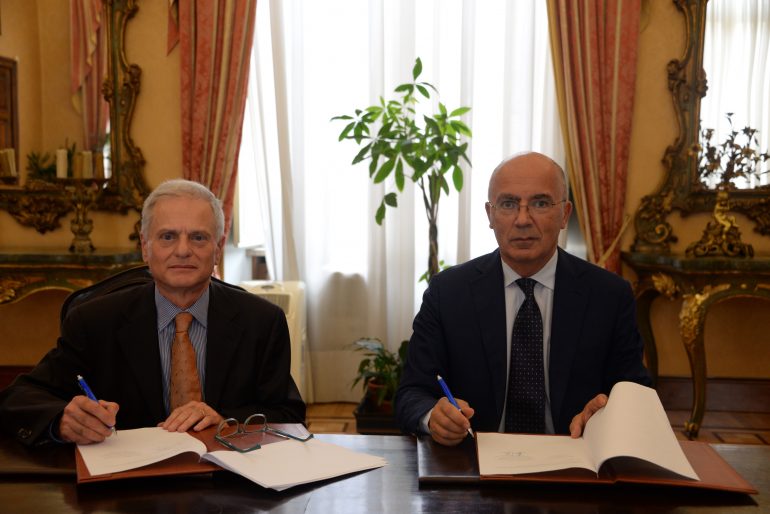
Thanks to the President of the University of Turin Prof. Gianmaria Ajani (in the picture on the right, with Mario Salomone, the WEEC Secretary General) for having hosted the WEEC network and honored our collaboration with an official agreement, signed on July 12th, 2017.
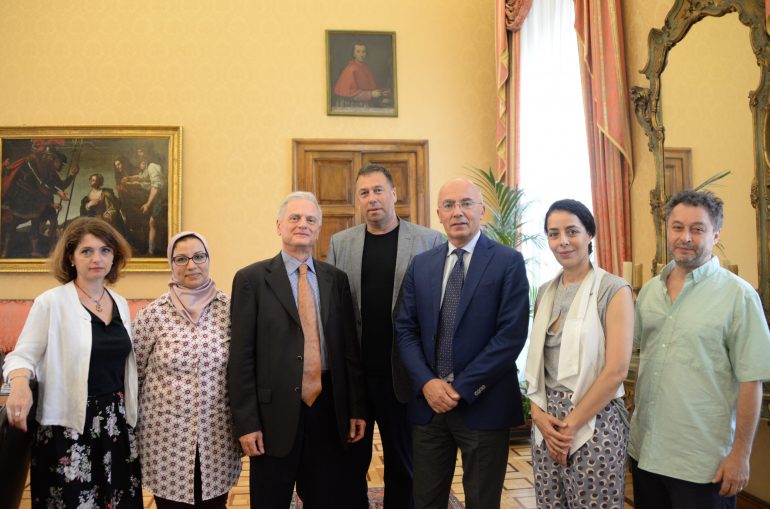
The WEEC delegation was composed by (in the picture from the left to the right): Bianca La Placa (WEEC Network, Italy) , Ihssane EL Marouani (Foundation Mohammed VI for the Environmental Protection, Morocco), Mario Salomone (WEEC Network Secretary General), David Zandvliet (Simon Fraser University, Canada) , Nouhza Alaoui (Secretary General Foundation Mohammed VI for the Environmental Protection, Morocco), Dario Padovan (Unesco Chair, University of Turin, Italy)

/in News/di /Lascia un commento

World-renowned voices, here are the plenary speakears

We are thrilled to share the list of our confirmed plenary speakers. Join us during WEEC 2017 to hear these world-renowned voices.

Saturday, September 9, 15:00 – 16:30
Dr. Jeannette Armstrong
University of British Columbia, Canada


Sunday, September 10, 10:30 – 12:00
Guujaaw
Council of the Haida Nation, Canada


Sunday, September 10, 15:00 – 16:30
Prof. Wade Davis
University of British Columbia, Canada


Tuesday, September 12, 10:30 – 12:00
Elizabeth May, OC MP
Green Party of Canada, Canada


Tuesday, September 12, 15:00 – 16:30
Dr. Tara Cullis
The David Suzuki Foundation, Canada


Wednesday, September 13, 08:30 – 10:00
Dr. David Suzuki
The David Suzuki Foundation, Canada


For their full biographies, please visit the congress website.

/in News/di /4 commenti

Call for interest to host the 11th WEEC Congress

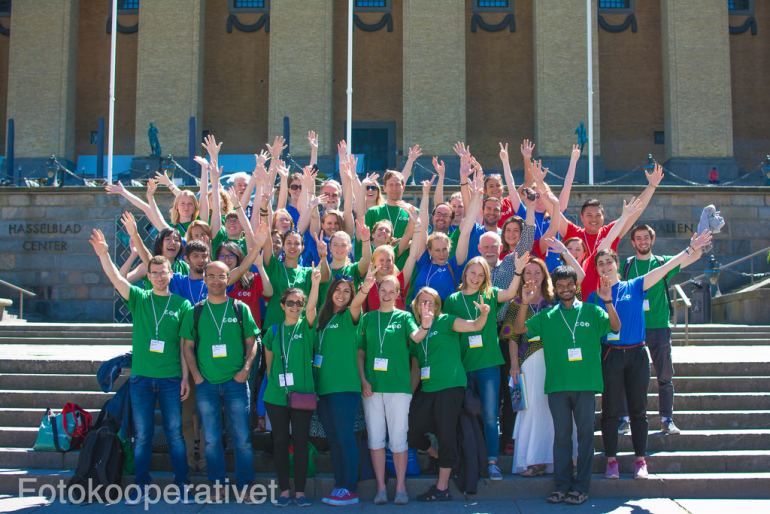
Volunteers 8WEEC, Sweden 2015. Photos by: Saman Nazari, Fotokooperativet

Are you interested to host the next WEEC Congress in 2021?
The World Environment Education Congress is a permanent meeting point for EE actors to share knowledge, contact and best practices. Since 2003, each two years, the WEEC Permanent Secretariat, in collaboration with local partner, organizes congress which attracts thousands of people worldwide.
The pillars of the congress are embedded in the tradition of the WEECs and in the characteristics of the environmental education whose success depends on its inclusive, cross-sectorial and multicultural approach.
You are invited to join the next congress in Vancouver (BC, Canada) from 9th to 15thSeptember 2017 and take the opportunity to meet the International Secretariat.

For detailed information please write to secretariat@weecnetwork.staging.19.coop

/in News/di /1 commento

Towards a “World Environmental Education Council”

Millions of people and organizations work every day to spread awareness, to increase the knowledge of citizens and their awareness of the environmental challenges of the twenty-first century, to help the changing of individual and collective behavior.
The conferences are the place where all disciplines meet, where each role gives its contribution (educators, journalists, science communicators, researchers, public administrators, etc.), Where the views are compared freely and possibly come together to contribute to the common good.
No matter how each calls this education; environmental, sustainable development, global citizenship, ecological transition …
It’s important to have all the same objectives for the building a greener society, livable, ecological, more in harmony with nature and more in tune with the balance and the limits of the Earth planet.
That’s why the world’s environmental education conference are also the place to build a “World Environmental Education Council”.

/in News, Press/di /Lascia un commento

Call for abstracts for 9th Weec

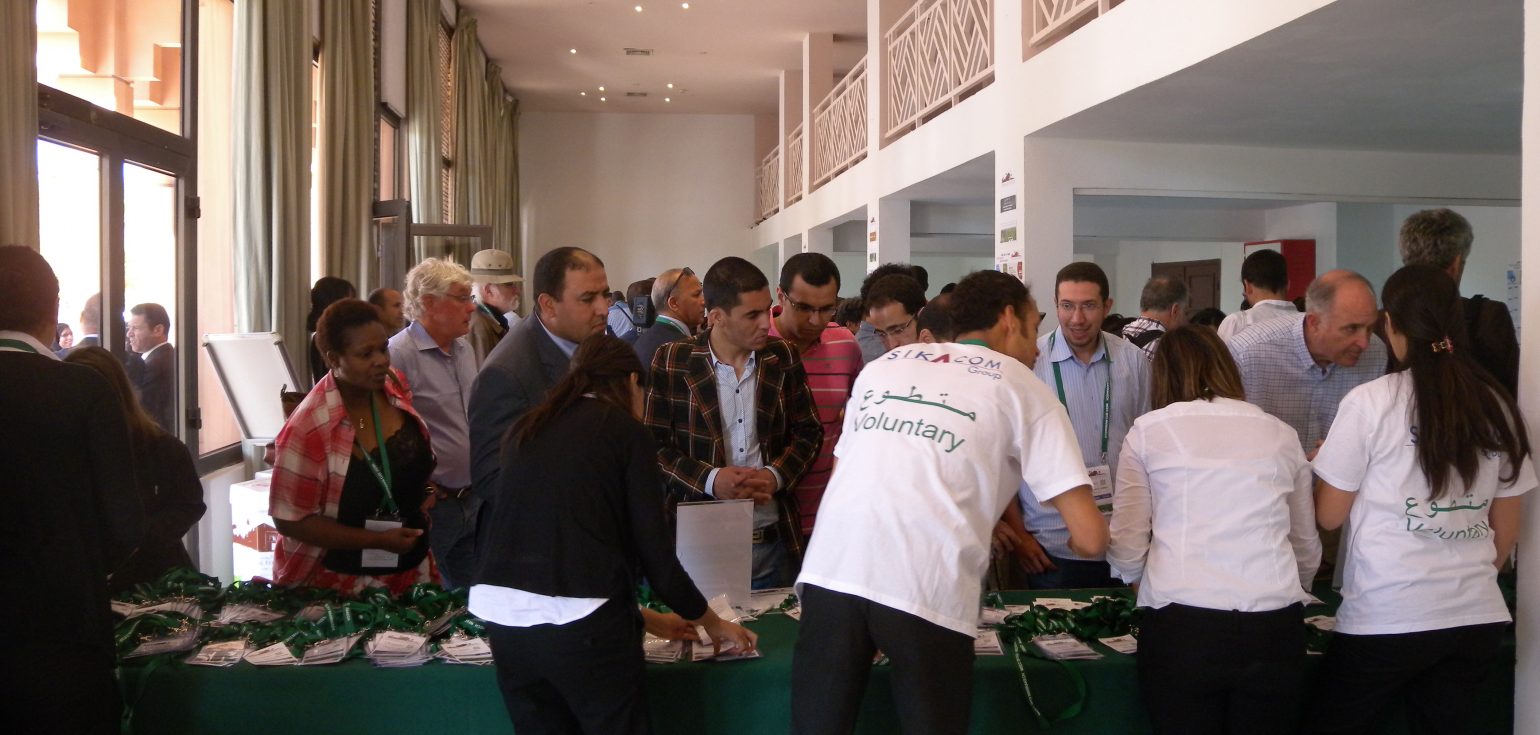
7th WEEC, Marrakech (Morocco) Registration desk

7th WEEC, Marrakech (Morocco) Registration desk

The 9th WEEC (World Environmental Education Congress) will be held in Vancouver, Canada, September 9-15, 2017. The title of the Congress is CulturEnvironment: Weaving new connections. The Organizing Committee for the congress is BC’s Institute for Environmental Learning (IEL) in cooperation with the WEEC Permanent Secretariat.

The deadline for submitting abstracts is March 31st, 2017.

The organizing committee in 2017 will embrace different approaches in both the conceptualization and implementation of EE worldwide.
The theme Culture/Environment focuses on the multidisciplinarity nature of the congress and a developing view that Culture and Environment are inseperable and may even arise from within each other. Such a theme of environmentalism underscores a need to abandon notions that everything is measurable or under human control. The real paradigm of environmental thinking is uncertainty in the ways forward vs. the idea that ‘progress’ is unavoidable. Cultural change is also the necessary condition/requirement to rebuild and reinvent our relation with nature and live sustainably. Therefore, with this call for papers we promote NETWORK/ACTION/COALITION.
WEEC 2017 (Vancouver) will be a congress of Cutural and Environmental mobilization.

/in News/di /Lascia un commento

COP 22, the Youth Appeal

During the Education Thematic Day at the COP 22, November 14th, the representatives of the Young Reporters for the Environment (JRE) launched a Youth Appeal. This appeal read by Aicha Oujidi JRE from Morocco and Melvin Lie Morris JRE from Kenya contains nine recommendations discussed and agreed by JREs from 11 different countries (Morocco, Kenya, Ghana, South Africa, Uganda, Tanzania, Portugal, Canada, Romania, Kazakhstan and Malta), which the Foundation held on 13 and 14 November in Marrakech on the theme of reducing the ecological footprint. One of the nine recommendations was retained by YONGO, which committed to bringing it up to the UNFCCC level.

Piloted by the Mohammed VI Foundation for the Protection of the Environment, the Young Reporters for Environment (JRE) is present in 30 countries belonging to the Foundation for Environmental Education (FEE) In Morocco participated 22,000 high school students, 174 of which were prize-winners in the national competition and 24 in the international competition. These pupils were accompanied by 8300 supervisors.