The third edition of the World Environmental Education Day took place from 14 to 26 October 2020. The Weec Network invited all the stakeholders of the environmental education to join the World Environmental Education Day organising special events to highlight the importance of environmental educational actions all over the world.
The aim of EE Day is to focus on the complexity of the challenges in a world where everything is ever more interconnected. Several associations, environmental education centres, schools and institutions sent us information about their events in 2020. We would like to thank all those who wanted to promote environmental education this year, despite the pandemic.
Here we present a selection of interesting case histories.
Bénin
Cercle de Recherche pour l’Identification et la Promotion des Alternatives du Développement Durable (CRIPADD)
CRIPADD is convinced that an environmental education program for children is essential to raise environmental awareness. It is with this in mind that they initiated an animation campaign for the benefit of schoolchildren at the public primary school of Hio. It will focus on environmental themes drawn from their environment.
This initiative was set up after the momentous decision to ban mangrove cutting in Avlékété, an area of impressive biodiversity, but overexploited. However, the decision of environmental protection is putting many families in economic difficulty.
Bhutan
Royal Education Council
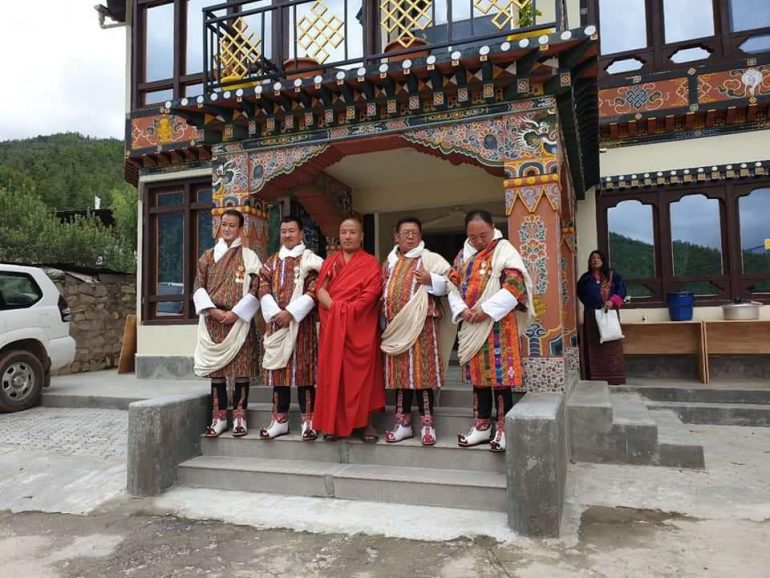 Environmental education is one of the national priorities towards achieving the goals of Gross National Happiness. To this effect, Environmental Science for classes 9 to 12 was introduced as optional subject with the aim of developing youths who are in peace and harmony with the tangible and intangible environment. As a consequence, nature is used sustainably for the wellbeing of people and the nature.
Canada
International Francophonie (Francophonie internationale)
Revue Éducation relative à l’environnement
The Revue Éducation relative à l’environnement, part of the Université du Québec à Montréal (UQAM), has set up a Google discussion group (mailing list) concerning the field of Environmental Education. In this group, members can exchange information (announcements of colloquia, seminars or webinars; publications; call for contributions for an event; call for publication; links to a website or webpage, etc.), ask subscribers research questions on the subject of the list, help other subscribers by answering the questions asked, receive information… as long as it is in the field of Environmental Education. The language used by this group is French. This list is moderated and you will have the possibility to unsubscribe at any time.
To be a member of this group, send an email at revue.ere@uqam.ca
Chile
Fundación Cosmos
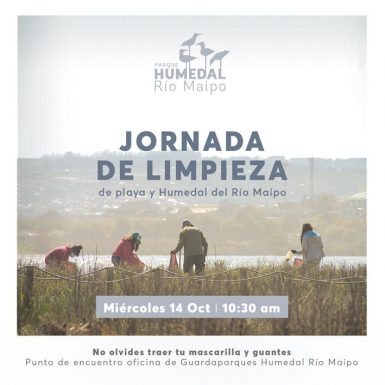 Fundación Cosmos manages the Rio Maipo Wetland Nature Sanctuary located on the central coast of Chile. This is one of the most important coastal wetlands in the area, both because it is home to more than 180 species of birds, and because of the environmental services it provides to local communities and the ecosystem in general. However, it is not free from threats and factors that deteriorate it and affect its biodiversity, such as the presence and accumulation of rubbish that reaches it through high tides or the flooding of the Maipo River. To commemorate World Environmental Education Day, they have organised a community rubbish clean-up, which is more important than ever, given the arrival of migratory birds in the wetland. Through the clean-up, the Fudación generates awareness about the origin of the rubbish and the possible destiny of the waste that we all produce, encouraging a change in behaviour with respect to it.
France
Association Centre de découverte du son
The Association Centre de découverte du son will organize a nature outing: “Sons Buissonniers”. Walks will be organised in search of musical instruments that nature can offer. Magical moments where a blade of grass turns into a whistle, fruit into percussion. Then pupils will discover how to manipulate and have fun with these sound objects.
France
Litt’Obs
Litt’Obs will organise an educational discovery of rays and sharks with a school public as part of the Festival Baie des Sciences in St-Brieuc, on 14th of October.
Italy
Department of Education Studies at University of Bologna
An informal group of professor and students engaged on environmental education is organizing a web event (in Italian) addressed to students of the Department of Education Studies at University of Bologna, on the 16 October, 11 am-1 pm.
Title: Educazione ambientale, scuola, Indicazioni Nazionali (Environmental education, school and National Guide-lines), relator Prof. Stefano Piastra.
Italy
“MAREARTE” Project, travelling exhibition
The “MareArte” project was born from an idea of the artist Diego Racconi as a collective of small paintings by international artists, received through the postal system. The theme of the works develops on the relationship between Man and the Sea, transforming art into a valid tool of awareness, through which to send a message to the community, stimulating virtuous behaviour and raising awareness of respect for the environment. The large participation of the artists with their personal postcards led to the development of the initiative by organizing a traveling collective exhibition, in which some specific works created by the artist Diego Racconi are also presented for a charity action in support of reality. that deal with the recovery of marine animals. The exhibition is structured and proposed thanks to the collaboration of various institutional bodies involving them for the promotion of the initiative in their own territory and is sent through the postal system from location to location in the various destinations, through a tour and a travel route using the postal system. The initiative focuses on environmental sustainability issues and for this reason the invitation to participate in the initiative is also extended to children, precisely to involve the new generations on ecological environmental issues and sustainability objectives. All the works received will be collected at the end of the exhibition in an artist’s book and will therefore not be returned. The Exibition is now hosted at the Museo Barca Lariana (MBL) – Pianello del Lario, Como, Italy
Madagascar
Institute of People and Nature (IPN)
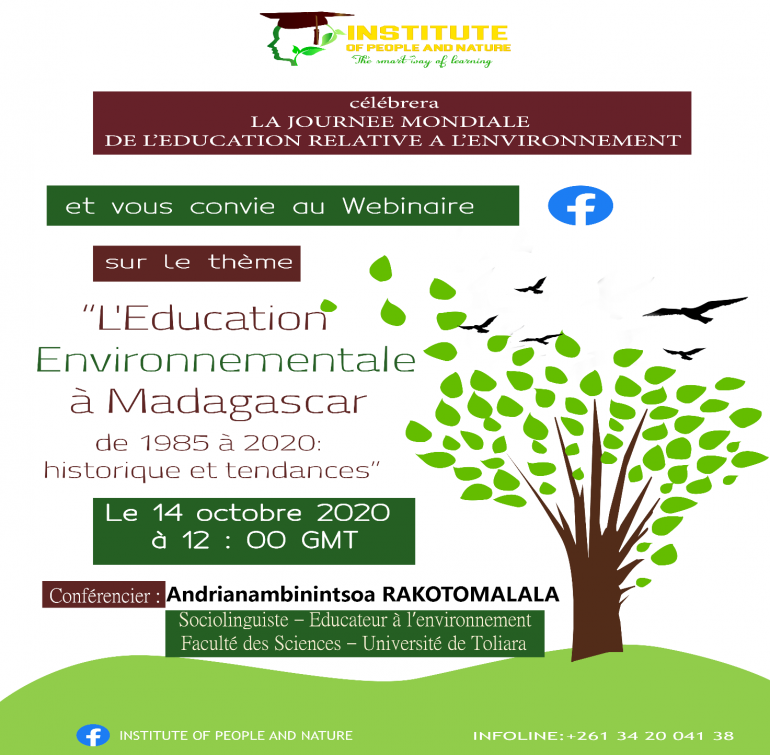 The Institute of People and Nature (IPN) will take part at the celebration of the World Environmental Education Day with a webinar on “Environmental Education in Madagascar from 1985 to 2020: background and trends”. The main objective is to inform the audience about the EE actions taken in Madagascar Island since the start in 1985, their impacts and current trends. The target groups are: Members of IPN group (217 members from Malagasy public and private Universities); and Environmental Education, Conservation and Sustainable Development professionals, University students worldwide interested in EE and environment-related issues in Madagascar. It will take place on 14th October at 12:00 GMT. The webinar will be conducted in French. The speaker is Andrianambinintsoa RAKOTOMALALA (Environmental Educator – Sociolinguist, Faculty of Science, University of Toliara, MADAGASCAR)
North-Macedonia
School of OOU Vlado Tasevski, Skopje
The school of OOU Vlado Tasevski will organise a Climate Action Project and Climate Change and Environment Activities on: Climate Change and biodiversity loss; the effects of climate change; the solutions; pedagogy and education; sustainable education; and SSGoals.
Turkey
SUGEP
The Sustainable Development Youth Leaders Education program will develop knowledge, skills and attitudes about sustainability. This program not only increases knowledge and awareness, but also improves skills and enables individuals to make more informed decisions about the environment.
There are a few methodologies that will create a solution-oriented project approach to many issues such as global climate change, gender equality, disruption of ecological balance, separation of biodiversity, ending hunger and poverty, sustainability cities, clean and sustainability energy, life in water. They will find knowledge to improve have academic and personal skills through organizational skills, speaking in front of the community, speaking a speech, preparing a project report.
Uruguay
National Network of Environmental Education for Sustainable Human Development of Uruguay (RENEA), Montevideo
From 5 to 7 November, a virtual meeting will set up. Experts from all over the region are invited to present their experiences and reflections on Latin American environmental education. Environmental education for sustainable human development implies an ethical, political and social commitment in a given time and space with the formation of a citizenship committed to participating democratically in decision-making and the execution of actions aimed at a socially equitable development, supportive and balanced between human needs and environmental care. In this very special year, environmental educators have faced new challenges and generated new learnings. It is more than ever a good time to meet, this time virtually, to continue the tradition of reflecting and building environmental education together.
USA
California Institute of Environmental Design and Management (CIEDM)
CIEDM will support WEED2020 by participating in the global campaign with following actions:
1. Raise public awareness of WEED2020 by spreading its campaign messages through its social medias, along with those of other environmental awareness events in and around October 14-25, such as Earth Science Week, International Day for Disaster Reduction, and Image a Day without Water;
2. Maintain and enhance through physical works the ecological and environmental services of the homestead pocket forest at Arcadia EcoHome as a registered pollinator site, a certified wildlife habitat, a certified pollinator habitat, and a verified ocean friendly garden.
We invite you to sign our campaign on Change to ask the United Nations, institutions, private and public organizations of five continents, to recognize and celebrate every year, on October 14th, the World Environmental Education Day.
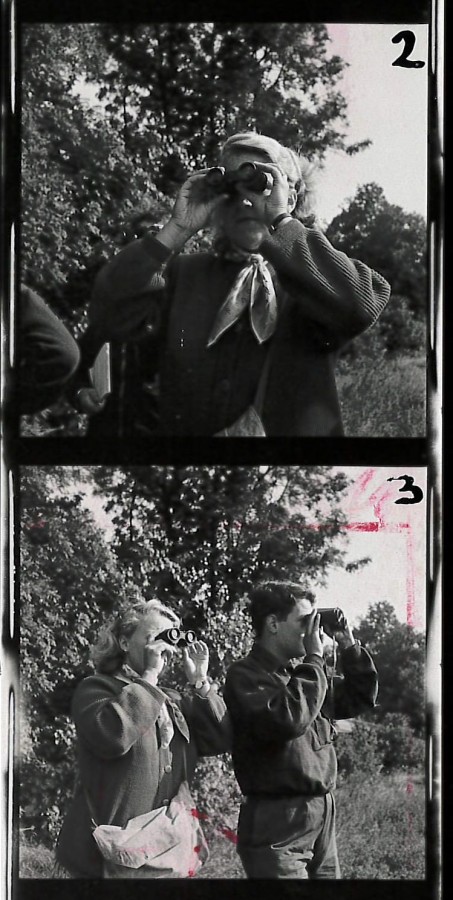 The event is conceived as the culmination of a study cycle on the theme of the history of nature-environment animation in those years. It aims to open up new avenues, to identify researchers in this field and to attempt a first synthesis of elements collected since 2016 within the framework of 6 preparatory study days.
 Cet été Nicolas Hulot le ministre de l’écologie, a démissionné du gouvernement en disant en direct à tous les français sur France inter : « …