MECCE Project announces third call for proposals for quality climate change communication and education case studies
The Monitoring and Evaluating Climate Communication and Education (MECCE) Project, a collaborative effort among over 100 prominent scholars and agencies, has unveiled its third funded case studies call for proposals. With an esteemed Advisory Committee including the likes of the IPCC, UNESCO, UNFCCC, and UNESCO Global Education Monitoring Report, MECCE aims to deepen the understanding of quality Climate Change Communication and Education (CCE) through insightful case studies.
Researchers, practitioners, and stakeholders are invited to submit their proposals until March 25th, 2024. The project seeks to fund a minimum of 10 case study research projects, offering up to CAD $10,000 per project. While all proposals will be given due consideration, this year MECCE is particularly interested in initiatives from Latin America and Eastern Europe. They are also keen on CCE initiatives focusing on public participation, public access to climate change information, and educational sectors such as pre-primary, primary, and higher education.
What is MECCE looking for?
MECCE is seeking case study proposals that delve into established quality CCE initiatives. The aim is to better understand how these initiatives contribute to the landscape of climate change education. Projects should offer clear research questions, methods, and approaches, primarily utilizing qualitative research methods.
Benefits of participation and eligibility
Participating in these case studies offers a range of benefits:
- Receive funding: Up to $10,000 CAD to conduct in-depth research on a quality CCE initiative.
- Contribute to knowledge: Help advance the understanding of quality CCE and ways to enhance CCE initiatives globally.
- Global networking: Connect with a diverse network of CCE researchers and practitioners.
- Showcase work: Display innovative CCE efforts through international platforms, including the MECCE Project’s data platform and digital library.
- Optional activities: Opportunities for joint publications, blog posts, and cross-case study analyses.
Deliverables
Successful applicants will be expected to:
- Participate in calls with the MECCE Project Office for updates and support.
- Submit a comprehensive final report detailing the case study and its findings.
- Provide a multimedia package showcasing the CCE initiative (e.g., photos, videos).
- Publish findings in academic or professional publications, and present results to target audiences.
Application process and deadlines
Proposals should be submitted through the application portal by the deadline of March 25, 2024, at 11:59 pm EST.
For more information on the MECCE Project and to view previously funded case studies, visit mecce.ca. Don’t miss this opportunity to contribute to the advancement of Climate Change Communication and Education on a global scale!
 The journal Education for the Environment: Regards – Recherches – Réflexions will host the proposals for articles from a paper presented at the World Environmental Education Congress. Recognized as a reference journal by the High Council for the Evaluation of Research and Higher Education (HCERE) in France, it is supported by the Center for Research in Education and Training related to environment and eco-citizenship (Centr’ERE of the University of Quebec in Montreal). It is also supported by the Social Sciences and Humanities Research Council of Canada (SSHRC) and the Fonds de recherche du Québec – Society and Culture (FRQSC).
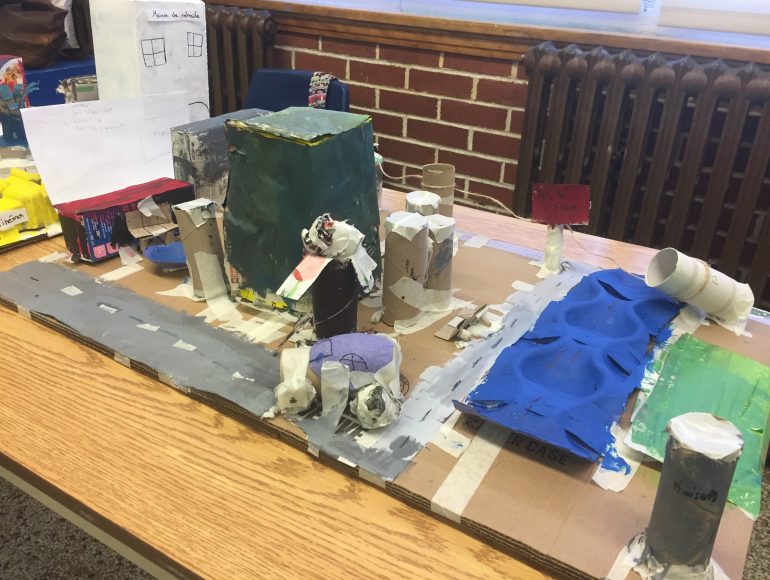 Que signifie « espace public » pour les générations futures ? Dans l’école primaire de Saint-Pierre (Montréal, Québec) deux organismes locaux qui s’occupent de macro-écologie appliquée et de revitalisation urbaine ont collaboré pour réaliser une série d’ateliers transdisciplinaires visant une meilleure connaissance et appropriation de l’espace public. L’approche utilisée a mis en valeur le programme de médiation sociale de l’Institut Pacifique, tout en conjuguant les principes de résolution pacifique des conflits avec ceux d’éducation à l’environnement. Les phases d’analyse et de planification ont permis de concentrer l’action du projet sur deux principaux enjeux socio-environnementaux : l’enclavement du quartier et la pollution visuelle et sonore. En outre, en tenant compte de l’analyse démographique du quartier la plus récente, la composante immigrée de la population, les problématiques de sous-scolarisation, des saines habitudes de vie et d’accès aux services ont été prises en considération (Revitalisation Saint-Pierre, 2017 et Centre international de prévention contre la criminalité, 2016).