UNRWA: Enhance students’ awareness towards environment
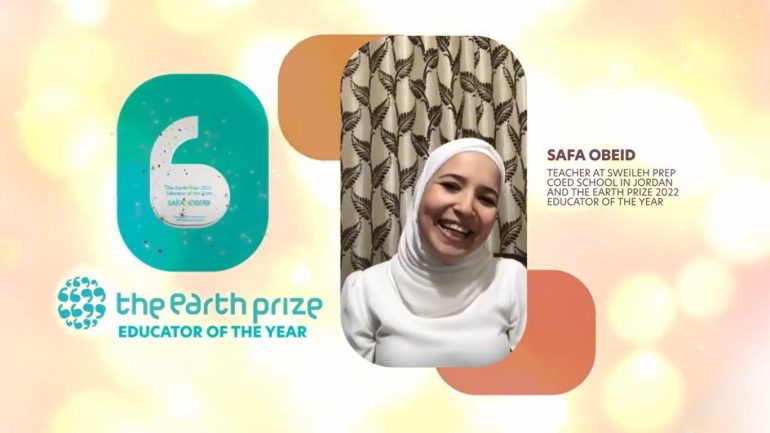 For the World Health Day, UNRWA celebrates Ms. Obeid, named the 2022 Earth Prize Educator of the Year. Ms Obeid, a teacher at the UNRWA Sweileh Preparatory Girls’ School in Jordan, was selected by the WEEC’s Secretary General Professor Mario Salomone.
Dr Oroba Labadi, Chief pf the UNRWA Field Education Program, underlines the importance of raising students’ awareness towards global environmental causes, “which is not limited to provide basic education but also in enhancing their knowledge, skills and build positive trends towards global environmental causes”.
Indeed, what encouraged Ms Obeid to take part in the competition together with her students was her belief that Palestine refugee students can participate in international competitions and affect change in both local and international communities.
”This award shows the impact of the professional in-service trainings that UNRWA regularly provides to us.” Ms Obeid Said.
UNRWA and SDG 13 – Climate Action
Across its fields of operation, the UNRWA plays a key role in addressing environmental protection issues within the Palestine refugee community and has an obligation to minimize the negative environmental impact of its own operations. In addition, the Agency is prioritizing a range of environmental protection efforts that include for instance the installation of energy saving equipment, such as solar panels, water heaters and LED fittings, in a number of schools, health centres and other installations, as well as safe disposal of medical waste.
Measures to protect water resources and improve environmental health in Palestine refugee camps are also being undertaken including the development of an integrated solid waste management system that will serve all Palestine refugee camps in Lebanon and the installation of solar power systems in 80 schools and six health clinics in Gaza.
The Agency is also exploring current environmental behaviours and teaching practices in its schools and classrooms in order to see how to strengthen and build upon these practices in a coordinated and coherent way. Developing capacity of Palestine refugee youth in the design, manufacture and servicing of renewable energy technology and energy efficiency devices is important for job creation and stimulating the green economy. UNRWA has recently introduced courses on energy efficiency at its vocational training centres in Gaza and will look to expand these to other fields based on lessons learned.
About UNRWA
Following the 1948 Arab-Israeli conflict, UNRWA was established by United Nations General Assembly Resolution 302 (IV) of 8 December 1949 to carry out direct relief and works programmes for Palestine refugees. The Agency began operations on 1 May 1950.
In the absence of a solution to the Palestine refugee problem, the General Assembly has repeatedly renewed UNRWA’s mandate, most recently extending it until 30 June 2023
The United Nations Relief and Works Agency for Palestine Refugees (UNRWA) is funded almost entirely by voluntary contributions from UN Member States. UNRWA also receives some funding from the Regular Budget of the United Nations, which is used mostly for international staffing costs.
The Agency’s services encompass education, health care, relief and social services, camp infrastructure and improvement, microfinance and emergency assistance, including in times of armed conflict.
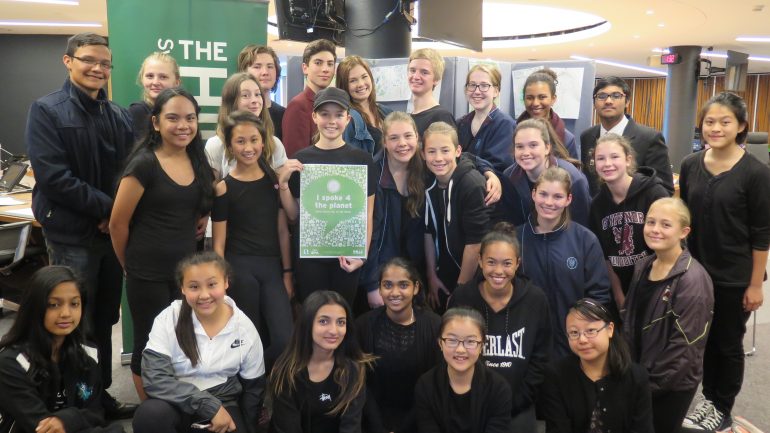 Speaking for the Planet is an international Arts-based competition for high school students. These events have World Environment Day themes and the Sustainability Development Goals as their focus. The competition categories are speaking, drama,art, video-making and writing.
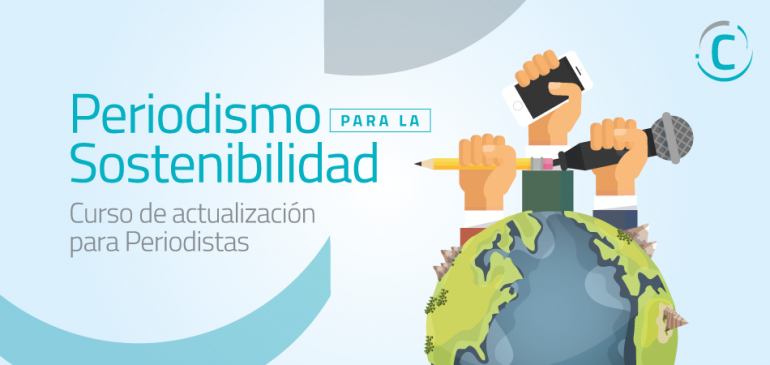 The Journalism Update Course for Sustainability is organised by CapacitaRSE – a pioneering center for teaching sustainability in Latin America – with the experience of 30 journalists or communicators (bloggers, podcasters or others) active in the field in the Spanish-speaking world.
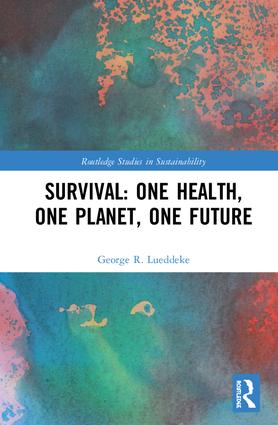 This book highlights two of our greatest social problems: changing the way we relate to the planet and to one another, and confronting how we use technology for the benefit of both humankind and the planet.
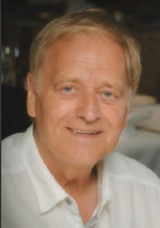 George R. Lueddeke MEd PhD is an educational advisor in higher and medical education and chairs the global One Health Education Task Force for the One Health Commission and the One Health Initiative. He has published widely on educational transformation, innovation and leadership and been invited as a plenary speaker to different corners of the world.
 It is possible now to enroll in the open, online course (or MOOC) entitled