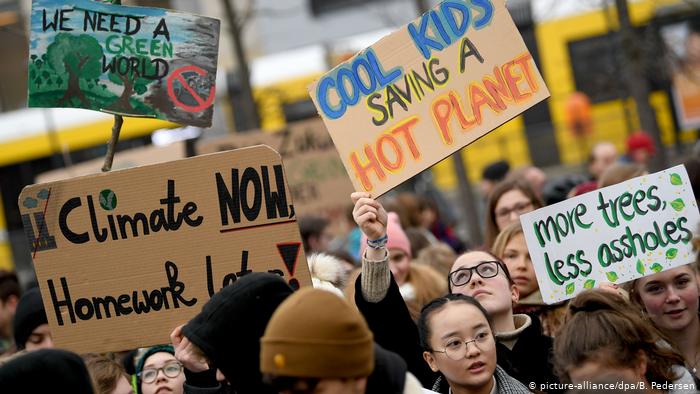
 Tous nos points de repères sont entrain d’être chamboulés. Nous ne devons plus chercher à regarder le vieux sage pour trouver la voie, il faut au contraire chercher la jeune écolière en grève assise seule dans le froid. Nous ne devons plus chercher les princes, s’il n’y en a déjà eu, il n’y en a plus, c’est dans les classes moyennes que se trouvent celles et ceux qui nous sauvent.
La vie est ailleurs et l’humanité aussi
Toutes et tous nous connaissons Greta maintenant, il suffit de dire Greta c’est bon, on sait de qui et de quoi il est question. Elle a 16 ans, il y a aussi Alexandria aux Etats unis, elle a 13 ans et il y en a aussi une dans le Colorado c’est Haven 12 ans, des jeunes filles qui coordonnent les actions pour le climat il y en a en Belgique, en Allemagne, en Australie… Ce sont encore des enfants, pas tout à fait des jeunes pour certaines. Elles sont déterminées, n’ont rien à perdre, elles savent intuitivement sans doute que les 40-70 ans qui mènent le monde se sont totalement fourvoyés, qu’ils mentent et qu’il ne faut surtout pas les suivre. Pour une raison simple, la vie est ailleurs et en conséquence l’humanité aussi.
Les pauvres, ne peuvent rien
Quand on regarde la carte des manifestions du 15 mars dans le monde on s’aperçoit qu’elles ont lieu dans les pays ayant les classes moyennes les plus développées, vivant dans les pays les plus libres. Bien peu de manifs dans les pays émergents où les populations dans leur grande majorité doivent se battre au quotidien pour leur survie. – le paysan qui doit tous les jours cultiver son riz pour nourrir sa famille ne peut pas s’occuper des affaires de la cité – dit le sage. Aujourd’hui il ne s’agit pas des affaires d’une ville particulière, il s’agit des affaires de la planète. Les plus de 7,5 milliards d’humains sur la planète sont concernés. Notre survie dépend de l’action de chacune et chacun d’eux. Nous avons besoin de tout le monde pour nous en sortir, pas un(e) dont la présence active pour la transition serait inutile. Les pauvres quand ils seront moins pauvres s’associeront à la lutte pour le climat.
Les riches ne peuvent rien
Aussi évident que les pauvres ne peuvent rien, les riches ne peuvent rien. S’ils pouvaient quelque chose ils l’auraient déjà montré. Ils ont toutes les manettes, les riches. Ils ont la presse dans des proportions insensées, en particulier en France, ils ont tous les leviers économiques en mains, ils ont le pouvoir politique pratiquement partout. Cela fait 60 ans et même plus qu’ils savent qu’il y a un problème avec l’environnement et ils ne font rien. C’est juste qu’ils ne peuvent rien faire. Pourquoi ? Il faudrait leur demander. Vu de notre fenêtre de la classe moyenne on peut penser que leur arrogance les aveugle. Ils se prennent pour des dieux comme dit Nicolas Hulot riche lui-même, il sait de quoi il parle. Les riches quand ils seront moins riche retrouveront la communauté et le sens des responsabilités.
Développer les classes moyennes pour sauver l’humanité
Il reste les classes moyennes. Ces classes moyennes, menacées d’érosion un peu plus chaque année par le bas il y a des milliards de pauvres dans le monde, 8 millions rien que en France, chiffre en constante augmentation, 600 000 de plus en 10 ans de 2006 à 2016. Les classes moyennes qui ne sont pas nourries par le haut, des riches tous les ans de plus en plus riches. De plus en plus de très riches, autant dire de plus en plus d’irresponsables qui se vivent hors communauté. C’est là dans ces classes moyennes que se trouvent celles et ceux qui se mettent debout pour le climat. Des personnes instruites ayant le sens des responsabilités, dotées d’un esprit critique développé, aptes à prendre des initiatives. Ce sont ces classes moyennes qui doivent augmenter dans le monde, ce sont elles qui peuvent nous sauver. En augmentant de façon très importante l’éducation à la transition pour toutes et tous tout au long de la vie.
Les vieux ne peuvent rien
Ce sont les plus âgés d’entre nous qui nous ont mis dans cette situation. Par avidité comme Gandhi l’a dit : « Il y a assez de tout dans le monde pour satisfaire aux besoins de l’homme, mais pas assez pour assouvir son avidité », par manque d’esprit critique et là on pense aux paysans qui se laissent embobinés par les marchands de produits phytosanitaires vendus par les coopératives et à tant d’autres qui achètent un tas de produits inutiles et souvent néfastes pour la santé, ravage de la publicité. Les vieux sont dans l’erreur par manque de culture écologique. Certaines et certains d’entre nous avaient un cours d’écologie en première et terminale au tout début des années 70, cela n’a pas été généralisé par les institutions éducatives. Les vieux peuvent faire leur examen de conscience et se mettre au service des jeunes. Durant nos vies pendant 30 ans on rêve, de 30 à 60 on tente de réaliser nos rêves et de 60 à 90 on aide les jeunes à réaliser leurs rêves. Quoi d’autre ?
Les hommes ne peuvent rien
Ce sont des femmes. Il y a les jeunes femmes certes et les très jeunes, elles sont sur la scène mais il y a aussi les plus grandes qui sont plus en coulisses. Sylvie qui plante une forêt avec ses élèves du primaire, Sophie qui met tout son collège en débat sur le climat, Lucie qui se met en grève de l’école posant la question du sens du métier d’enseignant et les leaders d’enseignant.e.s pour la planète, encore des femmes. Peut-être que les hommes ont moins de courage aujourd’hui, peut-être que les manettes dont ils ont encore le contrôle commencent à leur brûler les mains. Ils ne savent plus qu’en faire, ils doutent. Elles, elles sont appelées par la vie. Elles nous emmènent vers la vie.
L’émergence d’une citoyenne planétaire
« Selon les organisateurs de ce mouvement baptisé « Fridays for Future », plus d’un million d’étudiants, de lycéens et de collégiens ont défilé dans 2 000 villes de 125 pays, un record. » dit le Monde du 16 mars. Ailleurs il dit « 168 000 jeunes ont défilé vendredi dans plus de 200 villes en France ». A écouter les jeunes dans les rues de Montpellier le 15 mars, à sentir leur énergie et leur détermination, à entendre la force de la clameur qui sortait de leurs poitrines on se prend à retrouver une sorte d’espérance. Elles et ils sont entrain de faire émerger la citoyenne planétaire. Ce ne serait pas juste de la mettre au masculin, tant, en ces jours sombres, nous devons aux femmes.
Roland Gérard

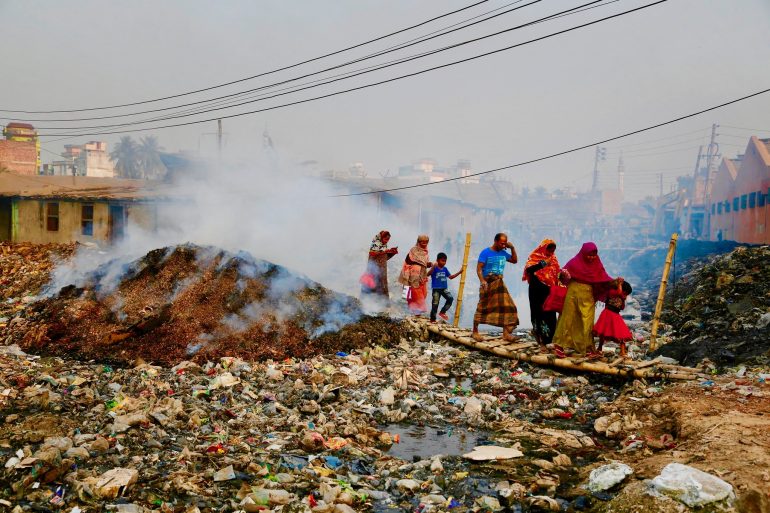 The anthropogenic transformations of ecosystems called Anthropocene is forcing scientists to recognize not only the inextricable interfusion of nature and human society (Malm and Hornborg, 2014), but also the fact that it is becoming a perfect marker and multiplier of differences and inequalities. The appropriation of nature under current capitalism conditions, which is at the core of the current geological troubles, is entailing some correlated processes such as the intensification of the processes of labour’s exploitation, the dispossession of peasants’ lands, the indiscriminate extraction of raw materials, and the racialization of all these processes (With the notion of racialization, we mean the process by which different groups or clusters of people are discriminated in some way because of their natural characters – skin color, gender, age – or of cultural features that are naturalized and crystallized – religion, language, dressing).
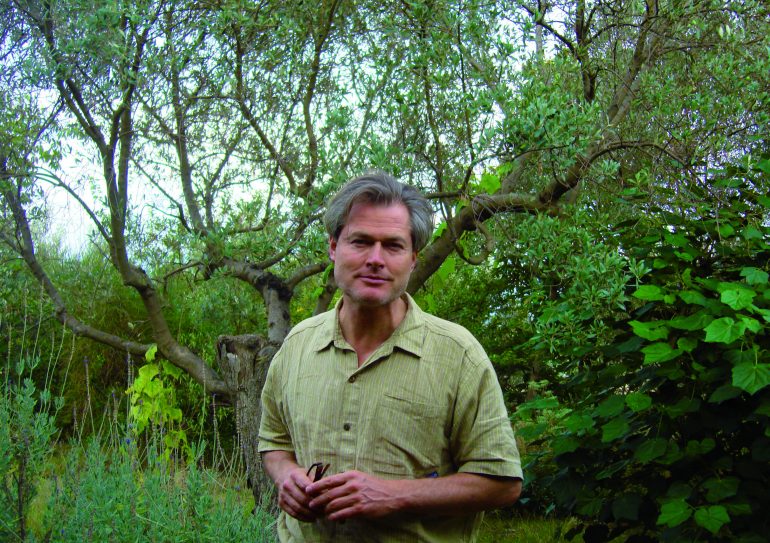 Vsiting lecturer and professor at universities in all continents, Member of the Board of NGOs and private companies in Asia, USA and Latin America Gunter Pauli is once again key note speaker at WEEC.
 Samira Benabdallah (in the picture) biologist (microbiologist) for 20 years in the field of the water environment, is the Director of the Center for Environmental Education (CEE) of the Mohammed VI Foundation for the Protection of the Environmentof (Morocco). Her goal is the protection and preservation of water quality. At the same time, she works extensively in the field of environmental protection at the Mohammed VI Foundation for the Protection of the Environment chaired by Her Royal Highness Princess Lalla Hasnaa.
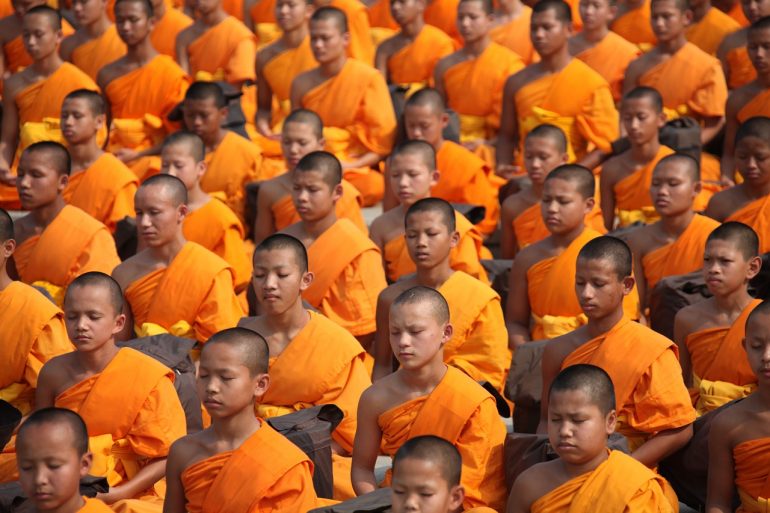 Our approach to the WEEC Congress in Bangkok continues with a taste of one of the main components of Thai culture and tradition: religion, or – better to say – the various forms of religious belief. There is a composite reality. Even if more than 90 percent declare themselves “Buddhist Theravada“, there are still residues of the previous cults in the various regions that make up the State which, with the Thais of the Muslim and Catholic religion (just over 6 per cent) go to compose a reality that often mixes religious and civil practices.
 You will be able to learn more about the latest in environmental education and education for sustainable development and discuss different issues. Participating in the NGO Forum gives you a chance to get valuable feedback that can further improve your work, establish new connections, as well as attract potential donors.
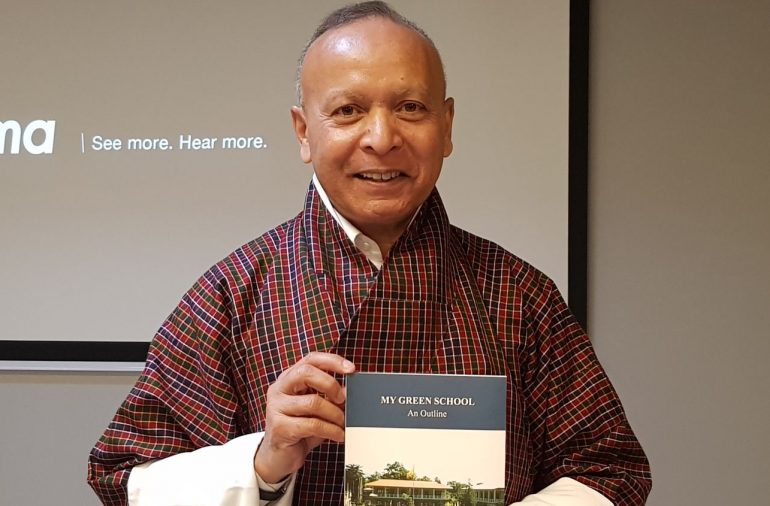 The WEEC Permanent Secretariat is proud to announce that Mr. Lyonpo Thakur S Powdyel (former Minister of Education in Bhutan) will be a key note speaker at 10th WEEC (Bangkok, Thailand, 3-7 November 2019)
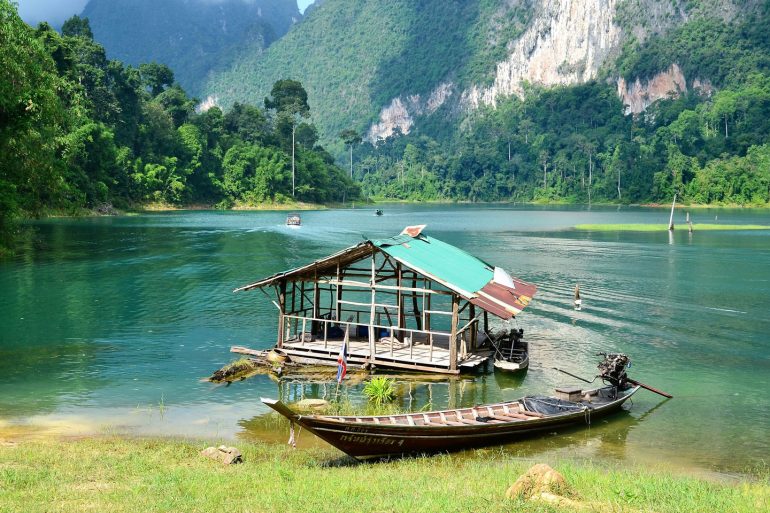 The Thai laws of 2002 and 2006 for the protection of the forest heritage as well as those for the protection of the most valuable areas, have allowed the slowing down of a process of progressive elimination of the forest component. At the beginning of 1900, 70% of the territory of Thailand was covered with forests, with fine mahogany trees, various types of walnut, oak and beech trees, as well as different types of pines. Gradually this natural “green lung” decreased to a skimpy 25% of the total around 2000. Since then there has been a vigorous swerve that led to the current stabilization, with a consolidated “green” presence of around 35% of the territory. Especially with many new areas for special protection or, in some cases, integral.
 A great tragedy has hit the world of environmentalism. The Ethiopian Airlines aircraft crashed yesterday after take-off near Addis Ababa, caused the death of 157 people who were on board, including passengers and crew members.