 Last days of 2018, this is the time to look back at what has been done, as the first edition of the World Environmental Education Day, held from 14 to 26 October. But it is also the moment to look ahead, and start thinking about the next edition, in October 2019. It is already available the logo of the World EE Day 2019. Schools, parks, environmental education centers, public institutions, associations, museums are invited to join the World Environmental Education Day organising special events to highlight the importance of environemtal educational actions all over the world.
The World EE Day wants to focus on the complexity of the challenges in a world where everything is ever more interconnected.
Ask us the logo and share with us your contents from the World EE Day 2018. Send us reports, photos, videos… and we will share it on the Weec Network.
Several associations, universities, parks and institutions sent us information about their events in 2018. We already presented a selection of interesting case histories in this article.
Now we propose a new group of exemples.
In Izmir, Turkey, the Permaculture Park for young children presents its activities: «Our first aim is to create ‘Permaculture Park’ for young children who are kindergarden students, elementary school students, high school students and disabled students in Izmir, will learn system of agricultural and social design principals and they will practice by gardening, by growing plants in our Permaculture Park. The other aim is to create our own organic compost which includes recycled material including decayed vegetables, fruit, grass clippings and organic waste in Izmir (in Kültürpark, Izmir Fair area). Therefore, we will reduce the rate of trash which goes into landfill area. Next step is to make mulch composting. Finally, we will get on our own organic soil. Then we will organize some workshop activities and invite some people who are interested in permaculture activities. To sum up, we want to give them an opportunity to emphasize the goal of sustainable agriculture and to be environmentally conscious. And every young child or teenager will ‘touch the soil’».
In Iran the UNESCO Chair on Environmental Education presented the “Coordination meeting of specialized workgroups of UNESCO Chair on Environmental Education in Islamic Republic of Iran for establishment of national online environmental education network”. UNESCO Chair on Environmental Education in Islamic Republic of Iran seeks to pursue the following objectives through research, educational and cultural approach:
– Enhancement of national and international status of environmental education through Communicating between academics, local and civil communities, decision-makers and researchers to create innovative ways of education and sharing information and knowledge regarding Environmental Education,
– Development and promotion of environmental culture
– Enhancement of the public participation in environment protection
– Promotion of environmental literacy in form awareness raising, change of attitude and environmental behaviors of citizens.
– Promotion of Islamic-Iranian approach in the field of environmental education
In October 2018, UNESCO Chair on Environmental Education in Islamic Republic of Iran held several meetings regarding running national online environmental education network with participation of different educational workgroups of the chair such as waste management, climate change, HSEE, carbon management, green business, participatory environmental protection, green management, religions and environmental education, women and environmental education, environmental education through toys and games, energy and environmental education, environmental pollutions, water management, citizenship and environmental education, Startup and innovative ideas regarding environmental education and ecotourism. In these meetings determined all mentioned workgroups should:
- Identify various audiences, needs and expectations of learners, developing learning goals and objectives, identifying instructional strategies, creating educational contents, implementing and evaluating the impact of their training and educational activities.
-Collaboration with national and international institutions, specialized research and development organizations, NGOs and environmental researchers.
-Publication of scientific articles, books, newsletters and providing electronic content. -Presentation of educational and research projects based on demand and supply in various environmental topics.
-Holding lectures, seminars and conferences on environmental education.
-Providing encyclopedia in environmental education
-Establishment of exhibitions, festivals and environmental events related to the activities of national environmental education network.
The UNESCO Chair on Environmental Education in Iran also held a Specialized Meeting on the role of social networking to improve environmental education regarding green small business, a meeting with the participation and collaboration of members of Amirabad neighborhood sub-council entitled “the role of social networking to improve environmental education regarding green small business” in October 2018.
At first, the benefits of eco-friendly local businesses were mentioned. A green small business is one which takes measures to provide family-supporting profits and benefits, also reduce its impact on the environment and preserves or enhances environmental quality. Green businesses may be committed to environmental and social initiatives, such as the use of renewable energy sources and energy-efficiency measures; the reduction of greenhouse gases emissions and other environmental pollutants; the conservation of natural resources and energy; reduction of material usage in order to enhance recyclability and reusability through green marketing such as implementing a green supply chain, green products design, packaging, pricing and promotion are benefits to society and the environment.
Local homogeneous groups in different areas of green small business were formed in the next step. Their educational needs recognized as follows:
- Family typology: Psychology topics, needs, etc.
- Individual resilience: flexibility, compatibility, collaboration, understanding risk, problem solving, etc.
- Community resilience: social connectedness for resource exchange, cohesion, response, and recovery, social and economic well-being of the community, effective risk communication, integration and involvement with different entities, etc.
- Green marketing: such as green product, green price, eco-labels that has economic impact on local economy with emphasis on low-energy solutions, sustainable products, non-toxic ingredients, low waste (or emissions), chemical free, recycled materials.
- Specialized training in various fields: organic food, eco-friendly toy seller, organic gift shop, eco-friendly beauty and health productions, financially and ecologically sustainable alternative for waste sorting and reusing, green store, etc.
Finally, UNESCO Chair on Environmental Education in Islamic Republic of Iran announced its readiness to hold a series of training sessions on the above subjects.
In Portugal the Instituto Nacional de Investigação Agrária e Veterinária, I. P. (INIAV), in cooperation with an Oeiras School organized a visit to the Pecan tree collection – Carya illinoinensis (Wangenh) K. Koch, located at INIAV Campus in Oeiras (Portugal). During the visit 18 pupils of 8th level, 2 teachers and 1 researcher participated in outdoor environmental activities that highlighted some aspects of this plant bio-geography and its value for agriculture as a nut tree.
In Spain the Faculty of Educational Sciences of the University of A Coruña (Galicia, Spain) was carrying out during this week and on the occasion of the World Day of Environmental Education activities of cleaning and categorization of waste, both inside the Faculty and in the exterior, with the participation of students and teachers.
The Manifesto World Day of Environmental Education was also posted on the Faculty’s website and on the Instagram of the environment, insisting on the need to continue throughout the course developing activities that allow action to make the Faculty and the campus more sustainable.

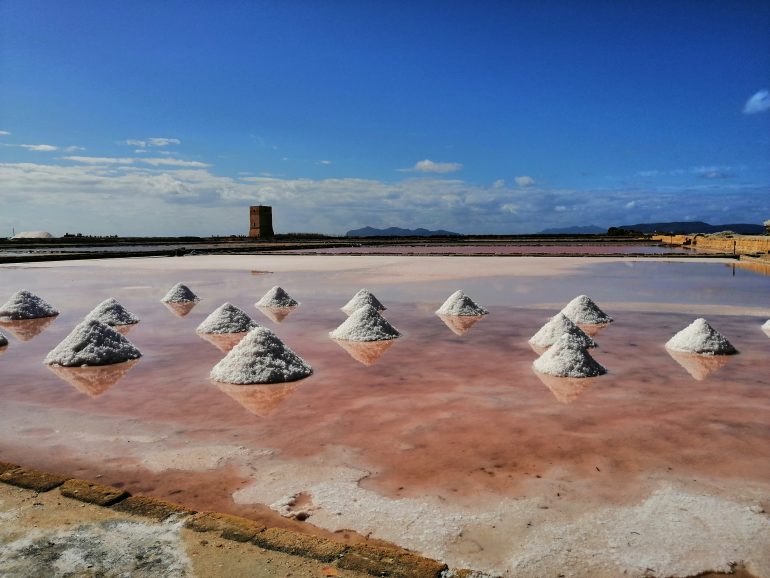 Ready, set, go! MedArtSal kick is a project to promote sustainable management of artisanal salinas in the Mediterranean. The eight partners of the project
 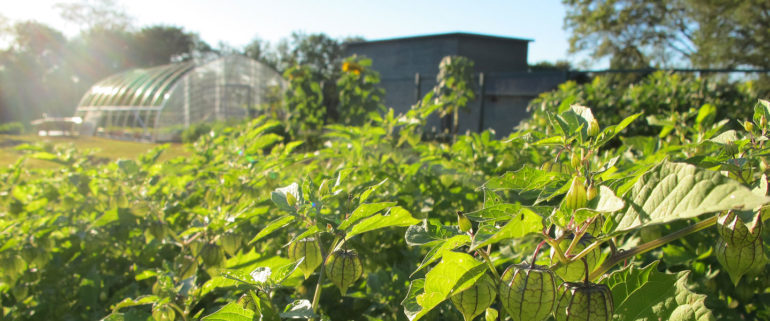 The University of Coruña and Alcoa foundation organise the Educating for Sustainability Course, under the title Campus, casa, cidade: laboratorios do cambio.
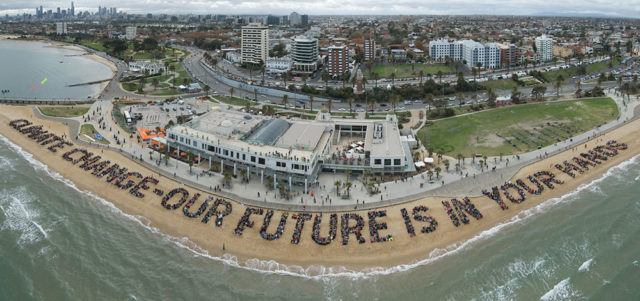 The 4th RESCLIMA international seminar: Education for climate change in the educational system and the 2nd meeting of the Rede internaional de pesquisadores em educação ambiental e justiça climática (REAJA) will take place in Santiago de Compostela (Spain) on October 26 and 27, 2018.