WEEC Network is granted consultative status at the UN
Have you heard the incredible news?! WEEC Network has officially been granted ECOSOC (Economic and Social Council) Consultative Status with the United Nations!
From now on WEEC Network has the special consultative status with the Economic and Social Council at the UN. The consultative status is the core of a formal relationship between the UN and social organizations, which is also a key approach for social organizations to take initiatives and to be engaged in activities of the UN and international communities.
As a member of the WEEC Network, you can also take part in the initiatives: keep reading to find out more.
Become a representative at ECOSOC!
As NGO with ECOSOC status, WEEC Network can choose delegates to be represented by in the various occasions. If you are interested, apply to be a delegate, representing one of the most worldwide organizations in environmental education.
Contact us on secretariat@weecnetwork.staging.19.coop
The Economic and Social Council of the UN (ECOSOC)
Article 71 of the United Nations Charter, which established the Economic and Social Council (ECOSOC), states the following:
The Economic and Social Council may make suit able arrangements for consultation with non-governmental organizations which are concerned with matters within its competence. Such arrangements may be made with international organizations and, where appropriate, with national organizations after consultation with the Member of the United Nations concerned.
— United Nations Charter, Chapter X, Article 71
One of the six principal organs of the UN, the Economic and Social Council (ECOSOC) is the central UN forum for international economic and social issues. The Council coordinates the economic and social work of the UN system, which engages 70 percent of the system’s human and financial resources. All of the UN specialized agencies (e.g., the World Health Organization and the Food and Agriculture Organization), as well as all of the UN programs and funds (e.g., UNICEF and the World Food Program), report to ECOSOC.
The ECOSOC Council has eight functional Commissions:
- Commission on the Status of Women
- Commission for Social Development
- Commission on Population and Development
- Commission on Crime Prevention and Criminal Justice
- Commission on Narcotic Drugs
- Commission con Science and Technology for Development
- Statical Commission
- United Nations Forum on Forests
ECOSOC Regional Commissions:
➤ Economic Commission for Africa (ECA)
➤ Economic and Social Commission for Asia and the Pacific (ESCAP)
➤ Economic Commission for Europe (ECE)
➤ Economic Commission for Latin America and the Caribbean (ECLAC)
➤ Economic and Social Commission for Western Asia (ESCWA)
Other bodies:
- Permanent Forum on Indigenous Issues
- Sessional and standing committees
- Expert, ad hoc, and related bodies
What we gained as NGO in consultative status
The ECOSOC Resolution 1996/31 specifies the non-governmental organizations (NGOs) in Consultative Status are entitled to:
- Attend international conferences and events.
- Make written and oral statements at these events.
- Organize side events.
- Enter United Nations premises.
- Have opportunities to network and lobby.
NGOs that are accredited with ECOSOC can participate in a number of events, including, but not limited to, the sessions/meetings of ECOSOC, its functional commissions and its other subsidiary bodies. At these events, NGO may:
- Attend official meetings
- Submit written statements prior to sessions
- Make oral statements
- Meet official government delegations and other NGO representatives
- Organize and attend parallel events that take place during the session; and
- Participate in debates, interactive dialogues, panel discussions and informal meetings.
Click Here to learn more about what ECOSOC is
Click Here to learn about ECOSOC 2021 goals:
https://www.un.org/ecosoc/en/events/2021/ecosoc-high-level-segment-including-three-day-ministerial-segment-hlpf-convened-under
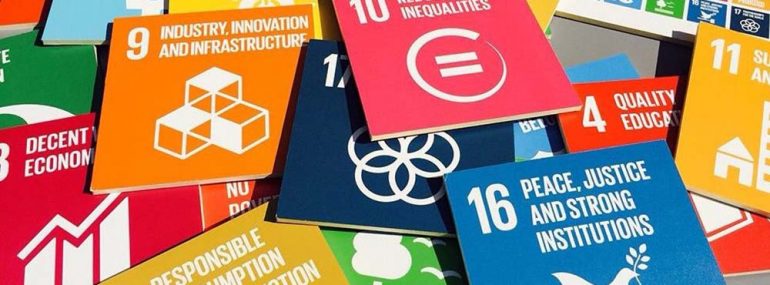 The Annual SDG Accord Report 2019, titled Progress towards the Global Goals in the University and College sector was launched some days ago in New York at the UN High Level Political Forum. The SDG Accord – says Iain Patton CEO, EAUC-The Alliance for Sustainability Leadership in Education – is a high profile international initiative that the Global Alliance developed to allow the tertiary education sector to demonstrate its commitment to playing its part in meeting the SDGs, and sharing best practice. This is a partnership initiative, endorsed by the UN’s HESI and many other global partners. It was launched in 2017, at 9WEEC in Canada, and it currently has official commitment to its tenets from 110 institutions, 103 support organisations and 817 individuals – all spread across 85 countries.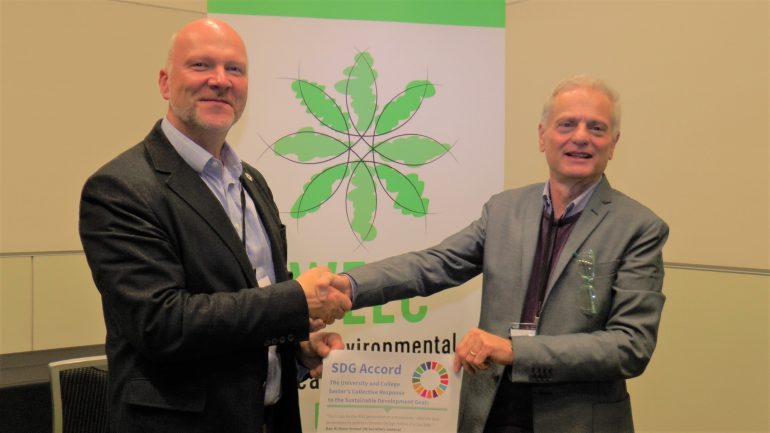
 A great tragedy has hit the world of environmentalism. The Ethiopian Airlines aircraft crashed yesterday after take-off near Addis Ababa, caused the death of 157 people who were on board, including passengers and crew members.
 One extra place is available at the
  The Green Gown Awards are the most prestigious recognition of environmental and sustainability best practice within the further and higher education sectors. The Awards provide the sector with benchmarks for excellence and are respected by Government, funding councils, senior management, academics and students.
 Important Dates